Mathematics Webinar | Advances in Hamiltonian Transport and Chaotic Dynamics
the chair
Hamiltonian systems are central to both classical and modern physics. They describe a broad spectrum of dynamical phenomena, ranging from celestial mechanics and plasma confinement to molecular interactions. This workshop, Advances in Hamiltonian Transport and Chaotic Dynamics, will explore recent progress in understanding the complex mechanisms driving phase space transport and the emergence of chaos in conservative and dissipative systems. Special emphasis will be placed on the role of invariant structures, such as tori, cantori, and resonant webs; the interplay between order and chaos; and the development and application of modern chaotic indicators. Key topics include Arnold diffusion, resonant dynamics, chaotic scattering, chaos indicators, and the statistical features of transport in both low- and high-dimensional Hamiltonian systems. The workshop aims to stimulate interdisciplinary dialogue by bringing together experts from mathematics, physics, and applied sciences to share insights, present theoretical advancements, and discuss cutting-edge computational techniques. Through interactive sessions and collaborative discussion, the event will foster new connections and inspire future research in this dynamic and foundational area.
Date: 3rd July 2025
Time: 02:00 pm CEST | 08:00 pm CST (Asia)
Webinar ID: 851 4517 9752
Webinar Secretariat: journal.webinar@mdpi.com
Meet Our Chair
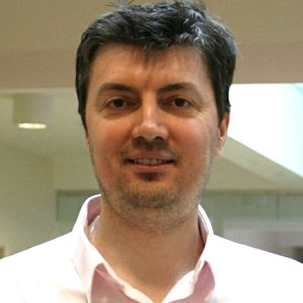
School of Mathematics, Statistics and Actuarial Science (SMSAS), University of Essex;Dr. Chris G. Antonopoulos is a Lecturer at the School of Mathematics, Statistics and Actuarial Science (SMSAS), University of Essex. He obtained his BSc in Mathematics from the University of Crete (1999), and his MSc (2002) and PhD (2007) in Applied Mathematics from the University of Patras, Greece. His PhD focused on the stability and chaos in multi-dimensional Hamiltonian systems and their transition to Statistical Mechanics. He was a postdoctoral researcher at Université Libre de Bruxelles in Prof. P. Gaspard’s group, where he published work on Hamiltonian systems and Statistical Mechanics. He later joined Profs. K. van der Weele and T. Bountis’ group at the University of Patras under the European “Complex Matter” programme. From 2012, he was an EPSRC Research Fellow at the University of Aberdeen’s ICSMB, working on information-dynamical approaches to complex systems. Since 2015, he has taught and conducted research at the University of Essex, focusing on dynamical systems, chaos theory, information theory, computational neuroscience, and complex networks, with applications to brain dynamics and epidemic modelling (e.g., COVID-19). He is a member of the LMS and IMA and serves as editor for Scientific Reports (Nature), Frontiers in Computational Neuroscience, and Open Physics. Dr. Chris G. Antonopoulos has authored 59 journal publications, 9 conference papers/book chapters, and delivered 59 talks (19 invited). He has organised sessions at BAMC, DDCA, and CHAOS conferences, and taught advanced courses on complex systems at summer schools and PhD programmes. With an h-index of 24 and over 2,800 citations, he currently supervises three PhD students and collaborates internationally to advance mathematical modelling of complex systems.
Meet Our Speakers

Prof. Dr. Edson Denis Leonel
São Paulo State University (UNESP), Institute of Geosciences and Exact Sciences, 13506-900, Rio Claro, SP, Brazil;Prof. Dr. Edson Denis Leonel is a professor of Physics at São Paulo State University (UNESP), Brazil. His research focuses on nonlinear dynamics, statistical mechanics, and phase transitions in low-dimensional systems. He has authored several books and numerous scientific papers on chaotic diffusion and scaling laws, and has organized international conferences on complex systems. He is also actively involved in academic leadership, serving as Dean of the Institute of Geosciences and Exact Sciences at UNESP.

Prof. Dr. Joelson Dayvison Veloso Hermes
Federal Institute of Education, Science and Technology of South of Minas Gerais - IFSULDEMINAS, Brazil;Prof. Dr. Joelson Dayvison Veloso Hermes is a professor at the Federal Institute of Education, Science and Technology of South of Minas Gerais (IFSULDEMINAS), Brazil. He holds a Ph.D. in Physics from São Paulo State University (UNESP) and is currently a postdoctoral researcher at the Institute of Physics of the University of São Paulo (USP). His research interests include nonlinear dynamics, Hamiltonian systems, and the application of Slater’s theorem to the study of invariant structures in dynamical systems such as the Fermi-Ulam model and billiards. He is also engaged in the analysis of parameter spaces in discrete dynamical systems, with a focus on periodicity cascades, extreme and superstable curves, and fractal structures in maps.

Dr. Matheus Rolim Sales
1) São Paulo State University (UNESP), Institute of Geosciences and Exact Sciences, 13506-900, Rio Claro, SP, Brazil 2) University of Essex, School of Mathematics, Statistics and Actuarial Science, CO4 3SQ, Wivenhoe Park, Colchester, United Kingdom;Dr. Matheus Rolim Sales is a postdoctoral researcher at University of Essex, Colchester, and his research interest ranges from Hamiltonian dynamics and characterisation of stickiness to diffusion and transport of chaotic trajectories in phase space. He is also interested in complex networks, adaptive networks, synchronisation and chimera-like states.


The webinar was hosted via Zoom and required registration to attend. The full recording can be found below. In order to learn about future webinars, you can sign up to our newsletter by clicking “Subscribe” at the top of the page.
This webinar brought together recent insights into the complex behaviour of Hamiltonian systems, with a focus on chaotic dynamics, invariant structures, and phase space transport. Prof. Edson Denis Leonel examined the transition from integrable to non-integrable regimes in Hamiltonian systems, highlighting a universal chaotic diffusion process governed by scaling invariance. Through numerical simulations and analytical solutions of the diffusion equation, the work identified critical exponents and uncovered features such as symmetry breaking, the emergence of a clear order parameter, and the presence of topological defects. Dr Joelson Dayvison Veloso Hermes presented a novel technique for detecting invariant curves in discrete Hamiltonian systems using Slater’s Theorem. His method, grounded in recurrence time analysis, was applied to well-known models such as the Standard Map and Fermi–Ulam model, effectively identifying the transition from local to global chaos and pinpointing the critical parameters for curve breakdown. Dr Matheus Rolim Sales introduced recurrence time entropy as a diagnostic tool to distinguish chaotic dynamics and sticky regions in phase space. His results revealed that the RTE distribution becomes multi-modal in the presence of hierarchical island structures, offering insights into the complex organisation of the chaotic sea.