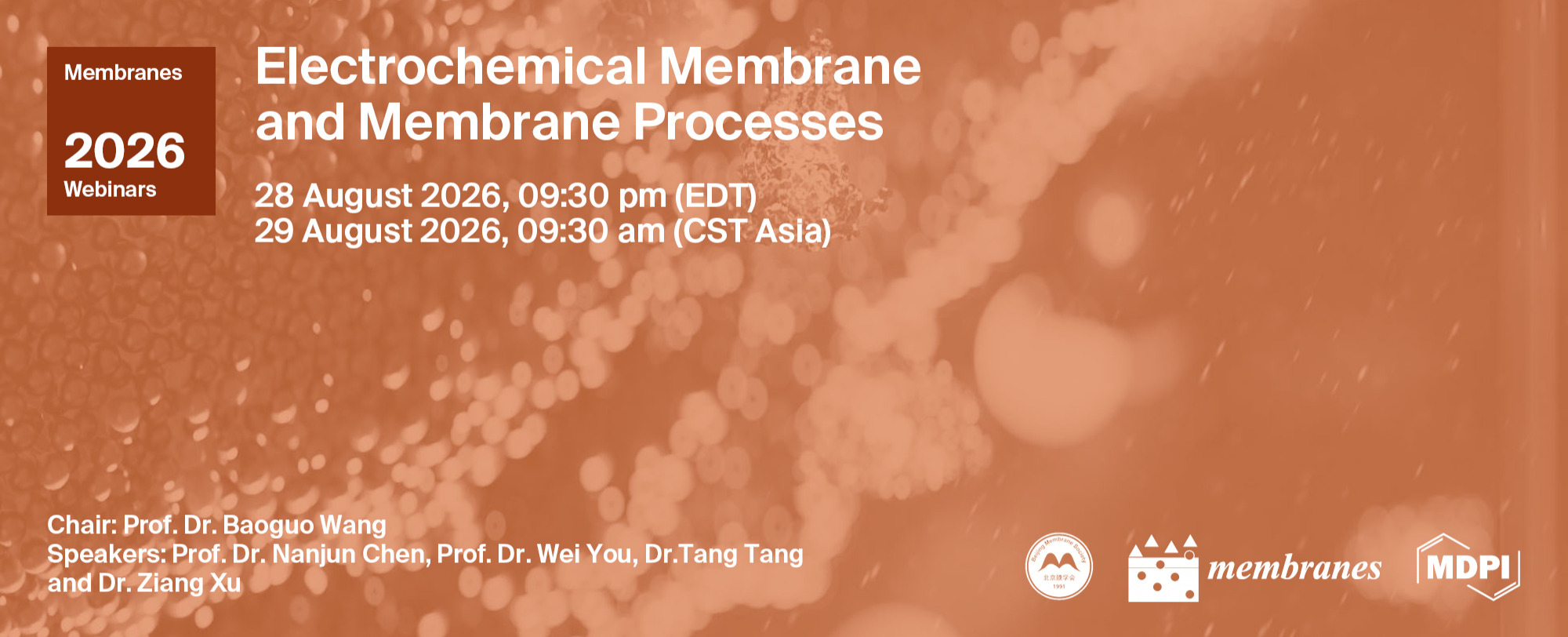
Membranes Webinar | Electrochemical Membrane and Membrane Processes
the chair
2nd Membranes Webinar
Electrochemical Membrane and Membrane Processes
Electrochemical engineering is gaining increasing attention as the world moves toward a net-zero future. To adequately decarbonize our economy, electrochemical devices such as electrolyzers and batteries are being developed at both laboratory and industrial scales, in which polymer electrolyte membranes will play critical roles. Inspired by nature’s design principles, the next frontier in synthetic membranes lies in harnessing this synergy to create integrated material systems as electrochemical membrane reactors, by integrating chemical and redox functions as an inherently interdisciplinary field.
The scope of this webinar is to gather the recent developments on: (i) ion exchange membranes for energy conversion processes like water electrolyzer; (ii) ion conduction membranes used in redox flow batteries for energy storage processes; (iii) designing and fabrication of membrane electrode assemblies (MEAs) for electrochemical reactions; and (iv) novel methods and tools for membrane characterization in electrochemical devices.
Date & Time:
August 28th, 2026, 9:30 pm EDT;
August 29th, 2026, 9:30 am CST Asia
Zoom ID: 875 8987 7389
Webinar Secretariat: journal.webinar@mdpi.com
Meet Our Chair
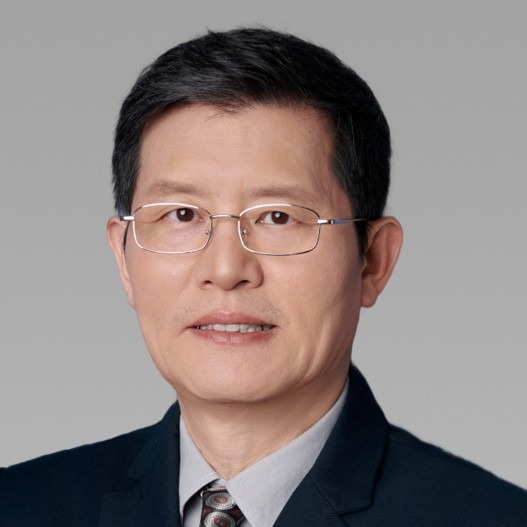
Department of Chemical Engineering, Tsinghua University, Beijing, China;Wang Baoguo received his B.Eng. and M.Eng. in Chemical Engineering from Tsinghua University in 1987 and 1993 respectively, and earned his Ph.D. in Engineering from the University of Tokyo, Japan in 2000. He conducted visiting research at Harvard University, USA from 2007 to 2008. He has long been engaged in interdisciplinary research of membrane separation and electrochemical engineering, including ion exchange membranes, catalytic materials and equipment technologies for alkaline membrane water electrolysis for hydrogen production, all-vanadium flow batteries, and zinc-air batteries. He has revealed the structure-activity relationship of electrochemical energy materials, and developed materials, equipment and basic theories in the field of electrochemical energy conversion and storage. He currently serves as the Director of the New Energy Membrane Special Committee of China Membrane Industry Association, Chairman of Beijing Membrane Society, Deputy Editor-in-Chief of the Editorial Board of Energy Storage Science and Technology, Deputy Editor-in-Chief of Membrane Science and Technology, Vice Chairman of the Flow Battery Special Committee of Zhongguancun Energy Storage Alliance, and Consultant of the Flow Battery Standardization Committee of the Energy Industry.
Meet Our Speakers
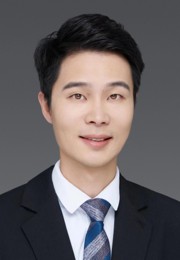
Prof. Dr. Nanjun Chen
College of Chemistry and Chemical Engineering, Xiamen University, Xiamen, China;Nanjun Chen completed his B.S., M.S., and Ph.D. studies at Beijing University of Chemical Technology from 2010 to 2019, under the supervision of Prof. Hong Zhu. From 2019 to 2023, he carried out postdoctoral research successively at Hanyang University in South Korea (supervised by Academician Prof. Young Moo Lee) and École Polytechnique Fédérale de Lausanne (EPFL) in Switzerland (supervised by Academician Prof. Xile Hu). He joined the College of Chemistry and Chemical Engineering at Xiamen University in early 2024. He is a member of the State Key Laboratory of Surface and Interface Chemistry and the Fujian Provincial Key Laboratory of Special Advanced Materials, among others. His research focuses on ion exchange membranes, water treatment membranes, fuel cells, water electrolysis for hydrogen production, CO₂/CO electroreduction, and electrocatalytic materials for HOR/ORR/OER/HER/CORR. He has published over 40 papers as corresponding or first author (including co-first authors) in top international journals such as Nat. Nanotechnol., Sci. Adv., Nat. Commun., J. Am. Chem. Soc. (3 papers), Angew. Chem. Int. Ed. (2 papers), Adv. Mater. (2 papers), Energy Environ. Sci. (3 papers), and Acc. Chem. Res., and has been granted 5 U.S. patents. His work has garnered more than 5,100 non-self citations.
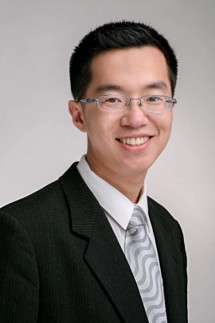
Key Laboratory of Engineering Plastics and Beijing National Laboratory for Molecular Science, Institute of Chemistry, Chinese Academy of Sciences, Beijing, China;Wei You enrolled in the Department of Chemistry, Tsinghua University, majoring in Chemical Biology in 2007. In 2011, he went to Indiana University Bloomington, USA, to pursue his Ph.D. degree in Organic Chemistry. After obtaining his doctorate in 2016, he joined the research group of Professor Geoffrey Coates at Cornell University to engage in postdoctoral research. In November 2019, he joined the Key Laboratory of Engineering Plastics, Institute of Chemistry, Chinese Academy of Sciences, and established his own research group. His main research focuses on polymer synthesis as well as the design and preparation of novel ion-exchange separators. To date, Researcher Wei You has published more than 20 papers in renowned domestic and international academic journals including Nat. Energy, Proc. Natl. Acad. Sci., Prog. Polym. Sci., J. Am. Chem. Soc., Angew. Chem. Int. Ed., Chem. Sci., ACS Energy Lett., Macromolecules, and ACS Macro Lett.. He is currently undertaking programs such as the General Program and the Youth Program of the National Natural Science Foundation of China.
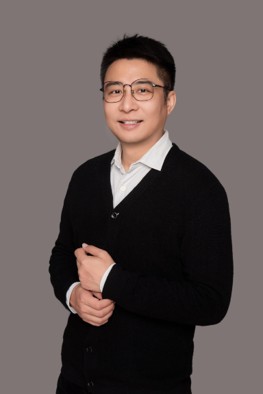
Dr. Tang Tang
Center of Artificial Photosynthesis for Solar Fuels and Department of Chemistry, School of Science and Research Center for Industries of the Future, Westlake University, Hangzhou, China;Tang Tang obtained his Ph.D. from Nagoya Institute of Technology (NIT), Japan in 2014. From 2014 to 2020, he served as a researcher at the Institute for Basic Science in South Korea. From November 2020 to November 2022, he conducted postdoctoral research in the laboratory of Professor Sun Licheng at the Center of Artificial Photosynthesis for Solar Fuels at Westlake University. Currently, he is an associate researcher in the laboratory of Professor Sun Licheng at the Center of Artificial Photosynthesis for Solar Fuels at Westlake University. His research interests mainly focus on the design and synthesis of novel polymers, such as anion exchange membranes (AEM) for water electrolysis and hole transport materials (HTM) for perovskite solar cells, etc.
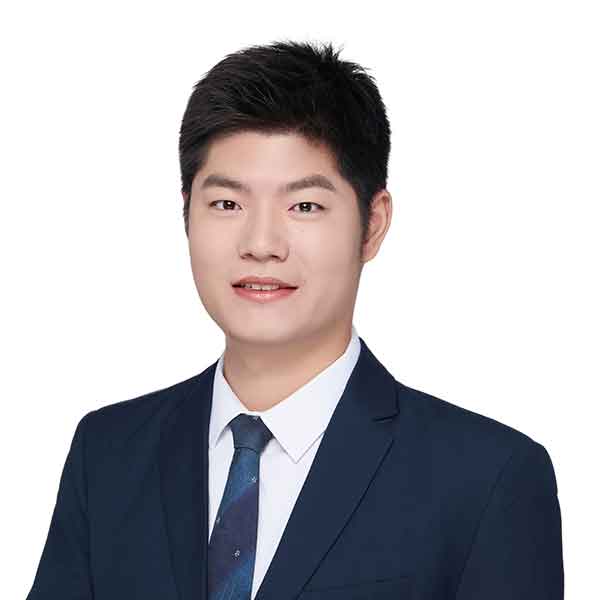
Dr. Ziang Xu
Department of Chemical and Biomolecular Engineering, Rice University, Houston, USA ;Dr. Xu received his Bachelor of Science in Chemical Engineering from Tianjin University in 2019, followed by a Ph.D. in Chemical Engineering and Technology from Tsinghua University in 2024. His research primarily focuses on the molecular design and application of ion-conducting polymers in electrochemical reactors. The researches include investigations into the transport mechanisms within alkaline ion membranes, the structural dynamics at the interfaces of bipolar membranes, and the strategic optimization of ionomers in catalytic layers. These pivotal studies have markedly advanced electrochemical technologies, such as water electrolysis and ammonia electrosynthesis, by reducing energy requirements and extending the operational longevity of the reactors. In collaboration with Professor Haotian Wang, Dr. Xu is pioneering research aimed at optimizing ion transport in catalytic electrodes. Their groundbreaking efforts are facilitating breakthroughs in CO2 reduction and capture technologies, operating under nearly electrolyte-free conditions.
|
Speaker/Presentation |
Time in CST Asia |
|
MDPI host Membranes and webinar introduction—5 min |
9:30 am–9:35 am |
|
Dr. Baoguo Wang (Chair) Chair introduction—5 min |
9:35 am–9:40 am |
|
Dr. Ziang Xu Engineering Ion-Conducting Membranes and Interfaces for Electrochemical Reactors—20 min |
9:40 am–10:00 am |
|
Prof. Dr. Nanjun Chen Anion Exchange Membranes for Cost-Effective Energy Devices—20 min |
10:00 am–10:20 am |
|
Prof. Dr. Wei You Application of Novel Cyclic Olefin Copolymers as Ion Exchange Membranes—20 min |
10:20 am–10:40 am |
|
Dr. Tang Tang Design and Industrial Applications of High-Efficiency Ion Transport Membranes—20 min |
10:40 am–11:00 am |
|
Q&A—20 min |
11:00 am–11:20 am |
|
Closing of webinar—10 min Dr. Baoguo Wang (Chair) |
11:20 am-11:30 am |
This is a FREE webinar. After registering, you will receive a confirmation email containing information on how to join the webinar. Registrations with academic institutional email addresses will be prioritized.
Certificates of attendance will be delivered to those who attend the live webinar.
Can't attend? Register anyway, and we'll let you know when the recording is available to watch.
Register for free here!
Electrochemical Membrane and Membrane Processes
Edited by Prof. Dr. Baoguo Wang
Deadline for manuscript submissions: 31 August 2026
-6a70d86518878.png)

-6a70d942199d7.png)