
Micromachines Webinar | Biofabrication Horizons — Early Career Researcher Session
the chair
12th Micromachines Webinar
Biofabrication Horizons — Early Career Researcher Session
It is my pleasure to launch the new webinar series of the “Biofabrication and Tissue Engineering” section of Micromachines (MDPI). This monthly series is dedicated to fostering global dialogue and collaboration at the forefront of our rapidly evolving discipline.
Each webinar will spotlight groundbreaking advances in 3D and 4D bioprinting, next-generation bioinks, organs-on-chips and microphysiological systems, scaffold-free tissue assembly, advanced biomaterials (including stimuli-responsive hydrogels and decellularized matrices), microfluidics, hybrid micro/nano-fabrication techniques, and translational strategies that bridge the gap between bench and bedside.
By convening leading researchers, clinicians, and industry innovators, early stage researchers and rising stars in the field, we highlight the latest discoveries in disease modeling, drug discovery, regenerative medicine, and the commercialization of biofabricated constructs, ultimately accelerating the delivery of transformative solutions to patients and society.
Micromachines is proud to provide this platform to stimulate interdisciplinary exchange, amplify emerging voices, and drive the field toward clinically impactful innovations in personalized healthcare.
I warmly invite you to join us, share your work, and be part of this exciting journey.
Date: 20 November 2026
Time: 06:00 pm CET | 09:00 am PST
Webinar ID: 825 5518 0722
Webinar Secretariat: journal.webinar@mdpi.com
Meet Our Chair

Laboratory for Innovations in Microengineering (LiME), Department of Mechanical Engineering, University of Victoria, Victoria, BC ;Dr. Akbari is an Associate Professor and Director of Laboratory for Innovations in Microengineering (LiME) at the Department of Mechanical Engineering of the University of Victoria. He is the section Editor in Chief of MDPI Micromachines—B2: Biofabrication and Tissue Engineering and guest editor of six special issues with MDPI.
Meet Our Speakers

Dr. Yasaman Maaref
BC Children’s Hospital Research Institute and Simon Fraser University, Canada;Dr. Yasaman Maaref received her PhD in Biomedical Physiology and Kinesiology from Simon Fraser University, building on a background in mechanical engineering. Her doctoral research focused on developing 2D tissue engineering approaches to improve the maturation of human induced pluripotent stem cell-derived cardiomyocytes (hiPSC-CMs) and applying these models to investigate genetic cardiac diseases. She is currently a postdoctoral fellow at BC Children’s Hospital Research Institute, supported by a BCCHR Postdoctoral Fellowship Award, under the supervision of Dr. Maksymilian Prondzynski. Her research focuses on engineering advanced 3D cardiac models to enable the scalable production of mature hiPSC-CMs for disease modeling and future translational applications.
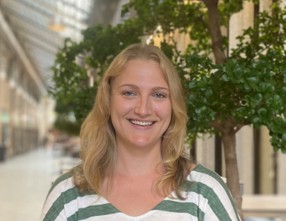
Ms. Aistė Balčiūnaitė
D-MAVT, ETH Zurich, Switzerland ;As a fourth-year PhD candidate in Prof. Robert Katzschmann's Soft Robotics Laboratory at ETH Zurich, Aiste Balciunaite develops skeletal muscle-based biohybrid robots by advancing biofabrication techniques, integrating sensing for closed-loop control of muscle actuation, and leveraging computational methods to inform the design of biohybrid robots. Her work on biohybrid robots was recently published in Nature Communications. She has authored various publications in Advanced Materials, Advanced Intelligent Systems, Science Advances, Advanced Functional Materials, and elsewhere. She was recognized as an IEEE RoboSoft Rising Star in 2025 and awarded the ETH ALIVE Doctoral Fellowship in 2022.
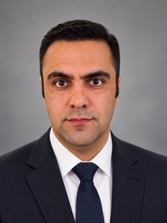
Laboratory for Innovations in MicroEngineering (LiME);Department of Mechanical Engineering, University of Victoria, BC, Canada;Esfandyar Askari is a PhD candidate in Mechanical Engineering at the University of Victoria, Canada, working with Dr. Mohsen Akbari, and a sessional instructor at UVic, where he teaches Bioprinting and 3D Printing of Human Parts. His research centres on engineered microgels for cell manufacturing and biofabrication, including thermoresponsive BrushGel microcarriers for enzyme-free cell harvesting (Advanced Healthcare Materials, 2025), grooved rod-shaped microgels that impart hierarchical anisotropy to bioprinted tissues (Biomaterials, 2026), and electroconductive soft microcarriers for skeletal muscle culture (Macromolecular Bioscience, 2026). He also develops high-throughput microfluidic microgel production and bioprinting–bioreactor platforms. He holds MSc and BSc degrees in Materials Science and Engineering, and received the L2M award in 2023.
This is a FREE webinar. After registering, you will receive a confirmation email containing information on how to join the webinar. Registrations with academic institutional email addresses will be prioritized.
Certificates of attendance will be delivered to those who attend the live webinar.
Can’t attend? Register anyway and we’ll let you know when the recording is available to watch.
Register for free here!
|
Speaker/Presentation |
Time in CET |
Time in PST |
|
Chair Introduction Dr. Mohsen Akbari |
6:00 - 6:10 pm | 9:00 - 9:10 am |
|
A Microcarrier-Based Hydrogel Platform for the Differentiation and Maturation of hiPSC-derived Cardiomyocytes Dr. Yasaman Maaref |
6:10 - 6:35 pm | 9:10 - 9:35 am |
|
Q&A |
6:35 - 6:45 pm | 9:35 - 9:45 am |
|
Engineering Microarchitecture for Functional Skeletal Muscle Bioactuators via Xolography |
6:45 - 7:00 pm |
9:45 - 10:00 am |
|
Q&A |
7:00 - 7:10 pm |
10:00 - 10:10 am |
|
From Cell Factory to Tissue Blueprint: Engineered Microgels that Expand, Release and Organize Cells for Biofabrication Esfandyar Askari |
7:10 - 7:35 pm | 10:10 - 10:35 am |
|
Q&A |
7:35 - 7:45 pm | 10:35 - 10:45 am |
|
Closing of Webinar Dr. Mohsen Akbari |
7:45 - 8:00 pm | 10:45 - 11:00 am |
Biofabrication Frontiers
Collection Editor: Dr. Mohsen Akbari
AI-Driven Biofabrication: Accelerating Design, Optimization, and Translation
Guest Editor: Dr. Miriam Fillippi
Deadline for manuscript submissions: 31 December 2026
B2: Biofabrication and Tissue Engineering
A section of Micromachines (ISSN 2072-666X).
Section Information
The ‘Biofabrication and Tissue Engineering’ section of Micromachines focuses on cutting-edge research and innovation in the design, fabrication, and application of biologically functional constructs for regenerative medicine, disease modeling, and drug discovery, with a strong emphasis on bioprinting technologies, including the development of advanced bioinks, 3D/4D printing techniques, and scaffold-free approaches to the creation of complex, multicellular tissues. It also explores organs on chips, leveraging microfabrication to create physiologically relevant models for studying organ-level functions, disease mechanisms, and drug responses, bridging the gap between traditional models and clinical applications. This section highlights the role of biomaterials, such as smart hydrogels, nanocomposites, and decellularized matrices, in directing cellular behavior, promoting tissue regeneration, and enabling the integration of engineered constructs with host tissues. Additionally, it addresses the critical aspects of commercialization and translation, focusing on scaling up technologies, navigating regulatory pathways, and fostering market adoption to accelerate the transition of biofabrication innovations from the lab to clinical and industrial applications, ultimately advancing human health.