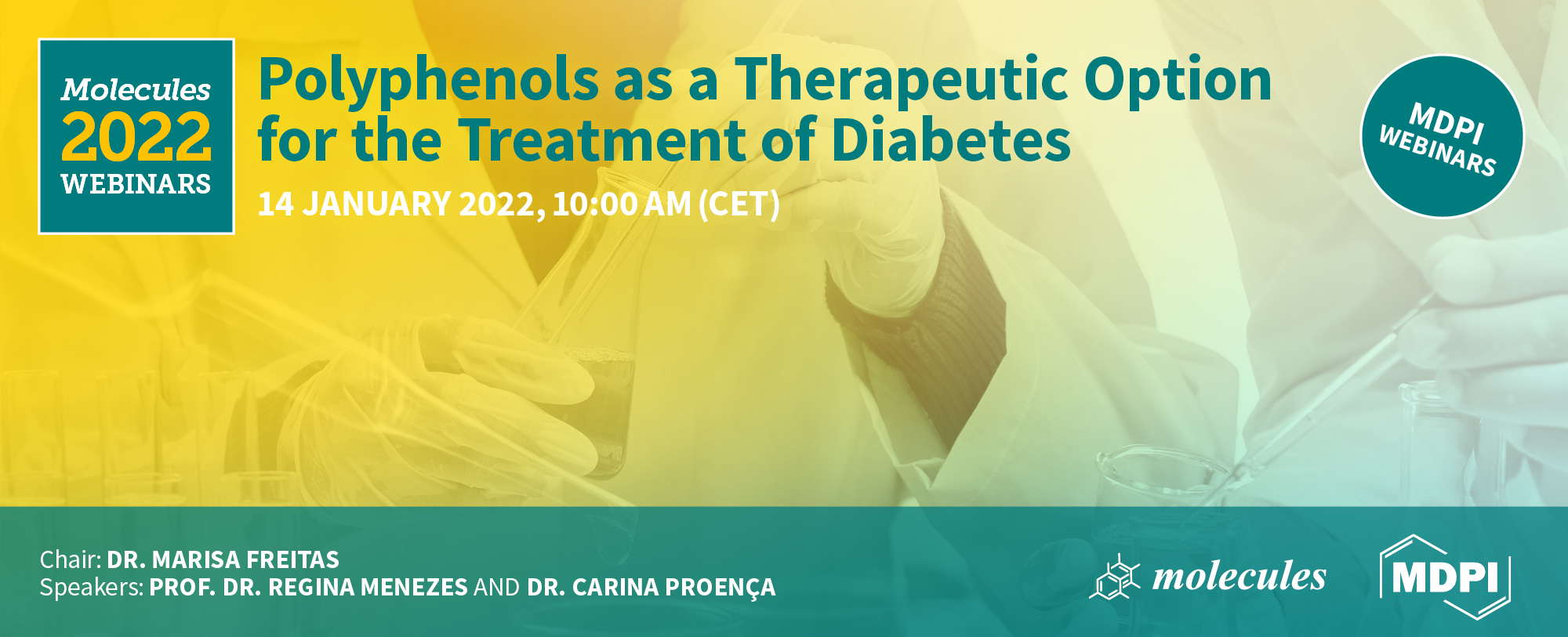
Molecules Webinar | Polyphenols as a Therapeutic Option for the Treatment of Diabetes
Meet Our Speaker

LAQV-REQUIMTE, Associate Laboratory for Green Chemistry, Faculty of Pharmacy, University of Porto, Portugal;Marisa Freitas (MF) completed her PhD degree in Pharmaceutical Sciences in 2010, in the Faculty of Pharmacy of University of Porto. Currently, she is Assistant Researcher at LAQV-REQUIMTE - Associate Laboratory for Green Chemistry, working at the Laboratory of Applied Chemistry of Faculty of Pharmacy of University of Porto. Her scientific background is supported by 85 publications in international journals, 5 book chapters, 50 oral communications and 120+ poster communications in national and international conferences, with 3 attributed awards. Her h-index is 31, with about 5000 citations (Scopus). MF participated in several projects funded by national and international funds. She collaborates as reviewer in 20+ journals (Publons - Web of Science Researcher ID AAY-7427-2020) and participates in the Editorial Board of 4 journals (Molecules, Cells, Oxid Med Cell Longev, Braz J Pharm Sci).

- Urolithin B is a dietary polyphenol metabolite with potential to inhibit the cytotoxicity of islet amyloide polypeptide aggregates, which have implications in diabetes.
- Flavonoids inhibit several enzymes directly related with the pathophisiology of diabetes, namely protein tyrosine phosphatase 1B, dypeptidyl peptidase-4 and fructose bisphosphatase.
New Trends in Polyphenols and Health
Guest Editors: Dr. Marisa Freitas, Dr. Daniela Ribeiro & Prof. Dr. Eduarda Fernandes
Deadline for manuscript submissions: 28 February 2022