NDT Webinar | Non-Destructive Testing for the Diagnosis and Conservation of Cultural Heritage
the chair
11st Webinar on NDT
Non-Destructive Testing for the Diagnosis and Conservation of Cultural Heritage
Non-destructive testing (NDT) plays a fundamental role in the investigation, monitoring, and conservation of cultural heritage assets. By combining geophysical methods, digital photogrammetry, remote sensing, and portable spectroscopic techniques, valuable information can be obtained without causing damage to historic structures or artworks.
Techniques such as Ground- Penetrating Radar (GPR) allow the detection of buried features, voids, fractures, and previous construction phases, while high-resolution photogrammetry enables the creation of accurate 3D models for structural mapping and condition assessment. Portable X-ray fluorescence (XRF) and Raman spectroscopy provide in situ characterization of pigments, mortars, and plasters, supporting the identification of materials and degradation processes. These methods contribute to a better understanding of the history, condition, and vulnerability of cultural heritage sites, providing essential data for conservation planning, restoration strategies, and long-term management while preserving the integrity of the original fabric.
In this webinar, Prof. Dr. Sebastiano D’Amico will present several case studies to illustrate concrete examples of diagnosis of large cultural heritage sites.
Date: 14 July 2026
Time: 3:00 pm CEST | 9:00 am EDT | 9:00 pm CST Asia
Webinar ID: 829 3045 3787
Webinar Secretariat: journal.webinar@mdpi.com
Meet Our Chair
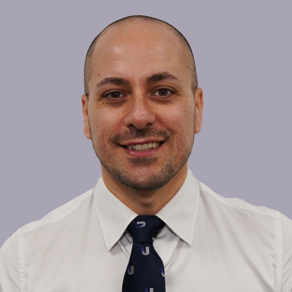
School of Computing and Engineering, University of West London, UK;The Faringdon Research Centre for Non-Destructive Testing and Remote Sensing, University of West London, UK;Prof. Dr. Fabio Tosti is a Chartered Engineer and Professor of Civil Engineering at the University of West London, U.K., where he serves as the Director of “The Faringdon Research Centre for Non-Destructive Testing and Remote Sensing”. His research focuses on the development of advanced algorithms and multi-physics methodologies for smart sensing and the non-destructive assessment of civil, green, and cultural heritage assets. With over 270 publications and numerous delivered keynote speeches and invited lectures, Prof. Tosti has led several funded national and international projects. He was the General Chair of ICARS 2025 and the SPT4GPRA workshop series. His contributions have been recognised with the EGU ECSs Award and several Best Paper Awards, including IEEE AGERS 2021 and GIRST 2023. Prof. Tosti is the Founding Editor-in-Chief of NDT – Journal of Non-Destructive Testing (MDPI) and an Associate Editor for several leading journals. Beyond his academic roles, he serves as an Expert Evaluator for the European Commission’s Horizon programs, where he supports research excellence, equity and innovation across Europe.
Meet Our Speaker
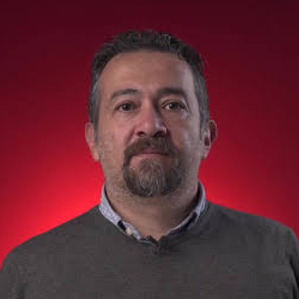
Department of Geosciences, University of Malta, Malta;Prof. Dr. Sebastiano D’Amico is Associate Professor and Head of the Department of Geosciences at the University of Malta. He holds a PhD in Geophysics and a degree in Physics. He has held research and academic appointments at leading international institutions, including the University of Messina (Italy), Istituto Nazionale di Geofisica e Vulcanologia (Italy) and Saint Louis University (USA). His research spans applied geophysics, earthquake seismology, environmental geophysics, and the application of non-invasive techniques to cultural heritage. Prof. D’Amico has coordinated and participated in numerous national and European research projects and has authored more than 150 peer-reviewed scientific publications. He regularly contributes to scientific committees, international conferences, and academic networks. His work combines scientific innovation with practical applications, supporting evidence-based approaches to environmental sustainability, risk mitigation, and heritage preservation.
In this section, you will find the recordings of this webinar to watch, re-watch and share with your colleagues!