Nanomaterials Webinar | Advances in Nanomaterials for Thermo- and Photocatalysis for Environmental and Energy Applications
Meet Our Speakers

Dr. Carmen Ciotonea
Unit of Environmental Chemistry and Interactions with Living Organisms” (UCEIV). Engineering School Littoral Opale Coast (EILCO), Dunkerque, France;Dr. Carmen Ciotonea (37 years old) obtained her PhD from University of Poitiers (FR) and Technical University “Gh. Asachi” from Iasi, (RO) in july 2015. The research was focused on development of materials based on non-metals (Ni, Cu and Co) with control of the metal nanoparticle size, in order to maximize the catalytic performance in the reaction of hydrogenation of α,β-unsaturated aldehydes. In present, Dr. Carmen Ciotonea is working as assistant professor at Engineering School Littoral Opal Coast and she is developing the research at Unit of Environmental Chemistry and Interactions with Living Organisms” (UCEIV). Her research is focused on development of advanced nanostructured materials based on non-metals for catalytic applications (45 articles published). Ms Ciotonea was involved in 15 projects for the preparation and advanced characterization of the catalytic materials, also she participates as coordinator in 5 projects.
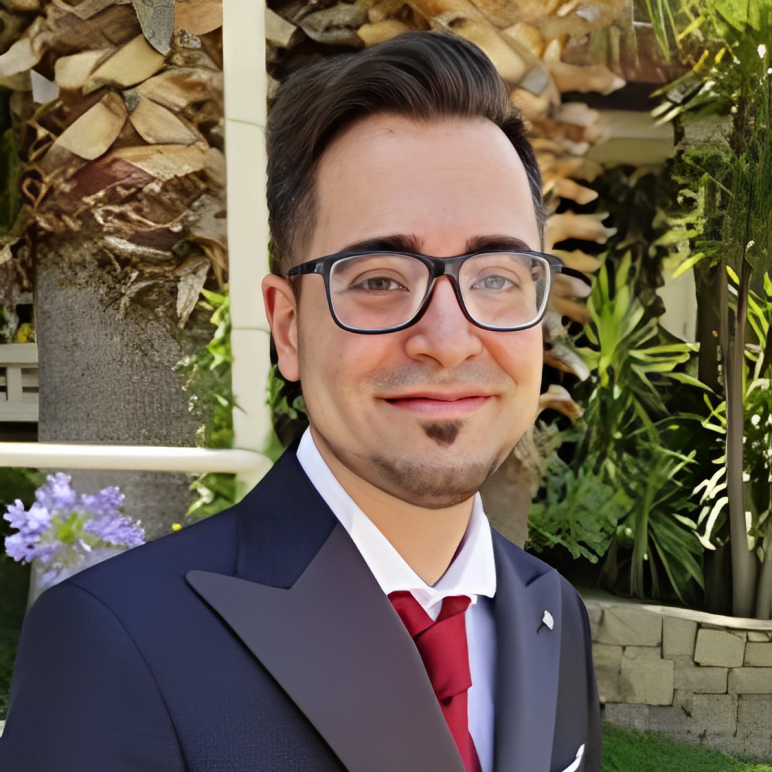
Department of Chemical Sciences, University of Catania, Italy;Roberto Fiorenza is currently assistant professor of Industrial Chemistry at Department of Chemical Sciences, University of Catania (Italy). His main research activities are the synthesis and characterization of metal oxides catalysts and photocatalysts for environmental and energy applications (purification of air and water, production and purification of hydrogen, CO2 valorisation). In the last years his research is focused on the unconventional photocatalysts (as CeO2, WO3, g-C3N4, organic-inorganic composites), and on hybrid catalytic approaches as the applications of the photothermo-catalysis for the VOCs removal and the CO2 conversion into solar fuels. In September 2022 he received the "Robert Karl Grasselli 2022" award from the catalysis group of the Italian chemical society for his research in the heterogenous catalysis in gas-phase. In November 2023 he achieved the Italian Scientific qualification as full professor for the disciplinary field of Industrial chemistry.


17th Nanomaterials Webinar
Advances in Nanomaterials for Thermo- and Photocatalysis for Environmental and Energy Applications
In this section, you will find the recordings of this webinar to watch, re-watch and share with your colleagues!
The first speaker of the webinar was Dr. Carmen Ciotonea with a presentation entitled: Heterogeneous Catalysis with Transition Metal (Oxide) Nanoparticles for energy applications.
She emphasized that controlling, the nanoparticle size, the morphostructural properties and the chemical and thermal stability of metal (or oxide) NPs, in order to improve the durability of the materials during the reaction. Such features are of high importance during the synthesis of materials in order to design performant catalysts. In fact, activation at high temperature as well as prolonged use in reaction generally results in a significant modification of the structural properties of the NPs and fast deactivation of the catalyst. Therefore Dr. Ciotonea developed new ways of preparing highly dispersed and thermally stable materials. Among the highlights of her research activity, there is notably the development of the melt infiltration method, allowing the synthesis of oxides of transition metals with precisely controlled sizes between 1 nm and 10 nm by selective confinement within micro- or mesopores. The evaluation of catalytic performances of the prepared NPs was demonstrated for reaction such as methanation, dry reforming, ammonia production and biofuel produced by hydrodeoxygenation of lignin derived molecules. In all of the selected reactions was noticed the benefic effect of small nanoparticles, which were found to be highly resistant in temperature and on stream reaction conditions.
The second speaker of the webinar was Dr. Roberto Fiorenza with a presentation entitled: Exploring the potentiality of the photothermo-catalysis for environmental and energy applications.
He showed the versatility of the photothermo-catalysis applied in different reactions focused on the solar fuels production. Specifically, with not-critical and sustainable catalysts that own both thermo-catalytic (redox) and photocatalytic features it was possible to obtain higher performance compared to the bare thermocatalytic and photocatalytic approaches. The total oxidation of Volatile Organic Compounds (VOCs) was successfully obtained with a considerable save of energy with MnOx-ZrO2 composites that permitted to exploit an improved Mars-Van Krevelen solar-assisted thermocatalytic mechanism. Furthermore, the obtained CO2 can be converted into solar fuels using an integrated approach able to produce high-added value chemicals from air pollutants and using CuOx/TiO2-CeO2 composites with a photothermo-co-catalysis. The possibility to tune the catalytic conditions and the combination of several porous catalytic supports as phyllosilicates or hydrotalcites with semiconductors established new synergisms that led to increase the catalytic performance and to efficiently valorize the CO2. These concepts was explained in the last part of the presentation concerning the photo-driven thermocatalytic CO2 methanation with peculiar SiC/hydrotalcites-derived catalysts that also exhibited self-heating effects that boosted up the photothermo-catalysis, therefore improving the CH4 yieds.
Advances in Nanomaterials for Energy Conversion and Environmental Catalysis
Edited by Jian Qi and Hui Liu
Deadline for manuscript submissions: 20 July 2024
Porous Materials for Energy and Environment Applications