Nanomaterials Webinar | Nanomaterial Ink Printing
the chair
This webinar will present relevant strategies for 3D printing using the extrusion of viscoplastic paste materials, also known as direct ink writing (DIW) or robocasting. To develop DIW, it is essential to design pastes with pseudoplastic rheology and understand how to post-process them so that they can be easily printed and transformed into multi-material structures. Two relevant examples in which carbon nanomaterials are used to prepare DIW electrodes for electrochemical applications will be presented in this webinar.
Networks of solution-processed 2D materials are promising for applications in printed electronics, sensing and energy storage/generation. An important point to elucidate is the relation between the network morphology and the macroscopic electrical properties of the printed films. In this webinar, focused ion beam–scanning electron microscopy nanotomography (FIB-SEM-NT) will be shown as an extremely useful tool to characterize the morphology of printed nanostructured networks and their devices. This technique will be surely used to investigate and optimize other nano-enabled devices for emerging applications.
Date: 12 November 2025
Time: 10:00 am CET | 5:00 pm CST Asia
Webinar ID: 836 5156 5688
Webinar Secretariat: journal.webinar@mdpi.com
Meet Our Chair

Instituto de Ciencia y Tecnología del Carbono, INCAR-CSIC, Oviedo, Spain;Dr. Silvia Villar-Rodil is a Tenured Scientist at the Institute of Carbon Science and Technology (INCAR)), part of the Spanish National Research Council (CSIC), Spain's largest research institution. She entered the field of nanomaterials when the field of two-dimensional (2D) materials research emerged after graphene was first isolated. In fact, her research team was a pioneer in her country in experimental work with graphene. Her current research focuses on the development of scalable methods for the preparation and processing of graphene and other 2D materials, investigating their potential in environmental and energy storage applications. She is currently the editor-in-chief of 2D and Carbon Nanomaterials section in Nanomaterials journal.
Meet Our Speakers
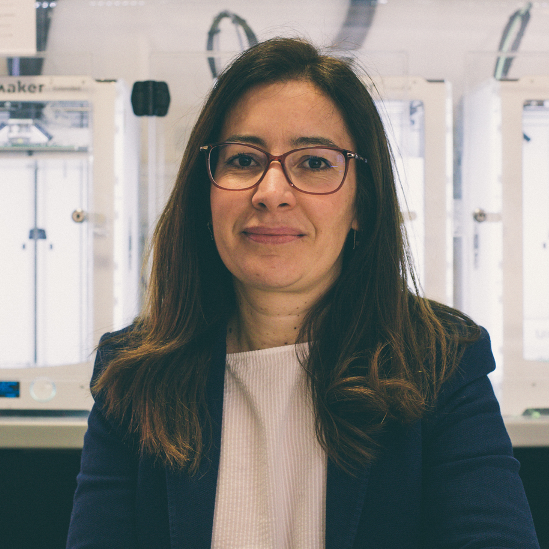
Instituto de Ciencia y Tecnología del Carbono, INCAR-CSIC, Oviedo, Spain;Dr. Victoria García Rocha is a Tenured Scientist at the Institute of Carbon Science and Technology (INCAR-CSIC), in parallel she is Honorary Research Fellow at Cardiff University (UK) where she spent four years as Lecturer and Researcher in the School of Engineering and she currently supervises 3 PhD students. Dr Rocha has extensive national and international experience and she has worked both in industry and in academia, at different United Kingdom Universities, such as the Universities of Bath and Cardiff and the Imperial College (London). Dr Rocha´s research has been devoted to advance the fields of carbon-based materials, carbon-ceramics composites and ceramic composites, with especial focus on disclosing the relationship between the chemical structure and bulk properties of carbon-based materials, advanced ceramics and composites. She has worked on synthesis, scale up and processing technologies with the aim of finding new composite materials for different applications, primarily energy devices and advanced structural ceramics. She has developed new petroleum binders for magnesia-carbon refractories, sol-gel synthesis, processing and sintering of a wide variety of ceramic nanoparticles and the fabrication of advanced structural composites by spark plasma sintering. Lately, Dr Rocha focuses her materials processing expertise on tailoring carbon and catalyst precursors to enable highly dispersed sustainable electrocatalysts for water splitting or development highly conductive carbon-based electrodes by direct ink writing (3D printing) or freeze casting for redox flow batteries and novel electrolysers.
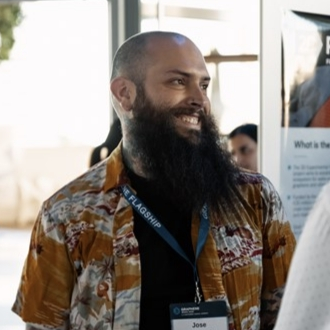
Dr. José María Munuera Fernández
Instituto de Ciencia y Tecnología del Carbono, INCAR-CSIC, Oviedo, Spain;Dr. José María Munuera Fernández is a postdoctoral researcher at the Institute of Carbon Science and Technology (INCAR-CSIC) as part of the MOMENTUM program. He holds a PhD in Materials Science from the University of Oviedo (2019). His research focuses on two-dimensional (2D) materials, particularly those produced by electrochemical exfoliation, with applications in energy storage, catalysis, and printed electronic devices. He carried out postdoctoral fellowships with renowned groups, including Professor Casiraghi at the University of Manchester and Professor Jonathan Coleman at Trinity College Dublin, where he worked on the development of 2D material preparation processes and their applications in biomedical and printed devices, before joining INCAR-CSIC in 2024 to work on the development of aqueous zinc batteries. Dr. Munuera has published 36 high-impact articles and received over 1,500 citations.


24th Nanomaterials Webinar
Nanomaterial Ink Printing
In this section, you will find the recordings of this webinar to watch, re-watch and share with your colleagues!
Different strategies for printing and preparing coatings from nanomaterial-based inks are discussed. The nanomaterials involved are of both carbonaceous (e.g., graphene, graphene oxide) and non-carbonaceous (2D transition metal dichalcogenides) nature. The printing methods dealt with are mainly direct ink writing and inkjet printing, although the properties of coatings prepared from 2D material inks by spray coating and Langmuir–Schaefer deposition are also described. The main intended use for the printed architectures discussed are as electrodes for electrochemical energy storage applications.
The 15th Anniversary of Nanomaterials—–Surface Chemistry of Graphene and Graphene Oxide
Edited by Dr. Silvia Villar-Rodil
Deadline for manuscript submissions: 31 December 2025
https://www.mdpi.com/journal/nanomaterials/special_issues/HUMZU6MJ71
Two-Dimensional Nanomaterials Beyond Graphene
Edited by Dr. Maiyong Zhu
Deadline for manuscript submissions: 20 November 2025
https://www.mdpi.com/journal/nanomaterials/special_issues/7A6398M9T0
2D Materials for Energy Conversion and Storage
Edited by Dr. Yutong Gong
Deadline for manuscript submissions: 26 December 2025
https://www.mdpi.com/journal/nanomaterials/special_issues/J641LCS1XF
Carbon Nanoarchitectures for Electrochemical Energy Storage and Battery Applications
Edited by Prof. Dr. Wei-Ren Liu
Deadline for manuscript submissions: 10 February 2026
https://www.mdpi.com/journal/nanomaterials/special_issues/S80PM0V474