
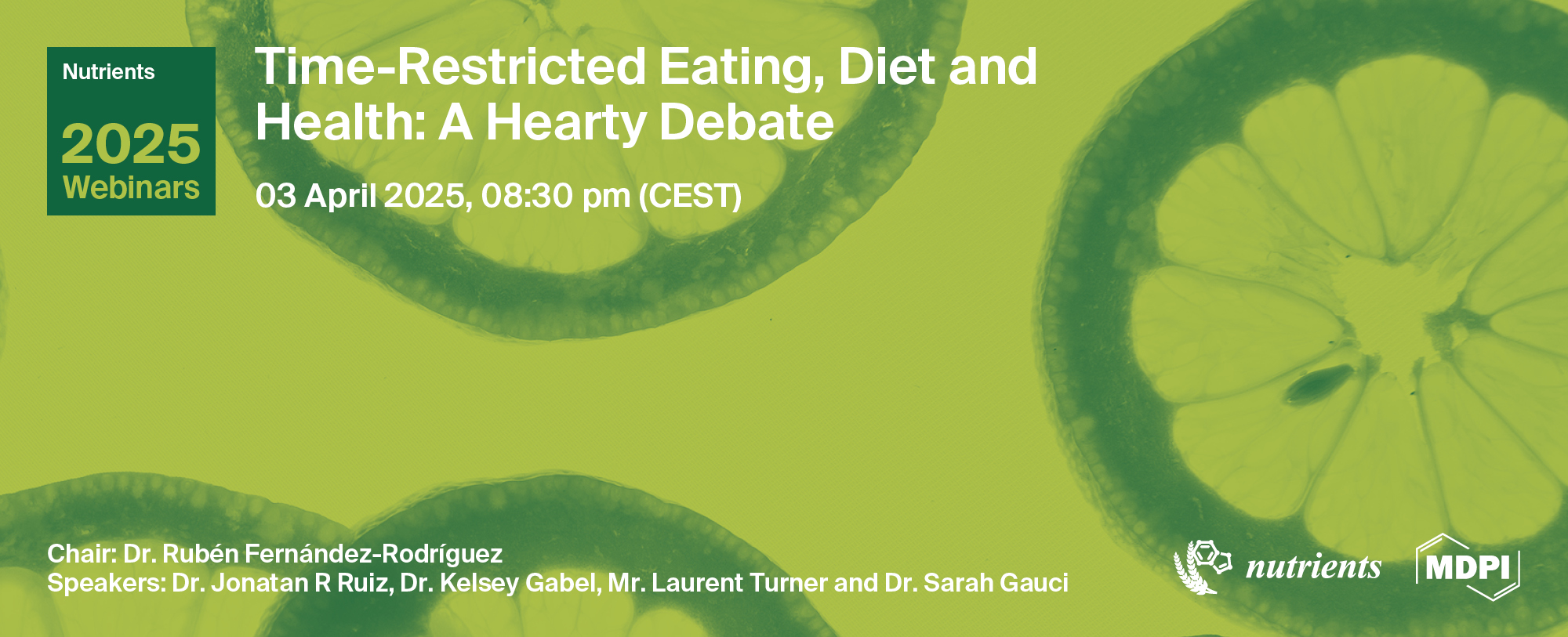
Nutrients Webinar | Time-Restricted Eating, Diet and Health: A Hearty Debate
Please feel free to download the webinar Poster in PDF and JPG created by Dr. Rubén Fernández Rodríguez's team.
the chair
Dietary strategies and diet quality play a pivotal role in preventing, reducing and managing cardiometabolic and mental health. During the last decade, time-restricted eating, a dietary strategy that restricts food consumption to a specific time window, typically ranging from 4 to 10 h, has emerged as a simple dietary strategy with a lower burden and higher acceptability in long-term adherence in individuals compared to other approaches while promoting health benefits. Diet quality has been related to a lower risk of cardiovascular diseases and mental health disorders, with promising results of co-treatment of mental health and cardiovascular diseases through nutrition and dietary strategies.
Given the large burden of disease from cardiovascular, metabolic and mental health disorders, research in these areas is necessary for both preventing and reducing their burden. This webinar will provide an overview of time-restricted eating strategies and how this approach and nutrition can counteract cardiometabolic, cardiovascular diseases, and cancer while taking into account mental health. The webinar will provide relevant clinical applications for the public and the research communities.
Date: 3 April 2025
Time: 8:30 pm CEST | 2:30 pm EST
Webinar ID: 822 2749 2384
Webinar Secretariat: journal.webinar@mdpi.com
Meet Our Chair
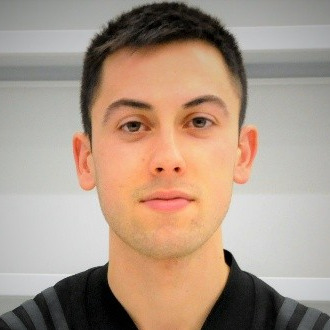
University of Granada, Granada, Spain;Dr. Rubén Fernández-Rodríguez's interests are related to time-restricted eating, exercise, and sustainable and healthy diets that promote planetary health, with a particular focus on mental health.
Meet Our Speakers

Professor of Physical Activity and Health and Director of the Institute of Sport and Health at the University of Granada, Granada, Spain;Dr. Jonatan R Ruiz is a Full Professor of Physical Activity and Health, and Director of the Institute of Sport and Health (iMUDS) at the University of Granada (Spain). His research focuses on the impact of exercise and nutrition on energy metabolism, obesity and cardiovascular health. Ruiz has coordinated several interdisciplinary weight loss and lifestyle intervention studies, resulting in weight loss and improved cardiovascular health in adults with obesity and related comorbidities such as obstructive sleep apnea.

Assistant Professor in Kinesiology and Nutrition at the University of Illinois, Chicago, USA;Kelsey Gabel RD, PhD is an Assistant Professor in Kinesiology and Nutrition at the University of Illinois, Chicago (UIC). Dr. Gabel has been studying alternatives to daily calorie restriction, such as intermittent fasting, on bodyweight and metabolic outcomes for over a decade. Her research focuses on how intermittent fasting may mitigate weight gain and adiposity, adverse effects, and metabolic dysregulation during anti-tumour treatment in women diagnosed with breast cancer. Additionally, she is exploring how different modalities of exercise, combined with intermittent fasting, may improve cardiometabolic health risk and cognitive decline in older adults with obesity.

Associate Research Fellow at the Food & Mood Centre, Deakin University, Geelong, Australia;Sarah is an Associate Research Fellow at the Food & Mood Centre with an interest in cardiovascular health, lifestyle, and mental health. Sarah has a BSc (Psychology and Psychophysiology) and Honours in Psychology. She recently completed her PhD in Health Science at the Centre for Human Psychopharmacology at Swinburne University. Her PhD research explored how dietary patterns are related to cardiometabolic health and cognitive performance in middle-aged and older adults. Sarah’s current research interest is the interrelationship between cardiovascular health, lifestyle, and mental health/cognition. Her research program will explore ways to improve the experience and quality of cardiac rehab for patients with comorbid mental health and cognitive issues. She aims to work with consumers to co-design and develop a lifestyle intervention to support mental health following a cardiovascular event. Sarah is supported by an NHMRC synergy grant (SOLVE CHD). SOLVE-CHD is a five-year program that aims to improve the secondary prevention of heart disease in Australia.
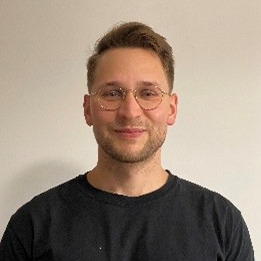
Mr. Laurent Turner
PHD Student at the University of Adelaide, Adelaide, Australia;Laurent is currently a PhD student at the University of Adelaide, and he is part of the Obesity and Metabolism Group led by Dr. Leonie Heilbronn. His primary research interests are at the intersection of nutrition and immunology, and his work will attempt to elucidate how dietary interventions impact immune cell function and immunity in adults with overweight and obesity.


Time-restricted eating (TRE) appears to be a safe, well-tolerated, and feasible dietary approach for adults with overweight, obesity, or at high risk of type 2 diabetes, showing non-severe side effects and slight benefits to cardiometabolic health and body composition, while the specific impact on the immune system needs to be further explored. TRE alone or in combination with exercise might be a promising strategy for patients with cancer. A bidirectional relationship between cardiovascular health and depression is discussed, reinforcing the crucial need for co-designed interventions focused on diet and nutrition during the secondary prevention of cardiovascular disease. Fernández-Rodríguez et al.’s future manuscript will provide a deep understanding of participants' and clinicians’ perceptions and experiences of TRE, highlighting the motivation driving the adoption as well as maintenance of TRE and including the perceived barriers and facilitators from a bio-psycho-sociocultural lens.
The webinar was hosted via Zoom and required registration to attend. The full recording can be found below. In order to learn about future webinars, you can sign up to our newsletter by clicking “Subscribe” at the top of the page.