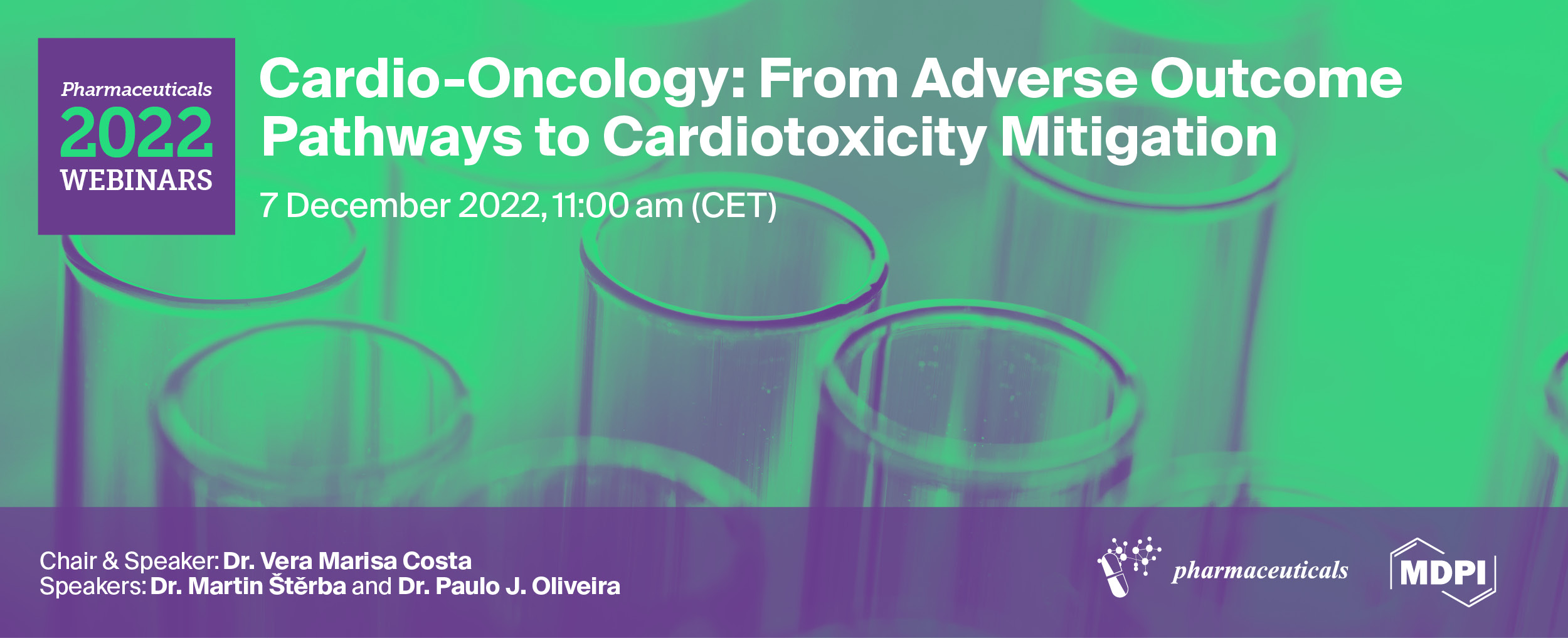
Pharmaceuticals Webinar | Cardio-Oncology: From Adverse Outcome Pathways to Cardiotoxicity Mitigation
Meet Our Speaker
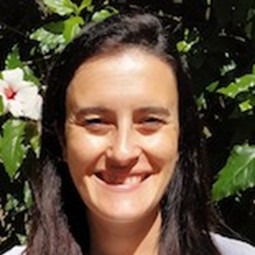
ICETA, Toxicology Laboratory, Faculty of Pharmacy, University of Porto, Portugal;Vera Marisa Costa (VMC) is a Researcher at the Faculty of Pharmacy University of Porto (FFUP), integrated at the excellence center UCIBIO\REQUIMTE. VMC is a Pharmacist with a PhD on Toxicology attributed in 2009 by the Faculty of Pharmacy University of Porto, being the thesis in the field of cardiotoxicity of catecholamines. At present, she holds 100+ international papers in peer-reviewed international journals (Scopus h-index of 34), 2 articles in national journals, and 4 book chapters. Her works impacts in Medical and Health Sciences with emphasis on Pharmacology, Pharmacy and Toxicology, mainly focusing on Onco-Cardiology, Chemobrain and Toxin Toxicity. She was the Principal Investigator on two FCT-funded projects (‘Why is mitoxantrone a poison to the heart? Focus on mitochondria, cytoskeleton, and metabolic bioactivation mechanisms’ and ‘Poisoning the heart with anticancer drugs: is metabolic bioactivation or aging promotion the link to the cardiotoxicity of anticancer drugs?’), being participant in 5 funded national projects and one EU-funded pedagogic project. She is (co)supervisor of 5 PhD students, being co-supervisor of 3 finalized PhD. She has (co)supervised 12 MSc dissertation(s) (plus 4 are ongoing). VMC has pedagogic experience in the Faculties of Pharmacy and Medicine in the University of Porto, CESPU and University of Trás-os-Montes and Alto Douro in the fields of Toxicology, Occupational Medicine and Pharmacology. She is Associated Editor in three international peer-reviewed scientific journals on Pharmaceutical Sciences and Toxicology. In recent years, she has been a Scientific Evaluator of research projects applied for funding on Italy, Poland, Romania and Serbia Scientific Programs and member of several COST actions, with focus on cardiac health.

On Wednesday, 7 December 2022, MDPI and the Journal Pharmaceuticals organized the first webinar on Pharmaceuticals, entitled "Cardio-Oncology: From Adverse Outcome Pathways to Cardiotoxicity Mitigation".
Cardio-oncology is an emergent clinical subject as cardiotoxicity of anticancer treatments is a huge contributor to the morbidity and mortality of cancer survivors. The present webinar focused essentially on the adverse outcome pathways of classic chemotherapy, like doxorubicin and mitoxantrone, and new targeted therapies, while presenting new pharmacological alternatives that can prevent or cure the cardiotoxicity elicited by anticancer treatments.
The presentations were followed by a Q&A and a discussion, moderated by the Chair. The webinar was offered via Zoom and required registration to attend. The full recording can be found here on Sciforum website. In order to stay updated on the next webinars on Pharmaceuticals, be sure to sign up for our newsletter by clicking on “Subscribe” at the top of the page.
Guest Editor: Prof. Dr. Vera Marisa Costa
Deadline for manuscript submissions: 31 May 2023