
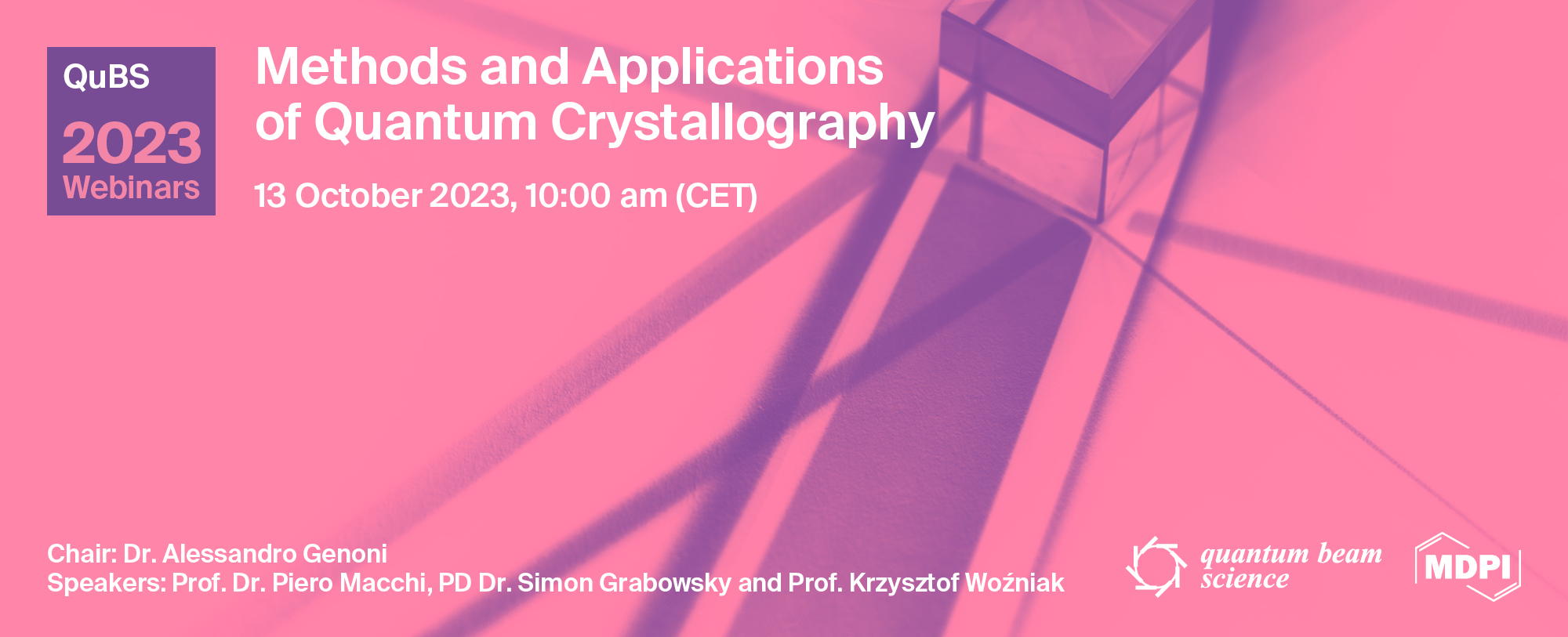
QuBS Webinar | Methods and Applications of Quantum Crystallography
the chair
Quantum Crystallography is an emerging field of science having the goal of studying properties and phenomena that are important for or occur in the crystalline state by exploiting methods strongly rooted on the laws of quantum mechanics. Over the years, many strategies have been proposed to accomplish this task. Among them it is worth mentioning the popular and traditional multipole model techniques for the determination of experimental charge densities form high-resolution X-ray diffraction data, the quantum chemical topological approaches for the analysis and interpretation of experimental/theoretical electron densities, the X-ray restrained/constrained wavefunction fitting approach for the extraction of wavefunctions compatible with measured X-ray structure factors, and the Hirshfeld atom refinement strategy for very accurate determinations of crystal structures. In this webinar, an overview of recent Quantum Crystallography research will be outlined, with a special focus on different applications of modern quantum crystallographic tools to different scientific problems, such as the investigation of chemical bonding, spintronics and high-pressure crystallography.
Meet Our Chair
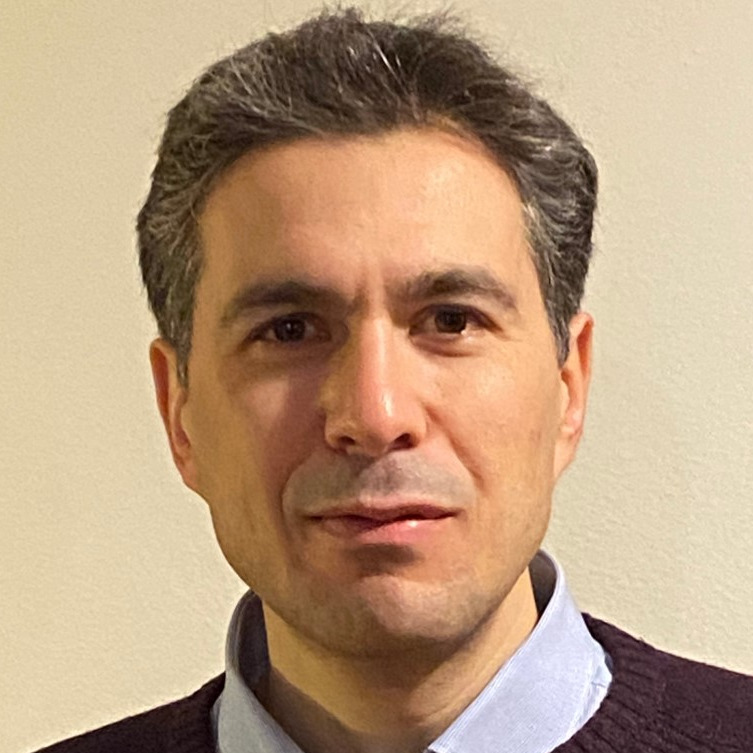
Laboratory of Theoretical Physics and Chemistry, CNRS & University of Lorraine, France;Dr. Alessandro Genoni is a researcher in the field of theoretical chemistry with expertise in quantum crystallography. He obtained his Laurea degree, equivalent to both a Bachelor’s and Master’s degree, in Chemistry from the University of Milan (Italy) in 2003. Dr. Genoni has afterwards pursued a Ph.D. in Chemistry at the University of Milan under the supervision of Prof. Maurizio Sironi, successfully defending his thesis entitled "Development and Application of Methods Based on Extremely Localized Molecular Orbitals" in 2006. After his Ph.D., Dr. Genoni embarked on a fruitful research journey as a Post-Doctoral Researcher. From 2006 to 2009, he joined the Kenneth M. Merz Research Group at the Quantum Theory Project of University of Florida in Gainesville, USA. He afterwards assumed a Post-Doctoral Researcher posi-tion from 2009 to 2011 in the Giorgio Colombo Research Group at the CNR – Institute of Chemistry of Molecular Recognition in Milan, Italy. Since 2011, Dr. Genoni has been a permanent CNRS Researcher at the Laboratory of Theoretical Physics and Chemistry of the University of Lorraine, located in Metz and Nancy (France), where he also obtained the French Habilitation to Direct Research in September 2018. His ongoing research focuses on the de-velopment of innovative methods within the framework of quantum crys-tallography. Additionally, Dr. Genoni serves as Chair (2022-present) of the Special Interest Group 2 (SIG-2) on Quantum Crystallography within the European Crystallographic Association. With his extensive research back-ground, Dr. Genoni continues to make significant contributions to the ad-vancement of theoretical chemistry, and particularly to the emerging field of quantum crystallography.
Meet Our Speakers
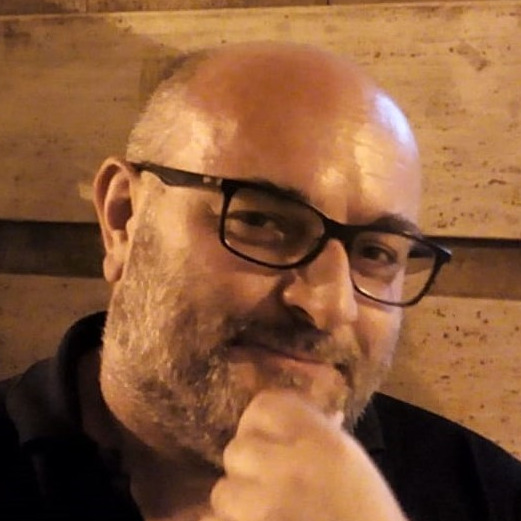
Department of Chemistry, Materials and Chemical engineering, Politecnico di Milano, Italy;Prof. Dr. Piero Macchi is a highly accomplished chemist and professor specialized in Quantum Crystallography, Chemical Crystallography and Structural Investigations. He earned his Ph.D. from the University of Milan in 1999, focusing on Electron Density Studies and Low Temperature Crystallography of Organometallic Compounds under the guidance of Prof. A. Sironi. In 2009, he obtained his Habilitation from the University of Bern, with a thesis on Structural Investigations on soft Bonds. With a distinguished academic career, Prof. Dr. Macchi held various positions at esteemed institutions. He gained experience as a Technical Assistant at the Structural Chemistry Department of the University of Milan from 1998 to 1999 and later served as an Adjunkt at the University of Aarhus from 1999 to 2000, working in Prof. F. K. Larsen's research group. Prof. Dr. Macchi held a permanent position as Assistant Professor at the Structural Chemistry Department of the University of Milan from 2002 to 2008. Subsequently, he joined the Department of Chemistry and Biochemistry at the University of Bern, where he served as Privat Dozent from November 2009 to April 2018 and as Associate Professor from April 2018 until the Academic Year 2018-2019. In recognition of his expertise, Prof. Dr. Macchi was also selected for an Associate Professorship in Inorganic Chemistry at the University of Rome in 2012, but he declined the position due to his existing commitments. From 2018 to 2022, Prof. Dr. Macchi held the position of Associate Professor at the Department of Chemistry, Materials, and Chemical Engineering of the Polytechnic of Milan (Italy). Since 2022, he has been Full Professor at the same institution. Prof. Dr. Macchi has given exceptional contributions to the field of Quantum Crystallography, Chemical Crystallography and Structural Investigations. These research achievements, coupled with his extensive teaching experience, has established him as a respected authority in the field of chemistry.
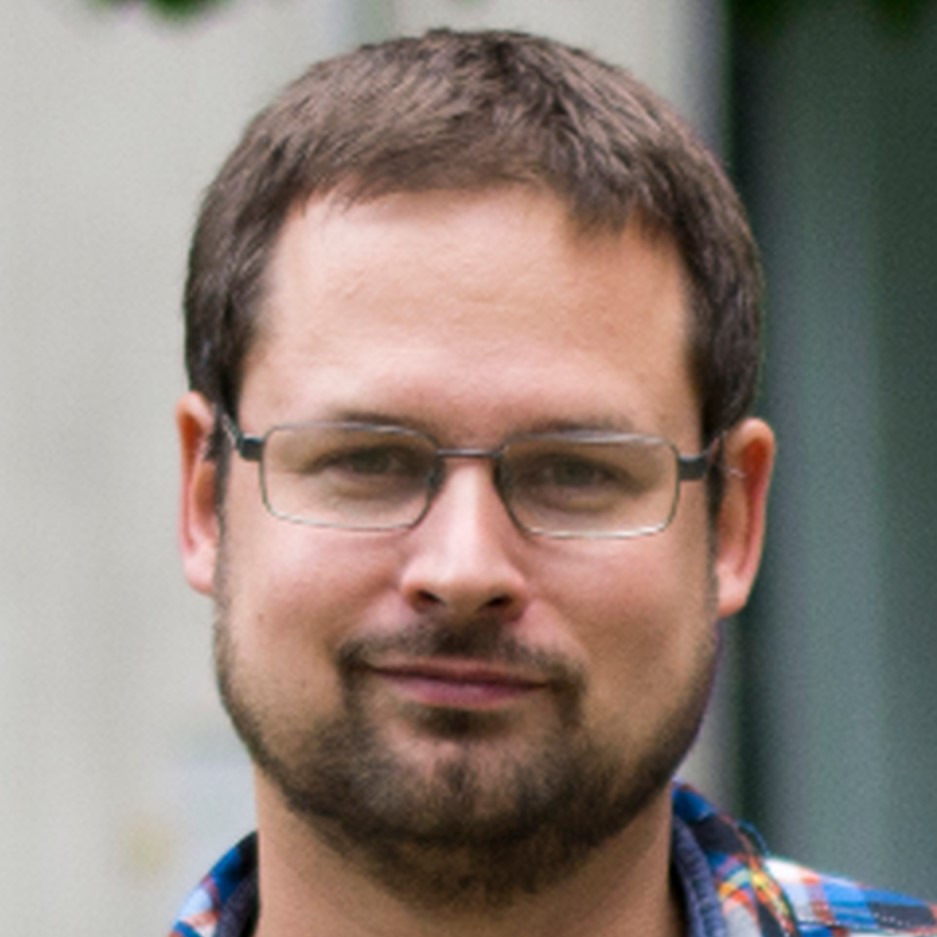
Dr. Simon Grabowsky
Department of Chemistry, Biochemistry and Pharmaceutical Sciences, University of Bern, Switzerland;PD Dr. Simon Grabowsky is a researcher in physical and structural chemistry, serving as a Research Group Leader and Privatdozent at the Department of Chemistry, Biochemistry, and Pharmaceutical Sciences at the University of Bern since August 2019. Prior to this, he held the position of Extraordinary Professor at the University of Bremen from October 2015 to July 2019, where he also held an Emmy Noether Fellowship of the German Research Foundation. His independent academic journey started as an Australian Postdoctoral Fellow at the University of Western Australia from January 2011 to January 2014, followed by an Assistant Research Professor position at the same institution. Dr. Grabowsky completed his doctoral studies at the Free University of Berlin, obtaining a Ph.D. in Chemistry in February 2010. His doctoral research, conducted under the guidance of Prof. Dr. Peter Luger took place in the field of experimental electron density determination via high-resolution single-crystal X-ray diffraction. In recognition of his extensive contributions to the field, he successfully completed his habilitation in Physical Chemistry at both the University of Bremen, Germany, in April 2019 and the University of Bern in October 2019.
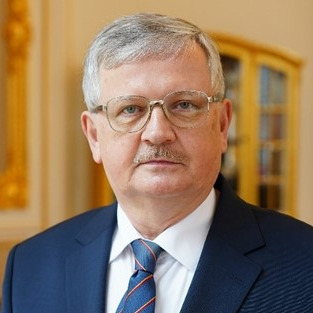
Department of Chemistry, University of Warsaw, Poland;Prof. Dr. Krzysztof Woźniak is a highly accomplished and distinguished professor in the field of chemistry, with extensive qualifications and an impressive research background. Since 2002, Dr. Woźniak has held the position of Full Professor at the Chemistry Department of the University of Warsaw (UW), Poland. His academic journey began with a Ph.D. in 1992, focusing on the influence of H-bonding on molecular properties, under the guidance of Professor Tadeusz Krygowski. His exceptional research work earned him the Prime Minister Prize for the Best Habilitation in 1998, following his Habilitation thesis on weak interactions in organic solids. Throughout his career, Prof. Dr. Woźniak has undertaken significant academic ventures, including a postdoctoral position at the Chemistry Department of Cambridge University (UK) in 1993-1994 and a sabbatical stay at the same institution in 2015. He also conducted over 30 shorter visits at various research institutions abroad. In recent years, Prof. Dr. Woźniak has held key leadership positions at UW, demonstrating exceptional expertise and organizational skills. Since 2008, he has served as the Head of the Crystallochemistry Laboratory and the Laboratory for Structural Research at the Chemistry Department. Additionally, since 2016, he has been been at the helm of the Laboratory for Structural and Biochemical Research at the UW Biological and Chemical Research Centre. Prof. Woźniak's contributions extend beyond academia, as he also served as a research expert at WPD Pharmaceuticals in Warsaw (Poland) from 2018 to 2020. He also currently holds the prestigious role of Head of the Cryo-Electron Microscopy and Electron Diffraction Core Facility at the Center for New Technologies in Warsaw, beginning in 2020. Prof. Woźniak’'s remarkable career showcases his unwavering dedication to advancing the field of chemistry through pioneering research and leadership in various scientific institutions.

Recording: