
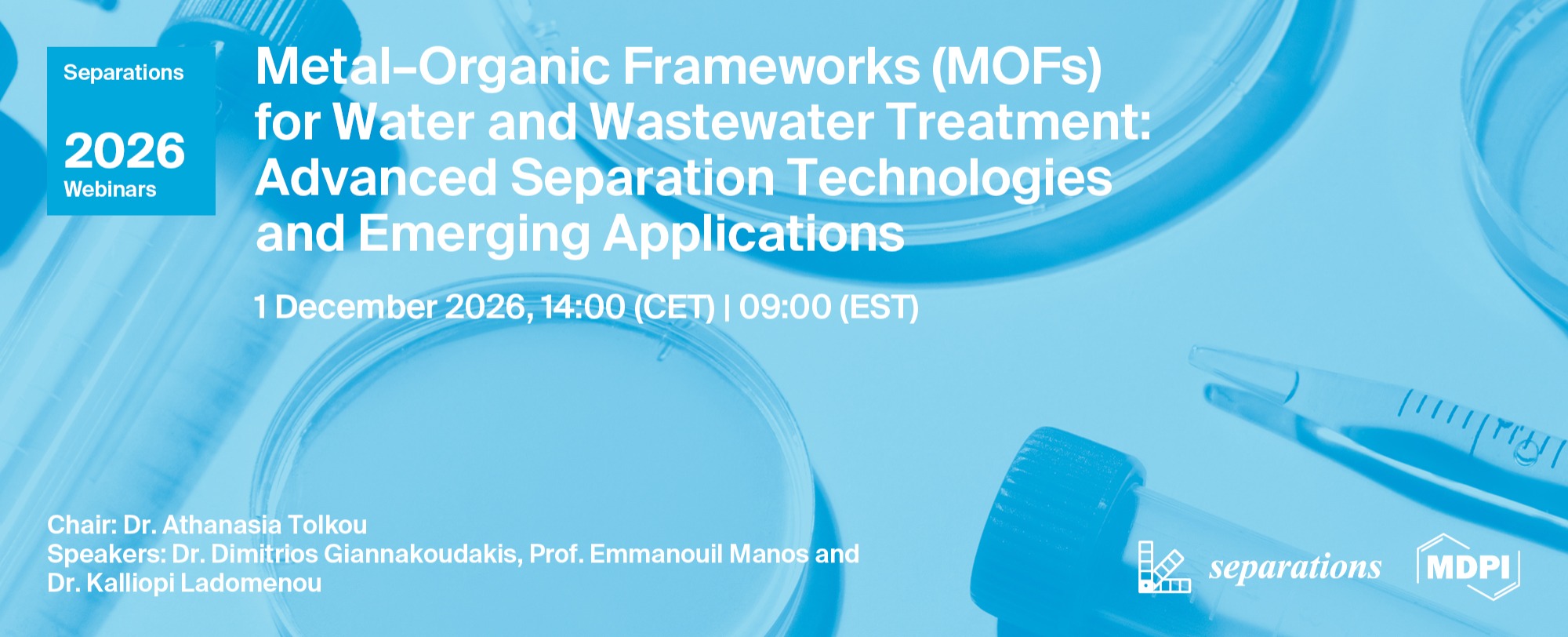
Separations Webinar | Metal–Organic Frameworks (MOFs) for Water and Wastewater Treatment: Advanced Separation Technologies and Emerging Applications
the chair
Separations Webinar
Metal–Organic Frameworks (MOFs) for Water and Wastewater Treatment: Advanced Separation Technologies and Emerging Applications
Metal–Organic Frameworks (MOFs) have emerged as highly versatile materials for advanced separation and environmental applications, owing to their tunable structures, high surface areas, and diverse chemical functionalities. Their unique properties offer promising opportunities for addressing current challenges in water and wastewater treatment, particularly in the removal of emerging contaminants and the development of advanced separation technologies.
This webinar, organized in connection with the Special Issue “Metal–Organic Frameworks (MOFs) Materials in Separation Science and Technology,” will bring together researchers working on the development and application of MOF-based materials for water and wastewater treatment. The webinar will highlight recent advances in adsorption, membrane separation, and other innovative MOF-based treatment approaches, while also discussing emerging applications, current challenges, and future perspectives.
The event will provide a platform for knowledge exchange and scientific discussion, bringing together researchers and professionals interested in the development of advanced MOF-based separation technologies for water
Date: 1 December 2026
Time: 14:00 CET | 08:00 EST | 21:00 CST Asia
Webinar ID: 830 0523 8978
Webinar Secretariat: journal.webinar@mdpi.com
Meet Our Chair

Department of Chemistry, Democritus University of Thrace, Greece;Dr. Athanasia Tolkou is an Assistant Professor in the Department of Chemistry, Democritus University of Thrace (DUTH). Her research interests include wastewater treatment; municipal, industrial, and hazardous wastewater treatment technologies; recovery of nutrients (phosphates, nitrates); and removal of ions, heavy metals, and dyes from water and wastewater. Her scientific work has been published in more than 100 Papers in international journals, while she has published 22 chapters in scientific books. She is the Guest Editor of nine Special Issues, and she is a reviewer for over 40 international scientific journals (Elsevier, Springer, ACS, RSC, Wiley, Taylor & Francis, MDPI, etc.). She has also participated in about 18 research projects related to her field. She has research experience at the Technical University of Hamburg (Germany), Laboratory of Water Resources and Water Supply; at the University of Insubria, Varese (Italy), Department of Theoretical and Applied Sciences; and at the University of Duisburg-Essen (UDE), Germany, Mechanical Process Technology/Water Technology. She also has teaching experience in the Department of Chemistry of the University Maria Curie-Skłodowska, Lublin, Poland. She received a scholarship from the Onassis Foundation to participate in a summer school (lectures in physics and chemistry for Nanoscience and Nanotechnology, focusing on graphene and other 2D materials. Dr. Tolkou was elected as Associate Member of the Chemistry and Environment Division (VI) of the International Union of Pure and Applied Chemistry (IUPAC). More info: https://tolkou9.webnode.gr/.
Meet Our Speakers
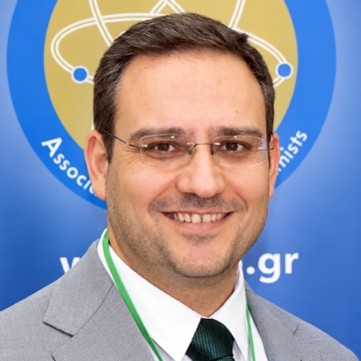
Asst. Prof. Dimitrios Giannakoudakis
Faculty of Chemistry, Maria Curie-Sklodowska University (UMCS), Lublin, Poland;Dr. Dimitrios A. Giannakoudakis is an Assistant Professor at the Faculty of Chemistry of Maria Curie-Skłodowska University (UMCS), Poland, and Principal Investigator of the SONATA and OPUS research projects. He studied Chemistry at Aristotle University of Thessaloniki (AUTH), where he earned two MSc degrees, and obtained his PhD in Nanotechnology and Materials Chemistry from the City University of New York (CUNY) in 2017. He subsequently held research and teaching appointments at the City College of New York, AUTH, and the Institute of Physical Chemistry in Warsaw. His research focuses on the development of multifunctional composite nanomaterials for advanced catalytic technologies integrating photo-, thermo-, and sonocatalysis, with applications in biomass valorization, plastics upcycling, environmental remediation, protection against hazardous chemicals, and energy-related processes. He has authored over 155 scientific publications, attracting more than 7,000 citations, and edited eight books. Included in the Stanford/Elsevier World's Top 2% Scientists list since 2021. He currently serves as Chair of the Division of Physical Chemistry of the European Chemical Society (EuChemS) as well as a member of the EuChemS Executive Board. During 2026-2027, he will be a Visiting Scholar at Yale University, working with Professors Paul T. Anastas and Julie B. Zimmerman on multi-energy catalytic technologies for sustainable plastics upcycling, guided by Green Chemistry principles.
Department of Chemistry, University of Ioannina, Greece;Emmanouil Manos is a Professor in the Department of Chemistry at the University of Ioannina, Greece. He received his Ph.D. in Inorganic Chemistry from the University of Ioannina and completed postdoctoral research at Northwestern University and the University of Cyprus. His research focuses on synthetic inorganic and solid-state chemistry, with emphasis on the design and development of porous functional materials—such as metal–organic frameworks (MOFs) and metal sulfides—for ion-exchange separations, heavy-metal remediation, radioactive waste management, luminescence sensing, and gas sorption. He has authored or co-authored over 135 peer-reviewed articles in high-impact international journals.
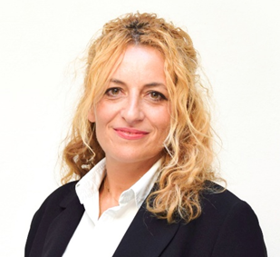
Department of Chemistry, Democritus University of Thrace, Greece;Kalliopi Ladomenou is an Assistant Professor of Inorganic Chemistry at the Department of Chemistry, Democritus University of Thrace, Greece. She received her Ph.D. in Chemistry from the University of Liverpool, UK. Her research focuses on the design, synthesis, and characterization of porphyrin-based molecular systems and advanced functional nanomaterials for energy and environmental applications. Her main research interests include photocatalytic hydrogen evolution, CO2 reduction, photocatalytic degradation of environmental pollutants, and water treatment. Her work also explores metal–organic frameworks (MOFs), carbon dots, and hybrid photocatalytic materials, with an emphasis on sustainable technologies for clean energy production and environmental remediation. Dr. Ladomenou has published extensively in high-impact journals, authored a book chapter, holds a patent, and serves as a reviewer and research proposal evaluator.
-6afa793b51c8a.png)