Symmetry Webinar | Chemistry: Symmetry/Asymmetry
the chair
19th Symmetry Webinar
Chemistry: Symmetry/Asymmetry
Symmetry and asymmetry represent a special field in chemistry. What are the typical subfields in this discipline?
Certainly asymmetric molecules, optical activity, racemates, resolution into enantiomers, enantioselective syntheses, chiral P-ligands, symmetry elements, X-ray crystallography, theoretical calculations, molecular orbitals are the most important components of this field.
The intention of the management of Symmetry (Chemical Section is to popularize this limited segment of chemistry, and to get closer the scientists.
I do hope this short webinar will promote the development of the related field.
Date: 31 May 2024
Time: 12:30 pm CET | 06:30 pm CST Asia
Webinar ID: 819 5585 5332
Webinar Secretariat: journal.webinar@mdpi.com
Meet Our Chair
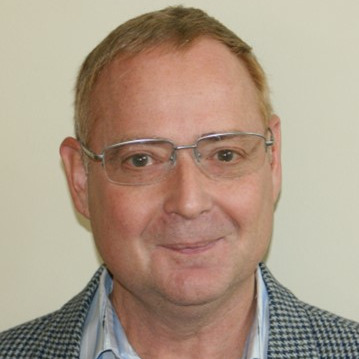
Department of Organic Chemistry and Technology, Budapest University of Technology and Economics, Hungary;György Keglevich graduated from the Technical University of Budapest (TUB) in 1981. He got PhD (1984), DSc (1994) and Dr Habil (1995) degrees. He has been the Head of Department of Organic Chemistry and Technology for 22 years (1999– 2021). He developed P-heterocyclic research in the subject of 6- and 7-membered, as well as bridged P-heterocycles. Additional research interests include the modification of the P-functions, and mechanisms. He also deals with environmentally friendly (“green”) chemistry embracing microwave chemistry, ionic liquids, new catalysts, selective syntheses, flow chemistry and optimization (“greening”) of syntheses. He took also part in pharmaceutical industrial projects marked by 3 patents. He is the author or co-author of 670 papers including 42 review articles, 3 books and 52 book chapters. His h-index is 47. 21 PhD degrees were born with his supervision, 3 degrees are in process. He is the Editor-in Chief of Curr. Org. Chem., founder E-I-C of Curr. Green Chem., and the Section-E-I-C of the “Chemical Section” of Symmetry. He is Associate Editor for Curr. Org. Synth., Lett. in Org. Chem., Lett. in Drug Design and Discovery and Heteroatom Chem. He is Editorial Board Member for Molecules, Green Processing and Synthesis, and Phosphorus, Sulfur, Silicon. He is the member of the Steering Committee of International Conference of Phosphorus Chem. (ICPC). The 22. ICPC was arranged in Budapest/Hungary in 2018 under his chairmanship. Presently he is the “Trustee of the Rector” on sustainable and green affairs.
Meet Our Speakers
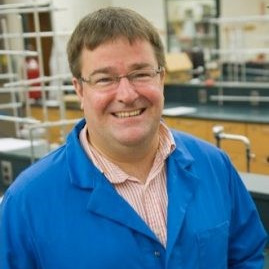
College of Science, Northeastern University, USA;George O’Doherty was born in Kilkenny Ireland in 1966, the son of two organic chemist. The went on to pursue the family business, receiving his undergraduate degree in 1987 from RPI working in the labs of Professor Alan R. Cutler. After earning his Ph.D. with Professor Leo A. Paquette at OSU in 1993 he pursued postdoctoral studies with first Professor Barry M. Trost at Stanford and the Anthony G. M. Barrett. He began his independent career at University of Minnesota in 1996 and in 2002, he moved to West Virginia University. He moved again in 2010, to Northeastern University where he has risen to the rank of Professor. His laboratory is interested in the use of asymmetric catalysis for the synthesis and medicinal chemistry study of biological important carbohydrate and natural products. These stereodivergent asymmetric syntheses enable novel Stereochemical-Structure Activity Relationship (S-SAR) studies of natural structures that nature in general does not provide.
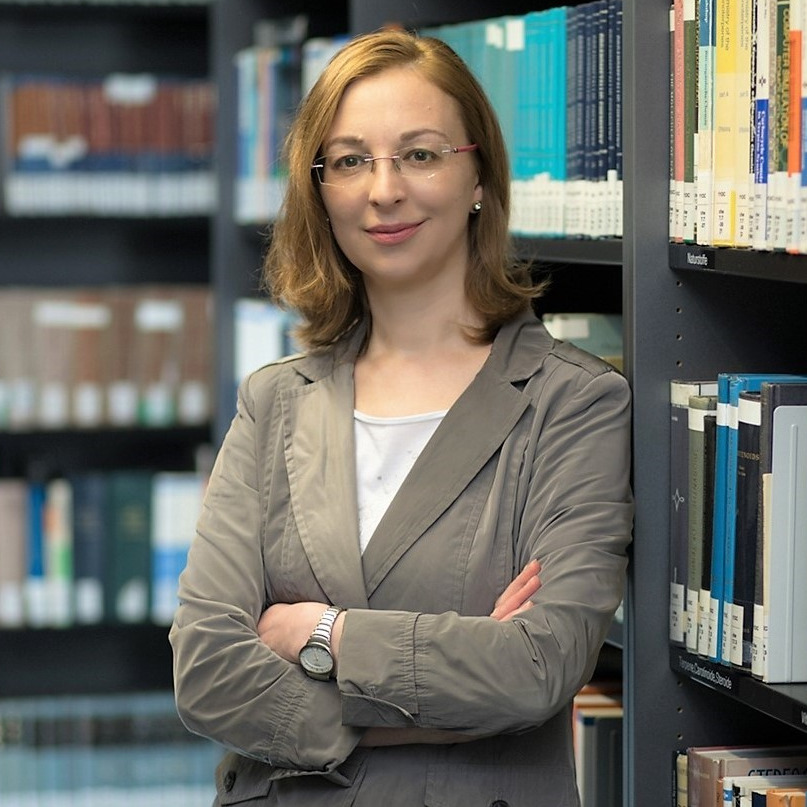
Department of Chemistry and Pharmacy, Friedrich-Alexander-University of Erlangen-Nürnberg, Germany;Svetlana B. Tsogoeva graduated with Distinction from St. Petersburg State University, where she completed her doctoral thesis supported by Procter & Gamble. After postdoctoral research at Johann Wolfgang Goethe University, Frankfurt am Main, Germany, she joined in July 2000 the Degussa AG Fine Chemicals Division. She was appointed in January 2002 as the first Junior Professor in Germany at the Georg-August-University of Göttingen, and in February 2007, as a Professor of Organic Chemistry at the Friedrich-Alexander University of Erlangen-Nürnberg, Germany. Her research spans topics from catalysis to medicinal chemistry. She is an Editorial/Advisory Board Member for ACS Med. Chem. Lett, Pharmaceuticals, Scientific Reports, Symmetry, and ChemPhysChem. In 2024, she was appointed Senior Editor for the ACS's flagship journal, ACS Central Science.

The webinar was entirely dedicated to the subject of nonlinear differential and integral equations. Special attention was paid to infinite systems of differential and integral equations. Particularly, the basic and essential facts concerning those systems were presented in order to enable participans to become familiar with that new branch of the theory of equations in questions.
The full recording can be found below. In order to learn about future webinars, you can sign up to our newsletter by clicking “Subscribe” at the top of the page.
"Chemistry: Symmetry/Asymmetry—Feature Papers and Reviews"
Edited by György Keglevich
Submission deadline: 31 December 2024