
Targets Webinar | Multidisciplinary Approach to Oral Cavity Cancer: A Hard Enemy
the chair
Oral Cavity Cancers (OCCs) account for 3% of all malignancies, are the most frequent squamous cell carcinoma of the head and neck (SCCHN), and are among those with the worst prognosis, with an overall survival (taking all stages of the disease into account) of less than 15% at 5 years. OCCs are very often related to tobacco smoking, alcohol consumption, and repeated oral trauma, as well as betel leaf chewing. From a genetic point of view, they are often polyclonal tumors, characterized by a high tumor mutational burden (TMB) and almost always by prognostically unfavorable mutations, such as the TP53 mutation. From an immunological standpoint, OCCs are characterized by a highly immunosuppressed tumor microenvironment (TME), that is, a microenvironment that is poor in cytotoxic T lymphocytes and rich in regulatory T lymphocytes. Overall, OCCs respond poorly to both chemotherapy, radiotherapy, and immunotherapy. For this reason, international guidelines often recommend surgery, even in the most advanced stages. Overall, the only truly effective therapeutic strategy remains early diagnosis.
Date: 14 October 2025
Time: 10:00 am CEST | 4:00 pm CST Asia
Webinar ID: 899 3035 4187
Webinar Secretariat: journal.webinar@mdpi.com
Meet Our Chair
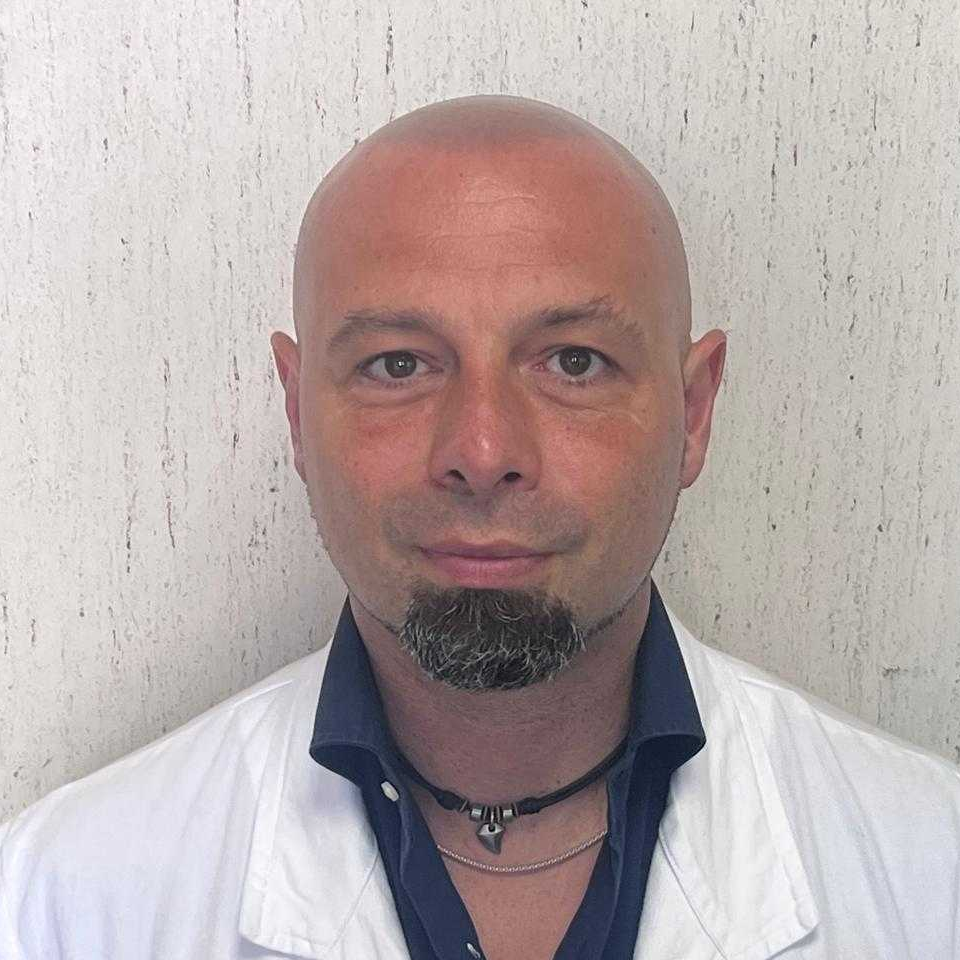
Istituto Nazionale Tumori di Napoli, IRCCS “G. Pascale”, Napoli, Italy;Francesco Perri is a medical oncologist. He worked at IRCCS Fondazione G Pascale of Naples from 2008 to 2013 and attended the Department of Radiation Oncology at University of Naples Federico II from 2013 to 2014. Francesco Perri worked at Medical Oncology Unit POC SS Annunziata of Taranto from July 2014, for a total time of 4 years, acquiring particular abilities to manage lung cancer, breast cancer, prostate cancer and targeted therapies for several solid tumors. He actually works at IRCCS G Pascale at the Department of Head/Neck and Sarcoma Oncology. He has got particular skills in the field of Head and Neck Oncology, Translational Research, Radiation Oncology, Biomarkers and Clinical Trials Management. Currently, Francesco Perri is the Chief of the Head and Neck Clinical and Experimental Oncology Unit at IRCCS Pascale and he has an high Specialization in Translational Research. Francesco Perri is author of about 190 published papers.
Meet Our Speakers
'%3e%3cpath%20d='M12.6647%2010.9104C12.4176%2010.325%2012.0589%209.7933%2011.6088%209.34485C11.16%208.89511%2010.6283%208.53653%2010.0432%208.28891C10.038%208.28629%2010.0327%208.28498%2010.0275%208.28236C10.8437%207.69282%2011.3743%206.73252%2011.3743%205.64907C11.3743%203.85423%209.92005%202.40002%208.12522%202.40002C6.33038%202.40002%204.87618%203.85423%204.87618%205.64907C4.87618%206.73252%205.40677%207.69282%206.22296%208.28367C6.21772%208.28629%206.21248%208.2876%206.20724%208.29022C5.62031%208.53783%205.09365%208.89287%204.64167%209.34616C4.19192%209.79496%203.83334%2010.3266%203.58573%2010.9117C3.34247%2011.4846%203.21128%2012.0987%203.19925%2012.721C3.1989%2012.735%203.20135%2012.7489%203.20646%2012.7619C3.21157%2012.7749%203.21924%2012.7868%203.22901%2012.7968C3.23877%2012.8068%203.25045%2012.8148%203.26334%2012.8202C3.27623%2012.8256%203.29007%2012.8284%203.30406%2012.8284H4.09012C4.14776%2012.8284%204.19362%2012.7825%204.19493%2012.7262C4.22113%2011.7148%204.62726%2010.7676%205.34519%2010.0497C6.08802%209.30686%207.07452%208.89811%208.12522%208.89811C9.17592%208.89811%2010.1624%209.30686%2010.9052%2010.0497C11.6232%2010.7676%2012.0293%2011.7148%2012.0555%2012.7262C12.0568%2012.7839%2012.1027%2012.8284%2012.1603%2012.8284H12.9464C12.9604%2012.8284%2012.9742%2012.8256%2012.9871%2012.8202C13%2012.8148%2013.0117%2012.8068%2013.0214%2012.7968C13.0312%2012.7868%2013.0389%2012.7749%2013.044%2012.7619C13.0491%2012.7489%2013.0515%2012.735%2013.0512%2012.721C13.0381%2012.0947%2012.9084%2011.4856%2012.6647%2010.9104ZM8.12522%207.90243C7.52388%207.90243%206.95792%207.66793%206.53214%207.24215C6.10636%206.81636%205.87185%206.2504%205.87185%205.64907C5.87185%205.04773%206.10636%204.48177%206.53214%204.05599C6.95792%203.63021%207.52388%203.3957%208.12522%203.3957C8.72655%203.3957%209.29252%203.63021%209.7183%204.05599C10.1441%204.48177%2010.3786%205.04773%2010.3786%205.64907C10.3786%206.2504%2010.1441%206.81636%209.7183%207.24215C9.29252%207.66793%208.72655%207.90243%208.12522%207.90243Z'%20fill='%235D1EE1'/%3e%3c/g%3e%3c/svg%3e)
“Sapienza” University of Rome, Rome, Italy;Francesca De Felice is an Associate Professor of Radiation Oncology at Department of Radiological, Oncological and Pathological Sciences, "Sapienza" University of Rome, Rome, Italy & Consultant Clinical Radiation Oncologist at AOU Policlinico Umberto I, Rome, Italy. She graduated from the Faculty of Medicine of the University of Rome “Sapienza” in 2007. She obtained the license to practice medicine in Italy in 2008. She was specialized in Radiation Oncology at the University of Rome “Sapienza” in 2012. In 2013 she was a medical attendant at the Département de Radiothérapie, Institut de Cancérologie Gustave Roussy, Villejuif-Parigi and in 2014 she spent a period of research at the Division of Clinical Oncology, Guy’s and St. Thomas’ Hospital, King’s College, London, UK. She obtained the PhD degree at the University of Rome “Sapienza” in 2015 and from 2016 to 2023 she was a research assistant professor at the Department of Radiological Sciences, Oncology, and Pathology, University of Rome "Sapienza". She is author of several indexed papers, all in the field of clinical and experimental oncology.

U.O.C. di Odontostomatologia, “AORN A. Cardarelli” Hospital, Naples, Italy;Dr. Agostino Guida, DMD, PhD, MSc in Oral Medicine & Oncology, is a Consultant in Oral Surgery. Author of scientific publication in the field of Oral Medicine, Surgery & Oncology, he mainly focuses on the early diangnosis of Oral Cancer and Oral Potentially Malignant Disorders management enhanced by novel technologies and molecular biomarkers.


1st Targets Webinar
Multidisciplinary Approach to Oral Cavity Cancer: A Hard Enemy
In this section, you will find the recordings of this webinar to watch, re-watch and share with your colleagues!
A virtual meeting (webinar) was held on October 14, 2025, attended by approximately 20 experts in Head and Neck Oncology, Translational Research, Radiotherapy, Molecular Biology, and Oral Pathology from various countries around the world. The meeting was led by Professor Francesco Perri, Chief of the Clinical-Experimental Head and Neck Oncology at the IRCCS Fondazione G. Pascale in Naples, Professor Agostino Guida, an expert in oral pathology at the AORN Antonio Cardarelli in Naples, and Professor Francesca De Felice, Associate Professor at the University of Rome La Sapienza and a specialist in Oncologic Radiation Therapy. The conclusion, which all participants agreed upon, can be summarized in three key points: a) Early diagnosis is crucial in reducing the percentage of patients diagnosed with locally advanced OSCC and thus improving the mOS of OSCC patients. Early diagnosis programs for OPMDs in the community should be implemented in the near future. b) MTD is the only plausible and acceptable strategy for the assessment and treatment of patients diagnosed with OSCC in both early and locally advanced stages, as well as recurrent/metastatic stages. c) Better genetic/biomolecular patient selection is desirable in the near future to identify predictive factors for treatment response and better select patients.
Multidisciplinary Approach to Oral Cavity Cancer: A Hard Enemy
Edited by Francesco Perri and Agostino Guida
Deadline for manuscript submissions: 20 February 2026
https://www.mdpi.com/journal/targets/special_issues/2S5JB03N9T