
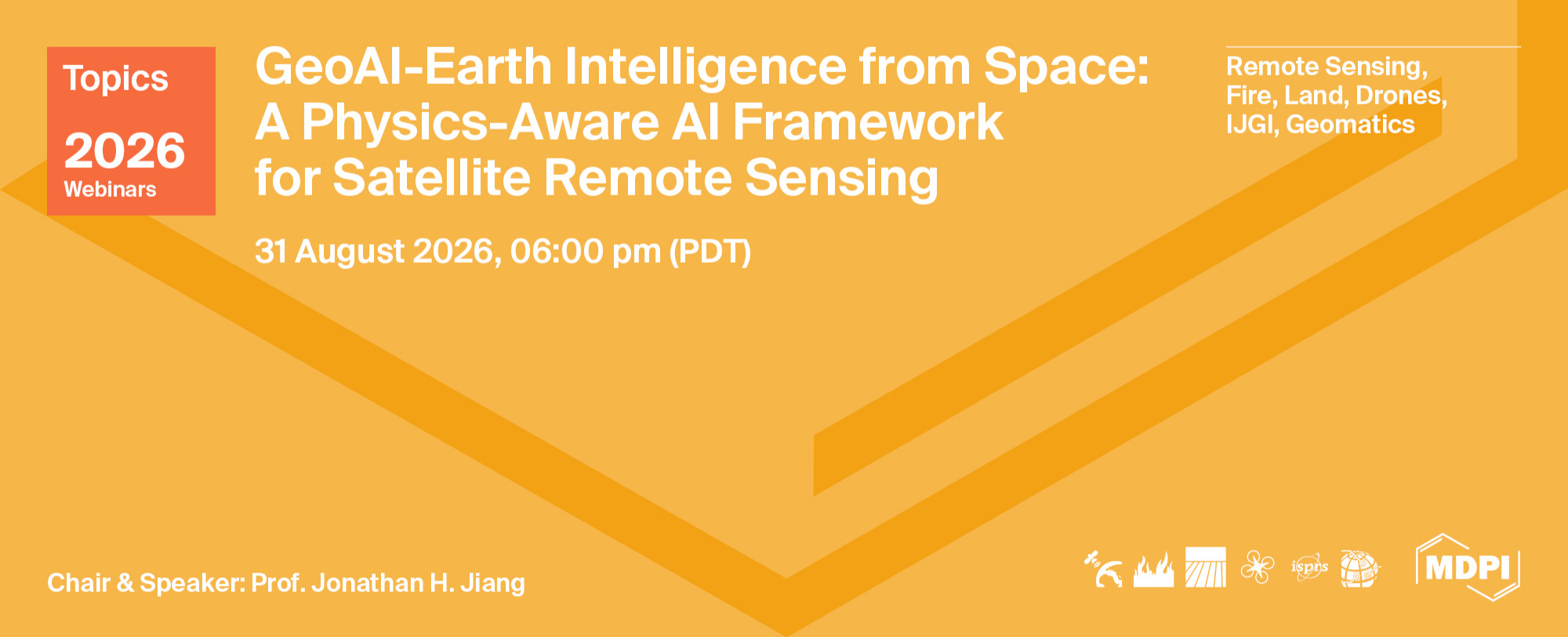
Topics Webinar丨GeoAI-Earth Intelligence from Space: A Physics-Aware AI Framework for Satellite Remote Sensing
the chair
GeoAI – Earth Intelligence from Space: A Physics-Aware AI Framework for Satellite Remote Sensing
Satellite remote sensing has transformed our ability to observe Earth, yet the rapidly growing volume, diversity, and complexity of Earth observation data require a new analytical framework. This seminar will introduce the concept of Earth Intelligence from Space, a physics-aware artificial intelligence framework that integrates satellite observations, physical principles, Earth system models, and advanced machine learning. Rather than treating artificial intelligence solely as a statistical pattern-recognition tool, physics-aware AI incorporates established scientific knowledge, observational constraints, uncertainty quantification, and causal reasoning into the learning process. The seminar will discuss the ways in which this approach can improve the retrieval, interpretation, and prediction of atmospheric, surface, and environmental conditions; strengthen the integration of multisensor and multiplatform observations; and support the development of more transparent and scientifically trustworthy AI systems. In addition, it will explore the longer-term vision of distributed and in-space computing for near-real-time Earth observation, early warning, and decision support.
Date & Time: 31 August 2026 6:00 pm PDT | 1 September 2026 9:00 am CST Asia
Webinar ID: 895 9363 0830
Webinar Secretariat: journal.webinar@mdpi.com
Meet Our Chair
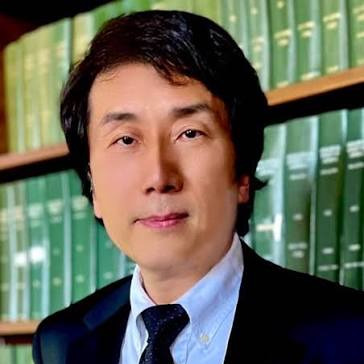
Jet Propulsion Laboratory, Pasadena, CA 91011, United States;Jonathan H. Jiang is an atmospheric and Earth system scientist, editor, and author. He previously served for more than 26 years at NASA’s Jet Propulsion Laboratory, California Institute of Technology, where he was a Principal Scientist and Group Supervisor of the Aerosol and Cloud Group. His research focuses on satellite remote sensing, atmospheric composition, clouds, climate variability, Earth system science, and the application of artificial intelligence to the interpretation of satellite observations. Dr. Jiang served on the steering committee of the U.S. National Academies of Sciences, Engineering, and Medicine study, A Science Strategy for the Human Exploration of Mars. He has also served as President of the Global Environmental Change Section of the American Geophysical Union and was elected a Fellow of the American Meteorological Society. He is currently Editor of MDPI's Remote Sensing and is the author of Avoiding the Great Filter: A Philosophical Journey toward Humanity’s Future.
This is a FREE webinar. After registering, you will receive a confirmation email containing information on how to join the webinar. Registrations with academic institutional email addresses will be prioritized.
Certificates of attendance will be delivered to those who attend the live webinar.
Can’t attend? Register anyway and we’ll let you know when the recording is available to watch.
Register here for free!
|
Chair & Speaker |
Presentation Title |
Time in PDT |
Time in CST Asia |
|
Prof. Jonathan H. Jiang
|
Introduction |
6:00 – 6:10 p.m. |
9:00 – 9:10 a.m. |
|
Earth Intelligence from Space: A Physics-Aware AI Framework for Satellite Remote Sensing |
6:10 – 6:45 p.m. |
9:10 – 9:45 a.m. |
|
|
Q&A Session |
6:45 – 6:55 p.m. |
9:45 – 9:55 a.m. |
|
|
Closing of Webinar |
6:55 – 7:00 p.m. |
9:55 – 10:00 a.m. |
Advancements in Deep Learning for Remote Sensing: Exploring Planetary and Earth Observation Applications
Edited by Riccardo La Grassa and Ignazio Gallo
Deadline for manuscript submissions: 31 August 2026
Chinese Satellite Remote Sensing Data Processing and Intelligent Analysis
Edited by Jining Yan, Caihong Ma and Yi Zeng
Deadline for manuscript submissions: 15 September 2026
Advances in Optical Sensors Research: Pre-Flight and In-Orbit Characterization, Calibration, Product Validation and Data Applications
Edited by Bahjat Alhammoud, Julia A. Barsi, Camille Desjardins and Steffen Dransfeld
Deadline for manuscript submissions: 31 October 2026