
MDPI World Animal Day Webinar 2026 (Session 1)
In order to commemorate MDPI World Animal Day 2026, MDPI is launching a webinar to encourage researchers to come together, raise awareness for the animal welfare movement, and contribute to the global force working to make the world a better place for all animals.
This year’s theme is “See the World Through Their Eyes”. On a planet increasingly affected by climate change and the consequences of human activity, it is important to remember that we are not the only ones impacted, but animals are as well. We often make decisions and think of the future from a human-centric stance. In this webinar, we invite you to view things from a different perspective, the one of animals.
Date: 5 Oct 2026
Time: 12:00 pm CEST | 6:00 am EDT
Webinar ID: 838 6822 9455
Webinar Secretariat: webinar@mdpi.com
Meet Our Speakers
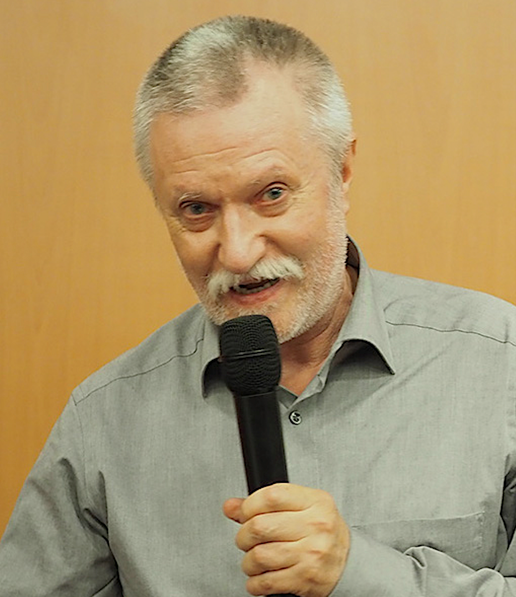
Department of Laboratory Animal Science and Animal Welfare, University of Veterinary Medicine, Hungary;Subcommittee for 3Rs and Alternative Methods, Hungarian Academy of Sciences, Hungary;Prof. Emerite Dr. Sándor Gy. Fekete, DVM, PhD, DSc, is a distinguished veterinary scientist and academic with an extensive career in animal nutrition, laboratory animal science, and animal protection. Over several decades, he has contributed significantly to research, higher education, and professional practice. His work has focused particularly on the nutrition, metabolism, and health of domestic animals, with an emphasis on approaches that support animal welfare, productivity, and the application of 3Rs in the animal experimentation, emphasizing New Approach Methodologies. His main fields of interest are digestibility, body composition, mycotoxins, zoomusicology, odorology, and animal cognition and bioethics. Throughout his career, Dr. Fekete has authored and co-authored numerous scientific publications, including international textbooks, and played an important role in educating generations of veterinary and animal science PhD students. His academic achievements, including his Doctor of Veterinary Medicine degree, PhD, and Doctor of Science of the Hungarian Academy of Sciences title, reflect his long-standing dedication to scholarly excellence. Prof. Fekete’s career represents a valuable bridge between research, education, practical veterinary application and animal welfare.

School of Life Sciences and Sustainability, Virginia Commonwealth University, USA;Dr. Peter Uetz trained as a molecular biologist, specializing in molecular neuroscience (at the Max Planck Institute for Medical Research in Heidelberg, Germany), and then worked on his PhD on vertebrate embryonic development at the European Molecular Biology Laboratory (EMBL, also in Heidelberg, Germany). He founded the Reptile Database while he was a graduate student at EMBL (1993-1997). Subsequently, he focused on microbial functional genomics, working on the function of proteins and protein interaction networks in viruses, bacteria, and yeast, while continuing the development of the Reptile Database. Over the past 10 years or so, he has become increasingly interested in the role of the human population and its impact on nature and animal populations, working with various teams of herpetologists, biogeographers, and the International Union for the Conservation of Nature (IUCN) on the threat status of the more than 12,000 species of reptiles. He has been an associate professor of systems biology at Virginia Commonwealth University since 2011.

Division of Psychology, University of Chester, UK;Dr. Pizza Chow is a Senior Lecturer in the Division of Psychology at the University of Chester (UK). Her educational background is primarily in Psychology, with additional training in Biology. She takes an interdisciplinary approach to addressing research questions, combining laboratory and fieldwork to test hypotheses. She has been working with squirrels for more than 14 years, with a considerable amount of her research examining how they learn, solve problems, and respond to their environments. In addition to squirrels, she also works with bees, pigeons, parrots, and humans. More recently, she has begun exploring the relationship between human psychological wellbeing and experiences of nature. Through this line of work, she aims to contribute to the development of more sustainable urban environments that support the wellbeing of both people and wildlife.
"Cryptic Diversity in Animals at Genetical, Morphological, and Ecological Levels"
Guest Editor: Dr. Manuel Ruiz-García
Deadline for manuscript submissions: 20 December 2026
"Advances in Sustainable Animal Nutrition: Impacts on Physiology, Health, and Production"
Guest Editors: Dr. Christos Eliopoulos and Dr. Dimitrios Arapoglou
Deadline for manuscript submissions: 31 December 2026
"Zoo Conservation as a Bridge to Biodiversity Recovery: Approaches, Perspectives, and Case Studies"
Guest Editors: Prof. Dr. Maria Buglione and P rof. Dr. Domenico Fulgione
Deadline for manuscript submissions: 31 December 2026
"The Invisible Bond: How Animals Shape Human Society"
Guest Editor: Dr. Charlotte Duranton
Deadline for manuscript submissions: 10 January 2027
MDPI’s Journal Cluster of Animal Science
Animal science is a multi-disciplinary and dynamic field dedicated to understanding the biology, management, and sustainable utilization of animals. This discipline encompasses the study of diverse animal species, including livestock, companion animals, wildlife, and aquatic organisms; it also focuses on investigating their physiology, genetics, nutrition, behavior, and health. By integrating knowledge from various fields such as biology, genetics, nutrition, veterinary medicine, and ecology, animal science aims to optimize animal production, improve animal welfare, and address critical challenges related to food security, conservation, and the responsible management of animal populations within the context of a healthy and functioning ecosystem.