The 1st Parasitologia International Virtual Conference
World of Parasites
The WoP-1 2027 is Now OPEN for Abstract Submission and Registration.
Instructions for authors are available online.
Submit your abstracts HERE.
For any inquiries, please contact us at wop@mdpi.com.
the chair
Dear Colleagues,
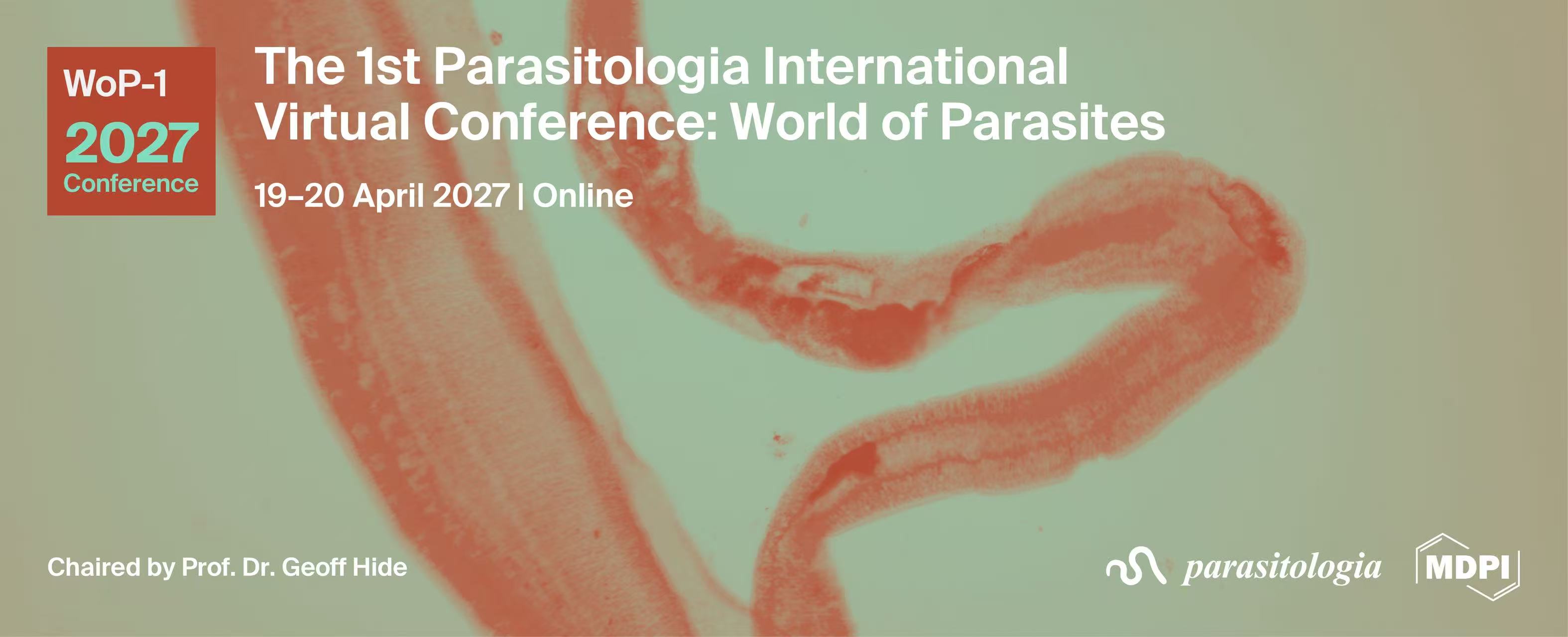
It is our great pleasure to welcome you to the 1st Parasitologia International Virtual Conference: World of Parasites (WoP-1). The conference is organized by the MDPI open access journal Parasitologia (ISSN: 2673-6772, Impact Factor: 1.5) and will take place online from 19 to 20 April, 2027.
Parasites continue to shape the health of humans, animals, and ecosystems worldwide, while rapid advances in molecular biology, epidemiology, immunology, and ecological sciences are transforming our understanding of these complex organisms. This conference aims to bring together scientists and professionals from diverse disciplines to discuss current discoveries, emerging challenges, and future perspectives across the many dimensions of parasitology.
The scientific program will cover the following themes:
S1. Parasite Biology, Genetics, and Molecular Mechanisms;
S2. Host–Parasite Interactions, and Immune Defenses;
S3. Veterinary Parasitic Diseases: Diagnosis, Treatment, and Pathogenesis;
S4. Epidemiology, Surveillance, and Public Health.
Through keynote lectures, oral communications, and interactive discussions, the conference will provide a stimulating environment for exchanging ideas and strengthening collaborations within the international parasitology community. Special attention will be given to the interconnected nature of parasite research, spanning human and veterinary medicine, environmental change, vector biology, and global health.
As the inaugural edition of World of Parasites, we hope this meeting will serve as a platform for fostering dialogue between established researchers and early-career scientists while highlighting innovative approaches to understanding parasite biology and control strategies in an ever-changing world.
We sincerely look forward to your participation and to welcoming you to this exciting scientific gathering.
Kind regards,
Prof. Dr. Geoff Hide
University of Salford, Salford, UK
Conference Chair of the 1st Parasitologia International Virtual Conference: World of Parasites
Follow the conference organizer on Social Media



Meet Our Chair

Biomedical Research and Innovation Centre, School of Science Engineering and Environment, University of Salford, Salford, UK;Professor Geoff Hide attended the University of Edinburgh in the UK and gained a BSc (Hons) in Biological Sciences with specialism in Genetics. He then obtained his PhD within the Institute of Animal Genetics at Edinburgh University where he specialised in the molecular epidemiology of parasites. He moved to the University of Glasgow for 10 years studying trypanosomes and the epidemiology of sleeping sickness. Following a move to Salford University in 1998, he broadened his research into a wide range of parasites, including Toxoplasma gondii, working on molecular epidemiology and host-parasite interactions. He has published over 120 research papers. He has had an active collaboration with scientists in Sun Yat-sen University in Guangzhou since 2010 and has held a number of management roles at Salford University including Director of the Biomedical Sciences Research Institute and, more recently, Director of Human and Natural Sciences. His current research interests revolve around host parasite interactions in both humans and animals. He was the founding Editor-in-Chief of Parasitologia in 2021.
Important Dates
15 Jan
2027
15 Feb
2027
14 Apr
2027
Meet Our Speakers
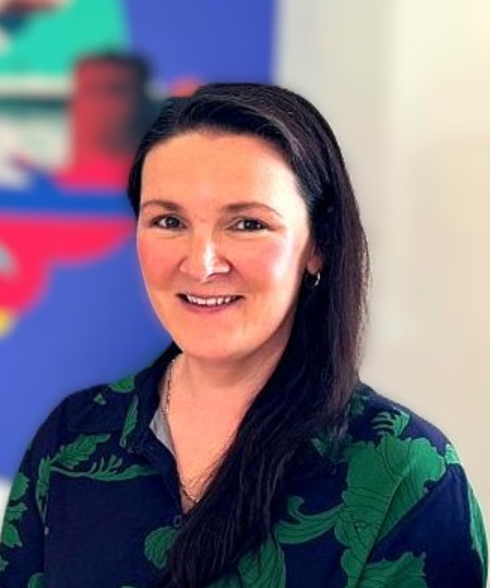
Dr. Denise O’Meara
South East Technological University (SETU), Waterford, Ireland;Dr Denise O’Meara is a Lecturer and Researcher in Molecular Ecology at South East Technological University (SETU), Ireland. Her research focuses on the development and application of molecular approaches to biological surveillance, with particular interests in wildlife, vectors, invasive species and infectious disease. She has worked extensively on non-invasive genetic monitoring, DNA barcoding, species-specific PCR and qPCR, population genetics and environmental DNA. Her recent research includes molecular surveillance of mosquitoes and Culicoides biting midges in Ireland, including the development of molecular tools to support vector identification and monitoring. She has also contributed to research on wildlife populations, invasive species and wildlife–livestock disease systems. Her current interests focus on how approaches developed within molecular ecology can support more integrated surveillance across biodiversity, animal health, biosecurity and public health within a One Health framework.

Institute of Parasitology, Biology Centre, Czech Academy of Sciences, Czech Republic;Dr. Julius Lukeš, PhD is principal investigator at the Institute of Parasitology, Biology Centre, Czech Academy of Sciences, and Professor at the Faculty of Sciences, University of South Bohemia. He earned RNDr (Rerum Naturalium Doctor) from Charles University, and PhD from the Czechoslovak Academy of Sciences. He was a postdoctoral fellow at the Czech Academy of Sciences, University of Amsterdam, University of California, Riverside, and visiting scientist at the UCLA, and a senior fellow of the Canadian Institute for Advanced Research. He is a member of the Czech Learned Society, a fellow of the American Academy for Microbiology, the European Academy of Microbiology, the AAAS, the European Molecular Biology Organization, and the NAS. He has been President of the International Society for Evolutionary Protistology, and is President elect of the International Society of Protistologists. Awards include prize of the Czech Minister of Education, and J.G. Mendel Medal for Achievements in Natural Sciences. Dr. Lukeš’s primary interest is functional analysis of a wide range of proteins of the kinetoplastid parasite Trypanosoma brucei, the free-living flagellate Diplonema papillatum, and few other protists. He is also interested in the evolution of the mitochondrion, in the phylogeny of unicellular eukaryotes with focus on the eukaryotic supergroup Discoba, in RNA editing and the kinetoplast DNA, in the role of bacterial endosymbionts in protists, in heme and iron-sulfur cluster metabolism, as well as in the host-parasite relationships in general. He likes to popularize science for the general public.
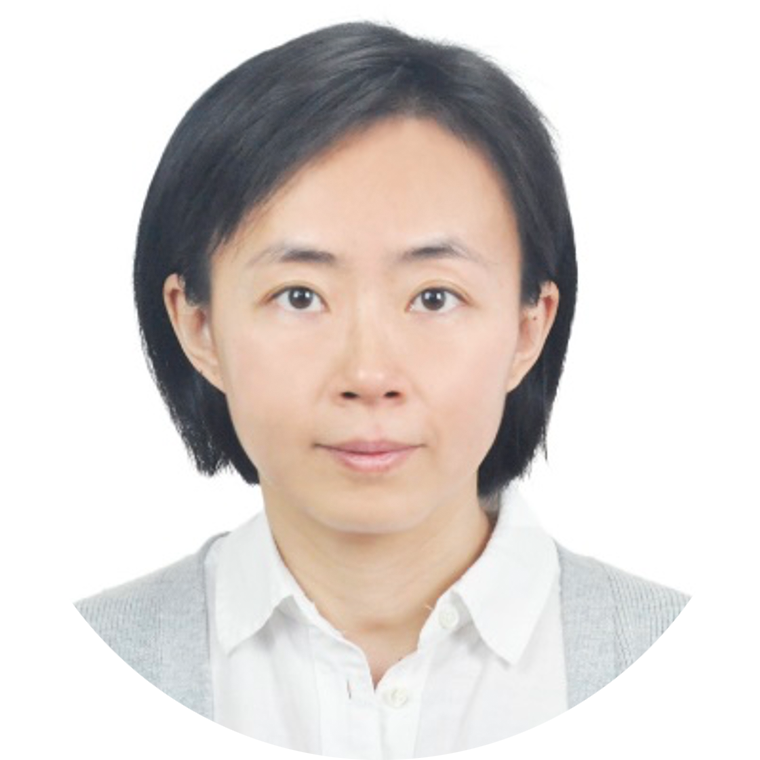
School of Life Sciences, Fudan University, Shanghai, China;