

Computation Webinar | Genuinely Multi-Dimensional Numerical Scheme for Conservation Laws
the chair
2nd Computation Webinar
Genuinely Multi-Dimensional Numerical Scheme for Conservation Laws
Today we introduce a new numerical approach for solving the hyperbolic partial differential equations of conservation laws. Tradionally the numerically methods were based on a one-dimensional concept, on the Riemann solution. Even though this was quite successful, it requires a relatively fine grid to resolve genuinely two-dimensional features like one has in the onset of turbulent flow.
Some 10 years ago Phil Roe introduced a new concept for the numerical solution of these PDEs. It still is a finite volume method, but it borrowed some ideas from finite element theory, combining them in an innovative way. Today’s speakers will give a glimpse of this method as well as how far along it has come until today.
Date: 28 October, 2025
Time: 3:00 p.m. CET | 10:00 a.m. EDT
Webinar ID: 865 0403 1525
Webinar Secretariat: journal.webinar@mdpi.com
Meet Our Chair
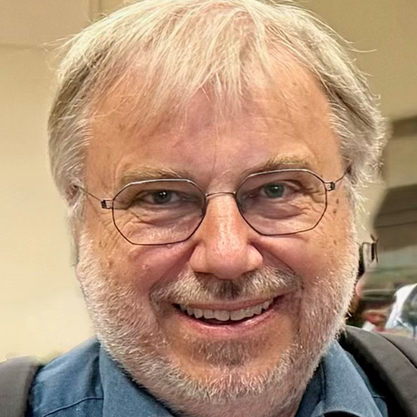
Wuerzburg University, Germany;PhD at New York University, USA, postdoc at Heidelberg University, Germany, then professor of applied mathematics at Wuerzburg University, Germany.
Meet Our Speakers
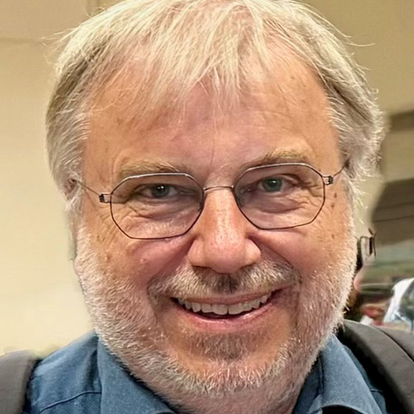
Wuerzburg University, Germany;PhD at New York University, USA, postdoc at Heidelberg University, Germany, then professor of applied mathematics at Wuerzburg University, Germany.

Dr. Wasilij Barsukow
Imperial College, London;PhD 2018 at Wuerzburg University; Postdoc at Zuerich University; permanent researcher at the prestigious CNRS in France, delegated from there to Imperial College, London.

Dr. Junming Duan
Wuerzburg University, Germany;PhD 2021 at Peking University, China; postdoc at EPFL, Lausanne, Switzerland; Humboldt fellow at Wuerzburg University, Germany; tenure-track professor at the Chinese University of Hong Kong from 2026.


In this webinar we introduced a new numerical approach for solving the hyperbolic partial differential equations of conservation laws. Traditionally the numerical methods had been based on a one-dimensional concept, the Riemann solution. Even though this was quite successful, it requires a relatively fine grid to resolve genuinely two- or three-dimensional features like in the onset of turbulent flow.
Approximately 12 years ago Phil Roe introduced a new concept for the numerical solution of these PDEs that is genuinely multi-dimensional. It still is a finite volume method, but it borrowed some ideas from finite element theory, combining them in an innovative way. The speakers of this webinar introduced this method and showed its progress thus far.
The webinar was hosted on Zoom and required prior registration to attend. The full recording can be accessed below. In order to learn about future webinars, you can sign up for our newsletter by clicking “Subscribe… at the top of this page.