

2nd International Electronic Conference on Entropy and Its Applications
the chairs
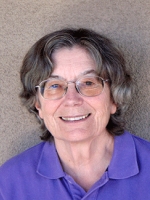
You are cordially invited to participate in the 2nd International Electronic Conference on Entropy and Its Applications. This event aims to bring together researchers working in the field to present and discuss their recent contributions, without the need to travel.
The field of entropy-related research has been particularly fruitful in the past few decades, and continues to produce important results in a range of scientific areas, including thermal engineering, quantum communications, and wildlife research. The inter-disciplinary nature of contributions from both theoretical and applied perspectives of entropy are welcome, including papers addressing conceptual and methodological developments, as well as new applications of entropy and information theory. The conference will address various research topics, these being brought together in six sessions, and which reflect the inter-disciplinary nature of entropy and its applications:
- Physics and Engineering: Thermodynamics, Statistical Mechanics, the Second Law of Thermodynamics, Reversibility, Quantum Mechanics, Black Hole Physics, Maximum Entropy Methods, Maximum Entropy Production, Evolution of the Universe
(Section A) - Information Theory: Shannon Entropy, Kullback-Leibler Divergence, Channel Capacity, Renyi and other Entropies, and Applications
(Section B) - Complex Systems: Self-Organization, Chaos and Nonlinear Dynamics, Simplicity and Complexity, Networks, Symmetry Breaking, Similarity
(Section C) - Chemistry and Biology: Chemical Networks, Energy, Enthalpy, Maximum Entropy Methods, Biological Networks, Evolution, DNA and RNA, Diversity
(Section D) - Machine Learning and Systems Theory: Artificial Intelligence, Neural Networks, Cybernetics, Robotics, Man–Machine Interfaces, Causality
(Section E) - Posters: In this section, posters can be presented stand-alone, i.e., without a proceedings paper that goes with it. Posters will be available online on this website during and after the e-conference. However, posters will not be added to the proceedings of the conference.
(Section P)
Accepted papers will be published in the proceedings of the conference, and selected papers will be considered for publication in Entropy with a 20% discount off the APC. Entropy is an open access publication journal of MDPI in the field of entropy and Information Theory (https://www.mdpi.com/journal/entropy).
Important Dates
- Abstract Submission: 10 September 2015 8 October 2015
- Notification of Acceptance: 15 September 2015 15 October 2015
- Submission of Full Paper: 25 October 2015
- Conference Open: 15-30 November 2015
Please do not hesitate to contact us if you have questions.
It is my pleasure to welcome you to the Second e-Conference on Entropy!
Best regards,
Dawn E. Holmes, Ph.D.
Department of Statistics and Applied Probability, University of California, USA
https://www.pstat.ucsb.edu/faculty/holmes/
Dawn Holmes received her Ph.D. degree in Computer Science from the University of Bradford, UK. She is a Senior Member of IEEE and also a member of several professional societies. She was recently a Guest Editor for Entropy, the journal, and also serves on the editorial board. She is also on the editorial boards of several other journals, including the International Journal of Advanced Intelligence Paradigms and the Journal of Supercomputing. Finally, Dr. Holmes is an Associate Editor for the journal, KES: Innovation in Knowledge-Based and Intelligent Engineering Systems.
As well as her research activities, she is dedicated to teaching and was awarded the UCSB Academic Senate Distinguished Teaching Award, which acknowledges Senate faculty members who have successfully united teaching with scholarly work.
She has published many peer-reviewed research papers in numerous journals and has presented at many conferences, including the annual MaxEnt conference, and has also co-edited, with Lakhmi Jain, research volumes on Data Mining, Machine Learning and Bayesian Networks. Her main research interests include Bayesian Networks, machine learning, data mining, knowledge discovery, and the Foundations of Bayesianism.
Meet Our Chairs
'%3e%3cpath%20d='M12.6647%2010.9104C12.4176%2010.325%2012.0589%209.7933%2011.6088%209.34485C11.16%208.89511%2010.6283%208.53653%2010.0432%208.28891C10.038%208.28629%2010.0327%208.28498%2010.0275%208.28236C10.8437%207.69282%2011.3743%206.73252%2011.3743%205.64907C11.3743%203.85423%209.92005%202.40002%208.12522%202.40002C6.33038%202.40002%204.87618%203.85423%204.87618%205.64907C4.87618%206.73252%205.40677%207.69282%206.22296%208.28367C6.21772%208.28629%206.21248%208.2876%206.20724%208.29022C5.62031%208.53783%205.09365%208.89287%204.64167%209.34616C4.19192%209.79496%203.83334%2010.3266%203.58573%2010.9117C3.34247%2011.4846%203.21128%2012.0987%203.19925%2012.721C3.1989%2012.735%203.20135%2012.7489%203.20646%2012.7619C3.21157%2012.7749%203.21924%2012.7868%203.22901%2012.7968C3.23877%2012.8068%203.25045%2012.8148%203.26334%2012.8202C3.27623%2012.8256%203.29007%2012.8284%203.30406%2012.8284H4.09012C4.14776%2012.8284%204.19362%2012.7825%204.19493%2012.7262C4.22113%2011.7148%204.62726%2010.7676%205.34519%2010.0497C6.08802%209.30686%207.07452%208.89811%208.12522%208.89811C9.17592%208.89811%2010.1624%209.30686%2010.9052%2010.0497C11.6232%2010.7676%2012.0293%2011.7148%2012.0555%2012.7262C12.0568%2012.7839%2012.1027%2012.8284%2012.1603%2012.8284H12.9464C12.9604%2012.8284%2012.9742%2012.8256%2012.9871%2012.8202C13%2012.8148%2013.0117%2012.8068%2013.0214%2012.7968C13.0312%2012.7868%2013.0389%2012.7749%2013.044%2012.7619C13.0491%2012.7489%2013.0515%2012.735%2013.0512%2012.721C13.0381%2012.0947%2012.9084%2011.4856%2012.6647%2010.9104ZM8.12522%207.90243C7.52388%207.90243%206.95792%207.66793%206.53214%207.24215C6.10636%206.81636%205.87185%206.2504%205.87185%205.64907C5.87185%205.04773%206.10636%204.48177%206.53214%204.05599C6.95792%203.63021%207.52388%203.3957%208.12522%203.3957C8.72655%203.3957%209.29252%203.63021%209.7183%204.05599C10.1441%204.48177%2010.3786%205.04773%2010.3786%205.64907C10.3786%206.2504%2010.1441%206.81636%209.7183%207.24215C9.29252%207.66793%208.72655%207.90243%208.12522%207.90243Z'%20fill='%235D1EE1'/%3e%3c/g%3e%3c/svg%3e)

Important Dates
8 Oct
2015
15 Oct
2015
25 Oct
2015


 Dr. Alexandre L. M. Levada
University of São Carlos, Brazil
Alexandre L. M. Levada received his B.Sc. degree in Computer Science from São Paulo State University in 2002, his M.Sc. degree in Computer Science from the Federal University of São Carlos in 2006, and his Ph.D. degree in Computational Physics from São Paulo University in 2010. He is currently associated with the Computing Department at the Federal University of São Carlos, SP, Brazil. His main research interests include random fields, complex systems, and mathematical models for pattern recognition and image processing
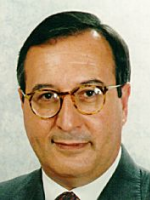 Prof. Dr. Rodolfo A. Fiorini
Polytechnic University of Milan, Italy
Rodolfo A. Fiorini is a tenured Professor of Bioengineering at the Department of Electronics, Information and Bioengineering (DEIB) of the Polytechnic University of Milan, Italy. In 1979, Dr. Fiorini was awarded the "Energetics Fellowship" from the Italian Ministry of Scientific Research and attended Bocconi University, School of Economics, and the Polytechnic University of Milan. He specialized in Energetics. Dr. Fiorini gained his Ph.D. degree in Energetics (100/100) from the Polytechnic University of Milan in 1984. In the 1980s, Dr. Fiorini was a research associate at Stanford University, Department of Aeronautics and Astronautics, Stanford, CA, U.S.A. and at the University of California at Los Angeles, Department of Computer Science, CA, U.S.A. The U.S.A. DOL appointed him with a Ph.D. degree in Bioengineering in 1989. Dr. Fiorini is a member of the IEEE and the EMBC, and a member of the WSEAS. Dr. Fiorini founded the Research Group on Computational Information Conservation Theory (CICT) at the Polytechnic University of Milan in the 1990s. Since 2009, he has been responsible for the main course on Well-being Technology Assessment at DEIB. Dr. Fiorini is the author of more than 240 national, international, scientific, and technical articles, papers, seminars, presentations, and books. His current research interests include entropy, biomedical cybernetics, neuroscience, well-being, consciousness, nanoscience, computer simulation, information science, anticipatory learning systems, networked-control systems, machine learning, machine intelligence, statistical and deterministic signal processing, statistical and combinatorial optimization techniques, decision support systems, and advanced management systems.
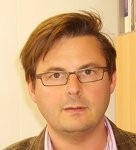 Prof. Dr. Francisco (Paco) Chinesta
Ecole Centrale de Nantes, France
Francisco Chinesta, born in 1966 in Valencia, Spain, is currently a Professor of Computational Mechanics at the Ecole Centrale of Nantes (France). He was the EADS Chair Professor on the advanced modeling of composites manufacturing processes and he is, at present, the ESI Chair Professor on the advanced modeling and simulation of materials and processes implying multi-scale and multi-physics approaches of solid and complex fluids, which are encountered in aeronautic and space applications. He is also an associate member of the University of Wales Institute of Non-Newtonian Fluid Mechanics. Francisco Chinesta is the author of more than 200 papers in peer review journals, 50 contributions to research books, and more than 700 contributions to conference proceedings. He has participated in the organization (as a member of the scientific or organizing committees that are responsible for minisymposia, and many times, as the conference chairman) of 177 workshops and conferences, most of them international. He has supervised 31 Ph.D. theses. He received, in 2000, the ESAFORM (European Scientific Association for Material Forming) Award. In 2008, he received the French Maurice Couette Prize for his research and contributions in computational rheology. He has given 109 keynote or plenary lectures, most of them in international conferences, on material forming, computational mechanics, and rheology, and has had numerous invited seminars in different universities around the world. In 2011, he was nominated as a senior member of the “Institut Universitaire de France” – IUF, and in 2015, he was elected as a fellow of the Spanish Royal Academy of Engineering.
Dr. Chinesta's main research contribution concerns the proposal and development of efficient model reduction strategies, based on proper orthogonal decomposition, and more particularly, on the development of separated representation-based strategies that make possible the solution of models suffering the so called “curse of dimensionality.” His research opens up an unimaginable panoply of possibilities for solving models that were, until now, never solved; these models are usually encountered in computational science and engineering.
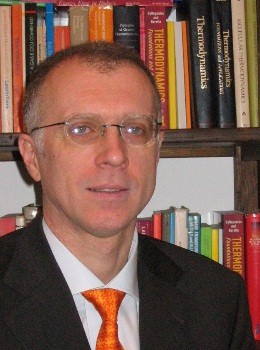 Prof. Dr. Gian Paolo Beretta
University of Brescia, Italy
Prof. Gian Paolo Beretta, born in Monza, Milan, Italy in 1956, is a professor of fluid and thermal sciences at the University of Brescia. Prof. Beretta (Laurea in nuclear engineering in 1979 from the Polytechnic University of Milan, M.S. in mechanical engineering in 1980, and Ph.D. in mechanical engineering in 1982, from the Massachusetts Institute of Technology) has 30 years of academic experience in mechanical engineering. He has supervised over 50 graduate students and has published over 100 papers in peer reviewed international journals and proceedings of international conferences (53 Web of Science articles, 500 citations, H index = 14). He has been an assistant professor at the Massachusetts Institute of Technology (1981-1986), a ricercatore at the Polytechnic University of Milan (1983-1986), an associate professor (since 1987), and full professor (since 1994) at the University of Brescia, where from 1999 to 2006, he was the elected Director of Mechanical Engineering Studies and led curricula reform. Currently, Prof. Beretta is the Head of the Doctoral Program in Mechanical and Industrial Engineering at the University of Brescia. His major contributions include: a widely used, fundamentally based description of flame propagation in spark-ignition engines; a number of studies on the conceptual, mathematical, and axiomatic foundations of thermodynamics; a number of experimental studies in the heat transfer and fluid mechanics area; a number of studies on the foundations of quantum physics, as related to thermodynamics; several contributions to the extension of the theory of irreversible nonequilibrium processes to the domain of chemical kinetics ad quantum thermodynamics through the introduction of the principle of Steepest Entropy Ascent [review in J. Maddox, Nature, Vol.316, p.11 (1985)]; and the coauthoring, with E.P. Gyftopoulos, of an authoritative reference textbook on the rigorous foundations of thermodynamics and its engineering applications (1991 1st Macmillan Ed.; book review in Nature [reviews in P.T. Landsberg, Nature, Vol.356, p.28 (1992) and M. Silvestri, Int. J. Theor. Appl. Mechanics, Vol.28, 354 1993]). Since 2005, the aforementioned textbook has been introduced in the prestigious Dover publications collection (350 Google Scholar citations). As a sign of international recognition, Prof. Beretta was named an ASME Fellow in 2006. Prof. Beretta joined the University of Brescia in 1987 when the engineering faculty was composed of less than ten units (today it has over 180). He founded the laboratory of Fisica Tecnica and mentored a group that currently consists of two full professors, three assistant professors, one technician, eight doctoral students, one post-doc, and several undergraduate thesis students.
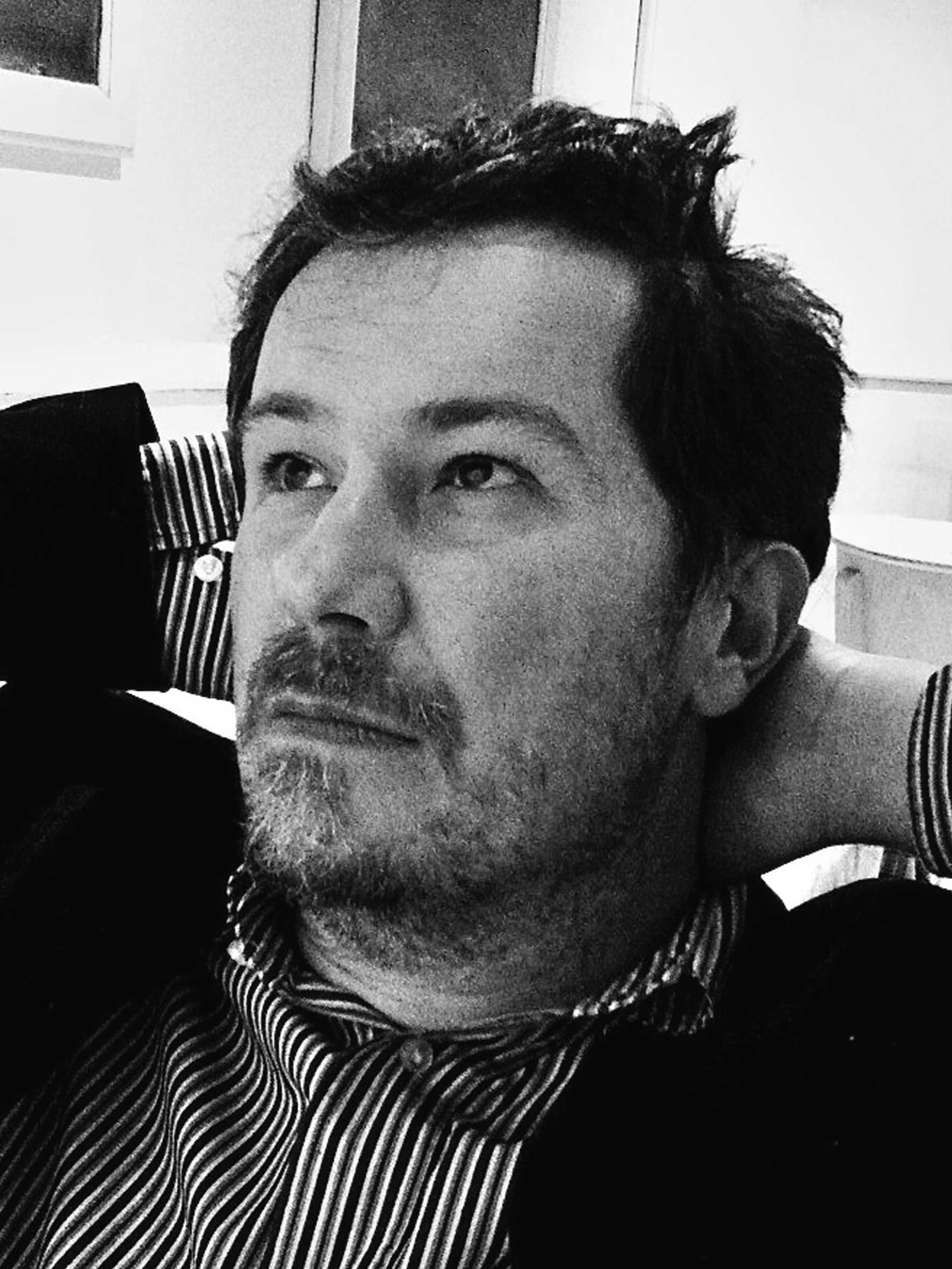 Dr. Massimo Materassi
Italian National Research Council, Italy
Dr. Massimo Materassi was born in Florence, Italy, in 1970. During his childhood, he was greatly inspired by the variety of living beings along the flow of natural history. In high school, he became interested in physics, and he earned an M.S. in General Physics in 1996 from the University of Florence. In 2000, Dr. Massimo Materassi defended a Ph.D. thesis in Theoretical Physics at the University of Perugia, Italy, concerning the Hawking Radiation spectrum from a black hole as a consequence of the Virasoro symmetry of event horizon dynamics, and became mainly interested in the description of dynamics as due to underlying symmetries. In 2001, Dr. Materassi won a permanent position as a researcher at the Italian National Research Council (CNR). From 2001 to 2004, he has been working as an applicative physicist in ionospheric dynamics and imaging. Since 2004, Dr. Materassi has been associated with the Institute for Complex Systems of CNR (ISC), after a post-doc in near-Earth plasma turbulence at the Space Research Centre of the Polish Academy of Science (CBK-PAN) in Warsaw. Dr. Materassi’s research interest basically focuses on the possibility of describing natural systems through physical laws and symmetries. Entropy- and information-related quantities turn out to have a major relevance in this field, and are dominated by dissipative and learning processes. For several years, Dr. Materassi’s activity has been mainly devoted to the algebrization of dissipation dynamics and information dynamics in natural processes