
Electronics Webinar | Recent Progress in Optoelectronic Devices and Systems
the chair
4th Electronics Webinar
Recent Progress in Optoelectronic Devices and Systems
It is my great pleasure to welcome all of the attendees to the 4th Electronics Webinar - Recent Progress in Optoelectronic devices and systems.
Optoelectronics as a specific discipline of electronics that focuses on light-emitting, light-detecting or light conversion devices and systems is one of the fast emerging technology fields that deals with applying electronic devices to the sourcing, detection and control of light.
The webinar is a venue for the exchange of information on new technologies, paradigms and ideas, and consists of a program of four lectures of well distinguished scientists around the world that will help in the technical and professional development of attendees.
I, as the chair of this 4th Electronics Webinar sincerely hope that this will have great impact on all the participants through a mutually beneficial information exchange. I am looking forward to meeting you all in March 18th.
Prof. Dr. Elias Stathatos
Date: 18 March 2022
Time: 1:00pm CET | 8:00am EDT | 8:00pm CST Asia
Webinar ID: 821 2920 3238
Webinar Secretariat: electronics.webinar@mdpi.com
Meet Our Speaker
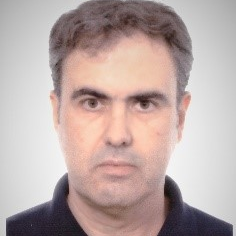
University of the Peloponnese, Greece;Elias Stathatos graduated from the Physics Department in 1991 and received his PhD in Materials Science/School of Engineering in 1999, both from the University of Patras, Greece. He was a Visiting Scholar at the University of Cincin-nati, Ohio, USA, in 2004. From 2005 to 2019, he was a faculty member of the Technological Educational Institute of Pa-tras and is currently a Professor at the University of Peloponnese. In the period 2008–2010, he was Department Head of the Electrical Engineering Department at Technological Educational Institute of Patras. His research interests encom-pass different themes, such as the conversion of solar into electrical energy using dye-sensitized, quantum dot, and per-ovskite solar cells employing nanostructured materials. Furthermore, Prof. Stathatos is also interested in the application of electrochromic nanocomposite materials in smart windows as well as OLED and OFET devices and nanosensors in environmental applications. He is the author of more than 140 papers published in ISI journals recognized by more than 6500 citations, six book chapters, and five international patents related to solar cells and electrochromic devices. He has been an invited speaker or reviewer in numerous international journals. He is also Associate Editor of the International Journal of Photoenergy (Hindawi Publishing Corporation) in addition to being on the advisory board of their publication Materials Science in Semiconductor Processing. In 2020, he was appointed as Section Editor-in-Chief for the Section "Microe-lectronics and Optoelectronics" of Electronics. He has also organized several Special Issues in international journals.



On March 18th 2022 webinar entitled “Recent Progress in Optoelectronic Devices and Systems” took place with the presence of four distinguished speakers supported by MDPI “Optoelectronics” section of “Electronics” journal. High quality experimental work in the field of field effect transistors, photodetectors, excitonic photovoltaics and lab-on-chip applications was presented by the speakers with great response from the participants.
The webinar was chaired by Prof. Dr. Elias Stathatos, of the University of the Peloponnese, Greece. His research interests include the conversion of solar into electrical energy using dye-sensitized, quantum dot and perovskite solar cells employing nanostructured materials. The session consisted of four presentations, of 30 minutes each.
The first speaker to start proceedings was Dr. Domenico Caputo, with his presentation on the topic of "Optoelectronic Devices Integrated on a Glass Substrate for Lab-On-Chip Applications". Dr. Caputo's current research is focused on the development of thin-film photodetector and lab-on-chip systems for DNA amplification for bacteria and virus detection.
Next was Prof. Dr. Antonio Di Bartolomeo, with a presentation titled "Electrical and Optical Characterization of 2d Materials-Based Field-Effect Transistors". His present research interests include optical and electrical properties of nanostructured materials such as carbon nanotubes, graphene, and 2D materials, van der Waals heterostructures and Schottky junctions, field-effect transistors, non-volatile memories, solar cells, photodetectors, field emission devices, supercapacitors, and fuel cells.
The third presentation, titled "Upconversion Nanohybrid designs for Broadband Photodetectors", was given by Prof. Dr. Surojit Chattopadhyay. In his current position, he is working on the synthesis of novel functional nanomaterials, including upconversion, for biomedical theranostics, imaging, drug delivery, and plasmonics for food toxin detection. His lab houses state of the art spectroscopies, and synthesis platforms.
The final presentation was given by Dr. Deep Jariwala, titled "Strong Light-Matter Coupling in Excitonic Photovoltaic Semiconductors". Dr. Jariwala's current research interests include new materials, surface science and solid-state devices for computing, opto-electronics and energy harvesting applications in addition to the development of correlated and functional imaging techniques.
Dr. Caputo and Prof. Dr. Di Bartolomeo's presentations were followed by individual Q+A sessions. There was a general discussion and Q+A at the end of the webinar, moderated by the chair. The full recording can be found here on Sciforum website. In order to stay updated on the next webinars on Electronics, be sure to sign up for our newsletter by clicking on “Subscribe” at the top of the page.
This webinar is part of the "Optoelectronics" Section of the Electronics journal. To find out more about this section and to check out the Special Issues that are currently open for submissions, please click here.