
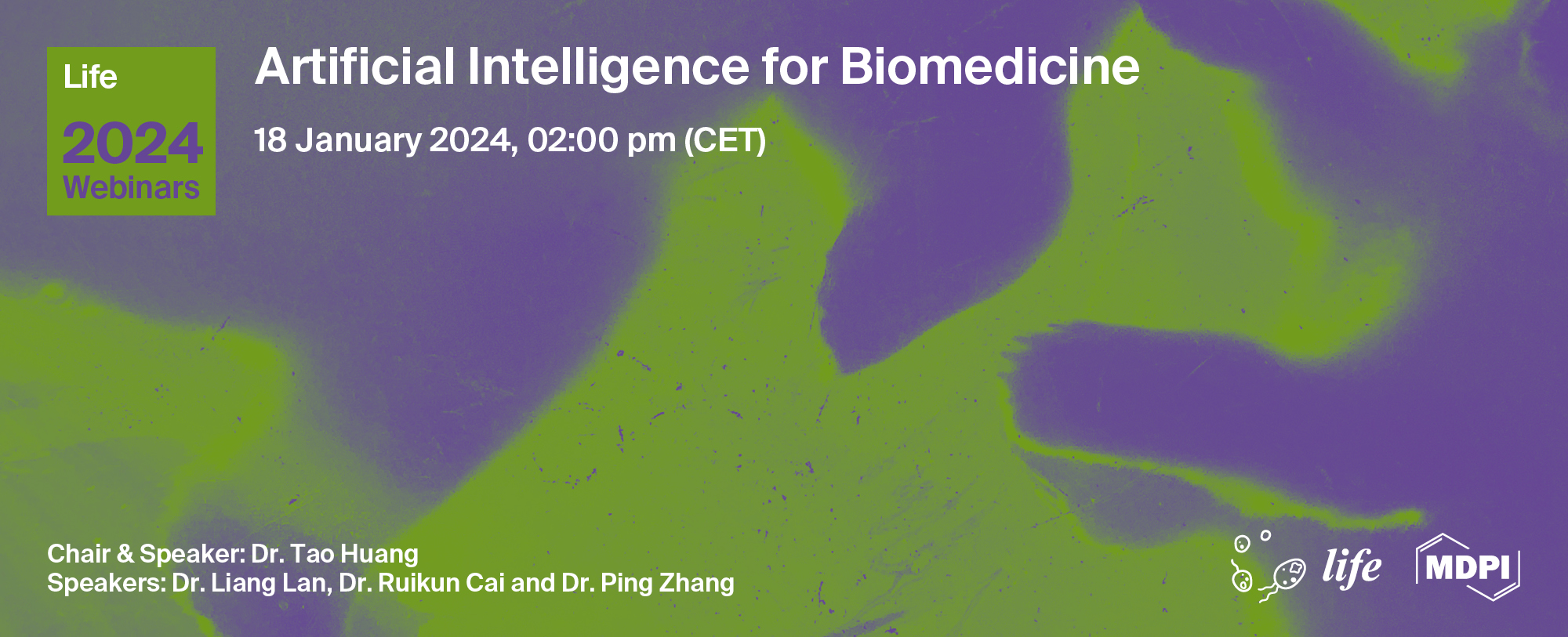
Life Webinar | Artificial Intelligence for Biomedicine
the chair
3rd Life Webinar
Artificial Intelligence for Biomedicine
With the rapid advancement of artificial intelligence technology, biomedical research has undergone significant changes. It has transitioned from empirical and theoretical approaches to data-driven and intelligent paradigms. The introduction of efficient and accurate early disease diagnosis models into clinical practice has greatly assisted doctors in making diagnosis and treatment decisions. AI has played a crucial role in driving innovation in medical diagnosis and treatment, enabling disease prevention, early warning, and precise treatment. Moreover, AI technologies, such as protein structure prediction and protein sequence generation, have accelerated the discovery of innovative medications. This holds the promise of providing patients with more effective and affordable drugs. Additionally, the use of biomedical big data intelligence analysis platforms allows users to access a cloud-native computing environment. This environment facilitates traceability of processes, reproducibility of results, knowledge sharing, and collaborative projects. Consequently, it reduces the barriers to scientific research and promotes the democratization and widespread adoption of biomedical research. This Webinar will introduce the latest development and applications of artificial intelligence in biomedicine.
Date: 18 January 2024 at 2.00 p.m. CET | 8:00 a.m. EST | 9:00 p.m. CST Asia
Webinar ID: 874 1616 4406
Webinar Secretariat: journal.webinar@mdpi.com
Meet Our Chair
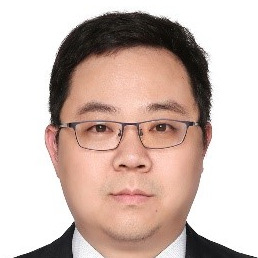
Shanghai Institute of Nutrition and Health, Chinese Academy of Sciences, Shanghai, China;Dr. Tao Huang is a Professor at the Shanghai Institute of Nutrition and Health, Chinese Academy of Sciences. He completed his post-doctoral research at the Department of Genetics and Genomics Sciences, Icahn School of Medicine at Mount Sinai, New York City, USA. His research interests include bioinformatics, computational biology, systems genetics, and big data research. He has published over 200 articles. His works have been cited 13,559 times with an h-index of 52. He has edited three books: Computational Systems Biology: Methods and Protocols, Precision Medicine, and Liquid Biopsies: Methods and Protocols for the Methods in Molecular Biology series. He has been an Editor or Guest Editor for over 30 journals and a Reviewer for 230 journals. He is a Highly Cited Chinese Researcher (2020, 2021, 2022) and World's Top 2% Scientist (2020, 2021, 2022).
Meet Our Speakers
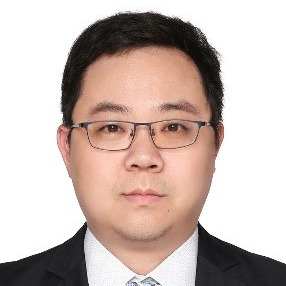
Shanghai Institute of Nutrition and Health, Chinese Academy of Sciences, Shanghai, China;Dr. Tao Huang is a Professor at the Shanghai Institute of Nutrition and Health, Chinese Academy of Sciences. He completed his post-doctoral research at the Department of Genetics and Genomics Sciences, Icahn School of Medicine at Mount Sinai, New York City, USA. His research interests include bioinformatics, computational biology, systems genetics, and big data research. He has published over 200 articles. His works have been cited 13,559 times with an h-index of 52. He has edited three books: Computational Systems Biology: Methods and Protocols, Precision Medicine, and Liquid Biopsies: Methods and Protocols for the Methods in Molecular Biology series. He has been an Editor or Guest Editor for over 30 journals and a Reviewer for 230 journals. He is a Highly Cited Chinese Researcher (2020, 2021, 2022) and World's Top 2% Scientist (2020, 2021, 2022).
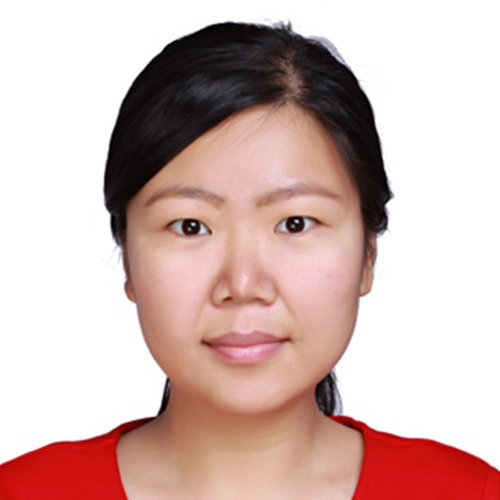
Dr. Ruikun Cai
National Research Institute for Family Planning, Beijing, China;Dr. Ruikun Cai, PhD, Associate Professor of National Research Institute for Family Planning, China. Her research interests are bioinformatics, machine learning, genetics, and the analysis of high-throughput sequence data.
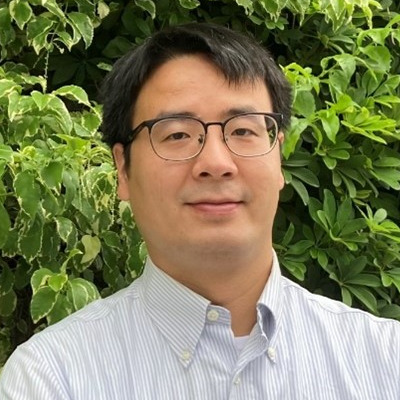
Dr. Liang Lan
Department of Interactive Media, Hong Kong Baptist University, HKSAR, China;Dr. Liang Lan is a Senior Lecturer in the Department of Interactive Media, Hong Kong Baptist University. He received his B.S. degree in bioinformatics from the Huazhong University of Science and Technology, Wuhan, China, in 2007, and his Ph.D. degree in computer and information sciences from Temple University, Philadelphia, PA, USA, in 2012. His research interests include artificial intelligence, machine learning, and bioinformatics. His work has been published in the top AI journals and conferences, such as AIJ, JMLR, TNNLS, ICML, AISTATS, and AAAI. He is the recipient of the Institution of Engineers Singapore (IES) Prestigious Engineering Achievement Award 2015 and 2016, and the ASEAN Outstanding Engineering Achievements Award 2016.
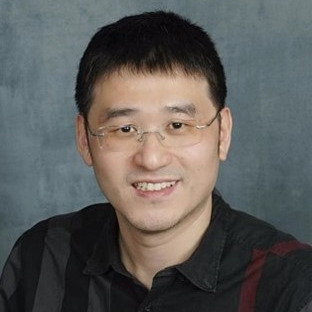
Dr. Ping Zhang
Department of Computer Science and Engineering, The Ohio State University, Columbus, OH, USA;Dr. Ping Zhang is a tenured Associate Professor at The Ohio State University (OSU) with joint appointments at the Department of Computer Science and Engineering (CSE) and the Department of Biomedical Informatics (BMI). He leads the Artificial Intelligence in Medicine (AIMed) Lab at OSU. His research focuses on machine learning, data mining, and their applications to trustworthy AI (e.g., explainability, fairness, robustness, domain generalization, causal inference, uncertainty quantification), computational medicine (e.g., predictive modeling, medical imaging, clinical NLP, real-world evidence, drug discovery and development). He is an ACM Distinguished Speaker, AMIA Fellow, and IEEE Senior Member.

The webinar was hosted via Zoom and required registration to attend. The full recording can be found below. In order to learn about future webinars, you can sign up to our newsletter by clicking “Subscribe” at the top of the page.
"Large Language Model and Large Vision Model for Life Sciences"
Guest Editor: Dr. Tao Huang
Deadline for Manuscript Submissions: 15 May 2024
"AI and Heart Failure"
Guest Editors: Dr. Andrew Xanthopoulos, Dr. Polydoros Ν. Kampaktsis and Dr. Alexandros Briasoulis
Deadline for Manuscript Submissions: 20 May 2024