
|
19:00-19:30 Prof. Dr. Yuh-Shyan Chen Human Activity Recognition for Radar Sensor Networks The millimeter-wave radar sensor has the characteristics of being less susceptible to weather and light as well as being low cost. In addition to supporting environmental sensing functions in automatic vehicles, the millimeter-wave radar sensor can also be used for non-contact human activity recognition under any environmental conditions. Monitoring, medical care, and physiological monitoring is another effective method in addition to the sensor-based and visual-based methods. We briefly introduce the basic principles of millimeter-wave radar sensors, collect millimeter-wave signals and collect 5-dimensional information in real time, drawing distance–speed maps, distance–azimuth maps, and distance–elevation maps. We further introduce various possible effective applications of human activity recognition using millimeter-wave radar sensors. |
|
19:30-20:00 Prof.Dr. Tzung-Shi Chen Object Tracking in Wireless Sensor Networks Object tracking is an important research field in the Internet of Things. Object tracking technologies can be applied in various fields, such as smart cities, smart transportation, etc. Object tracking technology includes object identification, object positioning, object tracking, and object movement management. This talk will briefly describe various object tracking technologies and applications. |
|
20:00-20:30 Prof.Dr. Wen-Hwa Liao Data Collection for Wireless Sensor Networks Wireless sensor networks consist of a large number of low-cost sensors, which have been used in numerous applications such as smart living, traffic monitoring and the healthcare system. In these types of applications, collecting data from sensors is one of the most important tasks. The simplest way is multi-hop forwarding from each sensor to the sink node. However, multi-hop forwarding leads to the problem of network disconnection, which affects the network lifetime. This occurs because the sensors closer to the sink consume much more energy for data forwarding than those sensors far away from the sink. Therefore, in this talk, I will discuss the research issues of some data collection from sensors for prolonging the network lifetime. |
|
20:30-21:00 Prof. Dr. Chih-Yung Chang Energy Recharging for Wireless Rechargable Sensor Networks In wireless sensor networks, sensors are tiny devices with limited battery capacity that perform sensing and communication tasks in the network. When the sensor battery is exhausted, it will not perform any task, which reduces the coverage quality of the network. Therefore, recharging the sensors before their energy exhaustion is one of the most important issues in WSNs. In this talk, an on-demand recharging scheduling mechanism using the mobile charger (MC) to recharge the sensors will be discussed. During the recharging operation, if any new sensor requests recharging, the MC can dynamically adjust its path to improve the recharging efficiency. |

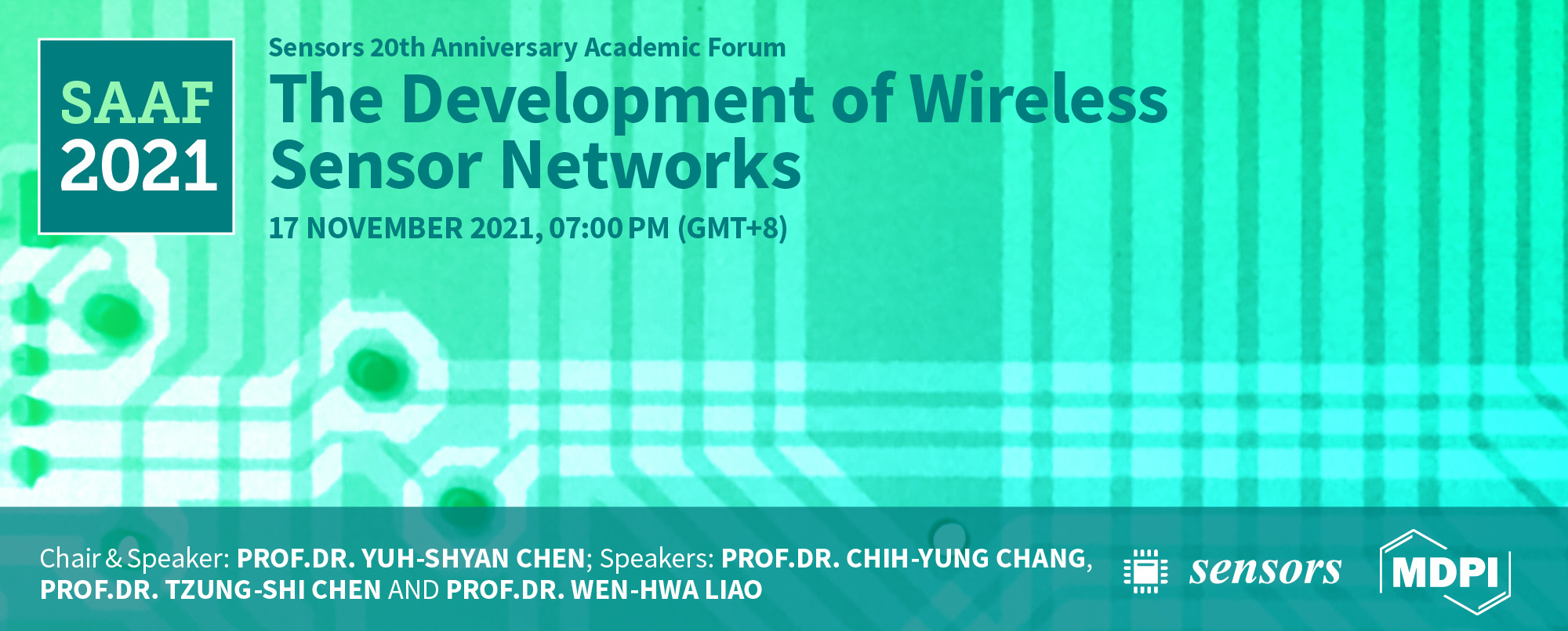
Sensors 20th Anniversary Academic Forum: The Development of Wireless Sensor Networks
the chair
Dear Colleagues,
I would like to invite you to the Sensors 20th Anniversary Academic Forum: The Development of Wireless Sensor Networks. This forum intends to briefly highlight exciting topics in a comprehensive but efficient manner, the event will last for two hours, which includes time for the discussion of presentations.
This event will feature 4 invited experts from Taiwan who have not only significantly contributed to our journal Sensors, but are also recognized for their great achievements in research fields related to the study of science and technology of sensors.
We will record the lectures, with the agreement of the lecturers, and deposit them in our online database. We will continue to build this database with brief introductions and summaries of topics across this fascinating field of science and technology of sensors. We hope that this event is of interest to you, and we welcome you to join us at this forum.
We look forward to seeing you at Sensors 20th Anniversary Academic Forum: The Development of Wireless Sensor Networks. Please find below an outline of the 4 presenters representing the broad range of sensors.
Date: 17 November 2021, 19:00--21:00 (GMT+8)
Webinar Secretariat: chloe.li@mdpi.com
The following experts will present and speak:
|
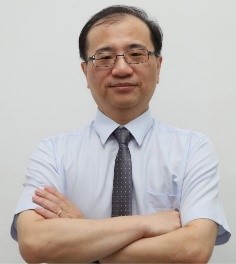
Prof.Dr. Yuh-Shyan Chen Department of Computer |
Yuh-Shyan Chen received Ph.D. degrees in Computer Science and Information Engineering from the National Central University, Taiwan, in January 1996. He joined the faculty of Department of Computer Science and Information Engineering at Chung-Hua University, Taiwan, as an associate professor in February 1996. He joined the Department of Computer Science and Information Engineering, National Chung Cheng University in August 2002. Since 2006 and 2018, he has been Professor and Distinguished Professor, respectively, at the Department of Computer Science and Information Engineering, National Taipei University, Taiwan. He is now also Director of the Center for Advanced Technology Research (2020/8~). Prof. Chen served as Dean of College of Electrical Engineering and Computer Science (2014/2~2017/1), and Director of the Research Center on Big Data and Smart City (2017/08~2019/07), National Taipei University. Prof. Chen has served as Editor-in-Chief of International Journal of Ad Hoc and Ubiquitous Computing (SCIE) since 2004, Associate Editor of Sensors (Section for ‘Sensor Networks’) since 2016, and Regional Editor (Asia and Pacific) of IET Commuications (SCIE) since 2010. Chen has been the Vice Chair of Task Force on "Telecommunications" of Intelligent Systems Applications Technical Committee, IEEE Computational Intelligence Society since 2007. He was the recipient of the K. T. Li Breakthrough Award, Taiwan, 2020. He is also listed among the top 2% of scientists worldwide from Elsevier. His paper won the 2001 IEEE 15th ICOIN-15 Best Paper Award. Prof. Chen was a recipient of the 2005 Young Scholar Research Award, National Chung Cheng University, R.O.C.. His recent research topics include wireless communications and mobile computing, next-generation personal communication system, and IoT with Artifical Intelligence. Dr. Chen is a senior member of the IEEE Communication Society, ACM (SIGMobile) member, and Phi Tau Phi Society. |
|
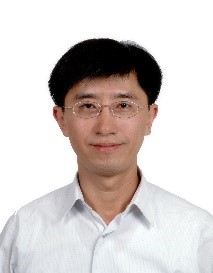
Prof.Dr. Chih-Yung Chang Department of Computer |
Chih-Yung Chang received his Ph.D. degree in Computer Science and Information Engineering from the National Central University, Taiwan, in 1995. He is currently a Distinguished Professor with the Department of Computer Science and Information Engineering, Tamkang University, New Taipei, Taiwan. His current research interests include the Internet of Things, wireless sensor networks, Artifical Intelligence and deep learning. He served as an Associate Guest Editor for several SCI-indexed journals, including the International Journal of Ad Hoc and Ubiquitous Computing (IJAHUC) from 2011 to 2020, the International Journal of Distributed Sensor Networks (IJDSN) from 2012 to 2014, IET Communications in 2011, Telecommunication Systems (TS) in 2010, the Journal of Information Science and Engineering (JISE) in 2008, and the Journal of Internet Technology (JIT) from 2004 to 2008. |
|
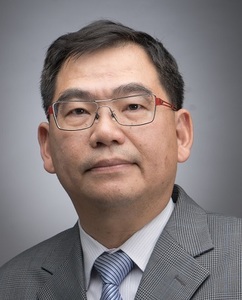
Prof.Dr. Tzung-Shi Chen Department of Computer Science and Information Engineering, National University of Tainan |
Tzung-Shi Chen received the B.S. degree in Computer Science and Information Engineering from Tamkang University, Taiwan, in June 1989 and the Ph.D. degree in Computer Science and Information Engineering from National Central University, Taiwan, in June 1994. He joined the faculty of the Department of Information Management, Chang Jung Christian University, Tainan, Taiwan, as an Associate Professor in June 1996. He was a visiting scholar at the Department of Computer Science, University of Illinois at Urbana-Champaign, USA, from June to September 2001. Since February 2004, he has become a Full Professor at the National University of Tainan, Tainan, Taiwan. He was a Director of Library at National University of Tainan, Taiwan, from August 2010 to July 2013. From August 2013 to July 2015, he was a Director of Computer Center at National University of Tainan, Taiwan. He has served as program committee members on many international conferences and as Editorial Board members and Guest Editors on many international journals. His current research interests include mobile computing and wireless networks, ubiquitous and cloud computing, and the Internet of Things. |
|
Prof.Dr. Wen-Hwa Liao National Taipei University of |
Wen-Hwa Liao received the Ph.D. degree in computer science and information engineering from National Central University, Taiwan, in 2002. He is currently a Full Professor with the Institute of Information and Decision Sciences, National Taipei University of Business, Taiwan. He has published 100+ papers in international journals and conferences. His current research interests include the Internet of Things, wireless sensor networks, and Artificial Intelligence. He has served as the Associate Editor of the International Journal of Distributed Sensor Networks (IJDSN) and International Journal of Vehicle Information and Communication Systems (IJVICS). He also has served as an Associate Guest Editor for SCI-indexed journal International Journal of Ad Hoc and Ubiquitous Computing (IJAHUC).
|
Meet Our Chair
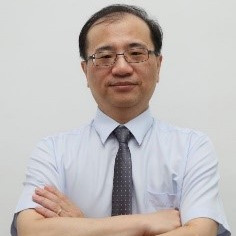
Department of Computer , Science and Information Engineering, National Taipei University;YUH-SHYAN CHEN received the M.S. and Ph.D. degrees at the Department of Computer Science and Information Engineering from the National Central University.
Meet Our Speakers
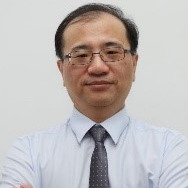
Department of Computer, Science and Information Engineering, National Taipei University;Yuh-Shyan Chen received Ph.D. degrees in Computer Science and Information Engineering from the National Central University, Taiwan, in January 1996. He joined the faculty of Department of Computer Science and Information Engineering at Chung-Hua University, Taiwan, as an associate professor in February 1996. He joined the Department of Computer Science and Information Engineering, National Chung Cheng University in August 2002. Since 2006 and 2018, he has been Professor and Distinguished Professor at the Department of Computer Science and Information Engineering, National Taipei University, Taiwan. He now also is Director, Center for Advanced Technology Research (2020/8~). Prof. Chen served as Dean of College of Electrical Engineering and Computer Science (2014/2~2017/1), and Director, Research Center on Big Data and Smart City (2017/08~2019/07), National Taipei University. Prof. Chen now also serves as Editor-in-Chief of International Journal of Ad Hoc and Ubiquitous Computing (SCIE) from 2004, Associate Editor of Sensors (Section for ‘Sensor Networks’) from 2016, and Regional Editor (Asia and Pacific) of IET Commuications (SCIE) from 2010. Chen was Vice Chair of Task Force on "Telecommunications" of Intelligent Systems Applications Technical Committee, IEEE Computational Intelligence Society from 2007. He wins K. T. Li Breakthrough Award, Taiwan, 2020. He is also listed as top 2% scientists worldwide from Elsevier. His paper wins the 2001 IEEE 15th ICOIN-15 Best Paper Award. Prof. Chen was a recipient of the 2005 Young Scholar Research Award, National Chung Cheng University, R.O.C.. His recent research topics include wireless communications and mobile computing, next-generation personal communication system, and IoT with artifical Intelligence. Dr. Chen is a senior member of the IEEE Communication Society, ACM (SIGMobile) member, and Phi Tau Phi Society.
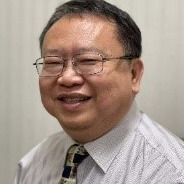
Department of Computer, Science and Information Engineering, Tamkang University;Chih-Yung Chang received the Ph.D. degree in computer science and information engineering from the National Central University, Taiwan, in 1995. He is currently a Distinguish Professor with the Department of Computer Science and Information Engineering, Tamkang University, New Taipei, Taiwan. His current research interests include Internet of things, wireless sensor networks, artifical Intelligence and deep learning. He has served as an Associate Guest Editor for several SCI-indexed journals, including the International Journal of Ad Hoc and Ubiquitous Computing (IJAHUC) from 2011 to 2020, the International Journal of Distributed Sensor Networks (IJDSN) from 2012 to 2014, IET Communications in 2011, Telecommunication Systems (TS) in 2010, the Journal of Information Science and Engineering (JISE) in 2008, and the Journal of Internet Technology (JIT) from 2004 to 2008.
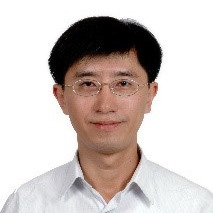
Department of Computer Science and Information Engineering, National University of Tainan;Tzung-Shi Chen received the B.S. degree in Computer Science and Information Engineering from Tamkang University, Taiwan, in June 1989 and the Ph.D. degree in Computer Science and Information Engineering from National Central University, Taiwan, in June 1994. He joined the faculty of the Department of Information Management, Chang Jung Christian University, Tainan, Taiwan, as an Associate Professor in June 1996. He was a visiting scholar at the Department of Computer Science, University of Illinois at Urbana-Champaign, USA, from June to September 2001. Since February 2004, he has become a Full Professor at National University of Tainan, Tainan, Taiwan. He was a Director of Library at National University of Tainan, Taiwan, from August 2010 to July 2013. From August 2013 to July 2015, he was a Director of Computer Center at National University of Tainan, Taiwan. He has served as program committee members on many international conferences and as Editorial Board members and Guest Editors on many international journals. His current research interests include mobile computing and wireless networks, ubiquitous and cloud computing, and Internet of things.
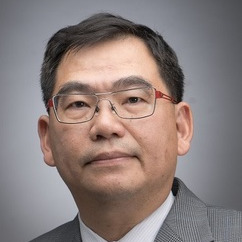
National Taipei University of Business, Institute of Information and Decision Sciences;Wen-Hwa Liao received the Ph.D. degree in computer science and information engineering from National Central University, Taiwan, in 2002. He is currently a Full Professor with the Institute of Information and Decision Sciences, National Taipei University of Business, Taiwan. He has published almost 100+ papers in international journals and conferences. His current research interests include Internet of things, wireless sensor networks, and artificial intelligence. He has served as the Associate Editor of the International Journal of Distributed Sensor Networks (IJDSN) and International Journal of Vehicle Information and Communication Systems (IJVICS). He also has served as an Associate Guest Editor for SCI-indexed journal International Journal of Ad Hoc and Ubiquitous Computing (IJAHUC).
We have recorded the lectures, with the agreement of the lecturers, and deposit them in our online database. We will continue to build this database with brief introductions and summaries of topics across this fascinating field of science and technology of sensors. We hope that this event is of interest to you, and we welcome you to join us at this forum.