Symmetry 2023 - The 4th International Conference on Symmetry
The 1st International Conference on Modern Mathematical Physics (ICMMP 2026) in 30 October–3 November 2026 | Hangzhou, China.
Symmetry 2027 - The 6th International Conference on Symmetry in 25–28 June 2027 | Shanghai, China.
Thank You for Joining Symmetry 2023!
We would like to thank our chairs, committee members, session chairs, speakers, poster presenters, and all the attendees for making such a great meeting. Check the collection of pictures from the event!
You can download an electronic Certificate of Attendance by accessing your dashboard on Sciforum.net. Your certificate will be found under the "My Certificates" category.
See you at the next edition!!
the chairs
Dear Colleagues,
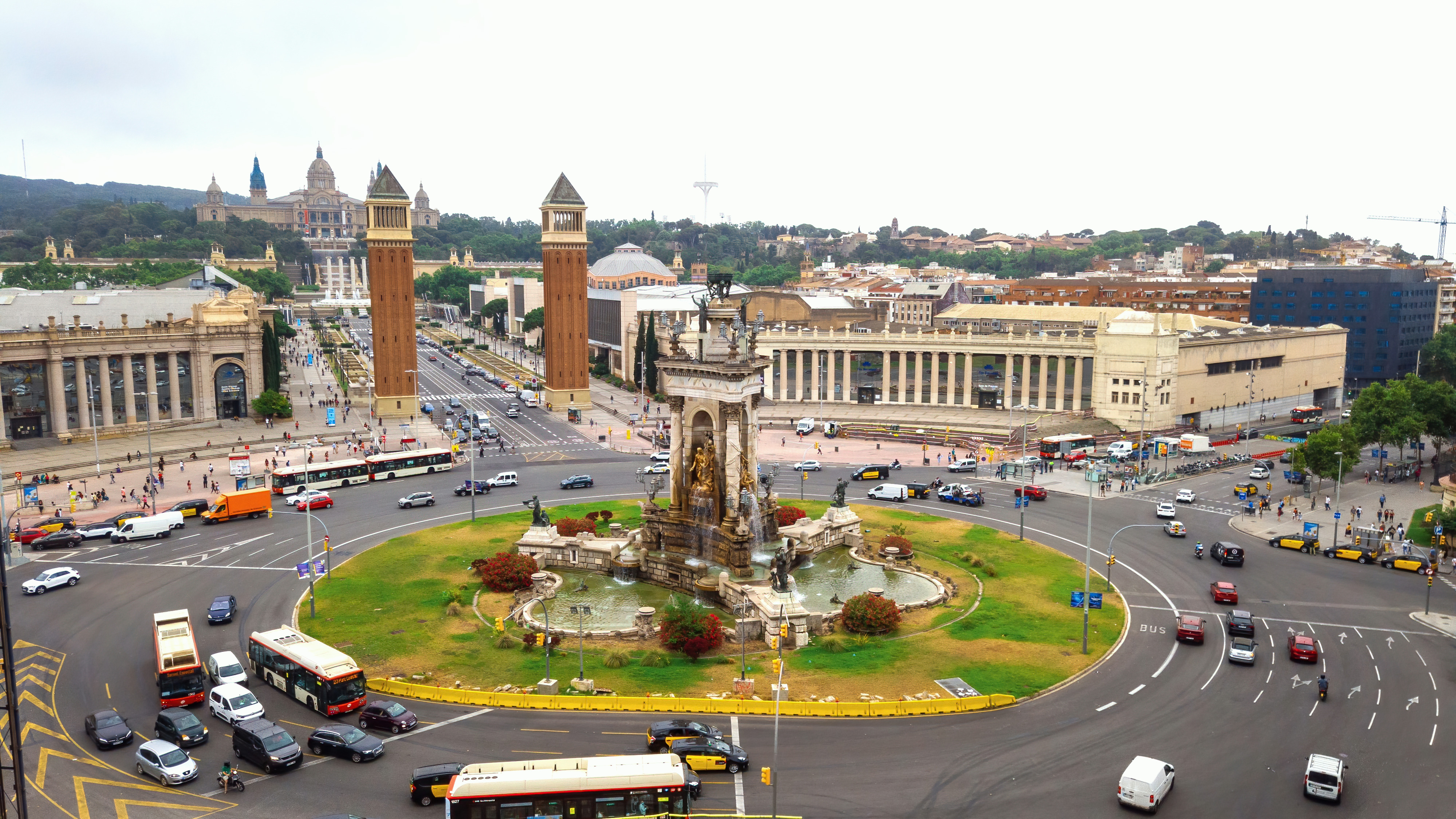
We are delighted to announce that “Symmetry 2023 — The 4th International Conference on Symmetry” will be back in person in 2023. The event is supported by MDPI’s open access journal Symmetry and will be held on 21–23 June 2023 in Barcelona, Spain.
As expressed by Hermann Weyl, who was responsible for important progress in the field of symmetry in math and physics: “Symmetry is a fundamental phenomenon in nature and all sciences”. Additionally, paraphrasing Frank Wilczek, “powerful symmetry principles have guided physicists in their quest for nature's fundamental laws”. Although one should add, at the same time, that many of the most interesting situations happen to occur when some fundamental symmetry principle is broken. It thus seems as if nature abhors perfect symmetry.
It is this interplay between symmetry and its breakdown, in the many different domains and situations where they appear, which we want to address in the 4th Symmetry Conference in Barcelona. Specifically, we will foster interaction between scholars working in different fields of science.
We welcome scholars, engineers, students, and non-academic colleagues to join Symmetry 2023, and we kindly ask you to save the date. The aim is to make this event a forum for discussion, knowledge exchange, and fruitful interactions among stakeholders working in the different symmetry-related fields: Computer Science, Mathematics, Physics, Chemistry, Biology, and Engineering Science. Both oral and poster contributions are welcome.
We are very enthusiastic about this 4th Symmetry Conference and are relying on you to make it a successful event.
We look forward to meeting you in Barcelona!
Kind regards,
Prof. Dr. Emilio ElizaldeProf. Dr. Juan Luis García Guirao
Prof. Dr. Sergei D. Odintsov
Symmetry 2023 Conference chairs
Conference Secretariat
Ms. Lee Li
Ms. Kira Yang
 Follow the conversation on Twitter with #symmetry2023
Meet Our Chairs
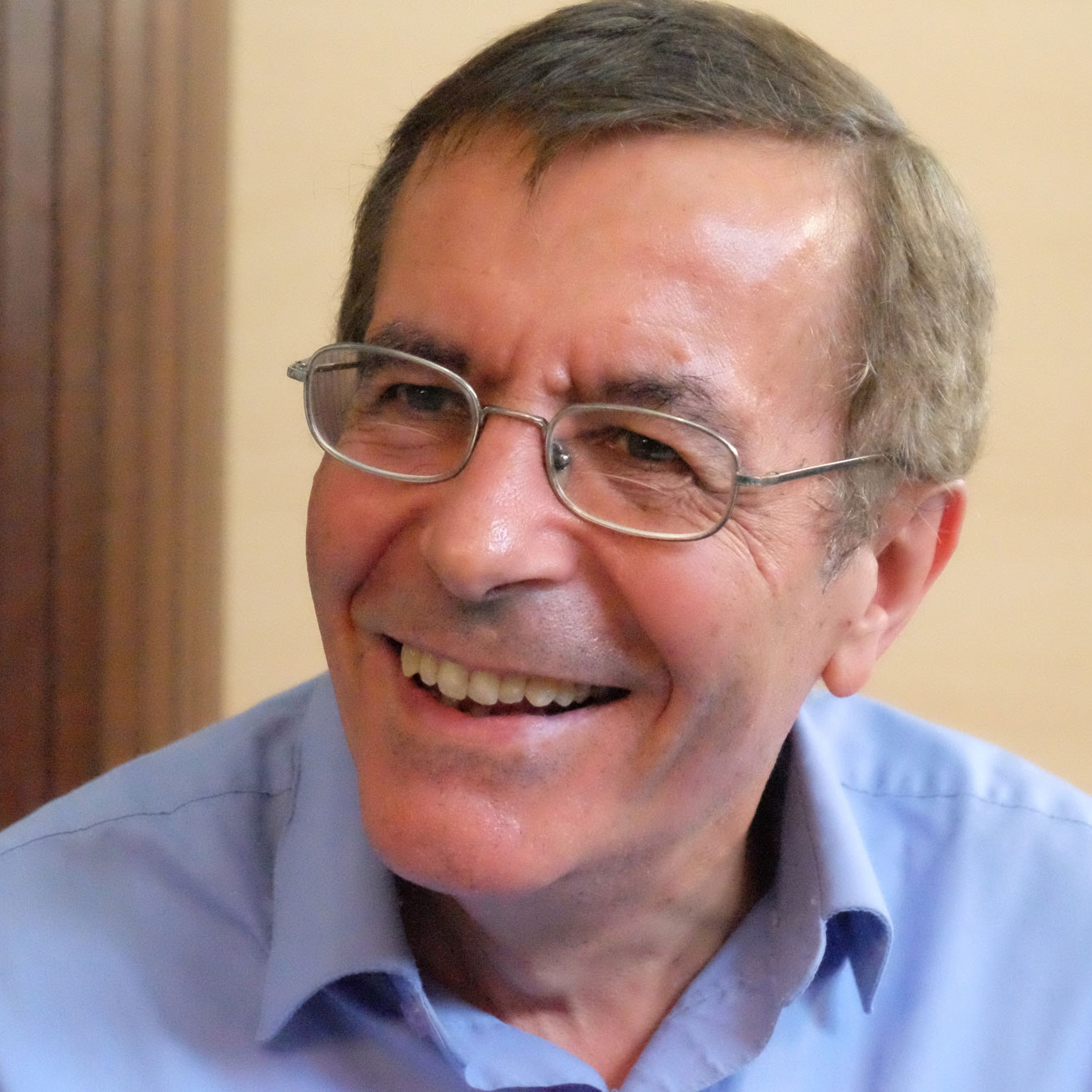
Institute of Space Sciences (IEEC-CSIC), Barcelona, Spain;Prof. Emilio Elizalde is the founding leader of the “Theoretical Physics and Cosmology” group of the CSIC Institute for Space Science (ICE-CSIC), in Bellaterra (Barcelona, Spain), and of the Catalan Institute of Space Studies (IEEC). The group, now co-leaded by Prof. Sergei D. Odintsov (whom Prof. Elizalde attracted to Barcelona in 1992) is highly recognized internationally and leader in Spain in its field. Prof. Elizalde was actually a cofounder of both ICE and IEEC, two institutes that have consistently topped all rankings of the Science Citation Normalized Impact Factor for Spain institutions during the last fifteen years. Prof. Elizalde has received Honorary Professorships from Tomsk TSPU University and from TUSUR University, and the Gold Medal and an Honor Certificate in recognition of Scientific and Academic Services from the first one. Five times “Visiting Scholar” at MIT (Mass, USA), he has got two prestigious “Invitational Fellowships of the Japan Government for Excellent Researchers” (2016, 2017) and four “Distinctions of Merit” from the National Higher Research Council of Spain (2013, 2016, 2018, 2019), where he become Professor Ad Honorem in 2020. He was elected Member of the European Science Foundation College of Expert Reviewers, and Member of the prestigious Barcelona Graduate School of Mathematics (BGSMath). He is a recipient of a “Connecting Great Minds” Certificate of Appreciation (World Scientific, 2016), and also of the Medal and the Founder’s Distinction Certificate of the Alexander-von-Humboldt Association of Spain, of which he was elected Secretary General and is presently Vice-President. His most recent book is “The True Story of Modern Cosmology” (Springer-Nature, 2021).
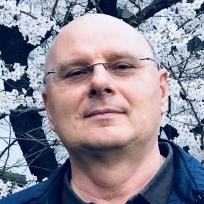
ICREA, Barcelona, Spain;Institute of Space Sciences (IEEC-CSIC), Barcelona, Spain;Prof. Sergei Odintsov is an ICREA Research Professor at ICE (CSIC-IEEC). He is the author of about 650 articles cited over 55000 times, and two of his manuscripts were cited more than 2500 times. Prof. Odintsov is Foreign Member of the Royal Norwegian Academy, member of the European Physics Society, and the Italian Society for General Relativity and Gravitation. He was awarded the Amaldi Gold Medal: European Prize for Grav. Physics 2014. Prof. Odintsiov is an Editorial Board Member of six journals. His h-index=112 (Google S.), h=104 (inspirehep). According to research.com he is ranked 273 among the Top 1000 Scientists in Physics in the world (2021).
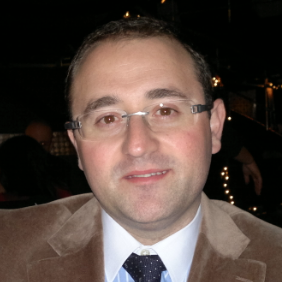
Department of Applied Mathematics and Statistics, Universidad Politecnica de Cartagena, Cartagena, Spain;Juan Luis García Guirao is Full Professor of Applied Mathematics at Technical University of Cartagena in Spain. He obtained his Degree in Mathematics at Universidad de Murcia (Spain) in 2001. As a result of covering all the subjects of the degree in four years, he used the last year to work on his master's thesis. Under the supervision of Professor Francisco Balibrea, Full Professor of Mathematical Analysis and founder of the Dynamical Systems Group of the Region of Murcia (http://www.um.es/sistdinamicos), he defended his Master Thesis in 2001 and PhD Thesis in 2004. His PhD had European Mention as he did a research stay at Instituto Superior Tecnico in Lisbon under the supervision of Professor José Sousa-Ramos, one of the main researchers in Dynamical Systems in Portugal, and who passed away in 2007. He has had several positions in different universities: Universidad de Alicante, Universidad de Castilla-La Mancha, Universidad Autónoma de Barcelona and Universidad Politécnica de Cartagena (now). In 2011, he became the youngest Mathematics Full Professor in Spain at 33 years old. Author of more than 200 research papers published in the best journals, he has supervised 5 PhD Theses and more than 10 Master Theses. He belongs to the Editorial Board of several journals, including MATCH Commun. Math. Comput. Chem. ranked first on the JCR 2010 list (Interdisciplinary Mathematics). Founder and Editor in Chief of Applied Mathematics and Nonlinear Sciences (Sciendo), he has been awarded with several international prizes such as NSP 2017 prize and 2018 Best paper Award from Differences Equations Society joint with Jaume Llibre. He is currently Head of the Dynamical Systems Group of the Region of Murcia. His research follows three lines: discrete dynamical systems defined in low dimensional spaces, study of the periodic structure of smooth systems using the homological Lefschetz theory, and analysis of Hamiltonian systems. Also, he applies the aforementioned lines to problems in the fields of economy, chemistry, and engineering.
Important Dates
31 Mar
2023
28 Apr
2023
7 May
2023
11 Jun
2023
11 Jun
2023
Meet Our Speakers
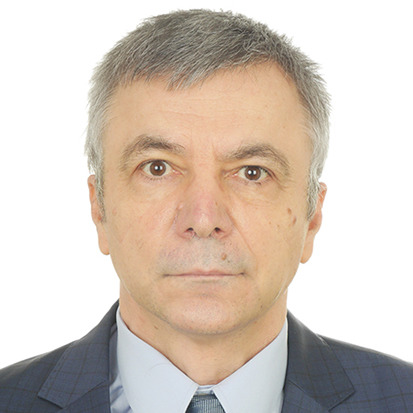
Department of Mathematics, Cankaya University, Ankara, Turkey;Dumitru Baleanu is a Professor at the Institute of Space Sciences, Magurele-Bucharest, Romania and a visiting staff member at the Department of Mathematics, Cankaya University, Ankara, Turkey. He got his PhD from the Institute of Atomic Physics in 1996. His fields of interest include the fractional dynamics and its applications, fractional differential equations and their applications, discrete mathematics, image processing, bio-informatics, mathematical biology, mathematical physics, soliton theory, Lie symmetry, dynamic systems on time scales, computational complexity, the wavelet method and its applications, quantization of systems with constraints, the Hamilton-Jacobi formalism, geometries admitting generic and non-generic symmetries. Dumitru Baleanu is one of the pioneers of the fractional variational principles and their applications in control theory. He is one of the co-authors of the seminal paper entitled “Anomalous diffusion expressed through fractional order differential operators in the Bloch-Torrey equation”, published in Journal of Magnetic Resonance (2008), which now plays a fundamental role within diffusion weighted MRI. Dumitru Baleanu is co-author of 18 books published by Springer, Elsevier and World Scientific. His H index is 91 and he is highly cited researcher in Mathematics in 2021. Prof. Baleanu won several awards: 2020-Best Research Award, given by the ITSR Foundation Award 2020; 2020-Distinguished Researcher Award, given by the Jaipur Mathematical Society; 2019-Award for 20 years of successful scientific activity in the field of fractional calculus and its applications by Istanbul Gelisim University, Turkey; 2019-Obada Prize, that recognizes and encourages innovative and interdisciplinary research; 2018-ICFDA2018 Award, granted to inventors of new patents which address major problems and have a great perspective by use of fractional calculus in real world applications.
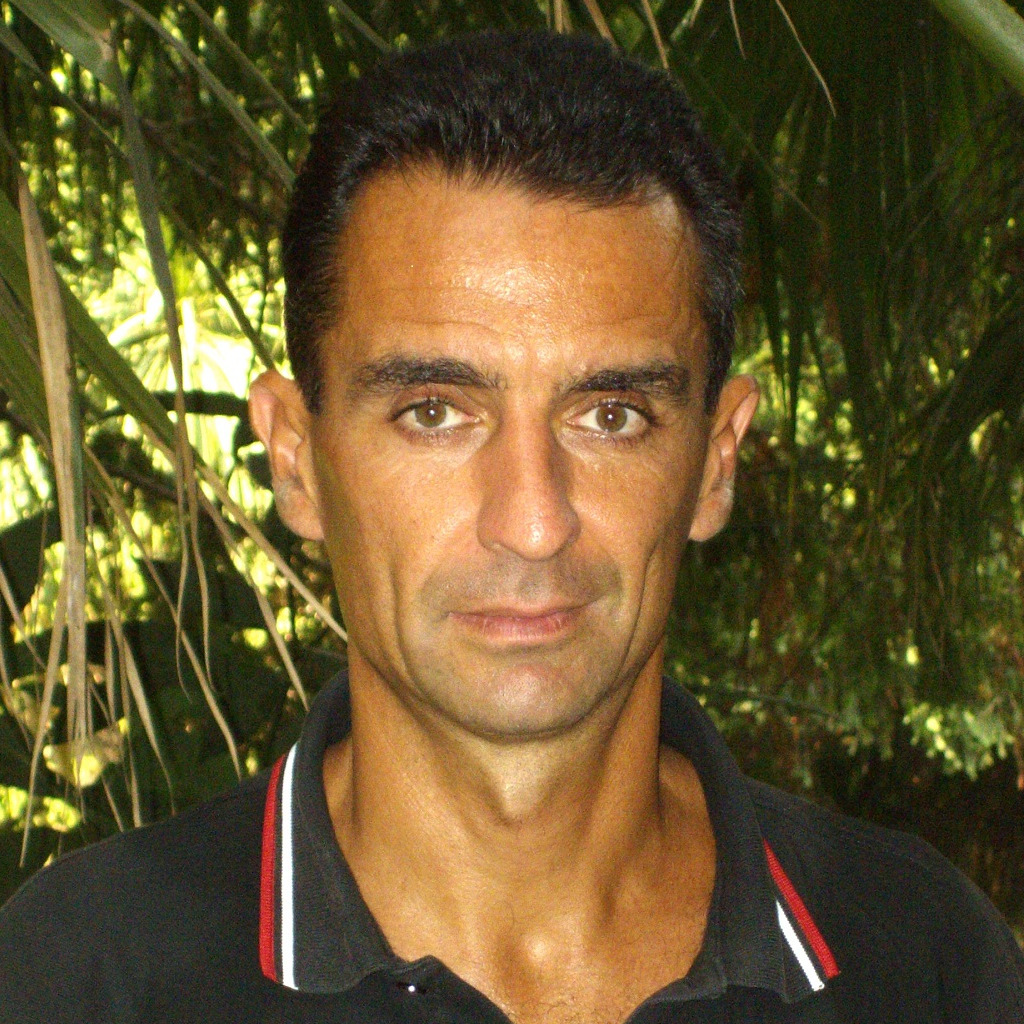
Department of Physics, University of Naples "Federico II", Italy;Salvatore Capozziello is Full Professor of General Relativity and Cosmology at the Department of Physics of University of Naples "Federico II" (Italy) and former President of the Italian Society for General Relativity and Gravitation (SIGRAV). He is the Coordinator of PhD program in Cosmology and Space Science at the Scuola Superiore Meridionale (Naples). He also teaches General Relativity at Gran Sasso Science Institute for Advanced Studies (L’Aquila) and he is Honorary Professor at Tomsk State Pedagogical University (Russia). He has been supervisor of almost 40 PhD and over 60 Master students in Physics and Mathematics. He spent several periods of his scientific career in USA, Germany, Poland, UK, Russia, South Africa, Canada, Brazil and Japan. His scientific activity is essentially devoted to General Relativity, Cosmology and Relativistic Astrophysics in their theoretical and phenomenological aspects. His main scientific achievements are related to the possibility to explain dark energy and dark matter phenomena by curvature invariants extending General Relativity to more general classes of theories. The results of these researches are published in over 600 papers appeared in several refereed journals. He is also author of monographic texts on Extended Theories of Gravity, Gravitational Lensing, Cosmology and General Relativity (Eds. Springer, Cambridge, Bibliopolis et al.).
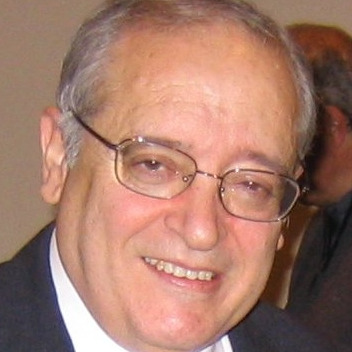
Department of Theoretical Physics, Faculty of Sciences, University of Zaragoza, Zaragoza, Spain;Born in Zaragoza (Spain) in 1945, José F. Cariñena received the Master Degree in Physics in 1967 and in Mathematics in 1970 in Zaragoza University and obtained in 1972 his Ph.D. cum laude in Valladolid University under supervision of Luis J Boya. Since 1993 is Full Professor of Theoretical Physics at the University of Zaragoza, Spain, where he has been heading a research team working in the area of Geometry, Mechanics and Control, mathematical foundations of quantum mechanics, and the interface of mathematics, and particle physics. He is a member of several professional societies and was elected as a fellow (n. 33) of the Royal Academy of Sciences of Zaragoza in February 2001. He is referee of many international journals of physics and mathematics and has been Chairman or member of the Organizing Committee of several international scientific meetings. His scientific work has been mainly devoted to the study of mathematical techniques and its applications to physics and particularly of Differential Geometry and its Applications to Mechanics and Differential equations, and related fields in Mathematical Physics. He has been the Thesis Advisor of fifteen Ph. D. students and is currently member of other Editorial Boards as Advances in Mathematical Physics, Frontiers in Physics: Mathematical Physics, International Journal of Geometric Methods in Modern Physics, ISRN Mathematical Physics, Reports on Mathematical Physics, Journal of Nonlinear Mathematical Physics, and Symmetry.
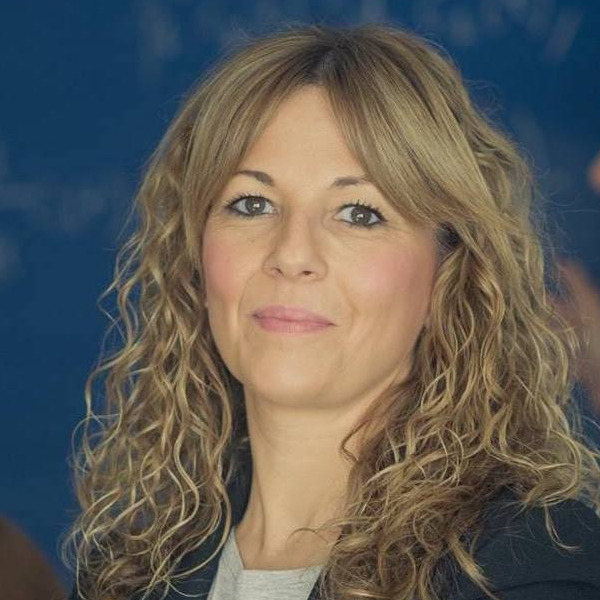
Department of Mathematics, Universidad de Cádiz, Biomedical Research and Innovation Institute of Cádiz (INiBICA), Cádiz, Spain;María Rosa Durán is an associate professor of applied mathematics at the Department of Mathematics of University of Cádiz (Spain), where she also did her PhD “cum laude” in Mathematics, granted Extraordinary PhD in Sciences Award. Her thesis was focused on findings exact solutions in mathematical models in cancer, by applying Lie transformation groups. In this thesis, she also developed a mathematical model able to describe the phenomenon of transfer resistance in lung cancer using in vitro data. She has worked on methodological aspects and on mathematical models of tumor growth and the development of resistances. Currently, her research focuses on the development of mathematical models to optimize Acute Lymphoblastic Leukemia (ALL) treatments in children. Her mathematical toolbox includes partial differential equations, Lie symmetries, dynamical systems and discriminant analysis. She is head of the research group “Bifurcation theory and dynamic systems” at University of Cádiz and of the research group “Mathematical Medicine” at Biomedical Research and Innovation Institute of Cádiz, (INiBICA), doing research in collaboration with medical doctors in the oncohematology programme. She belongs to the Mathematical Oncology Laboratory in University of Castilla-La Mancha. She is the principal investigator of the following projects: “Relapse 0: Mathematics against childhood leukemia”, funded by the crowdfunding platform “Precipita: Activando la ciencia colectiva” and by the Spanish Foundation for Science and Technology (FECYT); “Early relapse detection and treatment optimization for ALL through mathematical models and discriminant analysis”, funded by “ITI Cádiz 2019-Proyectos de Investigación en salud”. She has received three awards for the repercussion and social impact of the project of which she is principal investigator. As well, she has presented numerous communications in international congresses related to the study of mathematical models of tumour evolution.
Departament of Mathematics, Autonomous University of Barcelona, Bellaterra, Catalonia, Spain;Jaume Llibre (Barcelona, 1952) is a Spanish researcher, mathematician, professor and lecturer. During his career as a researcher he has published more than 1100 scientific articles and 21 books. Many of his publications appear in magazines such as the American Journal of Mathematics, Memoris of the American Mathematical Society, Advances in Mathematics, among others. The group of working on dynamical systems that he leads is an international benchmark in the investigation of dynamic systems. His contributions and research focus on celestial mechanics, Hamiltonian systems, dynamical systems, and qualitative research focused on the area of differential equations.
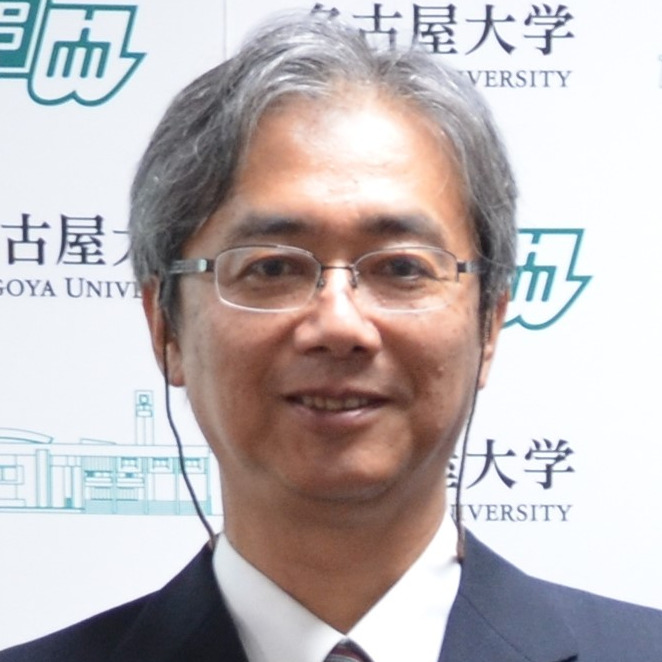
Department of Physics, Nagoya University, Nagoya, Japan;Kobayashi-Maskawa Institute for the Origin of Particles and the Universe, Nagoya University, Nagoya, Japan;Prof. Shin’ichi Nojiri obtained his PhD in Science from Kyoto University, 1986. Then, he was a Postdoctoral Fellow at RIFP, Kyoto University (1986-1987), at the Department of Physics, Kyoto University(1987-1989), at the KEK (1989-1991), and at the INS, Tokyo University (1991-1992). He then moved to the National Defense Academy where he was appointed Assistant Professor (1992-1995), Lecturer (1995-1997), and Associate Professor (1997-2006). Since 2006, he has been Professor at Nagoya University. In 2012-2019, he was the Director of the Center for Theoretical Studies, Kobayashi-Maskawa Institute for the Origin of Particles and the Universe, Nagoya University. Since 2019, he is Chair of the Division of Theoretical Studies, Kobayashi-Maskawa Institute for the Origin of Particles and the Universe, Nagoya University. His research covers Particle Cosmology, Elementary Particle Physics, and String Theory. In 2008, he was selected in “Fast Breaking Paper” by Thomson Reuters and was on the list of “Highly Cited Researchers” in 2014-2018. In 2014, he was awarded with the title of “Honorary Professor of Tomsk State Pedagogical University”.
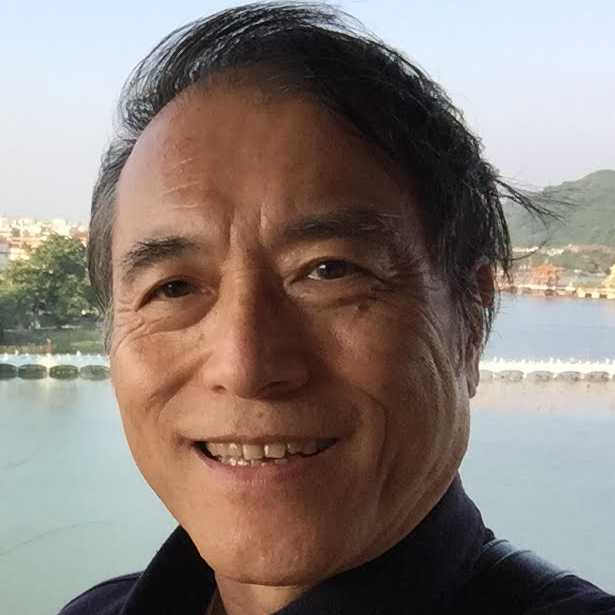
Kavli Institute for the Physics and Mathematics of the Universe (Kavli IPMU), The University of Tokyo, Tokyo, Japan;Prof. Misao Sasaki obtained his PhD in Science from the Department of Physics, Kyoto University, 1981. In 1983, he became an Assistant professor in the same Department and in 1986 moved to the Research Institute for Theoretical Physics, Hiroshima University. He became a full professor in 1995, Department of Earth and Space Science, Osaka University. In 2002, he moved to Yukawa Institute for Theoretical Physics, Kyoto University and, since 2018, he is Project Professor, Kavli IPMU, University of Tokyo.
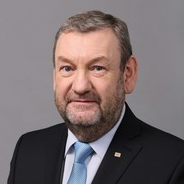
Department of Complex Information Security of Computer Systems, University of Control Systems and Radioelectronics, Tomsk, Russia;

Physics Department, Stellenbosch University, South Africa;Herbert Weigel is Professor of Theoretical Physics at Stellenbosch University (South Africa).He received his PhD at Siegen University (Germany) under the supervision of Prof. G. Holzwarth. Thereafter he spent several years as postdoc in Syracuse (New York), Orsay (France) and Tubingen (Germany). In Tubingen he also gained his 'Habilitation' (2nd PhD). He was then awarded a Heisenberg fellowship by the German Science Foundation (DFG) for a period of five years which he spent as researcher at the MIT, Cambridge (Massachusetts) and Tubingen. He became an Extra-curricular Professor at Siegen University before he moved to Stellenbosch as Associate Professor. He was promoted to Full Professor in 2013. Prof. Weigel's research interests are centered around non-linear phenomena in (quantum) field theory. Most notably these are the so-called soliton solutions. They have a particle interpretation and can, for example, be used to model aspects of quantum-chromo-dynamics as low energy scales. He particularly investigated the relevance of strange degrees of freedom for baryons. More recently he also focused on the quantum effects for solitons (or soliton-like structures). Not only yields that study insight in the famous Casimir effect; it also shows that classically unstable field configurations can be stabilized quantum mechanically. In other cases these quantum effects may cause classically stable configurations to fade away. Prof. Weigel has (co)authored more than one hundred research publications, about half a dozen review articles and two monographs on his research projects.
























Please find the list of posters HERE (last update 25 May 2023). You will be provided with a vertical poster board and your poster will be displayed based on your assigned poster number. Note that maximum poster size limited to A0: 84 x 120 cm / 33 x 47 in (width x height) in vertical orientation (portrait). Please print your poster prior to the conference.
Posters should be set up on Wednesday, 21 June in the afternoon, and they should remain in place for the entire event. Poster sessions are scheduled for Thursday, 22 June from 11:00 to 12:00, and on Friday, 23 June from 11:00 to 11:30. During these times you are required to stand at your poster. Posters must be taken down by Friday at 14:00. Any posters remaining after this time will be removed and recycled.

Thursday 22 June, 20:30h
45 EUR per person
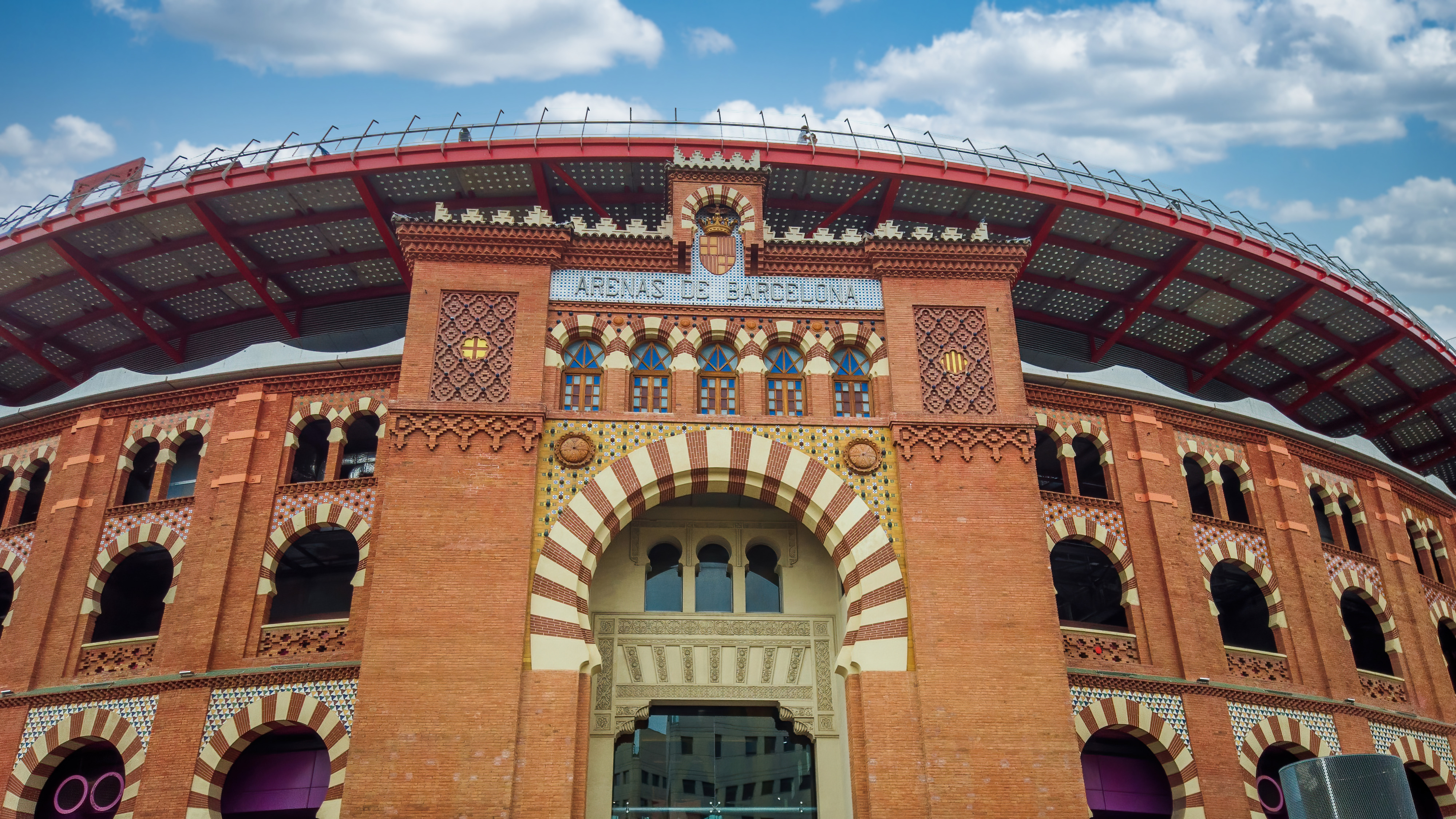
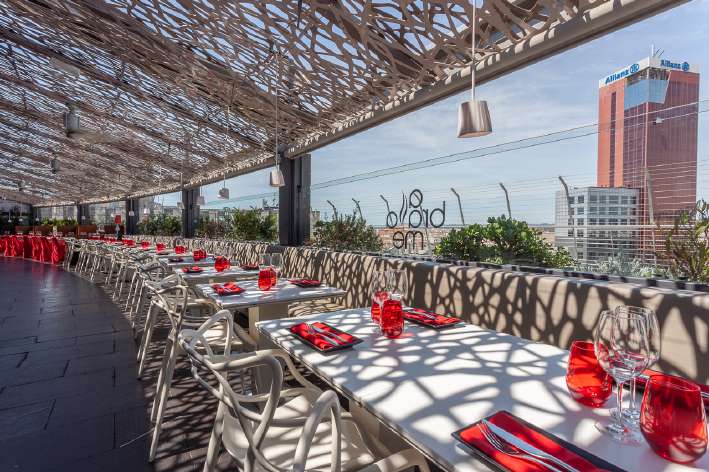
We invite you to join us at the Conference Dinner at Abrassame, a cutting-edge restaurant specialised in Mediterranean cuisine which, in addition to its location at the pictouresque terrace of Arenas de Barcelona, will make of your evening at the restaurant an experience to remember.
The dinner will be at an additional cost of 45 EUR and will need to be booked separately in an independent registration. Please register and pay for it here before 13 June 2023 and save your seat. You are welcome to bring any accompanying persons by booking their seats. Please note that registrations onsite will not be permitted.
Please find below the Symmetry 2023 Conference Book, including all abstracts (last update 14 June 2023). Click on the cover image to download it: