Sessions
Sessions
S1. Particle Physics and Nuclear Physics
S2. Theoretical and Mathematical Physics, Astrophysics and Cosmology
S3. Computer Science, Artificial Intelligence and Interdisciplinary Applications
S4. General Topics in Symmetry
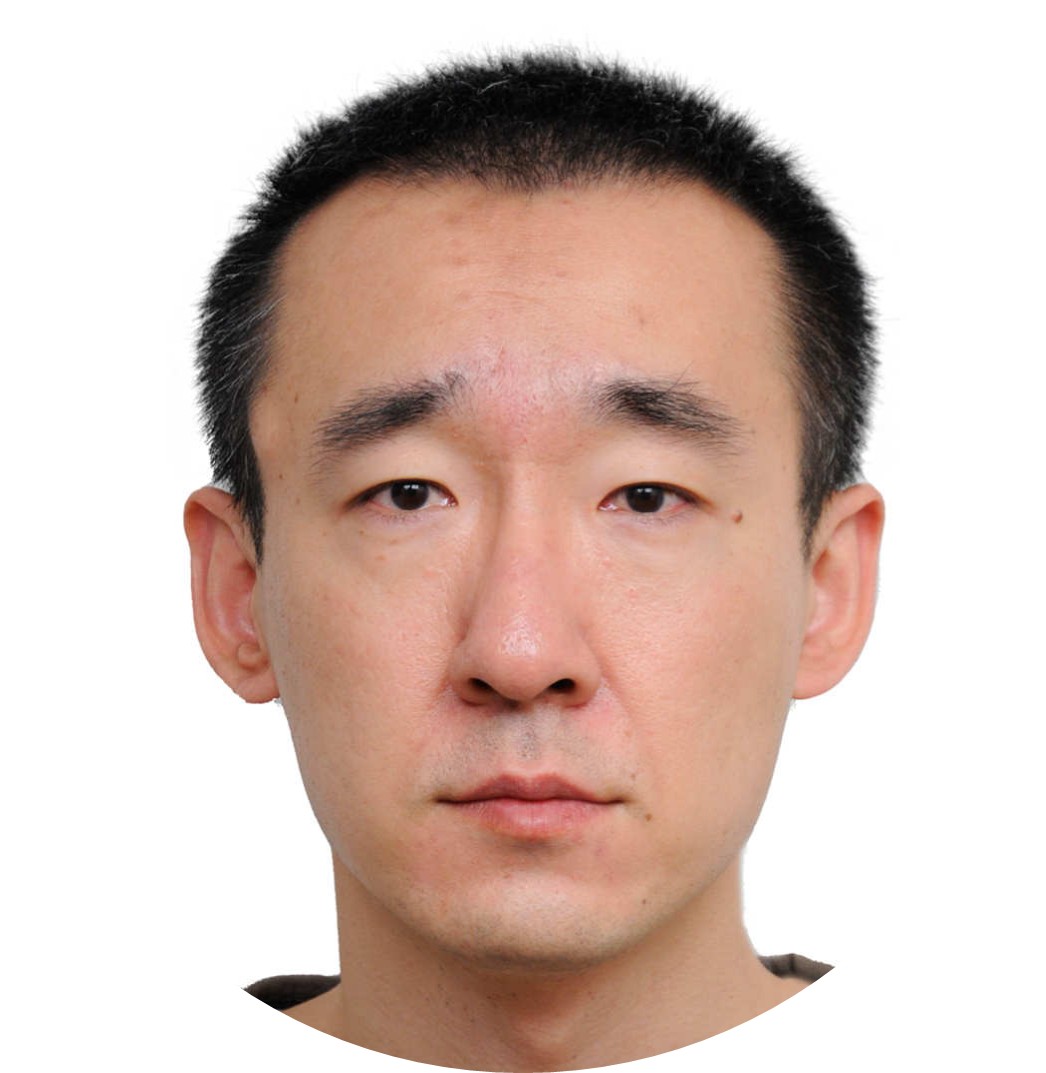
Institute of High Energy Physics, Chinese Academy of Sciences, Beijing, China
Beijiang Liu’s prolonged efforts in experimental hadron physics made ground-breaking contributions to the physics of exotic hadrons. He led the first observation of the isoscalar 1⁻⁺ state η₁(1855), revealing a new category of strongly interacting matter and opening a frontier in exotic quantum-number spectroscopy. He developed the world's first GPU-based partial-wave analysis software, overcoming computational bottlenecks in hadron spectroscopy. He served as BESIII Physics Coordinator and Light Hadron convener. He has led National Key R&D and NSFC/CAS programs, and is an NSFC Excellent Young Scholar. He delivered plenary reviews at ICHEP, HADRON, and other premier international conferences.
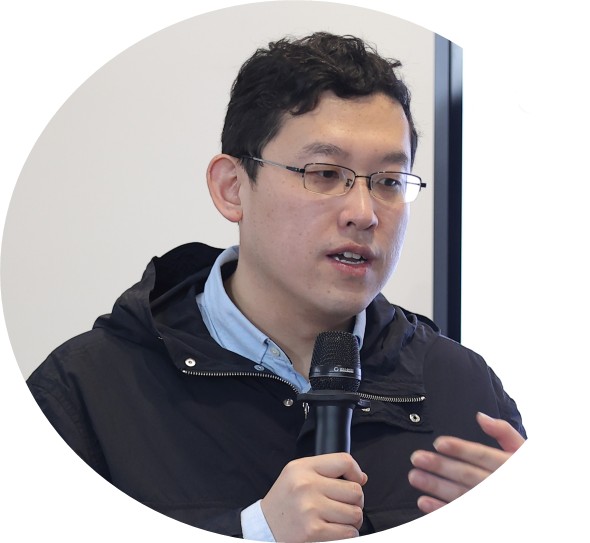
Tsung-Dao Lee Institute (TDLI), Shanghai Jiao Tong University, Shanghai, China
Prof. Shu LI is presently a tenured fellow at Tsung-Dao Lee Institute (TDLI), Shanghai Jiao Tong University (SJTU).
He obtained his bachelor and PhD degree from University of Science and Technology of China and pursued postdoctoral research at Duke University and CERN before joining TDLI/SJTU in 2017 as the first T.D. Lee Fellow.
His research focuses on high-energy experimental particle physics, including Higgs&Electroweak physics and also new physics beyond the Standard Model utilizing the ATLAS high energy proton-proton collision data from Large Hadron Collider (LHC) at CERN and led several international research groups of LHC-ATLAS collaboration. He is also the Principal Investigator of future DarkSHINE experiment R&D, being the first accelerator-based fixed-target experiment initiative in China dedicated to dark photon search with high repetition rate electron beam from SHINE (Shanghai HIgh repetitioN rate XFEL and Extreme light facility). He has been awarded several national and Shanghai municipal talent programs and been the leading Principal Investigators of NSFC international key research project and original exploration program, MOST national key research and development program sub-taskforce, and Shanghai pilot program for basic research.
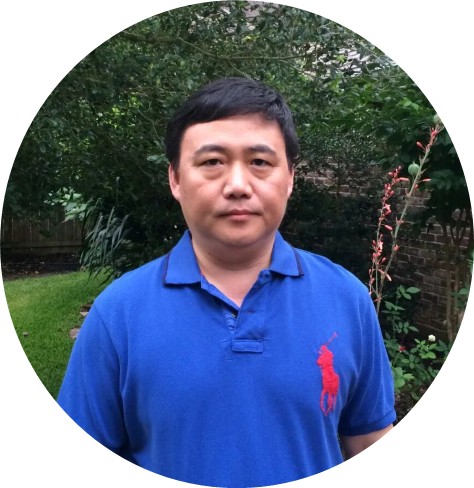
School of Physics, Henan Normal University, China
Tianjun Li is a Professor at School of Physics, Henan Normal University. He obtained the Ph.D. degree at University of Wisconsin-Madison. He has been a Postdoctoral Research Associate at University of Pennsylvania, a Member at the Institute for Advanced Study, Princeton, and a Professor at the Institute of Theoretical Physics, Chinese Academy of Sciences. His research covers particle physics phenomenology, Grand Unified Theory, string phenomenology, and cosmology, etc.
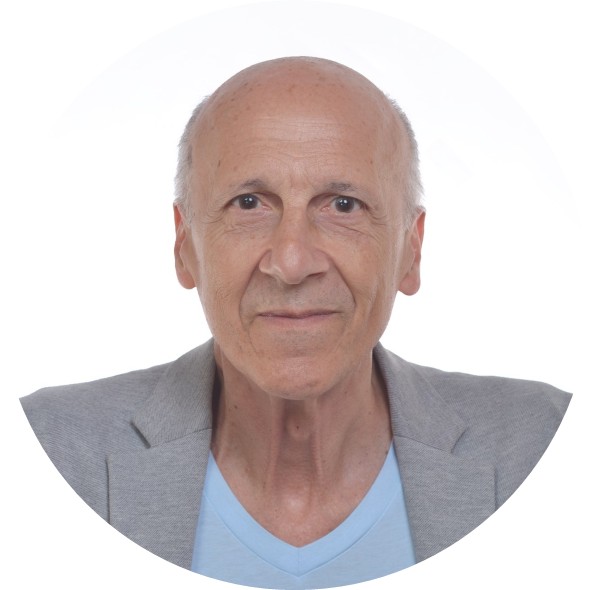
Laboratoire de Physique Théorique et Hautes Énergies (LPTHE), Sorbonne Université, Paris, France, Center of Excellence in High Energy Physics, , Faculty of Science, Chulalongkorn University, Bangkok, Thailand
Ignatios Antoniadis is Director of Research class 1 (Emeritus) at CNRS, France, and Honorary Professor at the University of Liverpool. He holds visiting positions at Chulalongkorn University and IAS Princeton. His research covers quantum field theory, particle physics phenomenology, quantum gravity, cosmology and string theory, with over 350 scientific articles.

Kobayashi-Maskawa Institute for the Origin of Particles and the Universe, Nagoya University, Nagoya, Japan
I received a Ph.D. from Kyoto University in 1986. I was a professor at Nagoya University from 2006 to 2024 and am currently a professor emeritus there. I served as Director of the Center for Theoretical Studies at the Kobayashi-Maskawa Institute (KMI) (2012-2019) and Chair of the Division of Theoretical Studies at KMI (2019-2024). My research covers quantum field theory, elementary particles, string theory, and modified gravity theories. I have been a Highly Cited Researcher every year from 2014 to 2018. I rank 912th in Research.com's Best Physics Scientists 2026.
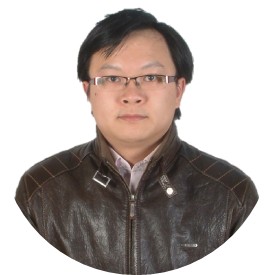
School of Physical Sciences, University of Chinese Academy of Sciences, Beijing, China
Dr. Jiajun Wu is a Professor and Ph.D. Supervisor at the School of Physical Sciences, University of Chinese Academy of Sciences (UCAS). He received his Ph.D. from the Institute of High Energy Physics, Chinese Academy of Sciences in 2012, and conducted postdoctoral research in the USA, Australia, and Germany. Since 2018, he has been a faculty member at UCAS.
His research focuses on theoretical high-energy particle physics, specifically hadron physics by combining experimental data with lattice spectra, as well as neutrino-nucleon scattering and weak decays of baryons and mesons. Dr. Wu has published over 100 academic papers in top-tier journals such as PRL, CPL, JHEP, PRD, PLB, and CPC, with a total citation count exceeding 5,000. He has been selected for the National High-Level Young Talents Program.

Universitat Politècnica de Catalunya, Barcelona, Spain
Dr. Jaume de Haro is a Professor in the Department of Mathematics at the Polytechnic University of Catalonia (UPC) in Barcelona, Spain. His primary research interests focus on theoretical cosmology, general relativity, and modified theories of gravity. He has authored numerous high-impact research articles on cosmic inflation, bouncing cosmological models, dark energy, General Relativity, and quantum cosmology, with a particular emphasis on Loop Quantum Cosmology. Dr. de Haro’s work aims to address fundamental questions in early-universe physics, gravitational dynamics, foundations of General Relativity and the non-singular evolution of the universe, bridging mathematical formulations with cosmological phenomenology.