Water Webinar | Hydrodynamics in Open Channel Flows and in Pressurized Pipe Systems: Fundamentals and Applications
the chair
6th Water Webinar
Hydrodynamics in Open Channel Flows and in Pressurized Pipe Systems: Fundamentals and Applications
In this new era, there is a pressing requirement for new digital tools applied in hydraulic and hydrodynamic analyses based on different characteristic parameters and using suitable numerical models. Identifying the biggest challenges and issues in the water industry both for open channel flows and for pipelines will help drive best engineering practices, innovation design and the definition of safety solutions by foreseen extreme surges and dangerous associate events. Deciding on future directions of hydrodynamics in open channel flows, flow–structure interaction, two-phase flows and water-hammer events allows us to obtain a correct definition of safety conditions to guarantee system security through innovative studies toward safer water infrastructures. Hydraulic systems may involve both pipelines and open channel flows, which challenges hydraulic transient analysis with significant wave propagation, allowing us to define research directions and best practice applications. Hydraulic transients occur regularly in hydraulic systems conveying fluids, such as water distribution and drainage networks, hydropower and pumping stations, as well as subsea pipelines, requiring valve control, entrapped air management, shutdown and start-up turbomachines, air–water and fluid–structure interactions. They can cause large pressure surges, which may damage the infrastructure assets and lead to instabilities when operating and surge control devices are not well designed to cope with this issue. Therefore, conducting hydraulic transient simulations, using digital twin approaches, or lab facility tests to replicate the real prototype operation are essential to facilitate a correct design, action rules and restriction definition in all types of hydraulic systems.
Date: 29 March 2024
Time: 3 pm CET | 10 am EDT | 9 am CDT
Webinar ID: 817 5813 0616
Webinar Secretariat: journal.webinar@mdpi.com
Meet Our Chair

Department of Civil Engineering, Architecture and Environment, CERIS, Instituto Superior Técnico, University of Lisbon, Lisbon, Portugal;Helena Margarida Ramos achieved her MSc degree in 1987, her PhD degree in 1995, and her Habilitation degree in 2005. She is a Full Professor at Instituto Superior Técnico (University of Lisbon) in 15 different courses. She has more than 400 publications, with 7 published books, 182 international scientific papers in journals with a referee, and 156 scientific papers in international conferences. She has participated in 32 scientific research projects. She has been Editor-in-Chief of the journal Water (MDPI), Guest Editor of six Special Issues in the Water and Energies (MDPI) journals, an invited speaker of webinars, and has been engaged in scientific activities as a member of editorial teams and as a reviewer of different scientific journals. She has received four awards from scientific societies and has been a member/collaborator of several International Scientific Committees. She has had nine IST Management positions at IST. She has been invited as a supervisor and evaluator of several examinations (projects, PhD, and MSc), and asked to develop/participate in projects and proposals (covering contacts across the EU, Latin America, Canada, Hong Kong, China, and the USA).
Meet Our Speakers
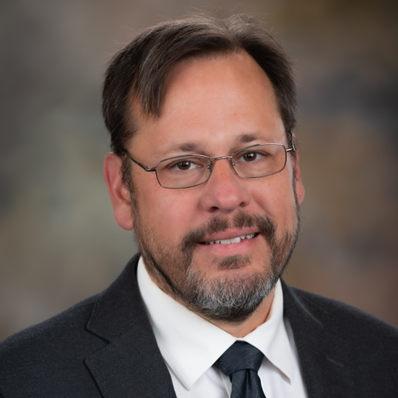
Prof. José Vasconcelos
Hydraulics and Hydrology Group, Department of Civil Engineering, Auburn University, Auburn AL, USA;Jose Vasconcelos is the leader of the Hydraulic Research Group at Auburn University, focusing on unsteady flows in closed conduits, air–water interactions, stormwater management, and extreme flows in urban water systems. He has interests in numerical and laboratory-scale hydraulic modeling, as well as field investigations on urban and undeveloped headwater watersheds. At Auburn, he teaches undergraduate and graduate-level classes on water resources and leads student researchers in areas linked to hydraulics, hydrology and sustainability, as well as serving on the university’s Stormwater Committee. He serves as an associate editor in the Journal of Hydraulic Engineering (ASCE), Journal of Water Management Modeling (CHI), and Water (MDPI). Dr. Vasconcelos also chairs the ASCE EWRI Task Committee for Two-phase Flows in Urban Water Systems. He also serves as a mentor to the Auburn University student chapter of Engineers Without Borders, having developed projects in Rwanda and Guatemala.

Department of Mechanical Engineering and Mechatronics, West Pomeranian Univ. of Technology Szczecin, Szczecin, Poland;Kamil Urbanowicz is an associate professor at the West Pomeranian University of Technology in Szczecin, Poland. He obtained his B.Sc. and M.S. degrees at the Szczecin Polytechnic University in 2004, and his Ph.D. degree at the West Pomeranian University of Technology in 2009, in the field of fluid transients. At the beginning of 2019 (April), based on the series of publications titled “Effective modelling of unsteady liquid flows in pressure pipes”, he started his habilitation thesis and later the same year (October 2019) was elected as an associate professor of numerical fluid mechanics at the West Pomeranian University of Technology at the Faculty of Mechanical Engineering and Mechatronics. He has been a member of the Polish Society of Theoretical and Applied Mechanics since October 2008 and a member of the Polish Academy of Science since February 2021. By himself or with coauthors, he has published 85 papers in scientific journals and proceedings at various international and domestic scientific conferences. He is also a co-author of five patents (five others under review). He has carried out research in the field of fluid transients and related phenomena, column separation, and unsteady friction. He has participated several times in specialized international conferences, for example, the Pressure Surges or Fluid Mechanics Conference. He was involved in two large research projects entitled “Models and calculation methods for the water hammer including cavitation and unsteady friction” (he was a member of a working team with Adamkowski, Lewandowski, and Zarzycki) and “Modeling of the dynamics of electromechanical microsystems” (leader of the working team). Nowadays, he actively cooperates with experienced scientists from all over the world. He is a reviewer for 45 top world-class scientific journals (indexed with a high impact factor). He has been awarded multiple times by the Rector of West Pomeranian University of Technology for his achievements and contributions to the development of scientific research.

School of Civil Engineering, Architecture and Urban Design, State University of Campinas, Campinas, Brazil;Dr. Elias Tasca specializes in researching air–water interactions in pressurized water pipelines, with a particular focus on the effects of entrapped air on system transients and the role of air valves in surge mitigation. He has published his work in the following journals: the Journal of Hydraulic Engineering (ASCE), Water, and Sustainability. In recognition for his work, Elias was awarded the 2022 Orin Flanigan Scholarship at the annual conference of the Pipeline Simulation Interest Group (PSIG) in San Diego, California. He earned his doctorate from the Universidade Estadual de Campinas (UNICAMP) in 2023 under the supervision of Professor Edevar Luvizotto Junior and completed an exchange program in 2020 at the University of Toronto, supervised by Professor Bryan W. Karney. Elias is currently working on two forthcoming monographs related to two-phase flows in pipeline systems, titled 'Two-phase Flow in Urban Areas,' to be hosted by the Hydraulic Structures Committee of the American Society of Civil Engineers (ASCE), and a monograph on transient flows, to be hosted by the International Association for Hydro-Environment Engineering and Research (IAHR).


First of all, a special thanks goes to the journal Water from MDPI for this initiative, which promotes the dissemination of knowledge, the gathering of experts from the water industry and those interested in it, and raising awareness among researchers and students about hydrodynamic issues that are associated with safer water infrastructures.
New digital tools applied in hydraulic and hydrodynamic analyses using suitable numerical models, as demonstrated by the speakers, were enhanced through all the presentations. Identifying the most significant challenges and issues in the water industry, both for open-channel flows and for pipelines, will drive the best practical engineering approaches, innovation designs, and the definition of safety solutions by anticipating the extreme pressure surges that are associated with dangerous associate events.
Hydrodynamics in open-channel flows using the SWMM model, unsteady friction formulations using MOC, two-phase flows, cavitation problems, and all types of water-hammer events allow for obtaining a better definition of the security conditions that guarantee system operation through innovative studies toward the best engineering practices that can be used for pipeline systems (e.g., storm drainage systems, conveyance hydraulic systems, pump and hydropower systems).
Hydraulic transients require entrapped air management, damping effects, fluid–structure interactions, fluid vaporization with cavitation, entrapped air, valve control, special concerns with higher points of the pipe profile, rigid and viscoelastic effects, and the shutdown and start-up of turbomachines. They can cause large pressure surges, thereby damaging infrastructures and leading to instabilities and issues with surge control devices.
Therefore, hydraulic transient simulations using digital twin approaches or lab facility tests to replicate real prototype operations are essential for correct designs and for defining action design rules in all types of hydraulic systems.
Feature Papers of Hydraulics and Hydrodynamics
Edited by Prof. Dr. Helena M. Ramos