Sessions & Session Chairs
Sessions
S1. Plasma and Laser Coatings, Surfaces and Interfaces
S2. Corrosion, Erosion and the Tribological/Smart/Diamond-Like Carbon Coatings
S3. Coatings and Thin Film Deposition
S4. Ceramic Coatings
S5. Protective Coatings in Cultural Heritage, Conservation and Preservation
S6. The Biomedical Application of Coatings
S7. Functional Polymer Coatings and Films
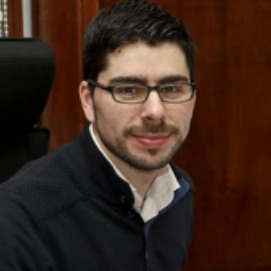
Materials Engineering, Applied Mechanics and Construction, University of Vigo, Vigo, Spain
Research lines: Laser materials processing. Biomaterials processing and mechanical characterization. Osseous remodelling based on mechanical stimuli.
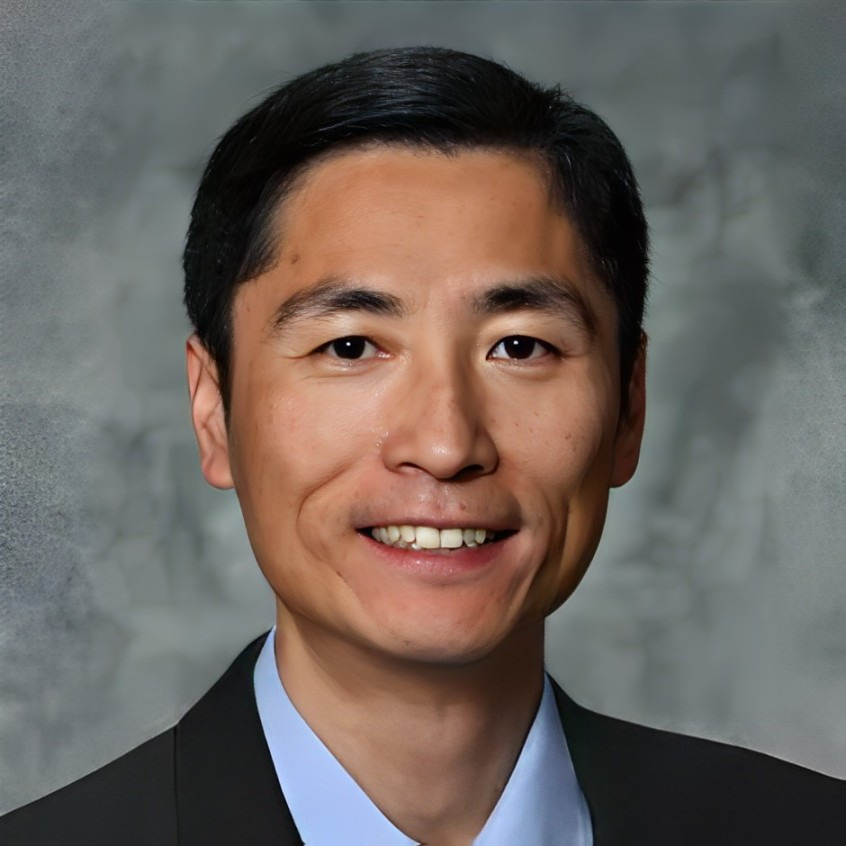
College of Engineering, Michigan State University, East Lansing, USA
Dr. Qi Hua Fan received his Ph.D. in applied physics from the University of Aveiro in 1999. He is currently a Full Professor at Michigan State University with joint appointment in the Department of Electrical and Computer Engineering and the Department of Chemical Engineering and Materials Science. He is also a member of the Fraunhofer Center for Coatings and Diamond Technologies. Dr. Fan’s research interests include plasma sources for large-area coatings and plasma processing of nanostructured materials for energy harvesting, energy storage, and electro-optical devices. Dr. Fan teaches both undergraduate and graduate courses in ECE and CheMS departments. Typical courses include Plasma-Assisted Materials Processing, Thin Film Optics and Engineering, and Materials Science.
Aerogel Materials Research Center (ERC), Yonsei University, Seoul, South Korea.
Hyung-Ho Park is a Distinguished University Professor of Yonsei University in Korea. His research is mainly focused on the preparation, characterization, and application of various functional materials including thin film materials, nanomaterials, and nanoporous materials including aerogels. Concerning with aerogels research, Park established a ‘Aerogel Materials Research Center’ from 2020, supported by a National Research Foundation of Korea. In AMRC, synthesis of inorganic, organic, and inorganic-organic hybrid aerogels are being investigated, especially formation of compound aerogels is included. Furthermore, to overcome the brittle nature of aerogel materials, multi-compositional, multi-dimensional, and multi-scaling approaches are being investigated. Through these works, applications of aerogels to thermal insulation systems, in aeronautical domains, for environment clean up and protection, heat storage devices, transparent windows, thickening agents in paints, etc. are also being studied.
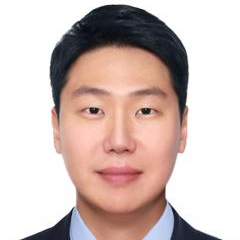
School of Materials Science and Engineering, Yeungnam University, Gyeongsan, South Korea
Minjae Kim is an Assistant Professor in the School of Materials Science and Engineering at Yeungnam University. His research focuses on oxide-based memristor devices and next-generation neuromorphic hardware. His work centers on functional oxide thin-film processing using Atomic Layer Deposition (ALD), the design of resistive switching memory (RRAM) and memristor devices, and the realization of large-area crossbar array-based artificial intelligence computing platforms. Prof. Kim investigates defect and doping control in oxide thin films to implement self-rectifying memristor devices and to develop device architectures that minimize sneak current issues during array operation. Beyond single-device characterization, his research extends to the integration of 32×32 and 64×64 crossbar arrays, multi-level switching, and the implementation of synaptic plasticity behaviors, thereby broadening the application potential of neuromorphic systems. His research group participates in national programs such as the ‘Semiconductor Specialized University Support Project’ and the ‘BrainKorea21 Four’ Program’ to strengthen its research capabilities. The laboratory conducts fundamental and applied research on memristor devices and is currently advancing research aimed at promoting the development of an oxide-memristor-based Physical AI platform. The group has established a full-cycle research framework spanning materials, devices, arrays, and systems, with the long-term goal of contributing to next-generation low-power AI hardware and highly reliable memory device technologies.

Department of Materials Engineering, Federal University of São Carlos, São Carlos, Brazil
Dr. Signo T. Reis is a glass scientist, a member of the American Ceramic Society, an Adjunct Professor of materials science at the Missouri University of Science and Technology in the United States, and a Visiting Professor at Federal University of Sao Carlos (UFSCar) in Brazil. He has worked on glass science and glass ceramics in the United States, Turkey, and Brazil, and brings extensive experience from both industrial and academic settings. Dr. Reis has been involved in research and development related to sealants for SOFC, enamel coating for metals, glass ceramics for abrasives materials, and general glass science across various countries. He also serves on several industrial, research, and institutional boards. He holds over 10 patents and has authored more than 100 publications, including peer-reviewed articles, conference papers, and book chapters, contributing as both an author and editor.

Department of Economics, Engineering, Society and Business Organization, University of Tuscia, Vitebo, Italy
Claudia Pelosi is an Associate Professor of Chemistry for the Environment and Cultural Heritage at the University of Tuscia (UNITUS) in Viterbo, Italy. She obtained the National Scientific Qualification (Abilitazione Scientifica Nazionale) for Full Professor in Analytical Chemistry, valid from 1 June 2022 to 1 June 2034. She is the co-author of 124 scientific articles indexed in Scopus.

Institute for Materials and Processes, School of Engineering, University of Edinburgh, Edinburgh, UK
Dr. Vasileios Koutsos is a Professor (Chair in Soft Materials and Surfaces) with the Institute for Materials and Processes in the School of Engineering. He was formerly a Marie Curie Post-Doctoral Research Fellow at the Laboratory of Condensed Matter Physics, Collège de France (Paris, France, 1998–2000). He obtained a B.Sc. in Physics from the Physics Department of Aristotle University of Thessaloniki, Greece, in 1992, and a Ph.D. in Polymer Science from the Chemistry Department and Materials Science Centre at the University of Groningen, The Netherlands, in 1997. Since joining the University of Edinburgh in 2000, he has progressed from Lecturer to Professor, leading an interdisciplinary research group at the interface of materials science and mechanical engineering. Over more than two decades of academic leadership, he has secured approximately £8 million in research and industrial funding and currently leads an advanced AFM facility at the University of Edinburgh. A defining feature of his career is a strong user-oriented approach that bridges the gap between fundamental research and industrial application. He has attracted more than £1.5 million in direct industrial funding from world-leading partners, including Michelin, SABIC, Ford, Jaguar Land Rover, WES, and Greencoat UK Wind, to address complex challenges in materials science and engineering. He is a Fellow of the Institute of Physics (FInstP), a Fellow of the Institute of Materials, Minerals and Mining (FIMMM), a Fellow of the Higher Education Academy (FHEA), a Chartered Engineer, and a Member of the Institution of Mechanical Engineers (CEng MIMechE). He served as Head of the Research Institute for Materials and Processes for a full five-year term (2014–2019) and as Deputy Head from 2019 to February 2026. Since 2024, he has also served as Deputy Director of Mechanical Engineering.

Food Science & Environmental Health, Technological University Dublin, Dublin, Ireland
Dr. Swarna Jaiswal is a lecturer in applied microbiology and food packaging technology at Technological University Dublin (TU Dublin), City Campus, Ireland. She earned her PhD in 2012 from TU Dublin and an executive MBA in 2015, equipping her with a strong blend of scientific expertise and strategic leadership. Following her PhD, she worked as a research scientist at the Centre for Research in Engineering Surface Technology (CREST), TU Dublin, for five years, where she played a pivotal role in advancing applied research for industrial applications. She is the Director of the Centre for Sustainable Packaging & Bioproducts (CSPB) at TU Dublin, leading innovative research in biodegradable packaging solutions, antimicrobial coatings, and nanocomposite biomaterials. Dr. Swarna’s research is deeply rooted in industry collaboration, working closely with SMEs and multinational corporations across Ireland and the UK to develop cutting-edge sustainable packaging technologies. Her expertise extends to applied microbiological coatings and active packaging films, driving impactful advancements in food safety, shelf-life extension, and eco-friendly material alternatives. She has authored over 100 publications, including peer-reviewed journal articles and book chapters, with an h-index of over 40 and 8,000+ citations. In recognition of her research excellence, Stanford University has listed her among the world’s top 2% of scientists in 2025. She serves on the editorial board of leading international journals, including Coatings and Sustainable Packaging (MDPI), and has presented her work at numerous prestigious national and intesrnational conferences. With a strong record of academic excellence, industry engagement, and leadership in sustainable materials research, Dr. Swarna is driving impactful innovations at the intersection of science and sustainability, shaping the future of environmentally responsible packaging solutions.