Speakers
Keynote Speakers

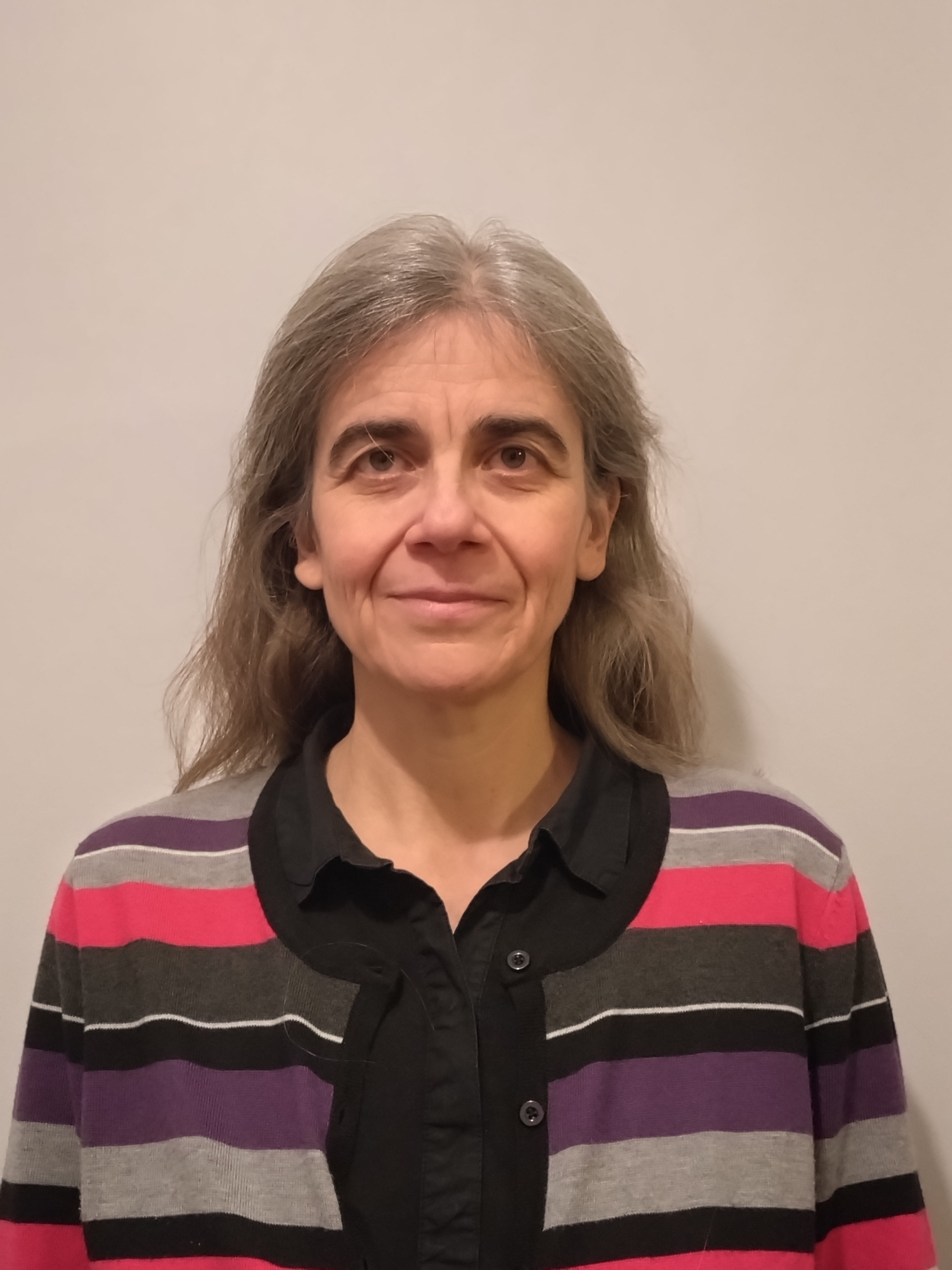
Prof. Dr. Elodie Richalot
Gustave Eiffel University of Bordeaux, ESYCOM Laboratory, Champs-sur-Marne, France

Title of the Presentation
RF sensors for spectroscopic analysis of small liquid volumes

Abstract
The use of RF-sensors is of interest for the study of biological materials as it gives an access to the internal properties of tissues or cells. These sensors are however sensitive to environmental conditions as temperature, affecting their reliability. The differential approach relying on the use of a known reference sample permits to compensate this effect; its implementation will be explained and the points of attention due to the possible overlap of the sensor resonances will be discussed. For different applications as medical diagnosis support or medicamental testing, the tested samples or of small volumes. As the sensing of small sample volumes implies reduced sensor sensitivity, resonating sensors can be preferred to broadband ones due to their higher sensitivity at the expense of the amount of frequency information. To mitigate this effect, the resonating sensor can be modified to make its resonance frequency electrically tunable. We will present the approach adopted to obtain a frequency tunable resonating sensor, along with the different parts of the system and the obtained performances.

Short Bio
Elodie Richalot (Member, IEEE) received the Diploma and Ph.D. degrees in electronics engineering from École nationale supérieure d’electrotechnique, d’électronique, d’informatique, d’hydraulique et des telecommunications, Toulouse, France, in 1995 and 1998, respectively. Since 1998, she has been with Université Gustave Eiffel, Champs-sur-Marne, France, where she became a Professor of Electronics in 2010. She is currently the deputy director of ESYCOM laboratory. Her current research activities in the ESYCOM Laboratory include modeling techniques, antenna characterization in reverberation chambers, millimeter wave passive devices along with RF and optical sensors. She is the coauthor of more than 60 papers in top-tier journals.

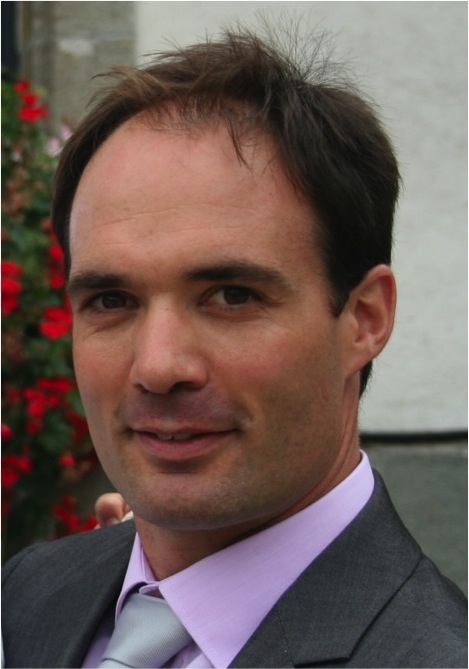
Prof. Benjamin Potelon.jpg

Prof. Benjamin Potelon
Lab-STICC, IMT Atlantique, Brest, France

Title of the Presentation
Sensitivity, selectivity and multi-parameter sensing with coupled planar microwave resonators

Abstract
This presentation proposes a comprehensive investigation into the design, analysis, and implementation of coupled planar microwave resonators optimized for advanced sensing applications. Planar microwave structures are widely utilized for non-invasive characterization; however, achieving simultaneously high sensitivity and selectivity remains a critical challenge. By exploiting the electromagnetic coupling mechanisms between resonators, we demonstrate a significant enhancement in the sensor's overall performance. This approach also enables the simultaneous extraction of several features  from an unknown material under test. Experimental and numerical results validate this approach, offering a high-precision, compact, and cost-effective outcomes opening the way for precise, accurate, real-time advanced industrial, chemical, and biomedical diagnostics.

Short Bio
Benjamin Potelon received the Ph.D. degree in electronics from the University of Brest, Brest, France, in 2007. From 2008 to 2022, he was an Associate Professor with the University of Western Brittany, Brest, where he received his peer-accreditation to supervise research in 2016, focusing on the technologies and synthesis techniques for SIW filters. He is currently a Professor (Full) with the Institut Mines-Telecom at IMT Atlantique and Lab-STICC, Brest. His research activities mainly address the design of radio frequency devices and associated fabrication technologies.

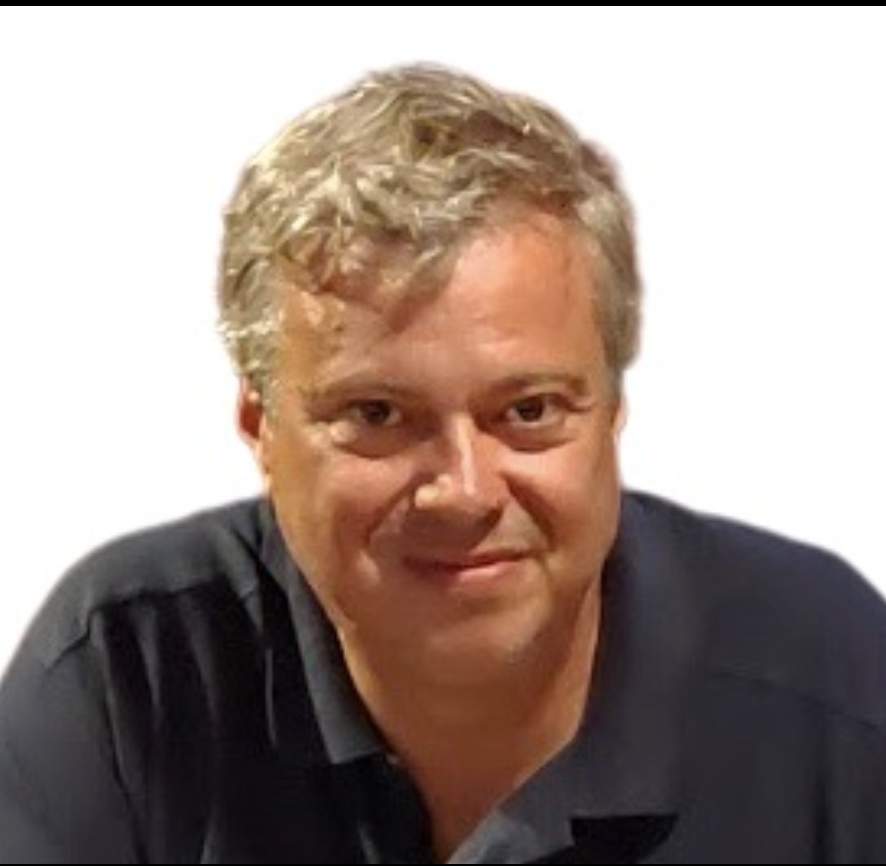
Dr. Valerio Bocci.png

Dr. Valerio Bocci
INFN Roma and Department of Physics, Sapienza University of Rome, Italy

Title of the Presentation
From Large Experiments to Silicon Laboratories: How Mixed-Signal SoCs Are Reshaping Sensing and Connectivity

Abstract
Over the last few decades, sensing systems have evolved dramatically. Functions that once required bulky and complex instrumentation can now be integrated into a few square millimeters of silicon. This integration is leading to a new class of all-in-one detectors that combine sensing, signal processing, and communication capabilities on a single device. Drawing on examples from particle physics instrumentation and the development of compact sensor systems, this talk will explore how advances in mixed-signal System-on-Chip technologies are enabling an emerging generation of connected, distributed sensing platforms. The convergence of microelectronics, wireless communications, and edge intelligence is opening up new possibilities in environmental monitoring, smart cities, wearables, and health applications. Finally, the presentation will discuss how the concept of a "silicon laboratory" is already reshaping the way measurements are performed and interpreted, turning technological expectations of the last decade into practical reality.

Short Bio
Valerio Bocci is an experimental physicist at INFN Roma with extensive experience in particle physics experiments and the development of electronics and data acquisition systems for particle detectors. His research activity has involved experiments at CERN in Geneva, including DELPHI, ATLAS, and LHCb, at the INFN National Laboratories of Frascati with KLOE, and in Argentina with the Pierre Auger Observatory. His work includes early contributions to the use of FPGA-based electronics in the radiation environment of the LHC, as well as the development of trigger, readout, and detector control systems. His current research focuses on mixed-signal electronics, silicon photomultipliers (SiPMs), System-on-Chip architectures, and intelligent distributed sensor systems. He conceived the ArduSiPM platform and has led the development of increasingly compact and integrated SiPM-based instrumentation, including NanoArduSiPM. His research explores the convergence of sensing, embedded processing, connectivity, and edge intelligence, from fundamental physics instrumentation to environmental monitoring and distributed sensor networks.

More Keynote Speakers

To be announced...

Follow us

Powered by Sciforum
Disclaimer
Terms and ConditionsPrivacy PolicyAccessibility