Entropy 2026: Exploring Complexity and Information in Science
Thank You for Attending Entropy 2026!
Entropy 2026 has officialy concluded. We sincerely thank all participants for making Entropy 2026 a great success. Your engagement and contributions made the event truly memorable. We will soon share the conference photos, so stay tuned!
We look forward to seeing you at the next edition!
You can click HERE to download your certificates.
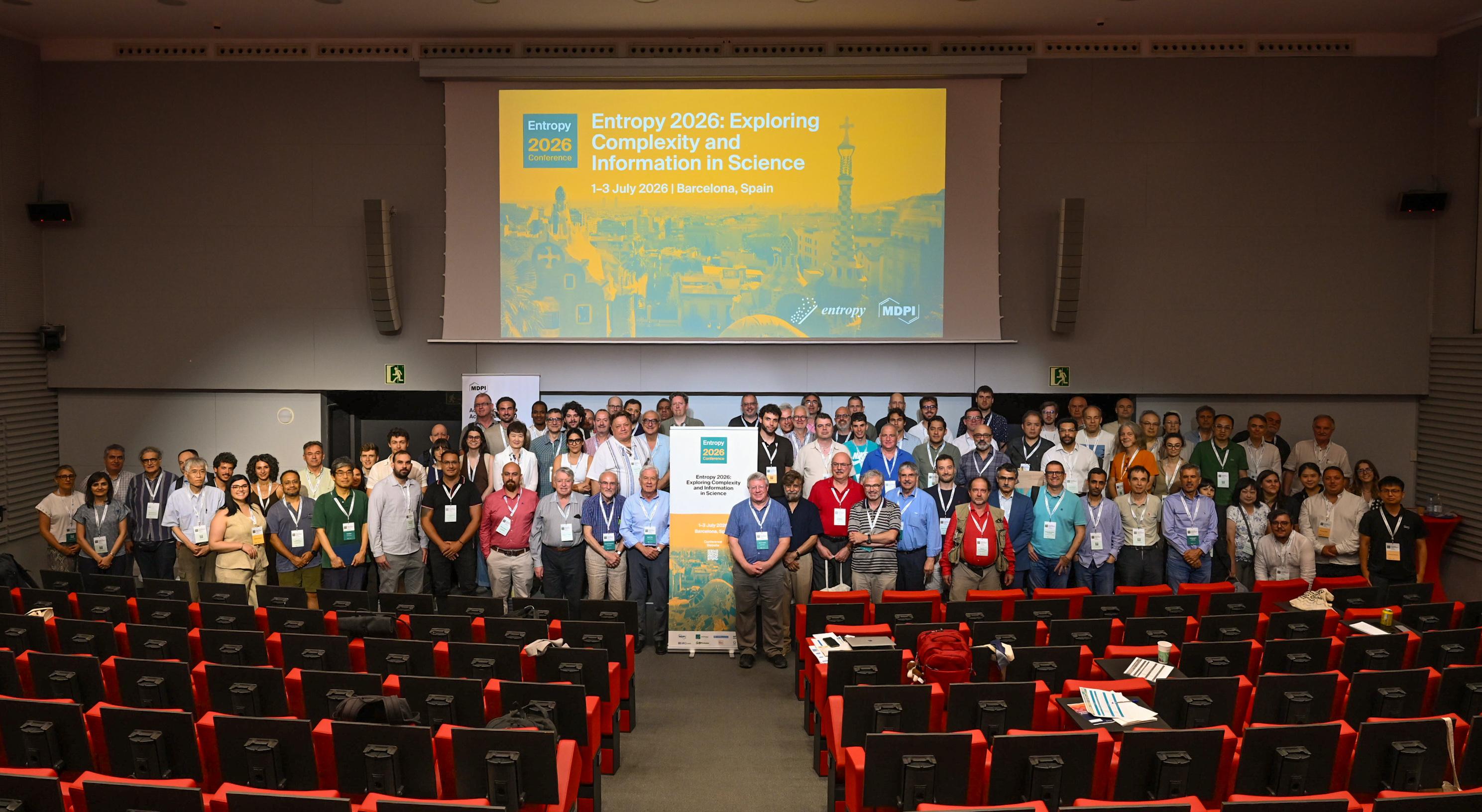
the chairs
Entropy is one of science's most frequently used terms, owing to its foundational relevance in two major disciplines: physics and information theory. Originally rooted in thermodynamics, the concept of entropy has, since Shannon’s pioneering work, become central to the understanding of information processing and communication.
This conference is organised by MDPI's open-access journal Entropy (ISSN 1099-4300; IF: 2.0) and presents a unique opportunity to unite researchers from both fields, fostering collaboration and cross-disciplinary innovation.
The main topics and sessions of the conference include the following:
• Complex Systems and Network Science
• Information Theory, Data Science and Artificial Intelligence
• Quantum Information and Quantum Computing
• Thermodynamics and Energy Systems
• Non-Equilibrium Systems and Entropy Production
• Statistical Physics and Stochastic Processes
• Soft and Living Matter
• Applications of Entropy in Science and Engineering
We particularly welcome interdisciplinary contributions from both theoretical and applied perspectives. Submissions may also address conceptual and methodological advances, as well as innovative applications of entropy and information theory across a broad range of domains.
We very much look forward to your participation.
Prof. Dr. Miguel Rubi—University of Barcelona, Spain
Prof. Dr. Kevin H. Knuth—University at Albany, USA



Join us on LinkedIn Events!
If you want to stay updated with the latest information, or if you want to connect with your fellow researchers before, during, and after the event, then be sure to join the Entropy 2026: Exploring Complexity and Information in Science LinkedIn Event.
See you over there!
Meet Our Chairs
University of Barcelona;J. Miguel Rubí is Professor of Condensed Matter Physics at the University of Barcelona. He earned his PhD in Physics with Summa Cum Laude and completed postdoctoral research with Peter Mazur at the Leiden University. Throughout his career, he has held leadership roles in academia and science policy, including serving as Head of Department, President of the Physics Programme of the Spanish Ministry of Science and Innovation, and Director of the Sitges Conference on Statistical Physics since 1996. His scientific achievements have been recognized with numerous distinctions, including the Alexander von Humboldt Prize, the Onsager Medal, the ICREA Academia Prize, and an honorary doctorate from Norwegian University of Science and Technology. He has also held visiting and honorary professorships at leading institutions across Europe and Latin America.

University at Albany;Kevin H. Knuth is Professor of Physics at the University at Albany and Editor-in-Chief of the journal Entropy. He earned his PhD in Physics and Mathematics from the University of Minnesota and is a former research scientist at NASA Ames Research Center, where he developed machine learning methods for astrophysics, Earth science, and climate research. With more than 30 years of experience in Bayesian inference and maximum entropy methods, he has made significant contributions to machine learning, data analysis, and statistical physics, including pioneering work in Bayesian source separation and the widely used optBINS histogram algorithm. His current research spans the foundations of physics, autonomous robotics, scientific inference, exoplanet discovery, and unidentified aerial phenomena (UAPs). Professor Knuth has authored over 100 peer-reviewed publications and delivered more than 100 invited presentations across 18 countries.
Important Dates
1 Apr
2026
17 Apr
2026
30 Apr
2026
15 Jun
2026
1 Jul
2026
Meet Our Speakers
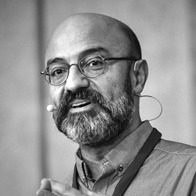
Department of Physics, University at Albany;Ariel Caticha is Professor Emeritus of Physics at the University at Albany. He earned BS and MS degrees in Physics from the University of Campinas and a PhD in Physics from the California Institute of Technology. Following appointments at the University of Utah, University of Campinas, and the National Institute of Standards and Technology, he joined the University at Albany in 1992. An award-winning educator, he has received both the University at Albany Excellence in Teaching and Advising Award and the SUNY Chancellor’s Award for Excellence in Teaching. He retired in 2024, but he is still active in research. His research spans quantum field theory, statistical mechanics, information theory, and the foundations of physics. He is best known for developing the framework of Entropic Dynamics, which applies Bayesian and entropic methods to derive and interpret quantum mechanics, offering new insights into probability, information, time, and the relationship between quantum theory and general relativity.
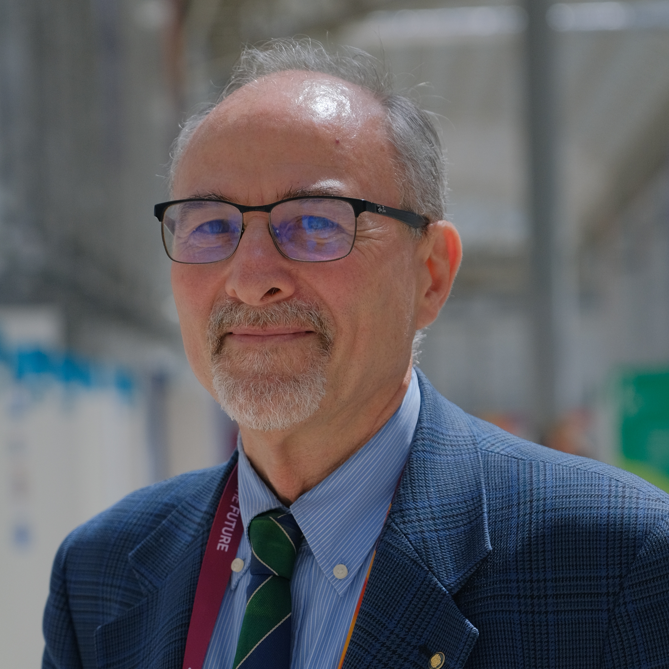
"Emilio Segrè" Department of Physics and Chemistry, Interdisciplinary Theoretical Physics Group, University of Palermo;Bernardo Spagnolo is Full Professor of Theoretical Physics at the University of Palermo and Co-Director of the International School on Nonequilibrium Phenomena at the Ettore Majorana Foundation and Centre for Scientific Culture. A Fellow of the American Physical Society, he serves on the Presidential Council of the Italian Physical Society and leads the Interdisciplinary Theoretical Physics Group at Palermo. His research focuses on nonequilibrium statistical physics, stochastic and multistable systems, noise-induced phenomena, relaxation dynamics, and complex systems, with important contributions spanning both classical and quantum physics. He has authored more than 225 scientific publications, edited numerous books and journal issues, and held visiting appointments at leading institutions across Europe and Russia. Professor Spagnolo serves on the editorial boards of several international journals and was awarded an Honorary Doctorate by Lobachevsky State University of Nizhny Novgorod in 2025 for his outstanding scientific achievements and international academic leadership.
Departament de Física de la Matèria Condensada, Universitat de Barcelona;David Reguera is Full Professor of Condensed Matter Physics at the University of Barcelona, where he is also a member of the University of Barcelona Institute of Complex Systems. He earned both his Physics degree and PhD from the University of Barcelona, receiving the Ilya Prigogine Prize for the best European PhD thesis in thermodynamics. Following postdoctoral research at University of California, Los Angeles, he returned to Barcelona as a Ramón y Cajal Researcher and later joined the faculty. He has authored more than 100 scientific publications with over 7,000 citations and is the founder and coordinator of the Spanish Interdisciplinary Network on the Biophysics of Viruses. His research focuses on virus biophysics, nucleation phenomena, and nonequilibrium statistical mechanics.
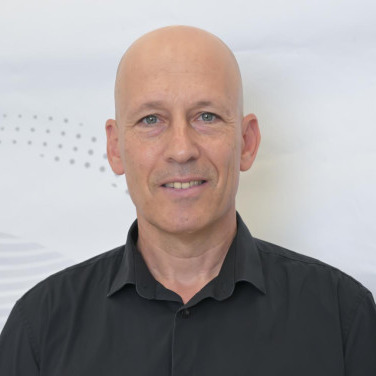
Department of Physics, Institute of Nanotechnology and Advanced Materials, Bar-Ilan University;Eli Barkai is Professor of Physics at Bar-Ilan University. He earned his B.Sc., M.Sc., and Ph.D. in Physics from Tel Aviv University, where he pioneered fractional kinetic approaches to anomalous transport. Following postdoctoral research at the Massachusetts Institute of Technology, he held a faculty position at the University of Notre Dame before joining Bar-Ilan University in 2004. Professor Barkai is internationally recognized for his contributions to nonequilibrium statistical physics, particularly the theory of weak ergodicity breaking, anomalous diffusion, and fractional kinetics. His research spans cold atoms in optical lattices, single-molecule biophysics, blinking quantum dots, weak chaos, fractals, and photon statistics. His achievements have been recognized with several prestigious awards, including the Krill Prize, the Bruno Memorial Award, and the Friedrich Wilhelm Bessel Research Prize.
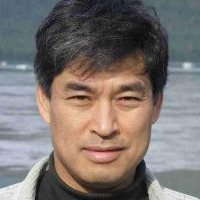
Prof. Dr. Hong Qian
Center for Interdisciplinary Studies, Westlake University;Hong Qian is Chair Professor of Interdisciplinary Studies at Westlake University. He received his bachelor's degree in Astrophysics from Peking University and his Ph.D. in Biochemistry from Washington University in St. Louis. Following postdoctoral research at the University of Oregon and California Institute of Technology, he joined the University of Washington, where he rose to the rank of Professor and held the Olga Jung Wan Endowed Professorship. Elected a Fellow of the American Physical Society in 2010, he is internationally recognized for pioneering contributions to stochastic processes, nonequilibrium thermodynamics, systems biology, and theoretical biophysics. His research integrates mathematics, statistical physics, and biology to advance the understanding of complex living systems, and has led to influential work on biochemical networks, molecular motors, stochastic chemical kinetics, and the foundations of statistical thermodynamics. He is also co-founder of the Gordon Research Conference on Stochastic Physics in Biology and author of the monograph Stochastic Chemical Reaction Systems in Biology (2021).
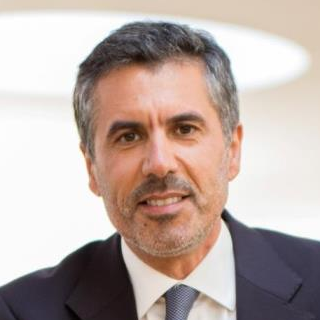
Department of Physics & I3N, University of Aveiro;José Fernando F. Mendes is Full Professor of Physics at the University of Aveiro and a leading researcher in statistical physics and complex systems. He earned his degrees in Physics from the University of Porto and has held research and visiting positions at institutions including University of Oxford, University of Geneva, Boston University, Nanyang Technological University, ETH Zurich, and École Polytechnique Fédérale de Lausanne. His research focuses on complex networks, nonequilibrium statistical physics, self-organized criticality, phase transitions, and complex systems. He has authored more than 150 peer-reviewed publications, accumulated over 22,000 citations, and co-authored influential books on network science, including Evolution of Networks and The Nature of Complex Networks. Professor Mendes is a Fellow of the American Physical Society, a Fellow of the Network Science Society, and a member of the Academia Europaea. He currently serves as President of the Complex Systems Society and Editor-in-Chief of Complexity.
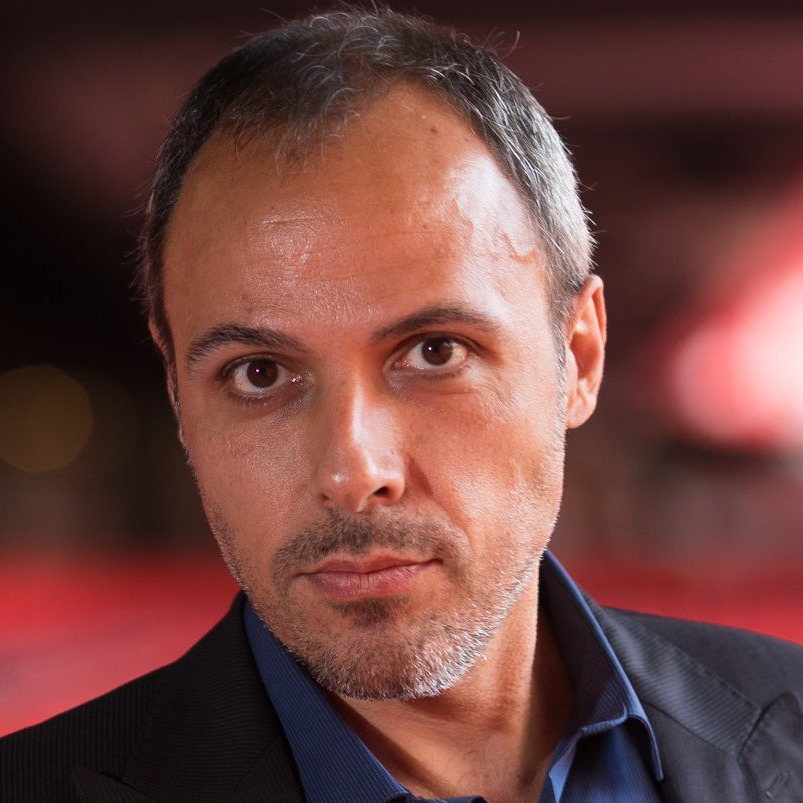
Biofisika Institute (CSIC, UPV/EHU), University of the Basque Country;José M.G. Villar is an Ikerbasque Professor whose research focuses on applying computational and mathematical modeling to biological networks. He earned his B.Sc., M.Sc., and Ph.D. in Physics from the University of Barcelona and completed postdoctoral training at Princeton University and The Rockefeller University. Throughout his career, he has held research and leadership positions at the Howard Hughes Medical Institute, Memorial Sloan Kettering Cancer Center, and Cornell University. Internationally recognized for his contributions to cancer systems biology and computational biophysics, he has developed innovative approaches for understanding complex biological pathways and networks. His achievements include the European Union Horizon Big Data Technologies Prize and the Werfen-Izasa-Beckman-Coulter Prize in Biophysics. He has served on major scientific review panels, including those of the European Research Council and the National Cancer Institute, and has published extensively in leading journals such as Nature, PNAS, and Physical Review Letters.
Institute of Theoretical Physics, UAM/CSIC;Juan F. Pedraza is a researcher and faculty member at the Institute for Theoretical Physics UAM-CSIC in Madrid. He earned his Ph.D. in Physics from the University of Texas at Austin in 2015 under the supervision of Willy Fischler. Prior to joining IFT, he held prestigious fellowships at the University of Amsterdam, University College London, Brandeis University, and the University of Barcelona as a Junior Leader `la Caixa' fellow. His research lies at the intersection of gravity and quantum information theory, with a focus on the emergence and dynamics of spacetime, entanglement entropy, holography, and quantum chaos. He was an active contributor to the Simons It from Qubit collaboration, an initiative that ran from 2015 to 2023 and explored deep connections between quantum information and the structure of spacetime.
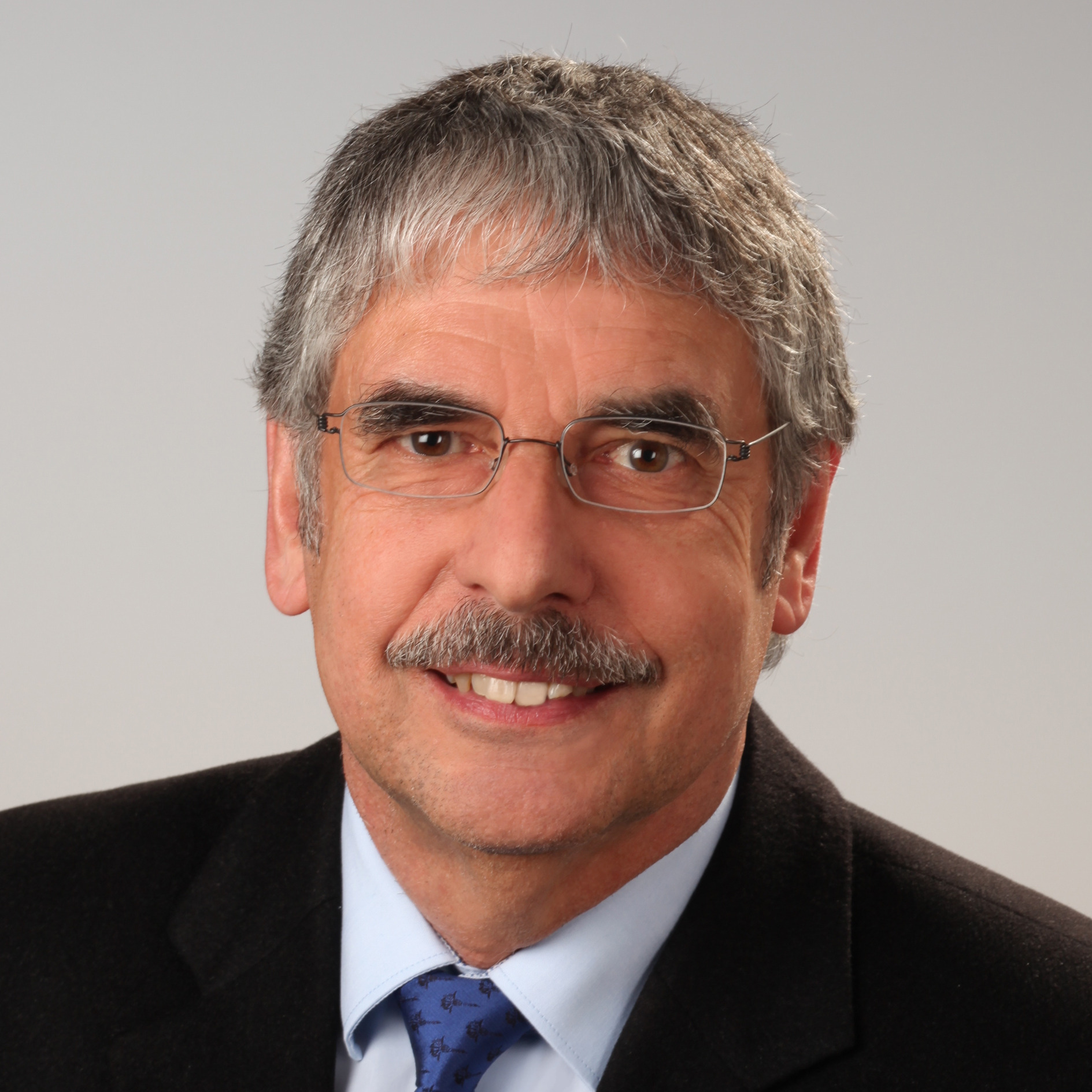
Institute of Physics, Technical University Chemnitz;Karl Heinz Hoffmann is Professor of Theoretical Physics at the Chemnitz University of Technology, where he leads the research group in Computational Physics within the Institute of Physics. His research encompasses computational physics, optimization, complex systems, nonequilibrium thermodynamics, and physical chemistry, with particular interests in diffusion processes and molecular phenomena. An internationally recognized scientist, Professor Hoffmann has authored numerous influential publications and has been invited to deliver keynote lectures at leading international conferences. His work has contributed significantly to the advancement of theoretical and computational approaches for understanding complex physical systems.

Department of Physics, University at Albany;Kevin H. Knuth is Professor of Physics at the University at Albany and Editor-in-Chief of the journal Entropy. He earned his PhD in Physics and Mathematics from the University of Minnesota and is a former research scientist at NASA Ames Research Center, where he developed machine learning methods for astrophysics, Earth science, and climate research. With more than 30 years of experience in Bayesian inference and maximum entropy methods, he has made significant contributions to machine learning, data analysis, and statistical physics, including pioneering work in Bayesian source separation and the widely used optBINS histogram algorithm. His current research spans the foundations of physics, autonomous robotics, scientific inference, exoplanet discovery, and unidentified aerial phenomena (UAPs). Professor Knuth has authored over 100 peer-reviewed publications and delivered more than 100 invited presentations across 18 countries.
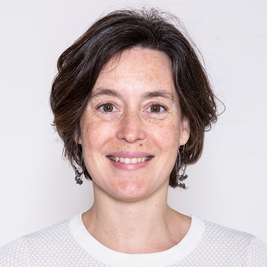
Department of Chemical Engineering, University of Rovira i Virgili;Marta Sales-Pardo is Professor in the Department of Chemical Engineering at the Rovira i Virgili University. She earned her degree and Ph.D. in Physics from the University of Barcelona before pursuing postdoctoral research and a Fulbright Scholarship at Northwestern University. She later served as Research Assistant Professor at the Northwestern University Clinical and Translational Science Institute, with joint appointments in Chemical and Biological Engineering and the Northwestern Institute on Complex Systems. Her research focuses on computational modeling, simulations, and complex systems, particularly the structure and dynamics of networks. Professor Sales-Pardo is a recipient of the ICREA Acadèmia Award (2013 and 2022) and was elected a Fellow of the Network Science Society in 2021. https://www.deq.urv.cat/en/people/marta-sales/
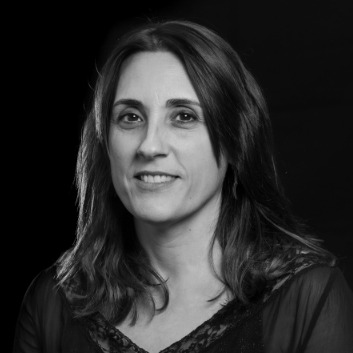
ICREA and University of Barcelona;M. Ángeles Serrano is an ICREA Research Professor in the Department of Condensed Matter Physics at the University of Barcelona and External Faculty at Complexity Science Hub Vienna. She earned her Ph.D. in Theoretical Physics from the University of Barcelona and later specialized in complex networks through research appointments at Indiana University Bloomington, École Polytechnique Fédérale de Lausanne, and Institute for Cross-Disciplinary Physics and Complex Systems. A Fellow of the American Physical Society and the Network Science Society, she is internationally recognized for her contributions to network science and complex systems. Her distinctions include the APS Outstanding Referee Award and the James S. McDonnell Foundation Scholar Award. She is also a founding member of Complexitat and a founding promoter of the University of Barcelona Institute of Complex Systems.
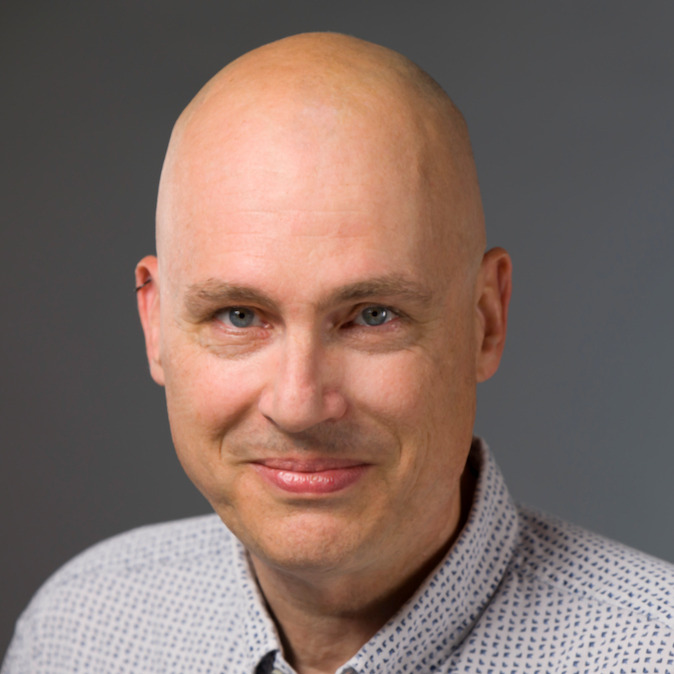
LTCI, Télécom Paris, Institut Polytechnique de Paris;Olivier Rioul is Professor at Télécom Paris and a member of the Mathematics of Information and Communications (MIC) research team. He holds a Ph.D. and Habilitation (HDR) and is a graduate of the prestigious École Polytechnique. His research focuses on information theory, coding theory, probability, statistical estimation, communication systems, signal processing, wavelet theory, and image compression. Professor Rioul has authored several textbooks, including Information and Coding Theory and Probability Theory, as well as more than 200 scientific publications and multiple patents. His work has made significant contributions to entropy inequalities, channel capacity theory, source-channel coding, secure communications, and signal analysis. In addition to his extensive research activity, he has taught at leading French institutions, including École Polytechnique, ENSTA Paris, and CentraleSupélec, and is widely recognized for advancing the mathematical foundations of information and communication sciences.
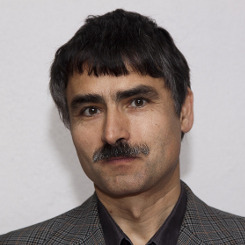
Department of Theoretical Physics, Institute for Particle and Nuclear Physics, Wigner Research Centre for Physics;Péter Ván is the Scientific Director of the Institue of Particle and Nuclear Physics in Wigner Research Centre for Physics and Scientific Advisor at the Department of Energy Engineering of Budapest University of Technology and Economics. He earned degrees in Physics and Applied Physics from leading Hungarian institutions, culminating in a Doctor of Science degree from the Hungarian Academy of Sciences. His research focuses on nonequilibrium thermodynamics, continuum mechanics, relativistic fluids, heat conduction, rheology, and the thermodynamic foundations of physical theories. Professor Ván has made significant contributions to the understanding of stability, nonlocal thermodynamics, generalized heat conduction, and the thermodynamic formulation of gravity and field theories. He has authored more than 150 journal articles, several books and book chapters, and serves on the editorial boards of journals including Continuum Mechanics and Thermodynamics, Journal of Non-Equilibrium Thermodynamics, and Entropy. He currently serves as President of the Steering Committee of the Joint European Thermodynamics Conference and is internationally recognized for his work on the foundations and applications of thermodynamics.
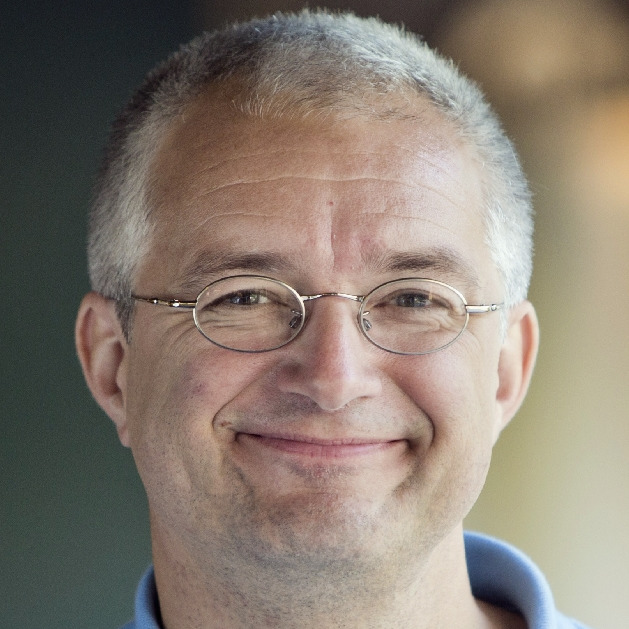
Institute for Physics & Astronomy, University of Potsdam;Ralf Metzler is Chair Professor of Theoretical Physics at the University of Potsdam and an internationally recognized leader in stochastic processes and nonequilibrium statistical physics. He earned his Ph.D. in Physics from the University of Ulm and subsequently held research positions at Tel Aviv University, Massachusetts Institute of Technology, the Nordic Institute for Theoretical Physics, the University of Ottawa, and the Technical University of Munich. His research spans stochastic processes, anomalous diffusion, nonequilibrium statistical physics, soft and biological matter, search processes, data science, and machine learning. Professor Metzler has authored more than 400 scientific publications, accumulating over 58,000 citations (Google Scholar), and is among the most influential researchers in his field. His distinctions include the Canada Research Chair in Biological Physics, the Finland Distinguished Professorship, and the SigmaPhi Prize, and he was recently elected to the Istituto Veneto di Scienze, Lettere ed Arti (Venetian Academy). He serves on the editorial boards of several leading journals and has delivered more than 150 invited talks at international conferences worldwide.
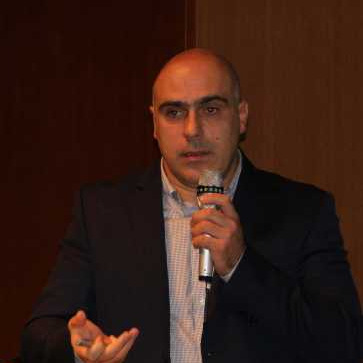
School of Science and Technology, University of Camerino, Italy;INFN Sezione di Perugia, Italy;Stefano Mancini is Professor of Theoretical Physics and Mathematical Methods of Physics at the University of Camerino. He earned his Ph.D. in Physics from the University of Perugia in 1998, with research focused on quantum state tomography, and subsequently held academic positions at the Universities of Milan and Camerino, helping establish some of Italy’s first university courses in quantum information and quantum computation. His research interests span quantum information theory, quantum optics, mathematical physics, and quantum technologies. Professor Mancini has authored more than 270 peer-reviewed publications, accumulating over 12,000 citations, and is recognized among the Top Italian Scientists in Physics and Mathematics. He serves on the editorial boards of leading journals, including IEEE Transactions on Information Theory, International Journal of Quantum Information, and European Physical Journal Plus. An active international collaborator, he has held visiting appointments at institutions such as Massachusetts Institute of Technology, University of Cambridge, ETH Zurich, and the National University of Singapore, and has delivered more than 60 invited talks at international conferences.
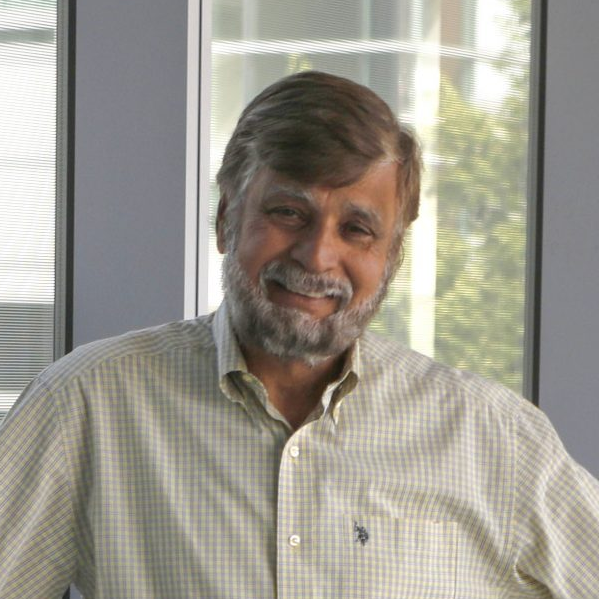
Department of Mathematics and Statistics, Brock University;Syed Ejaz Ahmed is Distinguished Professor of Mathematics and Statistics at Brock University and Senior Advisor to Sigma Analytics. Previously, he served as Professor and Head of Mathematics at the University of Windsor and the University of Regina, and held a faculty position at Western University. An internationally recognized scholar, his research focuses on big data analytics, predictive modeling, statistical machine learning, and data science. He is a Fellow of the American Statistical Association and the Royal Statistical Society, and an elected member of the International Statistical Institute. Professor Ahmed has published approximately 200 research articles, authored and edited several books, delivered more than 200 invited presentations worldwide, and supervised numerous graduate students and postdoctoral researchers. His achievements have been recognized through prestigious distinctions, including the Bualuang ASEAN Chair Professorship, major research awards, and long-standing support from the Natural Sciences and Engineering Research Council of Canada. He has also played a leading role in developing academic programs, advancing statistical education, and fostering international collaborations in data science and analytics.





























Best Oral Presentation Award
Özge Özkılınc - Data-Driven Screening of Choline Chloride–Monoterpenoid and –Fatty Acid Deep Eutectic Solvents for PFAS Extraction
Miriam Martinez - Quantifying Insect Dynamics in Euclidean and Non-Euclidean Spaces
Ronen Zangi - Chemistry with Small Number of Molecules
Valeria Rossi - Mutual Information Based on Kolmogorov Complexity for Randomness Evaluation
Amilcare Porporato - Environmental Thermodynamics: Bridging Science and Technology in a Changing Environment
Jan Korbel - Homophily-Based Social Group Formation in a Spin Glass Self-Assembly Framework
Best Poster Award
Angel Cuadras - Entropy Description of Projectile Motion in Dissipative Media
Andrés Vallejo - Alternative Analysis of Single-Qubit Quantum Heat Engines
Mateusz Wiśniewski - Fast Directed Transport via Energy Recuperation in Non-Markovian Media
Anna Monclús I Rojo - Correlations in Active Nematic Defects
Dana Polatin - ‘I Am Not My Language’: Human Cognition, Misattributed Intelligence, and the Extractive Risk of Large Language Models
Gordon Morison - Generalized Permutation Entropy Measures on Graph Signals
The online version of the Entropy 2026 Conference Book, including program and all abstracts is available to browse and download!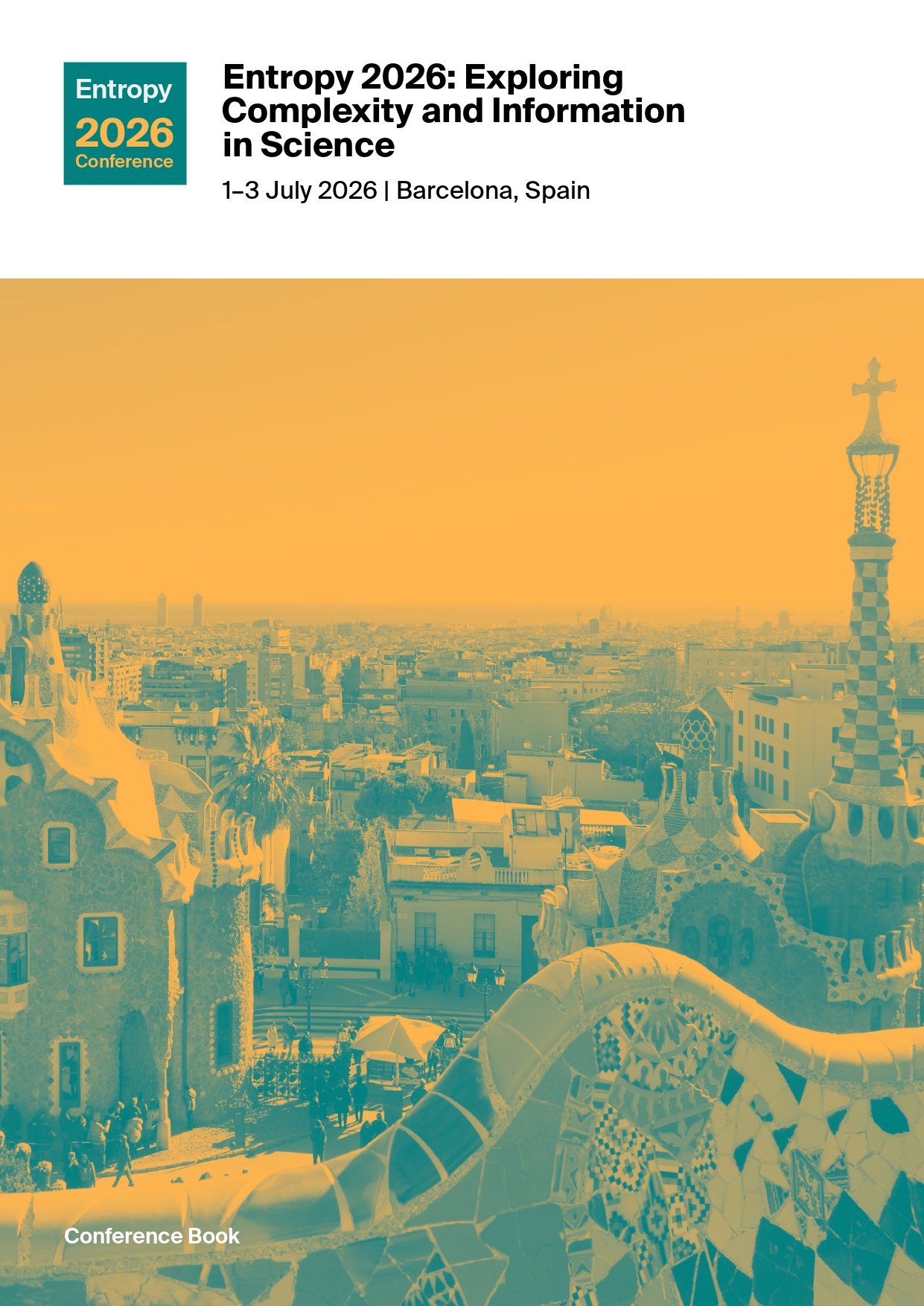
Barcelona
Barcelona is the capital and largest city of Catalonia and is Spain's second-largest city, with a population of over one and a half million people.
Located on the northeastern Mediterranean coast of Spain, this city has a rich and diverse history, with its roots dating back to Roman times. The fruitful medieval period established Barcelona's position as the economic and political center of the Western Mediterranean. The city's Gothic Quarter bears witness to the splendor enjoyed by the city from the 13th to the 15th centuries.
The 20th century ushered in widespread urban renewal throughout Barcelona, culminating in its landmark Eixample district, which showcases some of Barcelona's most distinctive Catalan art-nouveau, or modernista, buildings. The Catalan Antoni Gaudí, one of the most eminent architects, designed buildings such as La Pedrera, the Casa Batlló, and the Sagrada Família church, which have become world-famous landmarks.
In 1992, Barcelona gained international recognition by hosting the Olympic games, which brought about a massive upturn in its tourism industry. For visitors, this has translated into the very modern yet incredibly old city you see now in the 21st century, where new elements work to both preserve and celebrate the city’s heritage and origins.
Barcelona has plenty of outdoor markets, restaurants, shops, museums, and churches. The city is also very walkable, with an extensive and reliable Metro system for more far-flung destinations.


Special Offer for Attendees
Take advantage of your visit to discover some of the city's cultural highlights. Event attendees can enjoy a special discount on admission tickets to Moco Museum Barcelona, one of the city's most popular contemporary art museums. Located in the historic El Born district, the museum features works by internationally acclaimed artists, immersive digital exhibitions, and a diverse collection of modern and contemporary art.
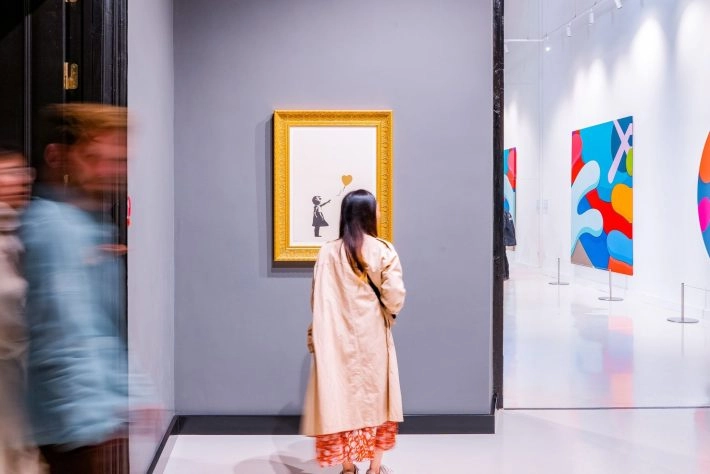
Use the code ENTROPY26 to enjoy 2-for-1 admission discount between 25 June and 6 July 2026. Please note the offer is only available from 25 June 2026.
How to redeem your discount:
● Online: Book your tickets through the museum website and enter ENTROPY26 during the booking process. The discount will be automatically applied to the final price.
● At the museum: Purchase your ticket directly at the ticket desk and present your event accreditation or proof of participation. Museum staff will apply the discount on-site.
For opening hours, tickets and visitor information, please visit the Moco Museum website.
Sponsoring
As organizers, we are committed to delivering a high-quality international conference that fosters academic exchange and interdisciplinary collaboration. We invite interested organizations to explore sponsorship opportunities and become part of Entropy 2026, supporting research and innovation in entropy, information theory, statistical physics, and complex systems.
Find the perfect sponsorship package tailored to your budget and desired exposure in our sponsorship brochure. Simply click on the icon below to access it.

If you have any questions, feel free to contact us via email at entropy2026@mdpi.com. We appreciate your consideration!
Ms. Adelina Platon
Ms. Coco Hou
Mr. Vincent Shang
Ms. Gabriela Vint
Dr. Alina-Andrada Igna
Email: entropy2026@mdpi.com
For inquiries regarding submissions and sponsorship opportunities, please feel free to contact us.