
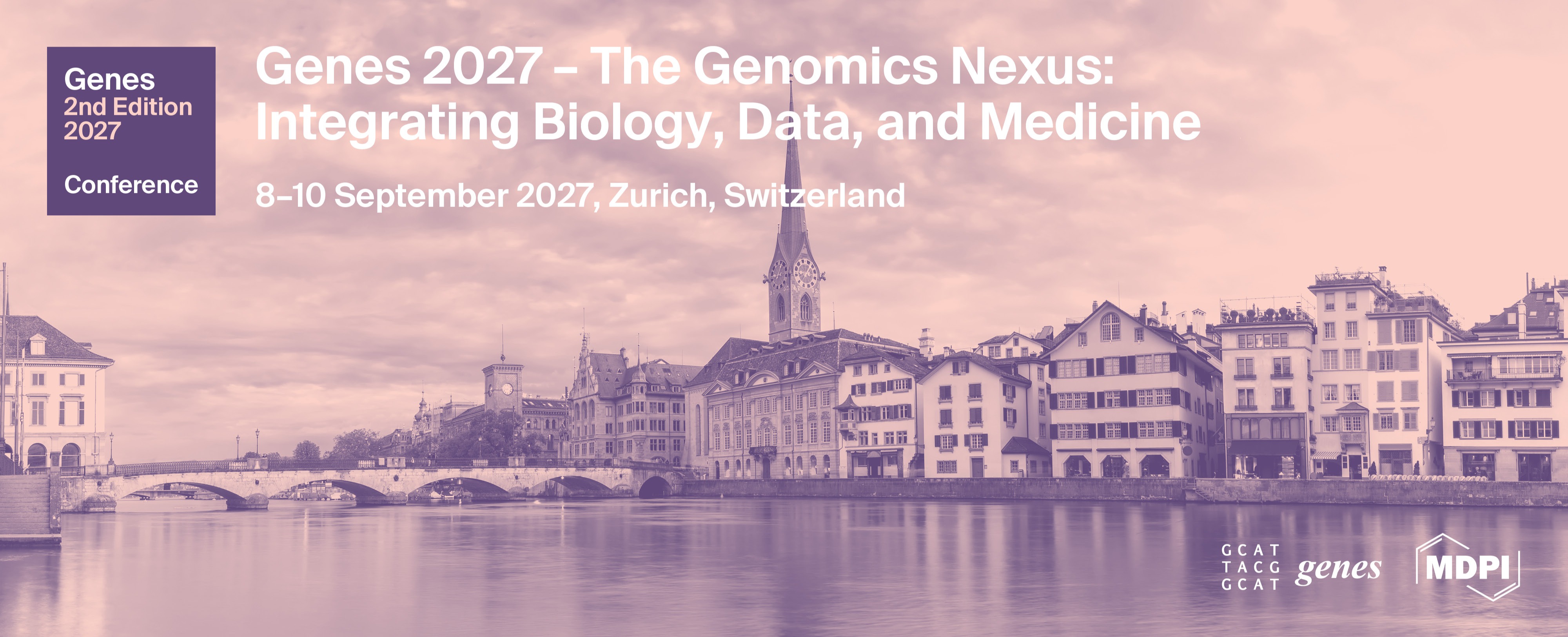
Genes 2027 – The 2nd International Conference in Genes
The Genomics Nexus: Integrating Biology, Data, and Medicine
the chairs
Genes 2027 Chairs
Meet Our Chairs

Department of Pathology, University of Alabama at Birmingham, USA;Dr. Selvarangan Ponnazhagan is a Professor whose research focuses on breast and prostate cancer progression, metastasis, tumor immunology, and therapeutic resistance. For nearly two decades, his laboratory has integrated molecular biology, genetic engineering, stem cell biology, immunotherapy, and drug discovery approaches to develop innovative translational therapies targeting the tumor microenvironment and tumor-host interactions. In breast cancer, Dr. Ponnazhagan has made important contributions to understanding osteoimmunology, bone metastasis, immune suppression, and tumor-stroma interactions. His laboratory developed mesenchymal stem cell (MSC)-based strategies for targeted treatment of osteolytic disease and engineered a novel osteoprotegerin (OPG) variant that selectively blocks RANKL signaling while preserving tumor cell apoptosis. His group was the first to identify myeloid-derived suppressor cells (MDSCs) in the bone tumor microenvironment as osteoclast progenitors that directly contribute to cancer-associated bone destruction. More recently, his laboratory discovered that tumor-intrinsic RANK signaling functions as a ligand-independent immunoskeletal checkpoint in hormone receptor-negative and triple-negative breast cancers, promoting immune evasion, osteolytic pathology, and resistance to immunotherapy. Current studies are focused on developing next-generation RANK-targeted therapies to enhance antitumor immunity. In prostate cancer, Dr. Ponnazhagan’s research has focused on androgen receptor (AR) signaling, tumor angiogenesis, oxidative stress, therapy resistance, and bone metastasis. His work has advanced understanding of the mechanisms driving castration-resistant prostate cancer (CRPC) and identified new therapeutic vulnerabilities. His laboratory is currently developing novel strategies to inhibit AR dimerization through pharmacophore-guided screening of FDA-approved compounds, combined with molecular, biochemical, and preclinical validation. Through multidisciplinary research spanning tumor immunology, metastasis, stem cell

Center for Preclinical Development, Clinic for Trauma Surgery, University and University Hospital Zurich, Switzerland;Dr. Paolo Cinelli is Head of the Center for Preclinical Development at the University of Zurich, as well as head of research at the Department of Trauma Surgery at University Hospital Zurich. His specialties are stem cell biology, trauma immunology and bioengineering. His laboratory focuses on establishing, characterizing and analysing stem cells, with the aim of developing their therapeutic and medical potential. The work follows two main lines: understanding the molecular mechanisms involved in the regulation of pluripotency and differentiation in different stem cell populations (embryonic stem cells, induced pluripotent stem cells (iPSC), mesenchymal stem cells, neural crest stem cells, and cancer stem cells); and the development and optimization of tissue engineering approaches for bone regeneration with pluripotent and multipotent stem cells. The main applications for this research include optimizing the generation of patient-specific iPSCs for personalized medicine and promoting the healing of fractures with critical-size bone defects. Dr. Cinelli is a member of the Center for Applied Biotechnology and Molecular Medicine (CABMM) at the University of Zurich, the Swiss Stem Cell Network and the Swiss Society for Biochemistry. He is President and a member of the Governing Board of the Swiss Laboratory Animal Science Association, and a member delegate of the Federation of European Laboratory Animal Science Associations (FELASA).
Dr. Laura Perez-Martin
Ms. Roberta Miglioranza
Ms. Marie-France Watson
Important Dates
1 Jul
2026
22 Feb
2027
25 Mar
2027
4 May
2027
22 Aug
2027
6 Sep
2027
Exhibitor and Partner Opportunities
We invite your organization to become part of Genes 2027 and connect with a focused international audience working in remote sensing research, technology, and applications. Industry participants will have the opportunity to engage with the scientific community, demonstrate relevant tools and services, and build connections with researchers, practitioners, and other organizations active in the field.
We offer a range of partnership and participation opportunities for organizations that want to attend, exhibit, or increase their visibility at Genes 2027. Our brochure outlines the available options and how to get involved.
If you have any questions or would like to discuss how your organization could become involved in Genes 2027 and perhaps even beyond, please contact us at conferences-partnership@mdpi.com. We look forward to exploring suitable participation options with you.
Society Collaboration
Are you part of a society and interested in this conference? Contact us to discuss a media partnership where your society members can access a 20% discount on all registration fees!


-6aec50027634a.png)