Speakers
Session Topics, Plenary Speakers and Keynote Speakers
S1. Quantum Field Theory, String and Brane Theory, and Gravitation
Plenary Speaker
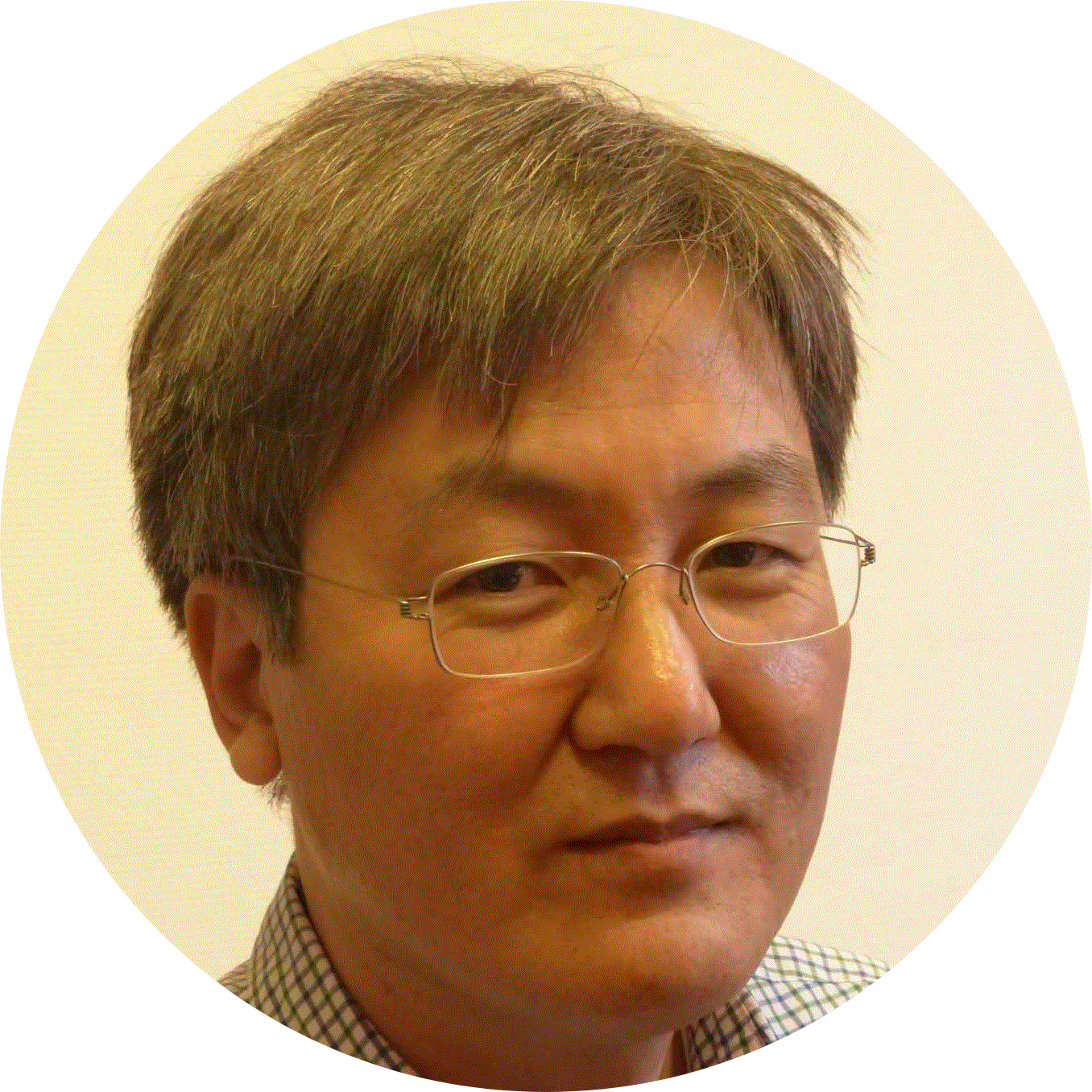 Prof. Piljin Yi |
Korea Institute for Advanced Study, Seoul, Korea Prof. Piljin Yi has been a professor at the Korea Institute for Advanced Study (KIAS) for decades, accumulating much experience in gravity, string theory, and mathematical physics. He is widely known for an existence proof of D0-brane bound states, a prerequisite for the celebrated M-theory, which has later expanded to a rigorous formulation of the topological index and the wall-crossing for general gauged systems. He also authored a series of landmark papers on supersymmetric solitons, and his works on a holographic study of baryons have been invited for plenary talks at major nuclear physics conferences. He spoke at String Conferences, for which he has also served as a member of the International Advisory Committee. He has also served as Vice President of KIAS and as a trustee of the Korean Physical Society and of the Gwangju Institute of Science and Technology. Presentation title: Conservation Laws Redux |
Keynote Speakers
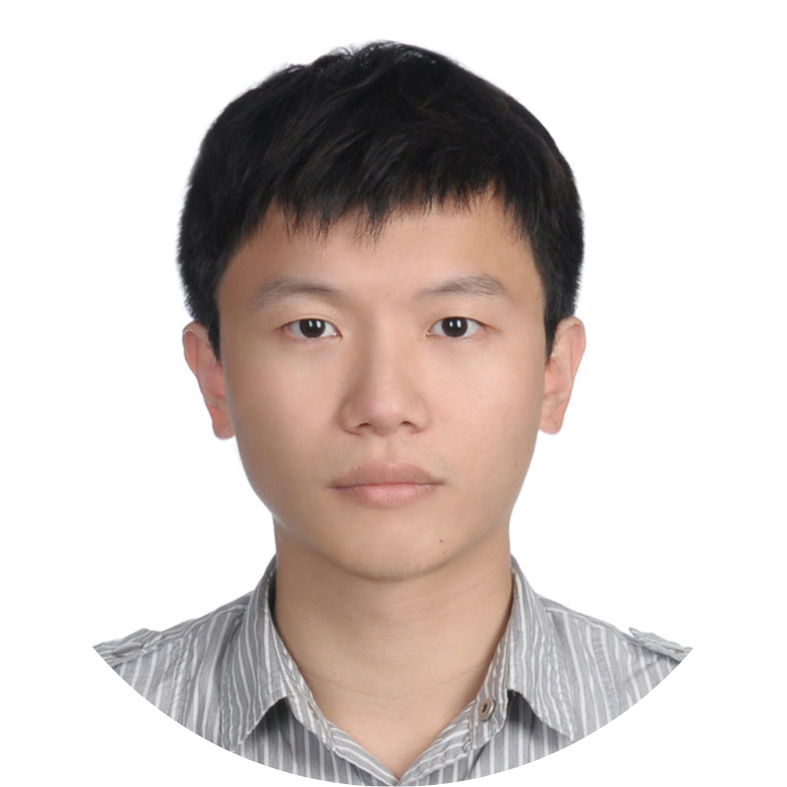 Prof. Chi-Ming Chang |
Tsinghua University, Beijing, China Prof. Chang is an Associate Professor at the Yau Mathematical Sciences Center, Tsinghua University. He received his Ph.D. in physics from Harvard University in 2014 and held postdoctoral positions at UC Berkeley and UC Davis (2014–19). He received the 2023 Frontiers of Science Award at the International Congress of Basic Science and was an invited speaker at Strings 2024. His research spans string theory, quantum field theory, and quantum gravity, with a focus on cohomological methods for BPS spectra, the construction of black hole microstates, and exact nonperturbative aspects of quantum field theory. Presentation title: Q-cohomology, Fortuity, and Black Holes |
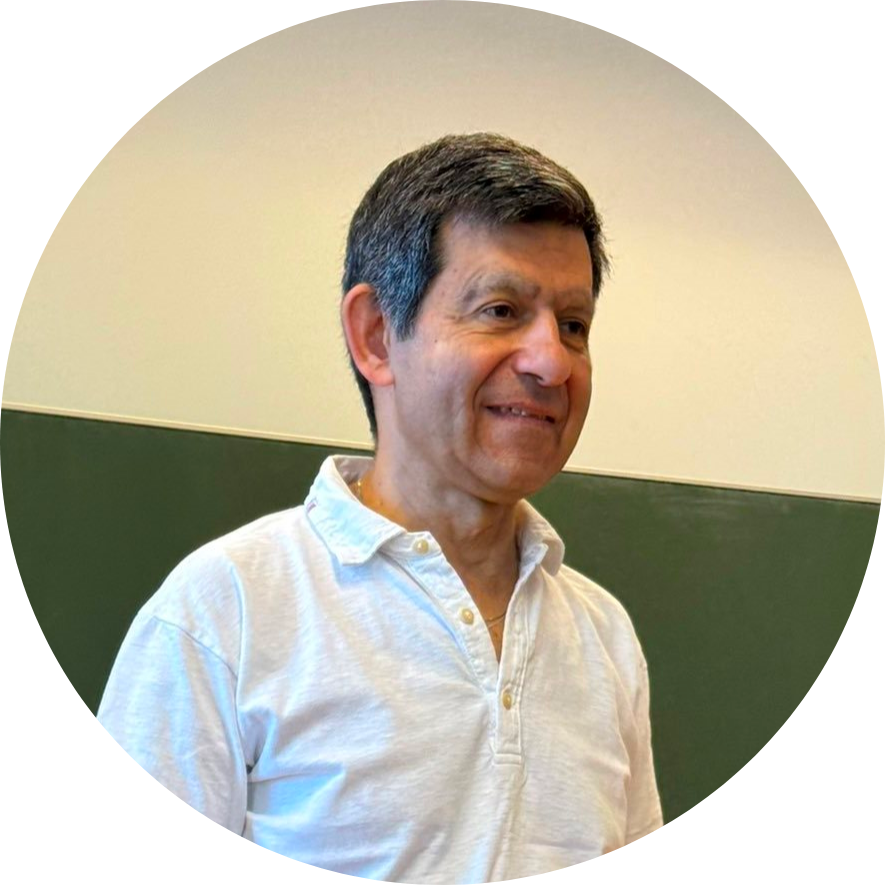 Prof. Ruben Minasian |
Paris-Saclay University, Paris, France Prof. Minasian is Research Director at the French National Center for Scientific Research and a member of Institut de Physique Théorique at CEA Saclay in France. He has made ground breaking contributions to string theory which is currently the most promising unifying theory of all elementary particles and their interactions. His discoveries in the field of duality symmetries have opened a new door for their study. The classes of string compactifications which he has studied bring us closer to modelling the real world, as observed in particle accelerators. Throughout his work, he has built bridges between mathematics and physics, from which both sides have greatly profited. His distinguished contributions have been recognized with prestigious accolades, including a Friedrich Wilhelm Bessel Research Award. Presentation title: Holography and SymTFTs |
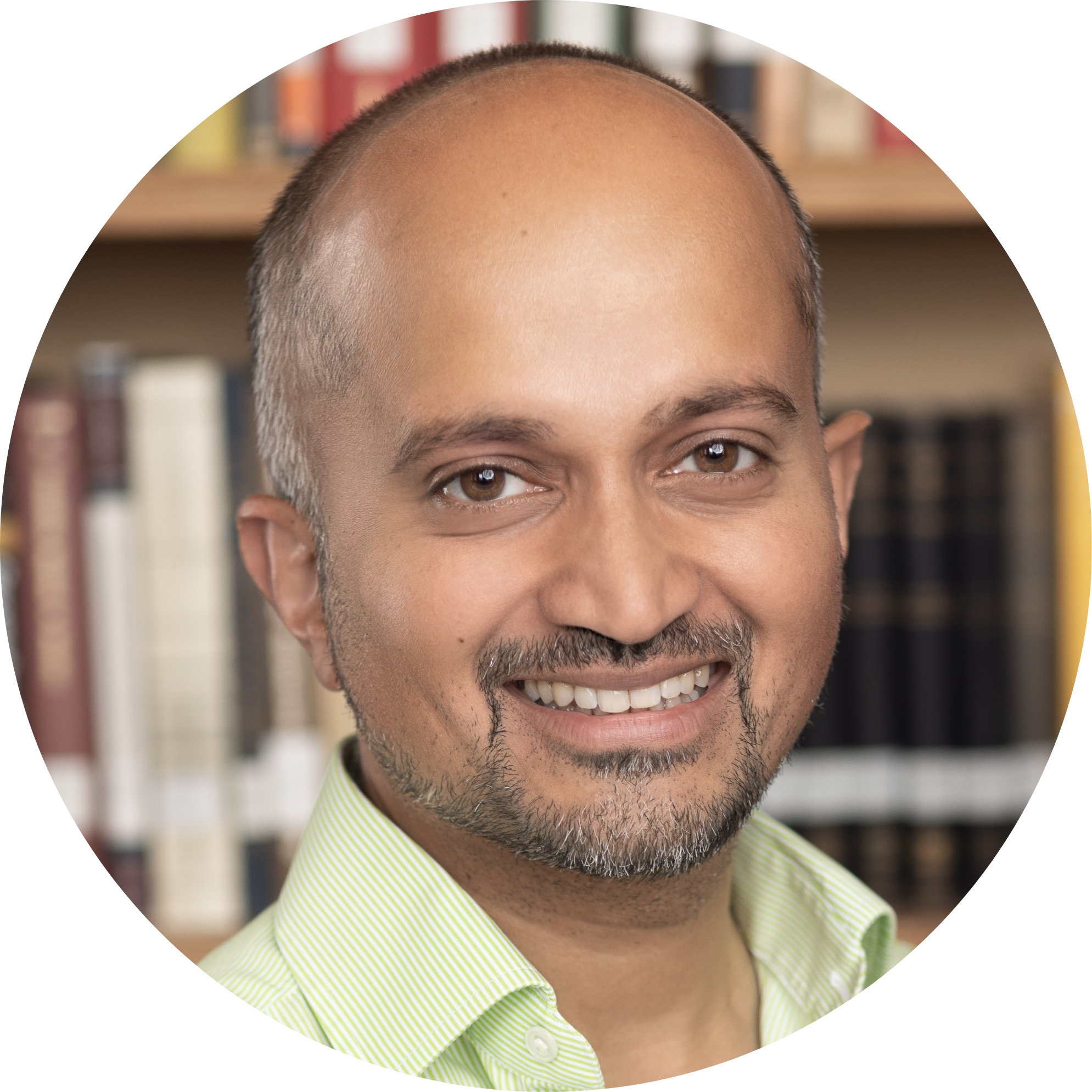 Prof. Sameer Murthy |
King’s College London, London, UK Prof. Murthy is a Professor of Theoretical and Mathematical Physics in the department of mathematics at King's College London. His research lies broadly in the fields of string theory, quantum field theory, and quantum gravity, and their interactions with mathematics and, especially, number theory. He has made pioneered contributions to quantum aspects of black holes and holography, and their relation with modular and automorphic forms. He was awarded the ERC consolidator grant 2015 to lead a research team working on a research project involving quantum gravity, black holes, and modular forms. He was the J. Robert Oppenheimer Visiting Professor at the Institute of Advanced Study, Princeton in 2023/24. In 2025 he received the Frontiers of Science Award at the International Congress of Basic Science. |
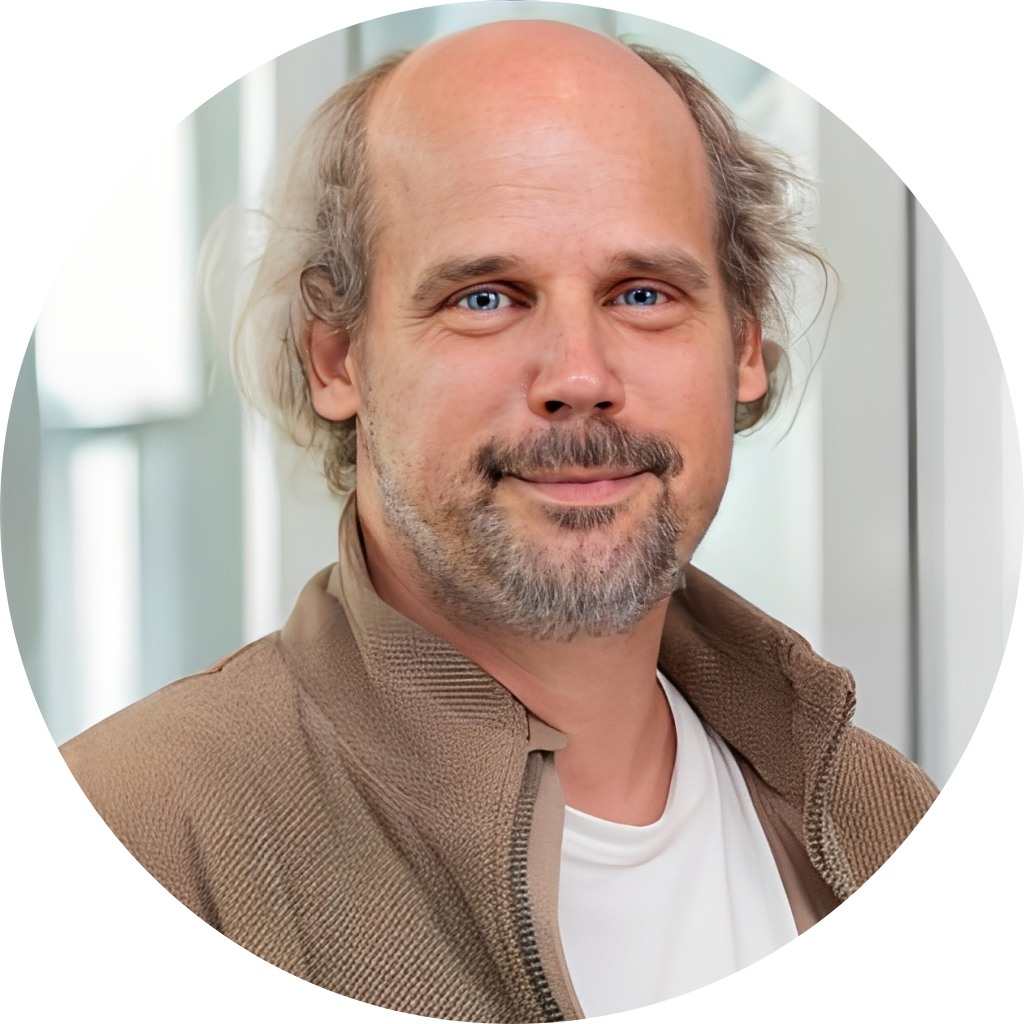 Prof. Urs Schreiber |
New York University Abu Dhabi, Abu Dhabi, United Arab Emirates Prof. Schreiber is a theoretical physicist. His research revolves around applications of the mathematics of algebraic topology and geometric homotopy theory to foundational problems of fundamental physics in quantum field- and string theory. In a long-term research project with Prof. H. Sati, Schreiber has developed foundations of strongly-interacting quantum vacua controlled by solitonic and other topological effects. With the team at the Research Center for Quantum and Topological Systems, Schreiber is currently using these results in the development of a topological quantum programming language that provides fine control over the peculiarities of the topological quantum hardware that may be expected to eventually support robust quantum computation. Presentation title: Electromagnetic Flux Quantization: Global Completion of Higher Gauge Theories |
S2. Integrable Models in Condensed Matter Physics and Statistical Physics
Plenary Speaker
 Prof. Yupeng Wang |
Institute of Physics, Chinese Academy of Sciences, Beijing, China Prof. Wang, an eminent Chinese physicist, was elected as an academician of the Chinese Academy of Sciences in 2021. Prof. Wang's primary research focuses on mathematical physics and condensed matter theory. His groundbreaking contributions include establishing the theory of the off-diagonal Bethe ansatz, which solved the problem of exact solutions for quantum integrable systems with broken U(1) symmetry. He proposed the first exactly solvable ladder model, now known as the "Wang model," which predicted and universally explained experimental observations in ladder materials. Furthermore, he constructed the first exactly solvable Kondo model in strongly correlated electron systems and established the theory for the universality class of confined Luttinger liquids. Presentation title: Exact Thermodynamics and Fractional Degeneracy of the XX Spin Chain with Arbitrary Boundary Fields |
Keynote Speakers
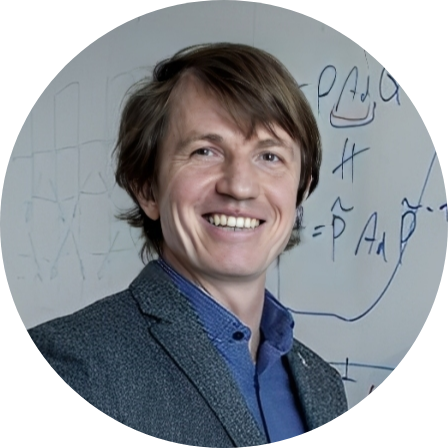 Prof. Tomaz Prosen |
University of Ljubljana, Ljubljana, Slovenia Prof. Prosen has been a full professor of theoretical physics at University of Ljubljana since 2008, where he leads a group on nonequilibrium quantum and statistical physics. ISI named him a 'Citation Superstar' as one of the most cited young scientists in Slovenia in 2000. His main current research interest is in fundamental problems in dynamical systems, quantum many-body dynamics, nonequilibrium statistical mechanics, and transport theory. Tomaž Prosen is primarily known for providing the first exact solutions for models of open quantum many-body systems and for the discovery of novel kinds of quantum conservation laws that settled long-standing questions about the nature of transport in fundamental models of low-dimensional quantum materials. He is also known for pioneering a novel approach for establishing quantum chaos in spin-1/2 systems, for which previously known semi-classical methods fail. Presentation title: Integrable Interactions Round-a-Face and Exactly Solvable Quantum/Stochastic Cellular Automata |
 Prof. Benjamin Doyon |
King's College London, London, UK Prof. Doyon joined King's College London as a Lecturer in January 2010, where he held the position of Royal Society Leverhulme Trust Senior Research Fellow in 2019, and became Professor of Theoretical Physics in 2021. He secured a number of important grants, and in 2025 obtained a prestigious ERC Advanced Grant (funded by UKRI under the “Horizon Europe guarantee” scheme), and ERC Synergy Grant in an international collaboration. He is external member of the Centre de Recherches Mathématiques (CRM), affiliated to the Mathematical Physics Laboratory, at Montreal University, Québec, Canada, and recipient of a Will International Chair (2025 - 2029), Lille University, France. Prof Doyon's current research is concerned with the emergence of hydrodynamic principles for large-scale dynamical behaviours, entanglement and fluctuations in many-body quantum and classical systems. He is primarily known for his pioneering work on the hydrodynamic theory for integrable systems, referred to as Generalised Hydrodynamics, as well as co-developing twist field techniques for many-body entanglement and ballistic extensions of the macroscopic fluctuation theory. For his research on these subjects Prof Doyon obtained The 2022 John William Strutt, Lord Rayleigh Medal and Prize from the Institute of Physics (UK), the 2020 AHP Birkhauser, and 2024 Journal of Physics A, best paper prizes, and a 2025 Frontiers of Science Award from the International Congress of Basic Science (China). Presentation title: Emergence of Unconventional Hydrodynamics from Soliton-Like Interactions: Waves in the Sea, Fields in Optic Fibres, Atoms in Traps |
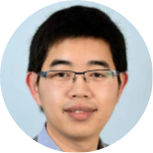 Prof. Yunfeng Jiang |
Southeast University, Nanjing, China Professor Jiang is a Young Chief Professor at the School of Physics and Shing-Tung Yau Center of Southeast University. He earned his Ph.D. in theoretical physics from Sorbonne University in 2015. Following his doctorate, he conducted postdoctoral research at ETH Zurich (2015-2018) and subsequently was a CERN fellow (2018-2021). His research focuses on quantum integrable models and quantum field theories. Prof. Jiang has made solid contributions to the field of integrability in AdS/CFT correspondence and to the study of solvable irrelevant deformations (such as the TTbar deformation) of quantum field theory and integrable models. He also pioneered the application of computational algebraic geometry methods to quantum integrable systems. Presentation title: TTbar-Deformed CFT Partition Functions: Uniqueness, Resurgence, and Harmonic Analysis |
S3. Quantum Information and Quantum Metrology
Plenary Speaker
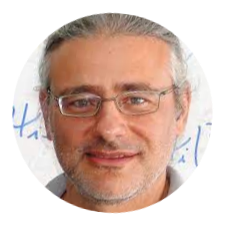 Prof. Augusto Smerzi |
Shenzhen Technology University (SZTU), Shenzhen, China Prof. Augusto Smerzi is Chair Professor at Shenzhen Technology University (SZTU) and recipient of the CJJX Distinguished Talent Award. He works on quantum metrology, entanglement theory, and the foundations of quantum parameter estimation. He has made pioneering contributions to the quantum theory of phase estimation and to the use of Fisher information as a quantitative tool for multipartite entanglement and ultimate precision bounds. His research spans nonlinear and distributed interferometry, quantum sensing networks, and the dynamics of coherent matter waves. Presentation title: Unveiling Useful Entanglement: Quantum Advantage in Sensing and Metrology |
Keynote Speakers
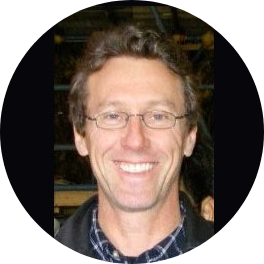 Prof. Murray Batchelor |
Australian National University, Canberra, Australia Murray Batchelor is Emeritus Professor of Mathematical Physics at The Australian National University. His research is centred on exactly solvable models in statistical mechanics and quantum many-body physics, with particular interests in integrable quantum systems, quantum spin chains, Bethe ansatz, parafermions and quantum Rabi models. He was awarded the Australian Academy of Science Pawsey Medal and the Australian Mathematical Society Medal, and served as Editor-in-Chief of Journal of Physics A: Mathematical and Theoretical from 2009 to 2013. His recent work explores exact structures in quantum many-body systems and their connections with quantum information. Presentation title: Exact Many-Body Structures, Goldstone Modes and Quantum Entanglement |
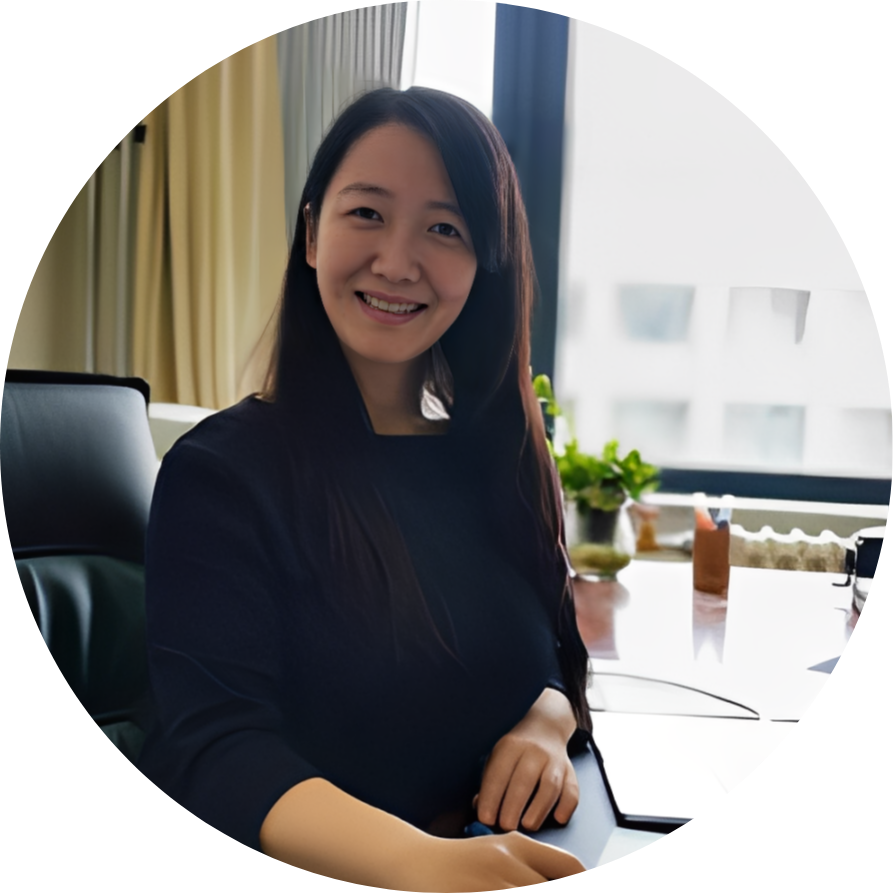 Prof. Qiongyi He |
Peking University, Beijing, China Qiongyi He, Peking University Boya Distinguished Professor. Her main research field is quantum optics and quantum information, including the detection, classification, quantification of various types of quantum correlations, as well as their applications in quantum information processing. To date, she has published over 100 journal papers, including Nature Physics, Nature Communications, Physical Review Letters. She has been awarded funding from National Science Fund for Distinguished Young Scholars, the Wang Daheng Optical Award, and the China Young Female Scientists Award. Presentation title: Characterizing the Multipartite Entanglement Structure of Non-Gaussian Continuous-Variable States |
S4. Atomic, Molecular, and Optical Physics
Plenary Speaker
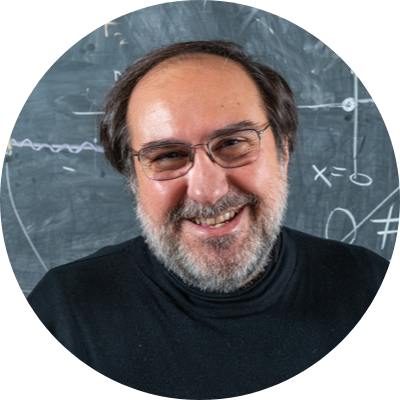
Prof. Thierry Giamarchi |
University of Geneva, Geneva, Switzerland Prof. Giamarchi is a distinguished physicist renowned for his seminal contributions to the theory of condensed matter systems. His research focuses on the effects of interactions and disorder in low-dimensional quantum and classical systems. He is celebrated for his pivotal role in the discovery and characterization of novel phases of matter, most notably the Bose glass phase. His work has been instrumental in establishing the framework of Tomonaga-Luttinger liquids to describe one-dimensional quantum materials, with profound implications for understanding organic superconductors, quantum spin chains, and ultra-cold atomic gases. Furthermore, he demonstrated that such quantum systems can act as simulators for complex phenomena like Bose-Einstein condensation. In recognition of his outstanding work, he was elected a Member of the French Academy of Sciences in 2013 and became a Fellow of the American Physical Society the same year. Presentation Title: Correlations and Dimensionality in Cold Atomic Gases |
Keynote Speakers
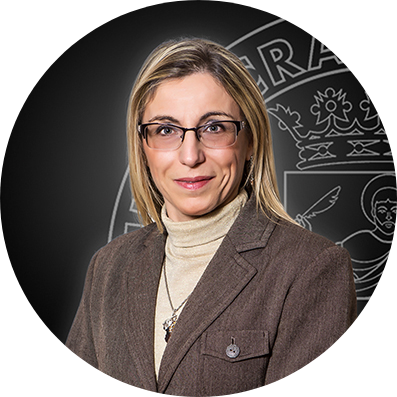 Prof. Roberta Citro |
University of Salerno, Campania, Italy Roberta Citro is Professor of Condensed Matter Physics at the University of Salerno. Her research focuses on strongly correlated low-dimensional quantum systems, quantum transport, and emergent phenomena in condensed matter, including topological and spin-orbitronic effects. She has authored over 200 publications in leading journals such as Reviews of Modern Physics, Nature Reviews Physics, Nature Physics, and Physical Review Letters. Her main scientific contributions include the development of theoretical frameworks for topological pumping in interacting systems, advances in the understanding of Luttinger liquid behavior and correlation effects. Her work has been recognized with awards including the Italian Physical Society Prize, the Fulbright Fellowship, and a Marie Curie Fellowship. She is currently PI of the IQARO project and actively contributes to international collaborations and advanced training in quantum physics. Presentation title: Out of Equilibrium Dynamics of Interacting One Dimensional Systems: Correlation Dynamics, Thermal Fate and Parametric Resonances |
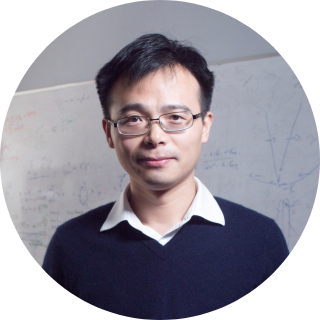 Prof. Shizhong Zhang |
The University of Hong Kong, Hong Kong, China Professor Shizhong Zhang is currently professor in the Department of Physics in the University of Hong Kong. He graduated from Tsinghua University in 2003, and received his Ph.D degree in physics from University of Illinois at Urbana-Champaign in 2009. He joined the University of Hong Kong in August 2012. He is an early pioneer in developing a set of universal relations in strongly interacting Fermi gas involving the so-called contact, which has since become a central quality in thermodynamic and dynamical quantities in cold atom physics. He has also made important contributions to the physics of spin-orbit coupled quantum gases, illuminating the role of spin-orbit coupling in the structure of Bose-Einstein condensate, Fermi superfluidity and optical lattices. His current research interest lies in the area of dilute atomic gases, including the elucidation of quantum transport in resonantly interacting quantum gases, and the exploration of many-body physics with p- and higher partial wave resonances. Presentation title: Physics of an Ion Impurity in a Dilute Fermi Gas |
S5. Nonlinear Dynamics and Computational Physics
Plenary Speaker
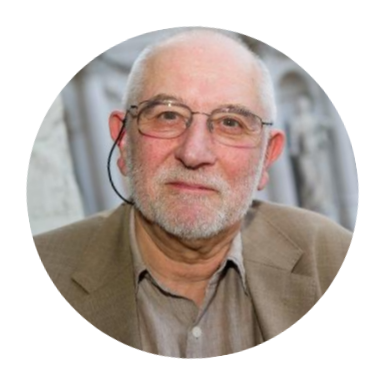
Prof. Michael Berry |
University of Bristol, Bristol, UK Sir Michael Berry is a theoretical physicist at the University of Bristol, where he has been for more than twice as long as he has not. His research centres on the relations between physical theories at different levels of description (classical and quantum physics, ray optics and wave optics…). In addition to these deeply mathematical, often geometric, studies, he also delights in finding familiar phenomena illustrating deep concepts – the arcane in the mundane: rainbows, the sparkling of the sun on the sea, twinkling starlight, polarised light in the sky, tidal bores and so on. Presentation title: Divergence and Resurgence |
Keynote Speaker
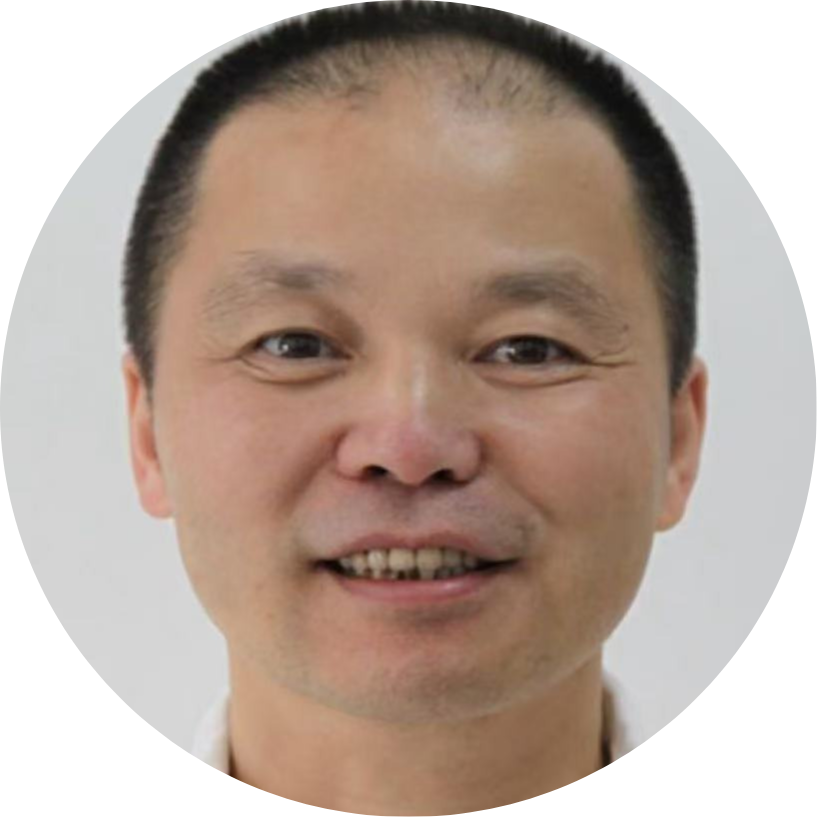 Prof. Haiqing Lin |
Zhejiang University, Hangzhou, China Member of the Chinese Academy of Sciences. Professor and Dean of the School of Physics, Zhejiang University. He received his B.S. from the University of Science and Technology of China (1981), M.S. from Iowa State University (1983), and Ph.D. in Physics from the University of California, San Diego (1987). He was elected a Fellow of the American Physical Society in 2003 for developing and applying computational methods for quantum many‑body problems. His research covers condensed‑matter theory and computational physics. He predicted the universality of phase separation in strongly‑correlated systems (experimentally confirmed), revealed the quantitative relation between quantum phase transitions and quantum entanglement, and put forward an entanglement‑based method for characterizing quantum phase transitions from quantum‑information perspective. His theoretical studies on light‑induced excitations in nanosystems have been validated by experiments and promoted relevant experimental work. |
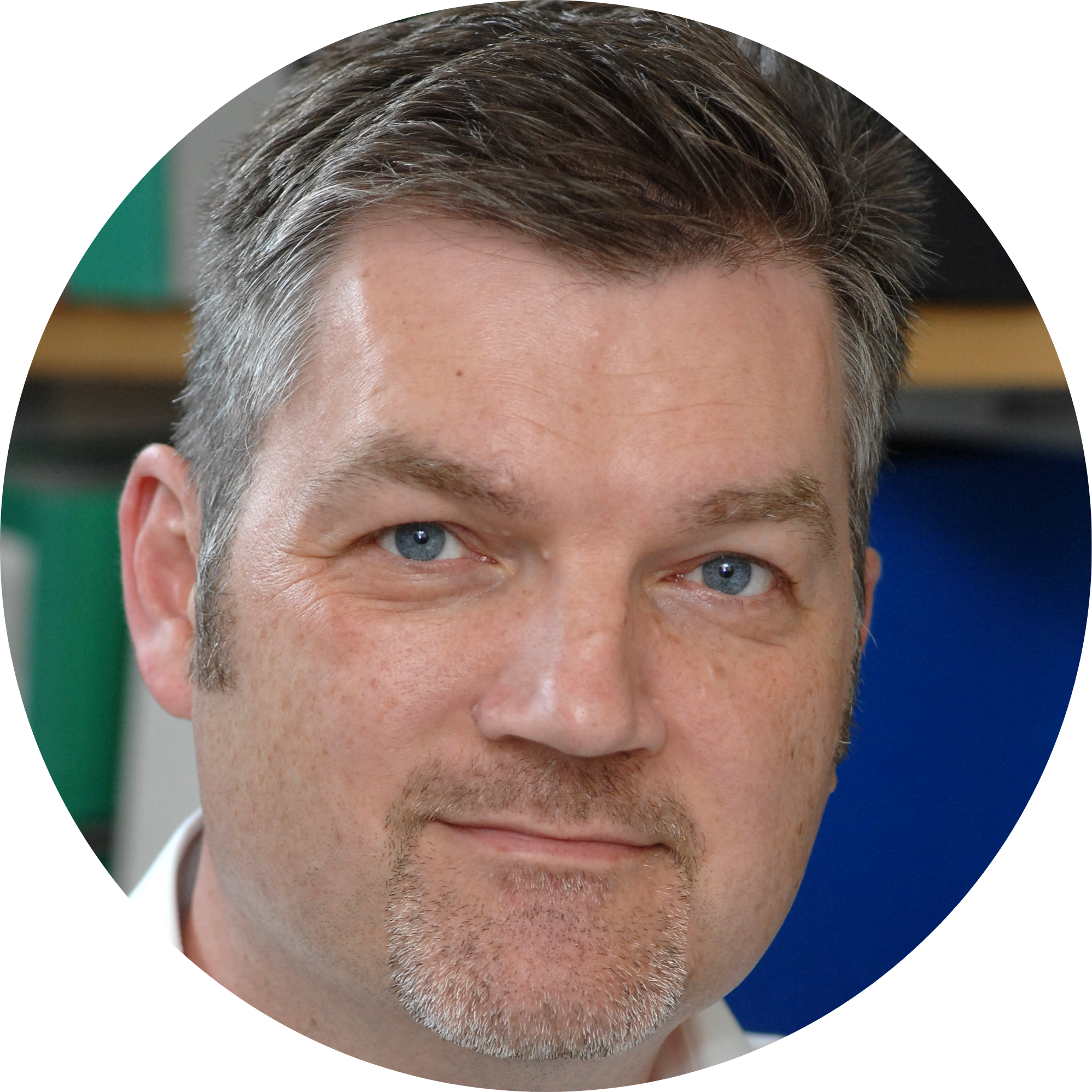 Prof. Rudolf A. Roemer |
University of Warwick, Coventry, UK Prof. Rudolf A. Römer, FInstP, is Professor of Physics at the University of Warwick, where he leads the Disordered Quantum Systems (DisQS) group, focusing on quantum transport, disorder, and computational modelling. He joined Warwick in 2002, following earlier research positions at TU Chemnitz, RWTH Aachen, and the Indian Institute of Science. Römer’s research spans theoretical and computational condensed-matter physics, including quantum Hall effects, disordered systems, transport phenomena, and many-body quantum solutions, with occasional forays into biology. Using advanced numerical techniques such as Monte Carlo simulations and large-scale diagonalisation, he has contributed significantly to understanding disorder-driven phase transitions. Recent work includes refined renormalisation approaches to the Chalker–Coddington quantum Hall model, studies of many-body localisation in SU(2)-invariant Heisenberg chains, and investigations of quantum storage in flat-band systems. An active international collaborator, he has held visiting positions in China, Germany, and France. He is a Fellow of the Institute of Physics, Editor-in-Chief of Physica E, and serves on several editorial boards. Presentation title: Transfer-Matrix Studies of Finite-Range Disordered Hopping Models |