The 4th International Electronic Conference on Agronomy
Winner Announcement:
On behalf of the conference chair, session chairs and conference committee of IECAG 2024, we are pleased to announce the winners!
The Best Oral Presentation Award:
- Maria Carpena -Title: Biopesticides from marine macroalgae ...
- Raju Mondal - Title: Decoding the effect of polyploidization ...
- Gabrijel Ondrasek - Title: Sewage Sludge as a Valuable Resource of Nitrogen and ...
- Eva Sanchez-Hernandez - Title: Aromadendrane Sesquiterpenoids from Santolina ...
Best Poster Award:
- Andi Mehmeti - Title: Assessing the impact of irrigation-based agricultural ...
Announcements:
Invitation to submit in the Special Issue of Agronomy with a 15% discount. Click here for details.
the chair
Dear colleagues, distinguished agronomists,
We are thrilled to welcome you to the upcoming 4th International Electronic Conference on Agronomy (IECAG 2024), proudly sponsored by the MDPI open access journal Agronomy. In line with our commitment to fostering collaboration and knowledge exchange, this electronic conference provides a unique platform for researchers to showcase their work, discuss groundbreaking findings, and engage in meaningful conversations with fellow experts.
Conference Overview: This virtual conference will be held at www.sciforum.net, a platform developed and sponsored by MDPI to organize and provide technical support for electronic conferences. The virtual format offers the distinct advantage of eliminating the need for travel and its associated expenses, allowing you to fully immerse yourself in the conference without any logistical constraints.
Key Themes: The conference will span various key themes, including the following:
- Breeding/Selection Technologies and Strategies;
- Sustainable Soil Management and Farming Systems;
- Crops;
- Precision and Digital Agriculture;
- Water Use and Irrigation;
- Plant–Crop Biology and Biochemistry;
- Biostimulation and Biocontrol Microbial-Based Strategies;
Conference Format: After abstract acceptance, authors are invited to submit a pre-recorded video presentation or a series of narrated slides. These materials will be accessible online and open for discussion, comments, and questions during the entire conference. Additionally, presentations will remain available after the e-conference concludes. Authors are encouraged to submit a full description of their work in a conference paper, which will undergo peer review. The accepted papers will likely be published in the MDPI Biology and Life Sciences Forum journal. However, paper submission is not a requirement for active conference participation.
Free of Charge Participation: We are pleased to inform you that participation in this conference is entirely free of charge for both authors and attendees. The accepted proceedings papers will likely be published in the MDPI Biology and Life Sciences Forum journal, available online on the MDPI website. Selected extended versions of the papers will be published in a Special Issue of the journal Agronomy with a 15% discount on the article processing charge (ISSN 2073-4395).
Awards and Opportunities: The best oral presentation and best poster awards will receive an award of CHF 200, along with an offer to publish an extended paper, in the Special Issue of Agronomy.
We encourage you to explore the conference platform and guidelines provided in advance for a seamless experience. Should you have any queries or require assistance, our dedicated support team is available to ensure your participation is smooth and rewarding.
We look forward to engaging in exciting discussions and hearing new ideas and perspectives from experts in the field. All participants are welcome to join the online conference and contribute to the vibrant intellectual exchange that makes events like IECAG 2024 truly exceptional.
Kind regards,
Dr. José David Flores-Félix
Department of Microbiology and Genetics, University of Salamanca, Salamanca, Spain
Follow the conference organizer on Social Media


Meet Our Chair

Department of Microbiology and Genetics, University of Salamanca, Salamanca, Spain;Dr. José David Flores Félix started his research work at the University of Salamanca (Spain) in the Department of Microbiology and Genetics, working on the evaluation of beneficial plant-associated bacteria, mainly focused on the interaction of Rhizobia with legumes and non-legume plants. The studies aimed to analyze these bacteria's role and determine the capacity of other beneficial endophytes in the qualitative and quantitative improvement of agronomic production. He received his Ph.D. in 2018 at the same university; after completing a postdoctoral step in this institution, He was granted a Marie Slowdoska Curie research fellowship to join the Health Research Science Centre (CICS-UBI) of the University of Beira Interior (Portugal). Nowadays, he is a postdoctoral researcher at the University of Salamanca (Spain) in the Microbial Interactions Group.
Important Dates
23 Sep
2024
27 Oct
2024
29 Nov
2024
Meet Our Speakers
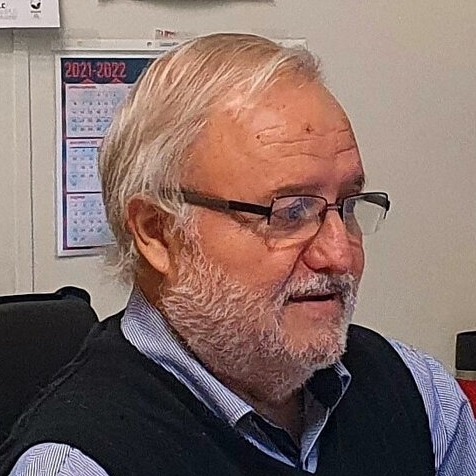
Institute for the Conservation and Improvement of Valencian Agrodiversity, Universitat Politècnica de València, Valencia, Spain;Oscar Vicente was born in 1956, in Madrid (Spain), where he graduated in Biochemistry in 1976 and obtained his PhD in 1983, before spending a three-year postdoctoral period at the Friedich-Miescher Institut, in Basel (Switzerland). In 1988, he moved to the Institute of Microbiology and Genetics, University of Vienna (Austria), where he established and led a research group, to work on pollen development and its biotechnological applications, and on the molecular characterization of pollen allergens and plant MAP kinases. As Assistant Professor, from 1991 to 1996, he was responsible for several courses of Experimental Genetics taught at the Faculty of Sciences. Oscar Vicente returned to Spain in 1996, to join the faculty of the Polytechnic University of Valencia, where he is at present Professor of Biochemistry and Molecular Biology, teaching different subjects in this area to undergraduate and postgraduate students of Biotechnology and Agronomic Engineering. His research interest focuses on the study of plant responses to abiotic stress and stress tolerance mechanisms.

Institute for the Conservation and Improvement of Valencian Agrodiversity (COMAV), Universitat Politècnica de València, Spain.;
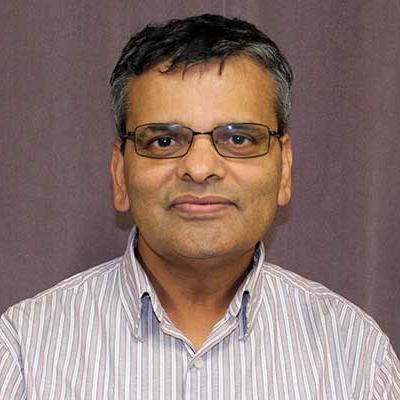
Department of Horticultural Science, College of Agriculture and Life Sciences, North Carolina State University, Mills River, USA.;Dr. Dilip R. Panthee, an Associate Professor in the Department of Horticultural Science at North Carolina State University, is a tomato breeder. He became an Assistant Professor at NC State University in May 2008 after working as a Post-Doctoral Research Associate at the Department of Plant Sciences at the University of Tennessee, Knoxville, TN. He has released ten hybrid cultivars, 19 breeding lines of tomato, and three soybean breeding lines. He has published over 86 journal articles, ten book chapters, more than 76 abstracts, and research reports. He has received ten various professional awards for his contribution to the scientific community.
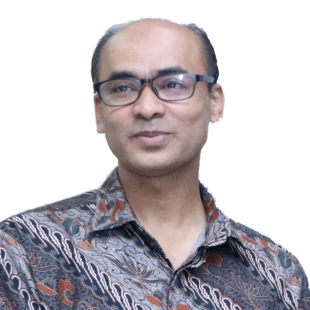
Department of Agronomy, Faculty of Agriculture, Sher-e-Bangla Agricultural University (SAU), Sher-e-Bangla Nagar, Dhaka, Bangladesh.;Dr. Mirza Hasanuzzaman is a Professor of Agronomy at Sher-e-Bangla Agricultural University, Dhaka, with a Ph.D. in Plant Stress Physiology from Ehime University, Japan. He has over 300 Scopus-indexed publications (h-index 83, 25,000+ citations) and has edited 20+ books. He serves as an editor for several international journals and has received numerous prestigious awards, including TWAS Young Scientist Award and UGC Gold Medal. He is a fellow of multiple scientific academies and societies and was named a Highly Cited Researcher by Clarivate in 2021 and 2022. Prof. Hasanuzzaman actively contributes to global research on plant physiology and stress responses.
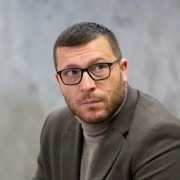
Department of Chemical Pharmaceutical and Agricultural Sciences, University of Ferrara, Ferrara, Italy.;Emanuelle Radicetti is a researcher at the Department of Chemical, Pharmaceutical, and Agricultural Sciences (DOCPAS) of the University of Ferrara (Italy). Since 2007, they have been working on different research projects and teaching activities. They obtained a Ph.D. in Environmental Sciences in 2012 with a dissertation on “Ecological Weed Management”, working on the effects of some ecological approaches for weed management, such as cultivar choice and cover cropping, on crop yield and weed flora composition. They are mainly engaged in developing and evaluating management practices for improving the sustainability of agro-ecosystems with a particular focus on weed community composition, nitrogen dynamics, and GHG emissions. Such issues are mainly investigated through field experiments performed under different environmental conditions. They are a co-author of 45 peer-reviewed papers in international journals. Moreover, they are a member of the Scientific Committee of Agriculture, Sustainability, and Agronomy, where they served in the organization of several special issues. They are currently involved in many different research and teaching activities at the Department of Chemical, Pharmaceutical, and Agricultural Sciences (University of Ferrara, Italy).
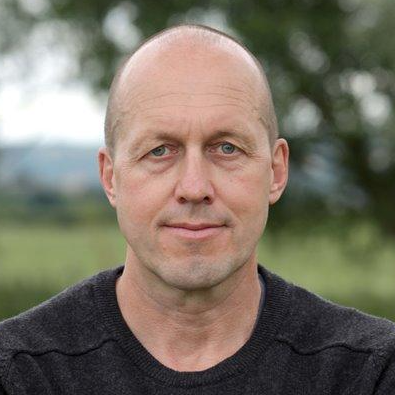
Faculty of Science and Engineering, Southern Cross University, Lismore, Australia.;Carlo Leifert is the Director of the Centre for Organics Research at Southern Cross University in Australia. He is a distinguished researcher in organic and low-input agricultural systems, holding a PhD in Microbiology from Nottingham University, UK, and a BSc/MSc from Georg-August Universität Göttingen, Germany. His research spans soil management, crop protection, food quality and safety, and the nutritional quality of low-input and organic dairy systems. With extensive industry experience, Dr. Leifert has served as Technical Director at Howgarden Ltd., Scientific Director at Stockbridge Technology Centre, and as an R&D Manager and consultant in food quality and organic farming practices.
Dr. Yongliang Qiao
Australian Institute for Machine Learning (AIML), University of Adelaide, Australia.;Yongliang Qiao received the B.S. degree in electrical engineering and automation and the M.S. degree in agricultural electrification and automation from Northwest A&F University, Yangling, China, in 2010 and 2013 respectively, and the Ph.D. degree in computer science from the University of Technology of Belfort-Montbéliard, Belfort, France, in 2017.,He worked as a Research Associate with the Australian Centre for Field Robotics, University of Sydney, Sydney, Australia. His research interests include artificial intelligence, agricultural robots, smart farming, and intelligent perception. His vision is to integrate cutting-edge technologies such as artificial intelligence and robotics with agriculture to realize smart farming. The ultimate goal is to develop intelligent agricultural systems covering "information-agronomy-agricultural machinery" to support sustainable production and promote unmanned farms.
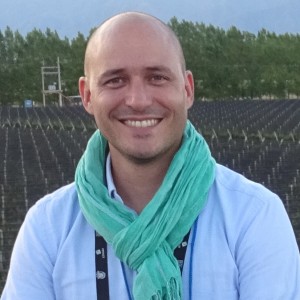
Determent of Agronomy, Food, Natural Resources, Animals and Environment (DAFNAE), University of Padova, Legnaro, Padova, Italy.;Franco Meggio is Associate Professor at the Department of Environmental Agronomy and Crop Science, DAFNAE of the University of Padova. He completed the PhD in Viticulture, Oenology, and Marketing of wineries at the University of Padova in 2008. He works at the crossroads of plant physiology, ecosystems ecology and remote sensing. His main research interests focus on three major topics: i) Understanding leaf-level biochemical processes and responses at the canopy level. He is interested in plant ecophysiology and its adaptation to the environment changes for a deeper understanding on impacts of climate change on tree crops (grapevine, orchards); ii) Sustainable viticulture and environmental impact of agricultural activities. Modeling carbon dynamics in tree crops and quantification of abiotic factors affecting plant physiological processes; iii) Linking remote sensing methods to plant physiology, canopy architecture and biophysical parameters to promote precision viticulture approaches by means of proximal and remote sensors. Member of the Italian (SOI) and International Society for Horticultural Science (ISHS) he is Academic Correspondent of the Italian Academy of Vine and Wine. Associated Editor of OenoOne he is author and co-author of more than 100 scientific publications concerning viticulture, plant ecophysiology and precision viticulture.
Council for Agricultural Research and Economics (CREA), Research Centre for Vegetable and Ornamental Crops, Italy.;Dr. Catello Pane is a Senior Researcher at the Research Centre for Vegetable and Ornamental Crops of the Council for Agricultural Research and Economics (CREA) in Pontecagnano Faiano, Italy. His major research interests include the development and implementation of low environmental impact cultivation methods, the promotion of sustainable agricultural techniques and the technological innovation mostly to improve resource efficiency in plant disease management. In recent years, he has carried out studies on the application of hyperspectral and thermal imaging on crops for the early detection of fungal infections.

Research Institute on Terrestrial Ecosystems-National Research Council (IRET-CNR), Sesto Fiorentino, Italy.;Sara Di Lonardo is a leading researcher specializing in biodiversity and terrestrial ecosystems, with an extensive career spanning Italy's top research institutions. From 2011 to 2023, she was a pivotal figure at the Consiglio Nazionale delle Ricerche (CNR), focusing on ecological sustainability and biodiversity conservation. Her work at the Research Institute on Terrestrial Ecosystems (IRET-CNR) addressed the impacts of climate change on terrestrial habitats through interdisciplinary research. In 2023, she joined the National Biodiversity Future Center (NBFC), furthering her efforts to tackle urgent environmental challenges. Earlier in her career, she contributed to studies on climate-biological system interactions at the Istituto di Biometeorologia in Florence. A strong advocate for integrating research into actionable solutions, Di Lonardo’s contributions continue to shape policies and practices aimed at fostering biodiversity and ecological resilience.
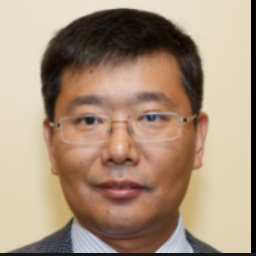
Tobacco Research Institute (CAAS), Chinese Academy of Agricultural Sciences, Shandong, China.;Prof. Dr. Yongfeng Guo is currently a professor at the Tobacco Research Institute, Chinese Academy of Agricultural Sciences. His research interest includes molecular regulation of leaf senescence and plant peptide signaling.
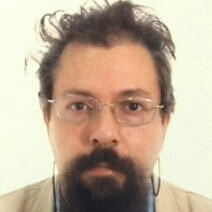
Department of Biotechnology, Polytechnic University of Valencia, Spain.;His main research interest is the EVOLUTIONARY ECOLOGY OF BIOTIC INTERACTIONS. He works in two complementary areas that contribute to the understanding and development of his field: 1) the molecular mechanisms that facilitate the stability of the interactions between species; and 2) the ecological factors affecting the evolutionary dynamics of interacting species. Nowadays, he integrates his experience with agronomy to address relevant societal problems such as agronomic sustainability and the impact of climate change.
Department of Environmental Engineering, Faculty of Engineering, Democritus University of Thrace, Greece.;Professor Spyridon Ntougias studied chemistry (Univ. Athens, Greece) and received his Ph.D. in 1999 from the Department of Biological Sciences, Wye College, University of London, UK. He worked as scientific staff at National Agricultural Research Foundation of Greece (NAGREF) and became academic staff in 2009 at the Department of Environmental Engineering, Democritus University of Thrace (DUTH). He has more than 20-year research experience on environmental bioengineering and applied microbiology, in particular on sustainable bioengineering approaches. He has been involved in 40 international and national research projects (in 20 as Coordinator/Principal Investigator), including EU-(co)funded and IAEA (International Atomic Energy Agency)-funded projects as well as projects funded by regional authorities and the private sector. He has 90 research publications in international scientific journals, 4 chapter books, 1 patent and approximately 90 participations in international and national conferences.
proMetheus - Research Unit on Materials, Energy and Environment for Sustainability, Instituto Politécnico de Viana do Castelo, Portugal;Ana Cristina Rodrigues, with a PhD in Chemical and Biological Engineering from the University of Minho, is an Adjunct Professor and Deputy Director at the School of Agriculture at the Polytechnic Institute of Viana do Castelo (IPVC). She is an active researcher in sustainable environmental solutions, focusing on nature-based technologies for water treatment, green roofs, and circular economy practices. She has led several national and international research projects, published extensively, and contributes to environmental and biotechnology education programs.
Sessions
Explore more details




DAY 1
S1. Crops
S2. Breeding/Selection Technologies and Strategies
DAY 2