

The 1st International Online Conference on AgriEngineering
Due to the high interest in our conference, we are pleased to announce that
we have extended the Abstract Submission Deadline to 2 November 2026!
the chair
We are thrilled to welcome you to the upcoming 1st International Electronic Conference on AgriEngineering (IOCAGE 2027), proudly sponsored by the MDPI open access journal AgriEngineering (ISSN: 2624-7402, Impact Factor: 3.1). In line with our commitment to fostering collaboration and knowledge exchange, this online conference provides a unique platform for researchers to showcase their work, discuss groundbreaking findings, and engage in meaningful conversations with fellow experts.
This online conference will be held on www.sciforum.net, a platform developed and sponsored by MDPI to organize and provide technical support for electronic conferences. The virtual format offers the distinct advantage of eliminating the need for travel and its associated expenses, allowing you to fully immerse yourself in the conference without any logistical constraints.
The conference will span various key themes, including the following:
- Agricultural Mechanization;
- Artificial Intelligence in Agriculture;
- Precision Agriculture;
- Livestock Farming Technology;
- Remote Sensing in Agriculture;
- Bioresources and Bioprocess Engineering;
We are pleased to inform you that the participation in this conference is completely free of charge for both authors and attendees. Extended versions of the accepted abstracts may also be submitted for free to Biology and Life Sciences Forum, after the conference ends. In addition, participants to this conference are invited to submit full papers for consideration in a Special Issue of AgriEngineering (ISSN: 2624-7402, Impact Factor 3.1), with a 20% discount on the article processing charge.
We encourage you to explore the conference platform and guidelines provided in advance for a seamless experience. Should you have any queries or require assistance, our dedicated support team is available to ensure your participation is smooth and rewarding.
We look forward to engaging in exciting discussions and hearing new ideas and perspectives from experts in the field. All participants are welcome to join the online conference and contribute to the vibrant intellectual exchange that makes events like IOCAGE 2027 truly exceptional.
Kind regards,



Meet Our Chair
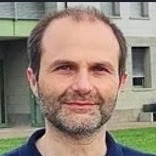
Department of Land, Enviroment, Agriculture and Orestry, University of Padova, Legnaro, Padova, Italy;Francesco Marinello is a full professor in biosystems engineering at the University of Padova (Italy). After his PhD in precision engineering and metrology jointly supervised by the Technical University of Denmark (Lingby, Denmark), he spent two years at the InterUniversity Center for Nanotechnologies (Venice, Italy) and two years at the University of Applied Sciences and Arts of Southern Switzerland (Lugano, Switzerland). Since 2012 he is researcher and since 2024 full professor at the University of Padova (Padova, Italy) and since 2017 Adjunct professor at the University of Georgia (Athens, USA): he is responsible for the courses in Agricultural Mechanics, Precision Farming, Applied Statistics and Unmanned Aerial Vehicles for Agriculture.
Important Dates
2 Nov
2026
2 Dec
2026
27 Jan
2027
Meet Our Speakers
-6ab0eacbe18e4.jpg)
Department of Agricultural Production, School of Agricultural, Food and Biosystems Engineering, Polytechnic University of Madrid, Madrid, Spain;Dr. Lorena Parra is an Assistant Professor at the Polytechnic University of Madrid (Spain), where she teaches in the field of gardening and landscaping. She received her PhD from the Polytechnic University of Valencia, where she was awarded the Extraordinary Doctoral Prize. Her current research focuses on turfgrass management, precision agriculture, and the development of innovative sensing technologies for monitoring vegetation and environmental conditions. Her work combines physiological assessment, proximal and remote sensing, artificial intelligence, and decision-support systems to improve the sustainability and performance of managed green areas. She has authored more than 70 scientific publications and has participated in numerous national and international research projects addressing smart irrigation, turfgrass monitoring, water management, and environmental sensing technologies. In addition to her academic activities, she has established collaborations with companies in the turfgrass, landscaping, and agricultural sectors, facilitating the translation of research findings into practical solutions and supporting innovation within the industry. Her current research aims to bridge the gap between advanced monitoring technologies and practical management solutions, contributing to more sustainable and data-driven approaches to turfgrass and agricultural systems.
-6ab276b477666.jpg)
Department of Engineering, São Paulo State University, Jaboticabal, São Paulo, Brazil;Rouverson Pereira da Silva is an Agricultural Engineer with an M.Sc. in Mechanical Engineering, a Ph.D. in Agronomy (Crop Production), and the title of Full Professor (Livre-Docente) in Agricultural Machinery and Mechanization. He completed a senior research fellowship at the University of Georgia (USA) in 2017. He is an Associate Professor at São Paulo State University (UNESP) and a CNPq Research Productivity Fellow (Level 1C). He has held leadership positions in international organizations, including serving as the first Regional Representative for Latin America and the Caribbean of the International Society of Precision Agriculture (ISPA). Dr. Silva is Associate Editor of Frontiers in Plant Science and has served as Guest Editor for several scientific journals. His academic output includes 285 journal articles, 12 books, 47 book chapters, and over 620 conference and technical publications. He has supervised 6 postdoctoral researchers, 31 Ph.D. students, 38 master's students, and 190 undergraduate research projects. His research focuses on Agricultural Machinery and Mechanization, Precision Agriculture, and Digital Agriculture, with emphasis on mechanized harvesting systems, operational quality, and technological innovation. He is recognized as a pioneer in mechanized peanut harvesting research in Brazil.
-6ad5c6aa11634.jpg)
College of Agricultural Engineering, State University of Campinas, Campinas, Brazil;Daniella Jorge de Moura is a Full Professor at the School of Agricultural Engineering (FEAGRI), University of Campinas (UNICAMP), Brazil. She holds a degree in Agricultural Engineering from the University of São Paulo and master’s and doctoral degrees from UNICAMP, and conducted doctoral research at the University of Florida. Her research focuses on precision livestock farming, animal environments, and animal welfare, particularly in poultry, swine, and dairy cattle production. She integrates environmental monitoring, computer vision, behavioral analysis, and acoustic sensing to support livestock management. Her current work explores artificial intelligence and animal-based indicators to improve environmental control, welfare, and production efficiency. She also serves on the board of IRCAW, based in Chongqing, China, representing Brazil.