Sessions & Session Chairs
Sessions
1. Sustainable Animal Welfare, Ethics and Human-Animal Interactions
2. One Health: Improve Disease Manifestation and Management in Animals, Humans, and the Environment
3. Sustainable Animal Nutrition
4. Animal Physiology, Reproduction, and Sustainable Production
5. Aquaculture Systems and Production Strategies in Asia
6. Smart Technologies for Sustainable Animal Systems in Europe
7. Animal Genomics and Genetic Improvement in the Americas

Department of Agricultural and Food Sciences, University of Bologna, Bologna, Italy, Faculty of Science and Engineering, Southern Cross University, Lismore, NSW, Australia
Dr Barbara Padalino is from Italy and graduated in Veterinary Medicine at the University of Bari (Italy) and completed her PhD at the University of Sydney. She is currently working as Associate Professor of Animal Behaviour, husbandry and Welfare at Southern Cross University, and as Associate Professor of Animal Science at the University of Bologna. However, before taking these positions, she has worked for several universities, Bari and Pisa in Italy, Charles Sturt University and Sydney in Australia and CityU in Hong Kong. She has also been a member of the Animal Health and Welfare panel of the European Food Safety Authority (EFSA) and she is currently advisor for the European Platform on animal welfare and a member of CAMENET, a technical committee on camel science of the Abu Dhabi Food Safety Authority. She is a Diplomate of the European Veterinary College in Animal Welfare, Ethics and Law, and she works as an editorial member for several peer-reviewed animal and veterinary science journals. Her research interests span several topics; her main areas of research are animal transportation and the development and validation of welfare protocols for farm-to-fork. She has written more than 200 publications in peer-reviewed international journals and conference proceedings on those topics.

Laboratory of Animal Molecular Virology; Swine and Poultry Infectious Diseases Research Center (CRIPA) and Research Group on Infectious Diseases in Animal Production (GREMIP); Faculty of Veterinary Medicine, University of Montreal, Saint-Hyacinthe, Canada
Dr. Levon Abrahamyan is a Professor at the Faculty of Veterinary Medicine, Université de Montréal since January 2015, where he directs the Laboratory for Molecular Virology. He holds a PhD in genetics from the Institute of General Genetics and Yerevan State University (Russia and Armenia; 1990) and he has reach postdoctoral experience. Dr Abrahamyan has conducted research in internationally renowned laboratories across the USA, Canada, Russia, and Colombia, and previously held academic positions at the Nebraska Center for Virology (UNL, NE, USA) and at Charles University in Prague, Czech Republic. His research focuses on the molecular biology of viruses affecting animals and humans, investigating host-pathogen interactions and viral pathogenesis in species such as swine, mink, and honeybees. Dr. Abrahamyan's work explores how viral and host genetic variations influence disease progression and includes development of veterinary vaccines and antiviral agents. Dr. Abrahamyan has authored over 40 peer-reviewed publications and serves as Associate Editor for multiple journals including Frontiers in Veterinary Science, Frontiers in Microbiology, BMC Microbiology and Viruses. His laboratory employs molecular virology, omics and advanced microscopy techniques to decode virus-host interactions.
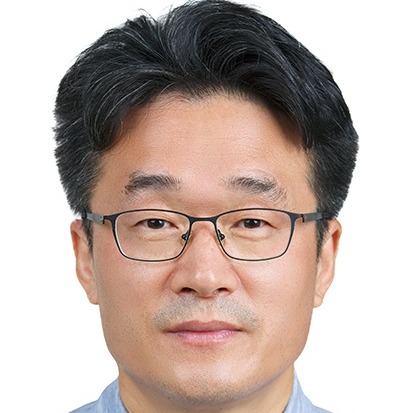
Department of Animal Science and Technology, Konkuk University, Seoul, Republic of Korea
He is currently a professor at the Department of Animal Science and Technology of Konkuk University, Seoul, Korea. He had his B.Sc and M.Sc degrees at Department of Animal Science, Chungnam National University, Korea in 1997 and 1999. He continued his study in the field of poultry science and obtained his Ph.D degree at Utrecht University, The Netherlands in 2002. He specialized in poultry nutrition and his research interests are to develop alternative strategies to reduce the use of antibiotics and/or anticoccidials in chickens, and to evaluate nutrient requirements in chickens. He is also interested in looking for dietary measures to minimize diet- and/or environment-associated stressors in chickens.
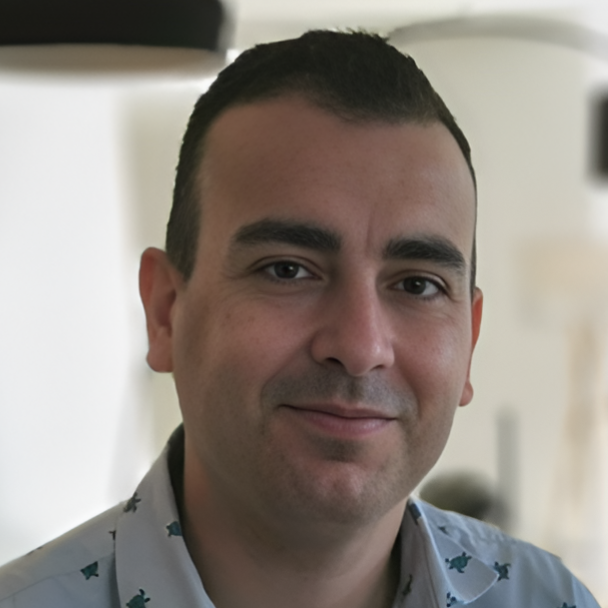
Centro de Investigación y Tecnología Agroalimentaria de Aragón (CITA), Animal Science Department. Avda. Montañana, Zaragoza
Guillermo Ripoll is PhD in “Ingeniería Agraria, Alimentaria, Forestal y del Desarrollo Rural Sostenible” (Universities of Seville and Cordoba, 2020), Master in Agrifood Biotecnology (University of Avila, 2016), Agricultural Engineer (University of Avila, 2014 and Agricultural Technical Engineer, University of Zaragoza, 2000). He received the Extraordinary doctoral award from the University of Seville.
His main research interests concern carcass, meat and meat products quality, including shelf-life, intrinsic and extrinsic quality cues and perception of consumers with a farm to fork approach. Areas or special interest are color and visual color perception and near infrared spectroscopy. He belongs to a research group called “Research in sustainable and healthy agro-livestock productions" (INPASS), previously was SAGAS, and previously “Quality and technology of meat-A04.
His scientific activity has been developed within 47 research projects of regional (20, 8 as IP), national (24), international (3). He has authored 134 articles indexed in Scopus, being the first or last author of the 46 % of them. The 47,23 2 % of papers are in the Q1, the 31.5% of documents are in the top 25% most cited documents worldwide and the 15 % are co-authored with researchers in other countries. His papers have 2.882 citations (h-index: 28). He has also published 72 technical papers, 15 book chapters, and presented 150 communications in national (84) and international (76) conferences. He has a 6-year research period by ANECA.
Also is co-inventor of the software Nodriza (registrered) and the utility model “Procedimiento de predicción de dureza de la carne de ganado vacuno mediante la detección de la mutación genética SNP98535683 (Thr182Ala) de la Calpastatina (CAST) y/o de la mutación genética SNP98545188 (CAST2)” (registered).
He has directed 12 MsC and TFG and he has given class to students of International Master of Animal Nutrition of CIHEAM in 2012, 2017 and 2018, four classes to student of Science and Technology of Food grade in the Veterinary Faculty of University of Zaragoza

Swine Production Medicine, Adelaide University, Roseworthy Campus, Australia, Faculty of Veterinary Science, Chulalongkorn University, Bangkok, Thailand
After completing his PhD on gilt management at Leeds, Roy researched the endocrinology of early weaned sows at Massey University, New Zealand and then moved to University of Alberta, and then the University of Saskatchewan, Canada and studied sow nutrition/reproduction interactions and control of reproductive function. During which period he went to vet school; graduating in 1995. After 4 yrs as a provincial government veterinarian, he returned to the UK for 3 yrs at the Royal Vet College, London, before moving to Michigan State University. After 10 yrs in the USA he moved to his current position as Associate Professor in Intensive Production (pigs) at Adelaide University, South Australia. His research interests have mostly been to improve sow herd reproductive performance. He has more than 275 publications and co-authored the popular book, “Pig Health”.
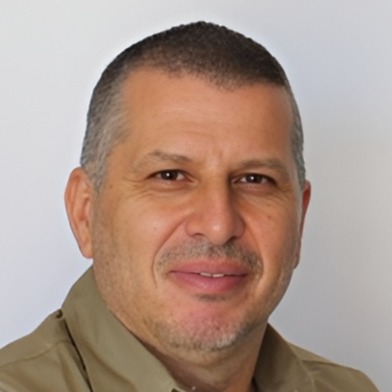
The Davies Livestock Research Centre, School of Animal and Veterinary Sciences, Adelaide University, Adelaide, SA, Australia
Veterinarian, originally from North Macedonia, with P PhD in veterinary medicine from Massey University in New Zealand. Affiliated with the current institution for over 14 years and interest in ruminant health and productivity. Consultancy in herd health and production and health problem solving in >10 countries

Key Laboratory of Freshwater Animal Breeding, College of Fisheries, Ministry of Agriculture, Huazhong Agricultural University, Wuhan, China
Dr. Jing-Xia Liu gets her PhD degree in 2005. From 3/2011 to 9/2012, she studied in medical school in Harvard University as a visiting scholar. She has been a professor in Huazhong Agricultural University from 2013. She successively chairs and participates in different grants from the National Major Basic Research Program (973), National Key R&D Program of China, the National Natural Science Foundation of China (NSFC), Innovation Project of Chinese Academy of Science and etc., and published near 100 papers in journals including Cell, Advanced Science, Science Bulletin, Development, Angiogenesis, the FASEB Journal, Journal of Biological Chemistry, iScience, and etc.. She gets “the Second Class Prize of National Natural Science Award” (top 4) in 2011, and “the Second Class Prize of Hainan Provincial Natural Science Award” (top 3) in 2021. She is interested in the fish development and genetics under environmental stresses, including abiotic stress (drugs, metal ions and their nanoparticles) and biotic stresses (bacteria). We focus on the developmental responses of hematopoietic system (hematopoietic cells) and locomotor behavior systems to stresses by approaches of chemical screens, genetic screens, and biochemical analysis in zebrafish. She studies the genetic and epigenetic mechanisms underlying the responsive developmental processes. The promising candidate genes which function in stress resistance have been transferred to economic freshwater fish for constructing and screening stress resistant germplasms in freshwater economic fishes.
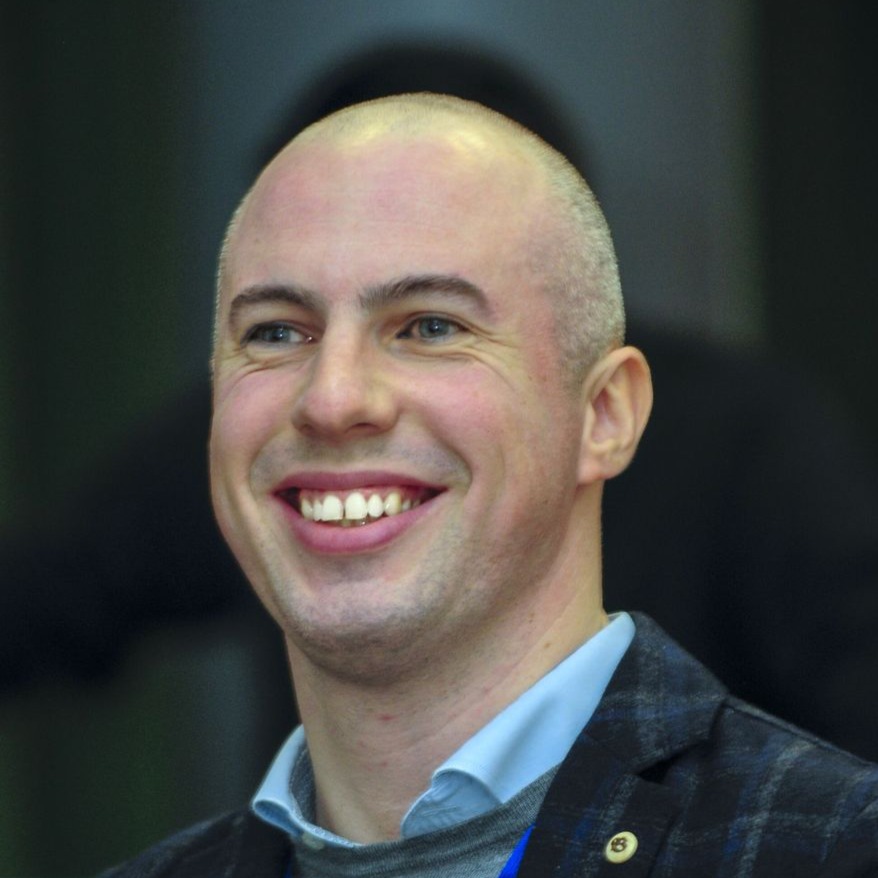
Department of Land, Environment, Agriculture and Forestry, University of Padova, Legnaro, PD, Italy
Andrea Pezzuolo is an Associate Professor at the University of Padova with wide expertise in Biosystems Engineering, Smart Livestock Systems and Precision Livestock Farming technologies. He's a member of the editorial board of 10 scientific journals.
In the last 10 years, coordinated/participated in several projects financed both from EU and from national funding. He supervised and is still supervising several PhD, MSc, and BSc students in these research areas. Details on his scientific outputs can be found at SCOPUS Researcher ID 56023708900 and ORCID (https://orcid.org/0000-0002-9955-9896).
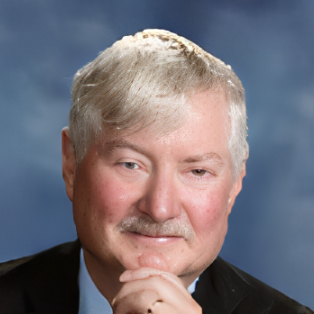
Department of Animal Sciences, The Ohio State University, 2027 Coffey Road, Columbus, OH, USA
Michael Davis was born in Huntsville, Ohio, in 1952 and was raised on a grain and livestock farm. He graduated summa cum laude with a B.S. Degree in Animal Science from The Ohio State University in 1974. He obtained his M.S. and Ph.D. Degrees in Animal Breeding & Genetics from Colorado State University in 1977 and 1980, respectively. From 1980 to 1982, Dr. Davis was a postdoctoral fellow at the University of Wisconsin, where he conducted research on the life-cycle efficiency of beef production.
In 1982, Dr. Davis joined the faculty of the Department of Animal Sciences at The Ohio State University as an Assistant Professor. He was promoted to Associate Professor in 1987 and to Professor in 1998. His teaching responsibilities included undergraduate courses in animal genetics and statistics. He was director of the Department of Animal Sciences’ Animal Genetics Lab, which performed blood typing and DNA typing for purposes of parentage verification for several beef cattle breed associations until its closure in 2004. He was also in charge of beef cattle genetic research at Ohio State’s Eastern Agricultural Research Station. From 1989 through 2005, Dr. Davis conducted a divergent selection experiment for blood serum insulin-like growth factor I (IGF-I) concentration in Angus beef cattle. Research was also directed toward identifying polymorphisms in candidate genes within the IGF-I/growth hormone axis that influence economically important traits in beef cattle, as well as toward studying the relationship between IGF-I and feed efficiency in cattle. For the 2009-2017 breeding seasons, the selection criterion in the two lines was changed from serum IGF-I concentration to high versus low maintenance energy expected progeny differences (ME EPD). Dr. Davis has published 97 peer-reviewed manuscripts.
Dr. Davis was a member of the editorial board of the Journal of Animal Science from 1984 to 1986 and from 2003 to 2005; was Associate Editor for the Animal Genetics section from 2005 to 2007; and was Division Editor from 2007 to 2009.