The 1st International Online Conference on Recycling
On behalf of the Chair of IOCRe 2026, we are pleased to announce the winners of the Best Oral Presentation Awards and Best Poster Awards.
The Best Oral Presentation Awards have been awarded to:
| ID | Title | Author |
| Sciforum-187189 | Effect of Thermal Pretreatment on the Comminution and Fractional Distribution of Gold in Waste Printed Circuit Boar |
Melito Salvador Oculares; Ryoei Watanabe; Ilhwan Park; Hiroki Kuroyama; Takumi Yata; Sanghee Jeon; Naoki Hiroyoshi; Mayumi Ito |
| Sciforum-185960 | Spatial Analysis of Fragmented Waste Management Systems Using GIS: A Decision-Support Framework for Urban Optimization |
Sotiris Lycourghiotis |
| Sciforum-187068 | Renewable Eutectic Solvent-based Catalytic Systems for the Chemical Recycling of PET and PEF |
Vinicius de Paula; Simão V. Pandeirada; Paulo J. A. Ribeiro-Claro; Armando J. D. Silvestre; Andreia F. Sousa |
The Best Poster Awards have been awarded to:
| ID | Title | Author |
| Sciforum-187210 | Disulfide-Containing Mesoporous Silica for Selective Palladium Recovery from Complex Chloride Media | Amir Nobahar; Flavia N. Braga; Rita M. Carvalho; Helena Passos; Filipe H. B. Sosa; Nicolas Schaeffer*; João A. P. Coutinho |
| Sciforum-187300 | Exploring snail shell as an alternative material for morta preparation | Amiya Ojha |
The IOCRe 2026 Conference Closed
Thank you for your contribution to the 1st International Online Conference on Recycling. We hope that you enjoyed the event.
Best Oral Presentation Awards and Best Poster Awards will be announced soon.
The certificates for Oral Presenters, Poster Presenters, and Participants available for download HERE.
Participants in this conference are invited to contribute a full manuscript to the conference's Special Issue, published in Recycling (ISSN: 2313-4321, Impact Factor: 5.2), with a 20% discount on the publication fee.
Click here for more details.
The online version of the IOCRe 2026 abstract book, including the program, all abstracts, and the complete poster list, is available to browse and download!
Click HERE for the abstract book (registrants only).
Click HERE for the poster gallery.
the chair
Dear researchers,
We are delighted to invite you to the upcoming conference the 1st International Online Conference on Recycling (IOCRe2026), organized by the MDPI journal Recycling (ISSN: 2313-4321; Impact Factor: 5.2; CITESCORE: 7.5).
This online conference will take place from the 7—8 September, 2026, addressing key sustainability, recycling, and resource recovery challenges. The event will focus on a broad range of topics, including resource recycling, waste management strategies, the circular economy, industrial symbiosis, sustainable materials, and policy frameworks towards a zero-waste future, among others.
The IOCRe 2026 conference offers a prestigious international platform for researchers, policymakers, and industry leaders. Here, you will have the invaluable opportunity to engage with cutting-edge research, share insights with leading experts, and contribute to shaping sustainable recycling practices and circular material recovery systems for the future. The goal is not only to respond to today’s complex challenges but also to proactively design systems that are adaptable, inclusive, and capable of driving long-term environmental and economic transformation.
One of the most significant advantages of this fully virtual conference format is the ease of participation—no travel is required, and scholars can join us from anywhere in the world. The event will feature live presentations, interactive Q&A sessions, and a virtual poster gallery, encouraging open dialogue and dynamic interaction among participants
The conference will be structured around several key thematic sessions:
1. Advances in Recycling Technologies
2. Circular Economy and Policy Innovations towards Improved Resource Recovery
3. Plastic and Composite Waste Recycling
4. Metal, Battery, and E-Waste Recycling
5. Challenges and Opportunities in Construction and Demolition Waste
We warmly invite you to submit your abstract and join this exciting global exchange. All abstracts will be peer-reviewed by the scientific committee and presented on the conference website. Participation is free of charge, and outstanding contributions will be eligible for conference awards. In addition, extended versions of the presented work (4–8 pages) may be published free of charge in the Environmental and Earth Sciences Proceedings, and authors will receive a 20% discount for submitting full-length papers to the Recycling Special Issue.
I look forward to your participation and the engaging discussions that will shape the future of recycling.
Kind regards,
Prof. Dr. Michele John
Chair of IOCRe 2026
Editor-in-Chief Recycling
Sustainable Engineering Group, Curtin University, Australia



Meet Our Chair
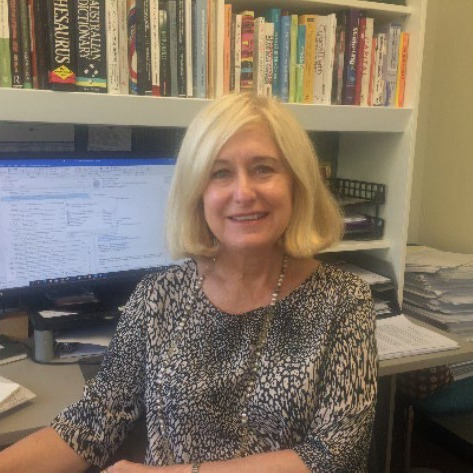
Sustainable Engineering Group, Curtin University, Perth, Australia;Professor Michele John is the Professor of Sustainability and Director of the Sustainable Engineering Group (SEG), Curtin University, Perth, Western Australia. Her teaching and research encompass a wide spectrum of disciplines, including life cycle engineering, environmental impact assessment, climate change, eco-efficient production, industrial symbiosis, waste management, and sustainability education. She has published two books on sustainability education, ‘Engineering Education for Sustainable Development’ (Biswas and John 2022) and the ‘The Routledge Handbook on Global Sustainability Knowledge and Thinking in the 21st Century’ (Open Access John, M. Editor. 2025). https://www.taylorfrancis.com/books/oa-edit/10.4324/9781003171577/routledge-handbook-global-sustainability-education-thinking-21st-century-michele-john Michele has been the founding Editor-in-Chief of the Recycling journal since 2014. Michele’s research interests include sustainable industrial production, sustainability assessment and measurement, corporate stewardship values, sustainability governance models, and sustainability education development. Michele’s teaching and supervision programs are committed to the development of multi- and trans-disciplinary sustainability education and the development of a sustainability leadership ethos and accountability.
Important Dates
22 May
2026
17 Jun
2026
1 Sep
2026
Meet Our Speakers
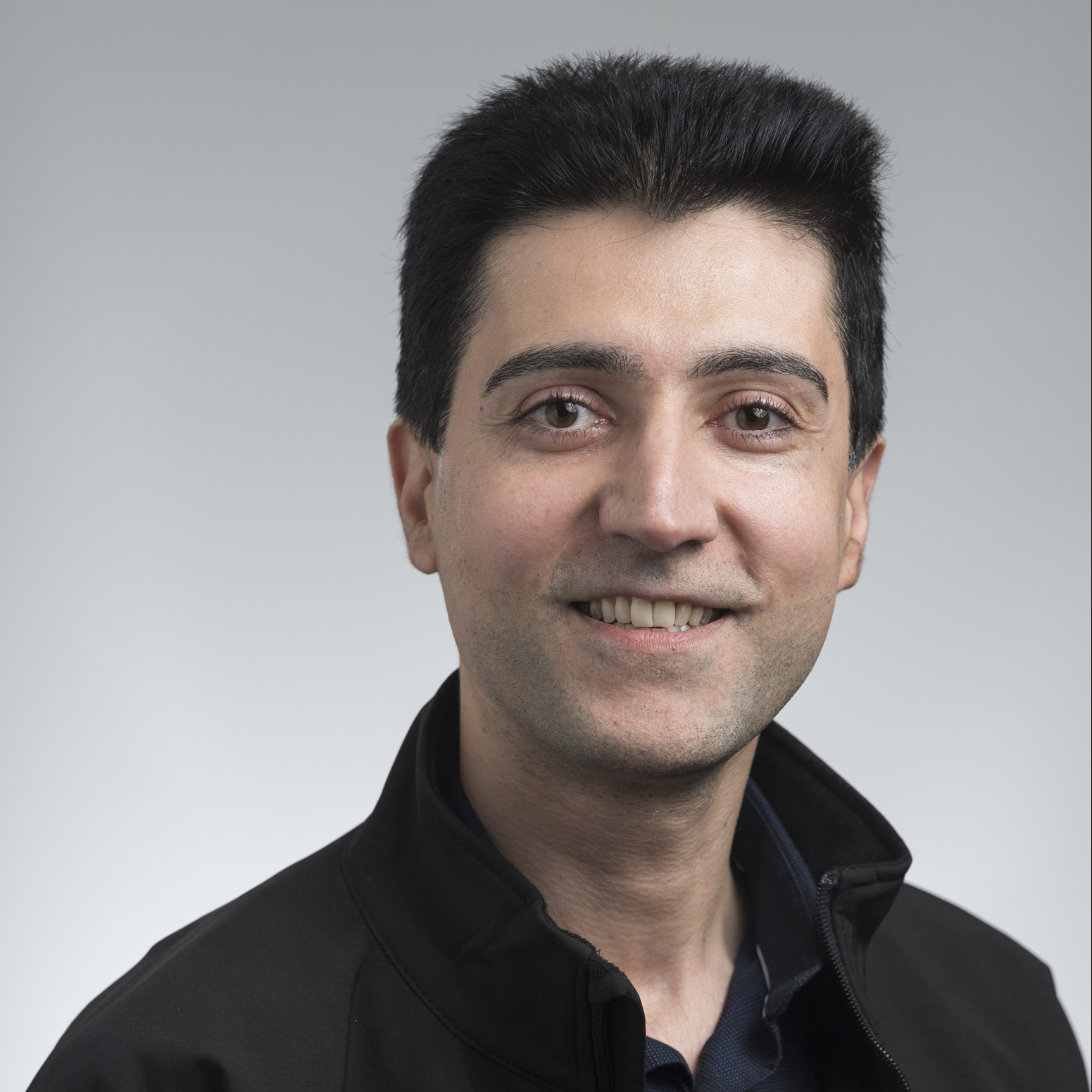
Department of Civil and Environmental Engineering, Monash University, Melbourne, Australia;Associate Professor Mehrdad Arashpour is a leading researcher and academic in construction engineering, digital construction, artificial intelligence, and sustainable infrastructure. He serves as Head of Discipline for Construction Engineering and Management at Monash University and is a member of the Monash University Academic Board. Recognised among the world's Top 2% Scientists by Stanford University (2022–2025), he has secured more than $16 million in competitive research funding and published over 160 journal articles. His research focuses on AI-enabled construction systems, computer vision, robotics, digital twins, modular construction, and circular economy solutions for the built environment. He has successfully supervised 16 PhD graduates and actively collaborates with industry and government partners.

Department of Chemical and Biological Engineering, University at Buffalo, The State University of New York (SUNY), New York, USA;Paschalis Alexandridis is Distinguished Professor in the Department of Chemical and Biological Engineering at the University at Buffalo, The State University of New York (SUNY), where he has served as Director of the Materials Science and Engineering program and Associate Dean for Research and Graduate Education in the School of Engineering. He earned his PhD in chemical engineering from MIT and has carried out postdoctoral research in polymer physical chemistry at Lund University. Alexandridis is an expert on soft matter and complex fluids, whose research bridges molecular organization to mesoscale structure, and translates these into processes and products that are energy-efficient and environmentally responsible. Ongoing projects address block copolymer self-assembly, diffusion in semicrystalline polymers, plastics and textile recycling, and PFAS sequestration. Alexandridis has 210 journal publications and 6 US patents (Google Scholar h-index 87 and 28,500 citations as of 8/2026). He is a Fellow of AAAS, AIChE, RSC, and IAAM, and held leadership positions within AIChE Area 1C: "Interfacial Phenomena" and the ACS Division of Colloid and Surface Chemistry. Alexandridis is the Editor-in-Chief of the Journal of Dispersion Science and Technology, Section Editor-in-Chief of Polymers, and Review Editor of the Journal of Surfactants and Detergents. (https://www.cbe.buffalo.edu/alexandridis)





For inquiries regarding submissions and sponsorship opportunities, please feel free to contact us.