
The 1st International Online Conference on Veterinary Sciences
Veterinary Virology in the New Era: Comprehensive Research from Identification to Prevention
The IOCVS 2025 Conference Closed and Winner Announcement
On behalf of the conference organizing committee,
we would like to express our appreciation to all the participants for their contributions.
The Best Oral Presentation Awards and Best Poster Awards of IOCVS 2025 have been evaluated.
Please refer to the Winner Announcement.
Accepted abstracts are eligible for publication in a Special Issue of Veterinary Sciences (ISSN: 2306-7381; Impact Factor: 2.3), with a 20% discount on the publication fee.
Click HERE for more details.
Coming Up Next: IOCVS 2026 - The 2nd International Online Conference on Veterinary Sciences
https://sciforum.net/event/IOCVS2026
For inquiry - iocvs2025@mdpi.com
Important Dates
4 Sep
2025
24 Sep
2025
28 Nov
2025
Meet Our Speakers

Host Pathogen Interactions program, Disease Intervention and Prevention Program, Texas Biomedical Research Institute, San Antonio, TX 78245, USA;Center of Scientific Excellence for Influenza Viruses, National Research Centre, Egypt;Dr. Ahmed Mostafa Elsayed is a Staff Scientist at Texas Biomedical Research Institute’s Host-Pathogen Interactions and Disease Intervention and Prevention Programs. His research focuses on viral evolution, transmission, and viral pathogenesis of zoonotic viruses, aiming to advance recombinant vaccines and antiviral therapies. He has extensive experience in high-containment labs (BSL2–BSL4) and expertise in viral-host interactions, antiviral testing, vaccine development, and animal models. Dr. Elsayed has authored over 135 publications with 4,500+ citations (H-index 35) and was named among the World’s Top 2% Scientists in 2023 and 2024.
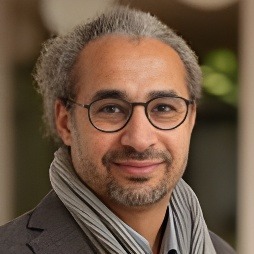
Friedrich-Loeffler-Institut, Institute of Molecular Virology and Cell Biology (IMVZ), Greifswald-Insel Riems, Germany;PD Dr. El-Sayed Mohammed Abdel-Whab leads a research team at the Federal Research Institute for Animal Health (Friedrich-Loeffler-Institut), Insel Riems, Germany. His research focuses on the molecular mechanisms underlying the adaptation of influenza viruses at the human–animal interface. He holds a Doctor of Veterinary Medicine degree from Freie Universität Berlin and is a Diplomate of the European College as well as Privatdozent in Virology at Justus Liebig University Giessen. He is a fellow of the Alexander von Humboldt Foundation, an alumnus of DAAD, and serves as editor and member of several international scientific organizations and journals.

Department of Microbiology, Biochemistry and Immunology, Morehouse School of Medicine, Atlanta, GA, USA;Dr. Eko is Professor of Microbiology & Immunology at Morehouse School of Medicine and NIH Principal Investigator. He obtained the Dr.Sc. degree in Microbiology from the University of Vienna, Austria. Dr. Eko designed the novel Vibrio cholerae ghost (VCG) vaccine delivery platform, which he utilizes for the development of human and veterinary vaccines. He is a member of the American Society for Microbiology, American Association of Immunology, and Chlamydia Basic Research Society. Dr. Eko has received numerous awards and is an Associate Editor of Frontiers in Cellular & Infection Microbiology and Editorial Board Member for Scientific Reports and Biomedicines

College of Veterinary Medicine, University of Illinois, Urbana, Illinois, USA;Dr. Leyi Wang is an Associate Professor of Veterinary Clinical Medicine and Virology Section Head of Veterinary Diagnostic Laboratory, College of Veterinary Medicine at University of Illinois at Urbana-Champaign. Dr. Wang has been in the clinical diagnostic virology field for 12 years. His research interests include diagnostic assay development and validation, animal coronavirus identification and surveillance, and new pathogen discovery. He has co-authored 117 peer reviewed articles and 8 book chapters and edited two versions of Animal Coronaviruses book. He is the co-inventor for two US patents. He serves as editorial boards for several journals including Associate Editor of Veterinary Vaccine, Academic Editor of Transboundary and Emerging Diseases, Advisory Board of Veterinary Microbiology, Editorial Board of Virologica Sinica, Viruses, COVID, Medicine, Scientific Reports, Journal of Veterinary Diagnostic Investigation, Animal Diseases, and World Journal of Virology. As an Editor-in-Chief, he is currently editing a book of Veterinary Virology of Domestic and Pet Animals in the series of Major Reference Works at Springer Nature. Dr. Wang’s significant contribution to the field is that he participated in first identification of variant PEDV, deltacoronavirus in diarrheic pigs, novel sparrow deltacoronavirus, new Bottlenose dolphin coronavirus, SARS-CoV-2 in zoo animals (tiger, snow leopard, fishing cat, binturong, coatimundi, and mandrill), bovine-like coronavirus in Indonesian tapir, bovine kobuvirus, and bovine boosepivirus.

Department of Biomedical And Life Sciences, Lancaster University, Lancaster, UK;Muhammad Munir is a Professor of Virology at the Lancaster University in the Northwest of England, UK. Prof Munir has been studying virus pathobiology, viral antagonism of immune responses, and host factors that limit virus replication for last 15 years. Owing to his extensive research on Newcastle disease virus (NDV) including proprietary vector establishment, Pro Munir is a leading figure in the NDV-based vaccine development. Molecular Virology Laboratory of Prof Munir holds HSE-compliant CL3 facility, egg incubation facility and viral vectors. He also acts as Technical Advisor of pharmaceuticalsand supports novel product development for both human and animals. Prof Munir has promoted the public understanding of viruses and zoonoses, presenting over 1000 times on CNN, BBC, SkyNews, ITV, Al-Jazeera, GBNews, among others on both national and international forums. Prof Munir has won Dean’s Award 2022 and Research Impact Award 2022 for his research excellence on viruses. Prof Munir is author of >175 articles, 8 books, 25 book chapters and is the Associate Editor of Scientific Reports and Microbial Pathogenesis amongst others.

Dr. Yin Li
The Commonwealth Scientific and Industrial Research Organisation (CSIRO), Brisbane, Australia;Yin is a Research Scientist with CSIRO Agriculture and Food in Australia. His background is in veterinary epidemiology and he has extensive experience in animal disease surveillance, outbreak investigation and training official veterinaries and academic staff on epidemiology. He is passionate about promoting veterinary epidemiology in developing countries. Yin has substantial field experience. He has conducted analysis on animal health loss, biosecurity gaps, animal health surveys on the pig and poultry industries in countries and has undertaken a series of outbreak investigations on notifiable animal diseases, including African Swine Fever, Avian Influenza (HPAI and H7N9), Foot-and-Mouth Disease, and Peste Des Petits Ruminants (PPR). In the past years, Yin has published over 35 peer-reviewed papers.

National Key Laboratory of Agricultural Microbiology, College of Veterinary Medicine, Huazhong Agricultural University, Wuhan, China;Associate Professor, College of veterinary medicine, HZAU. Visiting Scholar, College of Veterinary Medicine, Oregon State University. Ph. D in Agriculture, Preventive Veterinary Medicine, HZAU. Specialist in Fundamentals and Techniques for Bovine Disease Prevention, Ministry of Agriculture and Rural Affairs, PRC. Research Focus: Epidemiology of cattle diseases and zoonotic diseases, value chain analysis, and KAP (Knowledge, Attitudes, and Practices) analysis in infectious diseases, with a priority on the interconnected health of humans, animals, and the environment.
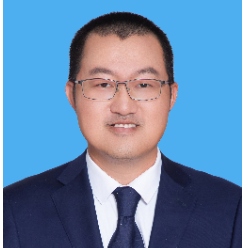
College of Veterinary Medicine, Yangzhou University, China;Nanhua Chen, a professor and doctoral advisor, is from Changle, Fujian. He graduated with a Ph.D. in Pathobiology from Kansas State University in 2014. In 2015, he joined the Department of Microbiology, College of Veterinary Medicine, Yangzhou University. His research focuses on Porcine Reproductive and Respiratory Syndrome Virus (PRRSV) and other viral infectious diseases in pigs. He has led 15 research projects, published over 45 papers in top journals, and holds 14 patents. He has been honored with several awards, including the Clarivate Analytics Publons Peer Review Award and recognition as a top global scientist.
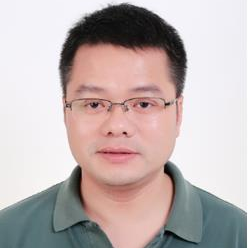
Department of Veterinary Medicine at the College of Veterinary Medicine, Huazhong Agricultural University, China;Dengguo Wei, a professor and doctoral advisor at the Department of Veterinary Pharmaceutical Sciences, Huazhong Agricultural University, specializes in agricultural microbiology. He has conducted postdoctoral research at University College London and Umeå University. Wei has led multiple research projects, including four funded by the National Natural Science Foundation of China, and has published over 20 papers in high-impact journals. His research focuses on virus replication, antiviral drug targets, and AI-based drug design. Wei has received several awards, including the Hubei Provincial Natural Science Award and Huazhong Agricultural University Innovation Research Award.






|
ID |
Title |
Authors |
|
sciforum-142697 |
Discovery and Detection of Novel Parvoviruses in Danish Wild Red Foxes (Vulpes vulpes) |
Marta Canuti, Frederikke Juncher Høeg, Nefeli Vasileiou, Anne Sofie Vedsted Hammer, Anne Cecilie Boldt Eiersted, Joost Theo Petra Verhoeven, Lars Erik Larsen , Tim Kåre Jensen |
|
sciforum-121523 |
Sen Zhang, Aizhen Guo, Yingyu Chen |
|
|
sciforum-135135 |
Zihan Tian, Aizhen Guo, Yingyu Chen |
|
|
sciforum-142439 |
Scorpion-Derived Peptides as Antiviral Agents in Veterinary Medicine |
Rosa Giugliano, Annalisa Chianese, Roberta Della Marca, Clementina Acconcia, Alessandra Monti, Ugo Pagnini, Serena Montagnaro, Nunzianna Doti, Carla Isernia, Filomena Fiorito, Luigi Russo, Valentina Iovane, Carla Zannella, Anna De Filippis, Massimiliano Galdiero |
|
sciforum-131201 |
Ignacio Vargas-Castro, José Luis Crespo-Picazo, María de los Ángeles Jiménez-Martínez, Emma Pla, Mariana Saubidet, José Ángel Barasona, Daniel García-Párraga |
|
ID |
Title |
Authors |
|
sciforum-141753 |
Alejandro Carra-Valenzuela, Luis Jiménez-Cabello, Iván Belinchón-Esteban, Iván Mazuecos-Aragonés, Sergio Utrilla-Trigo, Javier Ortego, Eva Calvo-Pinilla |
IOCVS 2025
Day 1
Session D. Antiviral Therapy
Session B. Development and Optimization of Animal Vaccines
Day 2
Session C: Veterinary Epidemiology
Session A: Identification and Detection of Novel Animal Viruses
Day 3
Session C: Veterinary Epidemiology
Session E: Virology in One Health