The 2nd International Online Conference on Veterinary Sciences
On behalf of the Conference Organizing Committee, we would like to express our sincere appreciation to all participants for their valuable contributions and support. We are pleased to share that the conference was a great success.
The Best Oral Presentation Awards and Best Poster Awards of IOCVS 2026 have now been evaluated and finalised. Please refer to the Award Winner Announcement.
The award winners will be contacted shortly with further details.

We are pleased to announce an upcoming in-person conference organized by the journal Veterinary Sciences— International Veterinary Science Conference 2027 (IVSC 2027) on the theme “Integrating Veterinary Science and One Health for Global Wellbeing”. The symposium will be chaired by Prof. Dr. Patrick Butaye (Ghent University, Belgium), Prof. Dr. Wentao Li (Huazhong Agricultural University, China), and Prof. Dr. Zhiqiang Wang (Yangzhou University, China), and will be held onsite in Hangzhou, China, from 11 to 14 June 2027. We would be honored to have your continued involvement.
Q1. Is it still possible to submit an abstract for an oral or poster presentation at this time?
No, the abstract submission period closed on 8 June 2026.
Q2. I have been selected for an oral/poster presentation. When will it take place, and how can I join?
You can check the exact schedule on the conference program available on the official website. Within one week before the conference, you will receive multiple reminders with the login link and session details. Please make sure to check your email regularly.
Q3. My abstract was accepted as a poster presentation. How should the Poster Presentation be?
Poster presentations will be conducted online in the “Flash Poster Session” format, which includes a 5-minute live presentation to share your screen and quickly present your poster, without a Q&A session.
Q4. I cannot find the option or link to upload my poster. When and how can I upload it?
Only the submitting author has access to the “upload” function on Sciforum. If you cannot upload your file, please send it along with your Sciforum ID to iocvs2026@mdpi.com.
Please upload your file to the Sciforum platform before the conference begins (before 1 September 2026).
Q5. Will I receive a Certificate of Participation? How and when will the certificates be issued?
Yes. All participants at the event and attendees to the live session are entitled to a certificate after the conference. Certificates will be available for download in the My Certificates section on Sciforum after conference closing 4 - 5 workking days, and you will be notified by email once they are ready.
Q6. My abstract has been accepted, but I did not receive a notification for an oral or poster presentation. Can I still present my work?
Due to limited time slots, not all accepted abstracts can be included as oral or poster presentations, which are selected by the scientific committee. However, all accepted abstracts are eligible to upload a poster via your author dashboard. All uploaded posters will be displayed in the Poster Gallery section on the conference website from the start of the event, where participants can view and comment during the conference.
the chair
Dear Colleagues,
It is our great pleasure to welcome you to the 2nd International Online Conference on Veterinary Sciences (IOCVS 2026), which will take place online on 7–9 September 2026. This event is organized by the open access MDPI journal Veterinary Sciences (ISSN: 2306-7381; Impact Factor: 2.7; CiteScore: 3.9).
Following the successful first edition, IOCVS 2026 returns with a sharpened focus on global health challenges at the human–animal–environment interface. This year’s conference will highlight cutting-edge research and foster cross-disciplinary exchange through three key themes:
S1. One Health Approaches to Emerging Zoonotic Threats;
S2. Surveillance and Epidemiological Modelling at the Human–Animal–Environment Interface;
S3. Antimicrobial Resistance and Food Safety: A One Health Perspective.
Our goal is to provide an engaging platform that bridges research and practice, encourages collaboration across disciplines, and inspires innovative solutions to safeguard animal and human health alike.
We warmly invite the community to join us in shaping this exciting event. Together, let us engage in meaningful discussions, share innovative research, and address pressing global challenges at the intersection of veterinary science, public health, and environmental health.
For details on oral and poster submissions, please see the Instructions for Authors on the conference website.
Your support and contributions are essential to the success of this event, and we look forward to welcoming you to IOCVS 2026.
Kind regards,
Prof. Dr. Patrick Butaye
Department of Pathobiology, Pharmacology and Zoological Medicine, Faculty of Veterinary Medicine, Ghent University, Belgium
Department of Infectious Diseases and Public Health, Jockey Club College of Veterinary Medicine and Life Sciences, City University of Hong Kong, China



Meet Our Chair

1. Department of Pathobiology, Pharmacology and Zoological Medicine, Faculty of Veterinary Medicine, Ghent University, Merelbeke, Belgium;2. Department of Infectious Diseases and Public Health, Jockey Club College of Veterinary Medicine and Life Sciences, City University of Hong Kong, Hong Kong, China;Professor Patrick Butaye is STEM-professor at City University’s Jockey Club College of Veterinary Medicine and Life Sciences. Patrick graduated with a degree of Veterinary Medicine from Ghent University in 1994. In 2000, he obtained his PhD from the same university. Following this, he worked as Senior researcher and head of division at the former Veterinary and Agrochemical Research institute in Brussel until 2015. In 2006, he became Adjunct Professor at Ghent University and still holds that position. In 2015, he started a Professorship at Ross University School of Veterinary Medicine, whereafter in 2023, he started at City University of Hong Kong. He is also senior research fellow at the One Health Research Foundation, Miramar Florida. Patrick is or has been member of several national and international advisory committees and expert panels and has been ad hoc expert on a multitude of occasions. These include the European Food Safety Authority (EFSA), World Health Organization (Who), Pan American Health Organisation (PAHO), Food and Agriculture Organisation (FAO), Belgian Food safety authority (FAVV), … He is member of the Executive board of the European Study Group on Veterinary Microbiology (ESGVM), as part of the European Society of Clinical Microbiology and Infectious Diseases (ESCMID). He has been member of several project review panels worldwide. Patrick was in the organising and/or scientific committee of several national and international conferences, including but not limited to ARAE, ICOHAR, ECVM, Belgian Wildlife Disease Society,… Patrick is Editor in Chief of the journal Veterinary Sciences (MDPI), member of the Editorial Board of BMC Veterinary Research and Editor for PlosOne and Associate Editor for Frontiers in Antimicrobials, Resistance and Chemotherapy as well as Guest Editor for Frontiers in Veterinary Science.
Important Dates
8 Jun
2026
7 Jul
2026
1 Sep
2026
Meet Our Speakers
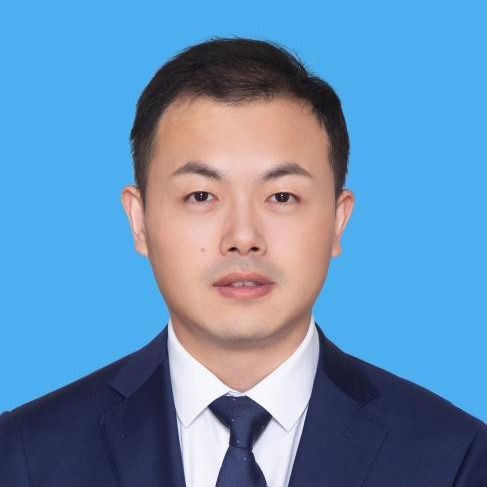
Jiangsu Co-Innovation Center for Prevention and Control of Important Animal Infectious Diseases and Zoonoses, College of Veterinary Medicine, Yangzhou University, Yangzhou, China;Institute of Comparative Medicine, Yangzhou University, China;Dr. Ruichao Li is a Professor and PhD supervisor at the College of Veterinary Medicine, Yangzhou University. He is a PI of the Jiangsu Collaborative Innovation Center for Prevention and Control of Important Animal Epidemics and Zoonoses. He received a PhD in Biological Science from The Hong Kong Polytechnic University. Currently, his research focuses on the development of genomic source-tracing technologies for drug-resistant bacteria and the research of their emergence and transmission mechanisms. Over the past years, he has published more than 200 SCI papers in prestigious journals such as Lancet Microbe, Nature Communications, Science Bulletin, ISME Journal, etc.. He has been consecutively listed in Elsevier’s World’s Top 2% Scientists (2023-25) with papers cited more than 5000 times and has presided over more than 10 research projects. He currently serves as an editorial board member of Veterinary Sciences.

College of Veterinary Medicine, University of Illinois, Urbana, Illinois, USA;Dr. Leyi Wang is an Associate Professor of Veterinary Clinical Medicine and Virology Section Head of Veterinary Diagnostic Laboratory, College of Veterinary Medicine at University of Illinois at Urbana-Champaign. Dr. Wang has been in the clinical diagnostic virology field for 13 years. His research interests include diagnostic assay development and validation, animal coronavirus identification and surveillance, and new pathogen discovery. He has co-authored 120 peer reviewed articles and 8 book chapters and edited two versions of Animal Coronaviruses book. He is the co-inventor for two US patents. He serves as editorial boards for several journals including Associate Editor of Veterinary Vaccine, Academic Editor of Transboundary and Emerging Diseases, Advisory Board of Veterinary Microbiology, Editorial Board of Virologica Sinica, Viruses, COVID, Medicine, Scientific Reports, Journal of Veterinary Diagnostic Investigation, Animal Diseases, and World Journal of Virology. As an Editor-in-Chief, he is currently editing a book of Veterinary Virology of Domestic and Pet Animals in the series of Major Reference Works at Springer Nature. Dr. Wang’s significant contribution to the field is that he participated in first identification of variant PEDV, deltacoronavirus in diarrheic pigs, novel sparrow deltacoronavirus, new Bottlenose dolphin coronavirus, SARS-CoV-2 in zoo animals (tiger, snow leopard, fishing cat, binturong, coatimundi, and mandrill), bovine-like coronavirus in Indonesian tapir, bovine kobuvirus, and bovine boosepivirus.
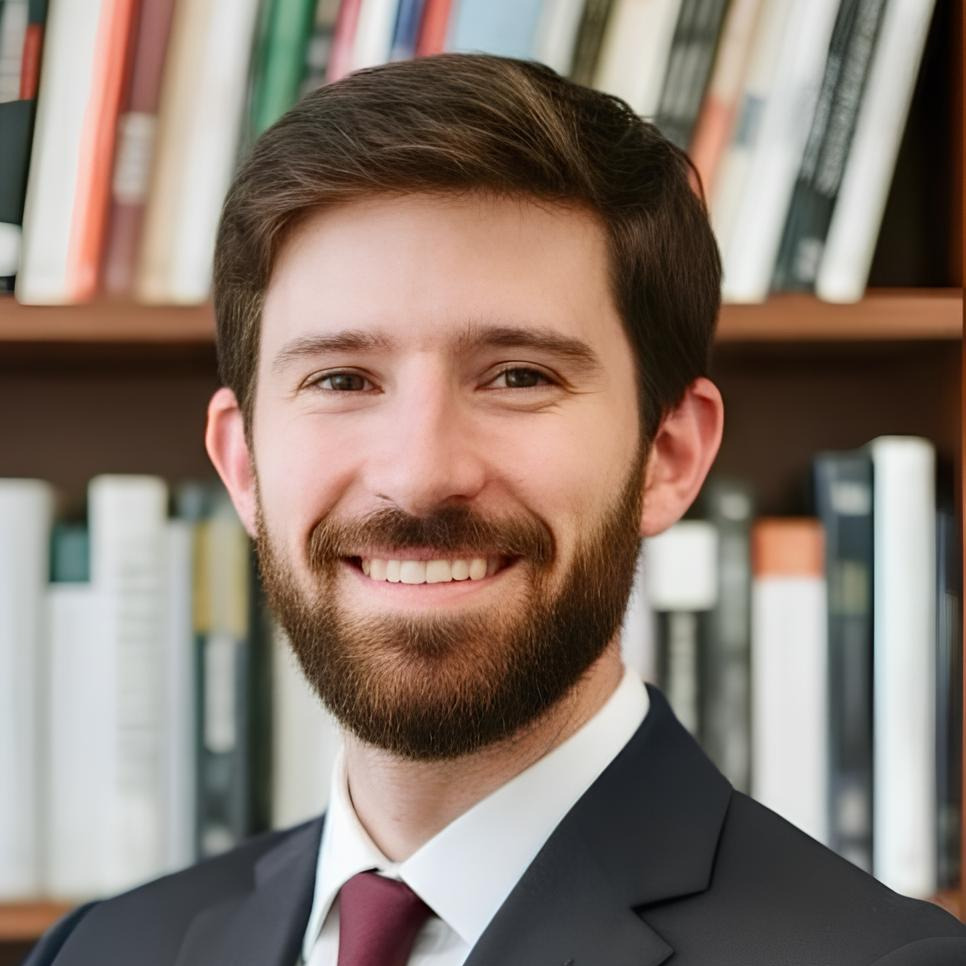
Department of Animal Medicine, Production and Health (MAPS), University of Padua, Legnaro, Italy;Prof. Giovanni Franzo graduated in Veterinary Medicine from the University of Padua in 2011 and earned a PhD in Veterinary Sciences in 2015, focusing on viral molecular epidemiology. He also holds a Master’s degree in Biostatistics and Clinical Epidemiology, with research on the application of machine learning to predict infectious disease outcomes in companion animals. Since completing his degree, he has worked on the development and validation of molecular diagnostic techniques and application of different sequencing approaches for viral characterization, microbiome analysis, and metagenomics, with a particular focus on data processing and interpretation. His research centers on the molecular evolution of animal viruses, leveraging biostatistics, bioinformatics, and artificial intelligence to investigate their epidemiology and dynamics and to improve disease control and diagnostics. He is a Diplomate of the European College of Veterinary Microbiology and has authored more than 200 scientific publications.

Department of Pathobiology, College of Veterinary Medicine, Auburn University, Auburn, AL 36849, USA;Dr. Chengming Wang is a Professor and Director of the Molecular Diagnostic Laboratory in the Department of Pathobiology at the Auburn University College of Veterinary Medicine, USA. He earned his DVM from Anhui Science & Technology University and an MS in Veterinary Preventive Medicine from Nanjing Agricultural University. He later received a PhD in Biomedical Sciences from Auburn University. Dr. Wang served as an Assistant Professor at the Ross University School of Veterinary Medicine, after which he joined the College of Veterinary Medicine at Yangzhou University as a Jiangsu Specially Appointed Professor. His research focuses on antimicrobial resistance, molecular diagnostics, and vector-borne pathogens of zoonotic importance. He has authored more than 190 peer-reviewed publications and has secured research funding from major federal agencies including the USDA, FDA, and NIH, as well as the National Natural Science Foundation of China.
|
ID |
Title |
Authors |
|
sciforum-187674 |
Protective assessment of oral immunization against genotype II using a new ASFV live attenuated vaccine prototype in wild boar |
Marta Arias-Mosquera*; Mónica Sánchez-Segovia; Aleksandra Kosowska; Marta Díaz-Frutos; Rocío Sánchez; Jose A. Barasona |
|
sciforum-187599 |
Integrated approach to Brucella ceti infection in stranded Mediterranean dolphins |
Adriana Cuevas Domínguez *, Ignacio Vargas-Castro, Sara Andrés-Barranco, José Luis Crespo-Picazo, Laura Torre-Fuentes, Mª Ángeles Jiménez-Martínez, Marta Hernández, Manuel Arbelo, Julio Álvarez, Pilar María Muñoz, Vicente Marco-Cabedo, María Jesús de Miguel, Débora López, Marta Muñoz-Baquero, Daniel García-Párraga, José Ángel Barasona |
|
sciforum-188382 |
Genomic Characterization of Multidrug-Resistance mecC-MRSA in Portuguese Rabbit Production |
Catarina Freitas *, Teresa Tavares, José Eduardo Pereira, Gilberto Igrejas, Teresa Semedo-Lemsaddek, Manuela Caniça, Pedro Teixeira, Patrícia Poeta, Vanessa Silva |
|
sciforum-193702 |
Crisaborole resensitizes KPC-producing Gram-negative bacteria to carbapenems |
ShuHui zhang, BeiBei Li *, ZiHang Ji, Peng Wang |
The Best Poster Award has been awarded to:
|
ID |
Title |
Authors |
|
sciforum-194469 |
Detection of Bovine Tuberculosis in Animals Using Interferon-Gamma Release Assays and Its Public Health Relevance in the One Health Approach |
Ewelina Szacawa *, Nina Kozieł, Monika Krajewska-Wędzina, Agnieszka Kuś, Krzysztof Szulowski |
|
sciforum-191823 |
Evaluation of a Mobile Flow Cytometer as a Rapid Tool for Environmental Hygiene Monitoring in Broiler Farms |
Mikulas Michael Kálnoky *, Miroslav Macháček, Michal Kaluža |




Ms. Coco Hou