
Toxins Webinar丨Recent Insights Into Fusarium Mycotoxins
the chairs
8th Toxins Webinar
Recent Insights Into Fusarium Mycotoxins
Fusarium fungi attack a wide range of plants, particularly cereals, reducing yield and contaminating them with mycotoxins harmful to human and animal health. These toxins, including the commonly detected trichothecenes such as deoxynivalenol (DON), HT-2 and T-2 toxin have many deleterious effects on human health. But also, toxins such as DON have been shown to be phytotoxic, enhancing the virulence of producer Fusarium fungi. A better understanding of the prevalence and mode of action of these toxins is imperative if we are to control their occurrence. This webinar will today overview some important recent developments as regarding our understanding of these toxins, their phytotoxic effects, and the implications of impending EU legislation regarding their maximal levels in foodstuffs.
Date: 28 May 2024
Time: 9:30 am CEST | 3:30 pm CST Asia
Webinar ID: 841 4540 5869
Webinar Secretariat: journal.webinar@mdpi.com
Meet Our Chairs
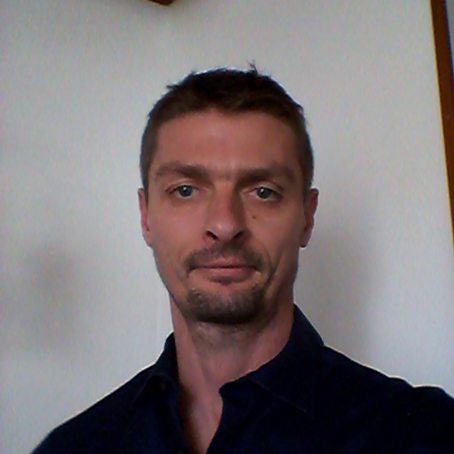
Institut des Sciences Moléculaires de Marseille (ISM2) – BiosCiences – UMR 7313 CNRS Aix Marseille Université, France;Dr. Marc Maresca is currently a researcher at the Aix-Marseille Université, Institut des Sciences Moléculaires de Marseille (ISM2) – BiosCiences team. Part of his research focuses on mycotoxins and their impact on human health. He also studies therapeutic molecules such as antimicrobial peptides and their mimics as well as on plant derivatives and their potential use in human medicine.
University College Dublin, Dublin, Ireland.;Fiona Doohan is the Professor of Plant Health in the School of Biology and Environmental Science at University College Dublin. She has established an internationally renowned research team that tackles fundamental questions in plant biology and applied questions in crop science, using a cells-to-systems based research approach. Her expertise spans basic cell biology through to the agronomy and pathology of crops, with a focus on the control of cereal diseases using endophytes and host genetics. Her research spans a diversity of technologies, diseases and is all contextualized within the development of more sustainable cropping systems. Her fundamental research has greatly expanded our understanding of the complex polyploid wheat genome and the evolution of disease resistance within cereals and the complexity of plant-microbe interactions.
Meet Our Speakers
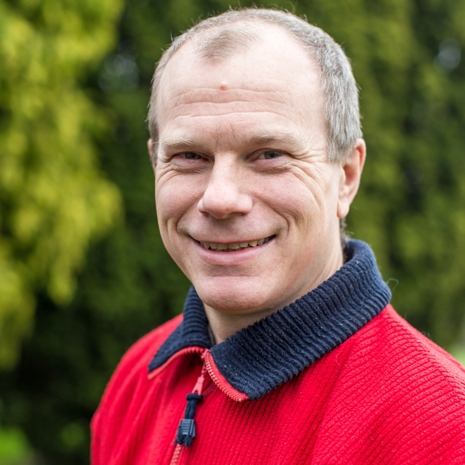
Agriculture and Environment Department, Harper Adams University, UK;Simon Edwards is the Professor of Plant Pathology at Harper Adams University. He has worked extensively on the epidemiology, mycotoxin production, diagnostics and control of Fusarium pathogens on cereals. Mycotoxin studies have focused on deoxynivalenol and zearalenone in wheat and HT2 and T2 in oats. Simon has conducted large-scale surveys, lab and field experiments as well as commercial-scale food processing to identify the impact of agronomic practices and food production systems on fusarium mycotoxins. Simon is a member of the WHO/FAO Joint Expert Committee on Food Additives and Contaminants (JECFA) with responsibility to assess worldwide mycotoxin contamination of food and the benefits of mitigation pre- and post-harvest.
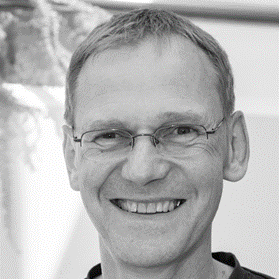
Institute of Bioanalytics and AgroMetabolomics (iBAM), Department of Agrobiotechnology (IFA-Tulln), BOKU University, Vienna, Austria;Rainer Schuhmacher is Professor at BOKU University and group leader at the Institute of Bioanalytics and Agro-Metabolomics Department of Agrobiotechnology (IFA-Tulln). He received his degrees in Chemistry from the University of Konstanz in Germany and the TU Wien in Austria. In 2009 he earned his habilitation in Analytical Chemistry from the BOKU University. The work of his research group Plant-Microbe Metabolomics focuses around the development and application of novel, isotope-assisted workflows for metabolomics research. Special emphasis is given to the investigation of the molecular mechanisms underlying plant-pathogen- as well as plant- beneficial microbe interactions. Another major topic of interest is metabolomics of abiotic stress in plants. His research is complemented by purification and characterization of bioactive compounds as well as analytical quality assurance in metabolomics. Rainer has (co-)authored more than 160 SCI publications, which have been cited more than 9500 times (accessed on Scopus, April 2024).
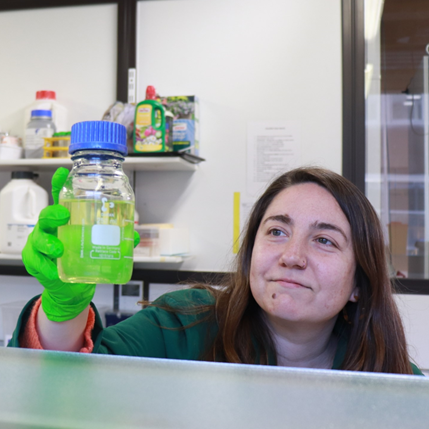
Dr. María Agustina Pavicich
Centre of Excellence in Mycotoxicology & Public Health, Department of Bioanalysis, Faculty of Pharmaceutical Sciences, Ghent University, Ghent, Belgium;Laboratory of Applied Mycology and Phenomics, Department of Plants and Crops, Faculty of Bioscience Engineering, Ghent University, Ghent, Belgium;María Agustina Pavicich has a joint PhD in Organic Chemistry and Pharmaceutical Sciences from Buenos Aires University and Ghent University. She works as a postdoctoral researcher in the Laboratory of Applied Mycology and Phenomics and the Centre of Excellence in Mycotoxicology and Public Health of Gent University. Her research focuses on the detection of multiple-mycotoxins in different food products. Currently she is working on combining mass spectrometry and hyperspectral imaging with a machine learning approach to achieve a non-destructive detection methodology for fungi and mycotoxins.
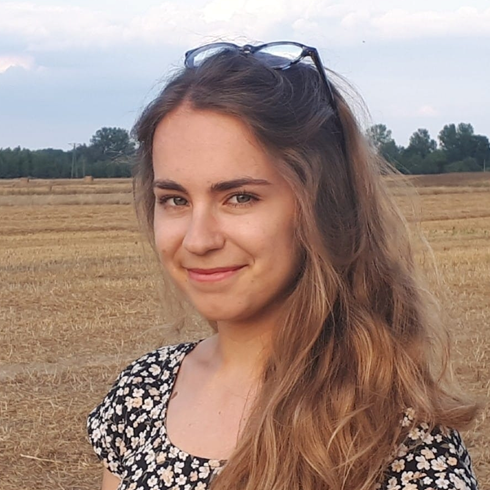
Ms. Bernadette Willoquet
Toxalim – Research centre in food toxicology, Toulouse, France;Bernadette Willoquet has obtained a degree in agronomy engineering with a specialization in food science and nutrition, from the French École Nationale Supérieure Agronomique de Toulouse. Bernadette Willoquet is currently a last year PhD student in food toxicology at Toxalim (Toulouse). My research focuses on the interactions between mycotoxins on liver in vitro and ex vivo models. I have a particular interest for the genotoxicity of mycotoxins and their effect on cell metabolism.


In this section, you will find the recordings of this webinar to watch, re-watch and share with your colleagues!