The 5th International Electronic Conference on Atmospheric Sciences
The accepted proceeding papers will be published in Environmental Sciences Proceedings soon. All participants of ECAS 2022 are welcome to submit the extended work to the Atmosphere Special Issue "Advances in Atmospheric Sciences ".
Welcome to the new electronic conference EACS 2023.
the chair
Dear Colleagues,
You are cordially invited to participate in the 5th International Electronic Conference on Atmospheric Sciences. We are pleased that this conference is already in its fifth iteration, and we hope to continue the success of this conference series. We acknowledge that sharing our work face-to-face with our colleagues is preferred, however, the continuing COVID-19 crisis has forced many conferences online during the last year. Technology is continuously improving the virtual experience and we hope to take advantage of the latest developments in order to create a quality online meeting. Additionally, the virtual experience allows us to stretch our conference budgets and increase our interactions. Additionally, last year, we experimented with two live presentation sessions, which were well-received.
For the fifth electronic conference in atmospheric sciences, the range of topics will remain more general, but we would be open to subject areas having a thematic topic of importance. During the last few decades, great strides have been made in all general areas of atmospheric science. We have seen the proliferation of remote sensing technologies and techniques for their use in research and forecasting. We have seen advances in the understanding of synoptic and dynamic meteorology which have improved weather forecasting. Advances in the capabilities of atmospheric modelling as well as increases in computing power have enhanced our understanding of atmospheric behaviors on all scales of time and space. Additionally, there have been discoveries related to the behavior of smaller-scale systems, especially those that interact with human activity, health, and economics. These have inspired techniques for warning people that these events could affect them. The increased understanding of interannual and interdecadal variability in climate has also led to the development of long-range forecasting and projection. In conclusion, this conference will be organized around the following general and related themes which correspond to the Atmosphere journal:
- Aerosols
- Air Quality
- Air Quality and Human Health
- Atmospheric Techniques, Instruments, and Modeling
- Biometeorology
- Climatology
- Meteorology
- Upper Atmosphere
Accepted papers will be published in the proceedings of the conference in MDPI’s online journal, Atmosphere, after peer review.
Prof. Dr. Anthony R. Lupo
Chairman of ECAS 2022
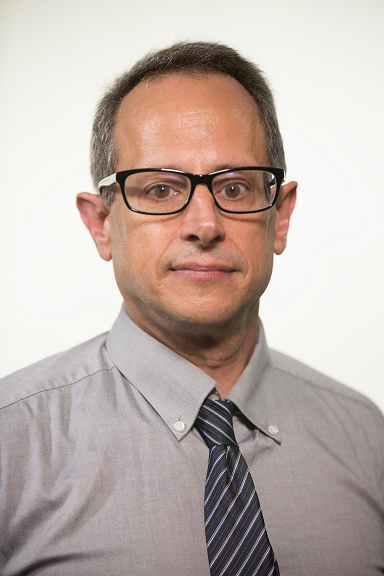 |
Dr. Anthony R. Lupo is a Professor of Atmospheric Sciences in the Soil, Environmental, and Atmospheric Sciences Department at the University of Missouri. He earned his BS in Meteorology from the State University of New York at Oswego in 1988 and his M.S. and Ph.D. degrees from Purdue University in 1991 and 1995, respectively. His research has been in the areas of large-scale atmospheric dynamics, climate dynamics, and climate change, including modeling, and he has more than 140 peer-reviewed publications between each of these areas. Additionally, he edited and contributed to the book Recent Hurricane Research: Climate, Dynamics, and Societal Impacts (published in 2011), and in 2014, 2015, and 2018, he was the Lead Guest Editor of the publication “Advances in Meteorology Special Issue: Large-Scale Dynamics, Anomalous Flows, and Teleconnections”. He has been a member of the American Meteorological Society since 1987 (Certified Consulting Meteorologist #660) and the National Weather Association since 1998. As a CCM, he served on the governing board from 2014–2017, serving as Board Chair during 2017. He was a Fulbright Scholar during the summer of 2004 to Russia, studying climate change at the Russian Academy of Sciences in Moscow. He won Fulbright scholarships to teach and research at Belgorod State National Research University in Russia for 2014–2015 and fall 2017. Additionally, he has served as an expert reviewer and/or contributing author to the Intergovernmental Panel on Climate Change (IPCC) (sponsored by the United Nations, World Meteorological Organization). His other professional associations include the Royal Meteorological Society (Fellow), the American Geophysical Union, Sigma Xi, Gamma Sigma Delta, Phi Kappa Phi, and the Missouri Academy of Science (Fellow). He has won awards for teaching and advising at the University of Missouri, including the College of Agriculture, Food, and Natural Resources Senior Teaching Award (2006), the Outstanding Undergraduate Advisor Award (April 2008), and the University of Missouri Kemper Foundation Award for Excellence in Teaching (April 2008). He was awarded the Most Distinguished Scientific Achievement Award by the Missouri Academy of Science (2009), and University of Missouri professor of the year (May 2010). In October 2013, he was awarded the Outstanding Alum for the year 2013 by the Earth and Atmospheric Science Department at Purdue. He is listed on the Fulbright Specialist Roster (2016–2022) and was part of the scientific committee for the First Conference on Atmospheric Blocking in Reading England (2014–2016). |
Meet Our Chair
Department of Soil, Environmental, and Atmospheric Science, University of Missouri-Columbia, USA;Dr. Anthony R. Lupo , is a Professor of Atmospheric Sciences in the Soil, Environmental, and Atmospheric Sciences Department at the University of Missouri. He earned his BS in Meteorology from the State University of New York at Oswego in 1988, and his M.S. and Ph.D. degrees from Purdue University in 1991 and 1995, respectively. His research has been in the areas of large-scale atmospheric dynamics, climate dynamics, and climate change including modeling, and he has more than 140 peer-reviewed publications between each of these areas. Additionally, he edited and contributed to the book Recent Hurricane Research: Climate, Dynamics, and Societal Impacts (published in 2011), and in 2014, 2015, and 2018 he was the Lead Guest Editor of the publication Advances in Meteorology Special Issue: Large-Scale Dynamics, Anomalous Flows, and Teleconnections. He has been a member of the American Meteorological Society since 1987 (Certified Consulting Meteorologist #660), and the National Weather Association since 1998. As a CCM, he served on the governing board from 2014-2017, serving as Board Chair during 2017. He was a Fulbright Scholar during the summer of 2004 to Russia, studying climate change at the Russian Academy of Sciences in Moscow. He won Fulbright scholarships to teach and research at Belgorod State National Research University in Russia for 2014–2015, and fall 2017. Additionally, he has served as an expert reviewer and/or contributing author to the Intergovernmental Panel on Climate Change (IPCC) (sponsored by the United Nations, World Meteorological Organization). His other professional associations include the Royal Meteorological Society (Fellow), American Geophysical Union, Sigma Xi, Gamma Sigma Delta, Phi Kappa Phi, and the Missouri Academy of Science (Fellow). He has won awards for teaching and advising at the University of Missouri, including the College of Agriculture, Food, and Natural Resources Senior Teaching Award (2006), the Outstanding Undergraduate Advisor Award (April 2008), and the University of Missouri Kemper Foundation Award for Excellence in
Important Dates
10 May
2022
24 May
2022
30 Jun
2022
Meet Our Speakers

Department of Geography and Resource Management & Institute of Environment, Energy and Sustainability, The Chinese University of Hong Kong, Shatin, Hong Kong, China;Dr. Yuan Xu is an associate professor in the Department of Geography and Resource Management and the leader of the Environmental Policy and Governance Programme in the Institute of Environment, Energy and Sustainability, The Chinese University of Hong Kong (CUHK). His work primarily focuses on energy and environmental policies and strategies, especially on their enforcement and compliance as well as related technological innovation and industrial development, covering fossil fuels and renewables. In contrast to central planning and rule-based governance, he developed a theory of “goal-centered governance” to understand China’s energy and environmental development. He also built a theoretical model to integrate informative but imperfect satellite data into environmental compliance monitoring for enhancing its effectiveness and efficiency. In collaboration with Prof. Zhu Lei, they initiated a research theme to internationalize CO2 capture and storage chains as a crucial carbon-neutral means especially for regions without convenient nearby CO2 storage sites.
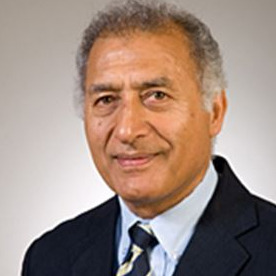
Department of Marine, Earth, and Atmospheric Sciences, North Carolina State University, Raleigh, USA;Viney Aneja is a professor and was the Co-Director of Graduate Programs (2016 to 2020) in the Department of Marine, Earth, and Atmospheric Sciences, North Carolina State University. He was recently recognized in the Stanford University 2020 list of the world’s top 2% scientists and his industrial and academic research contributions have been extensively recognized. At North Carolina State University, Dr. Aneja has developed one of the nation’s leading agricultural air-quality and climate research programs. His most recent research has concentrated on the critical issue of the contribution of concentrated animal feeding operations (also known as CAFOs) to air quality; and quantifying the emissions, transformation, transport and fate of pollutants in the environment, and climate.
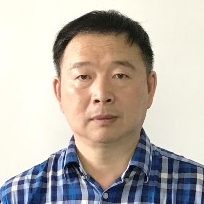
South China Sea Institute of Marine Meteorology, Guangdong Ocean University, Zhanjiang China;Prof. Dr. Chunlei Liu is currently working at Guangdong Ocean University, China, and a visiting fellow of the University of Reading. His research is focused on the climate change, particularly on the Earth system energy budget and the water cycle change in the warming climate. He combines the satellite and surface observations with reanalysis and climate model simulations to extract the useful information and study the mechanisms, in order to have better understanding of the climate change.
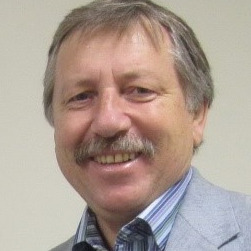
Space Research Institute, Russian Academy of Sciences, Moscow, Russia;Prof. Sergey Pulinets is a Principal Research Scientists in the Space Research Institute of the Russian Academy of Sciences, Moscow, Russia. He has more than 35 years of experience in Space Plasma Physics, Physics of the Ionosphere, and Geophysics. Dr. Pulinets is a co-convener of the American Geophysical Union, fellow of IUGG Inter Association Working Group on Electromagnetic Studies of Earthquakes and Volcanoes (EMSEV), correspondent member of International Radio Science Union (URSI), International Committee of Space Research (COSPAR) and many others.
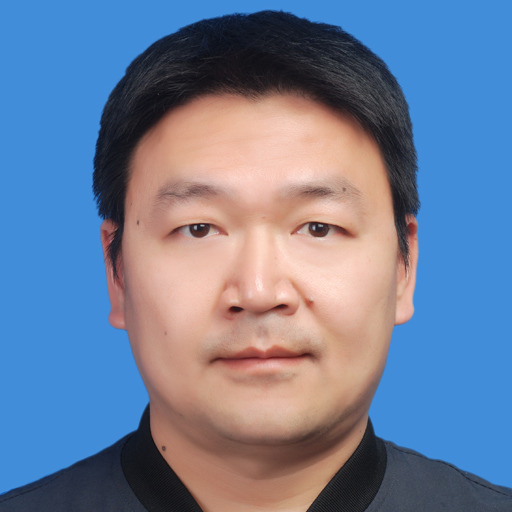
Joint Research Center for Engineering Structure Disaster Prevention and Control, Guangzhou University, Guangzhou, China;Mainly engaged in the field of structural wind engineering. So far, he has published more than 70 academic papers, 53 SCI papers (32 JCR-Q1 papers, 29 first or corresponding author papers, 25 JWEIA papers, an international authoritative journal in the field of wind engineering, Scopus H-index is 15, cited 652 times); presided over 6 scientific research projects including the National Natural Science Foundation (NSFC) youth project and general project, and participated as a core member in 11 NSFC outstanding youth projects, general projects and Hong Kong SAR Research Grants Council projects, etc. Completed 7 wind engineering consulting projects as the technical leader; obtained 5 domestic and foreign invention patents (including 1 US PCT and 1 Japanese patent), more than 30 utility model patents and 3 software copyrights; respectively served as Frontiers in Built Environment and Journal of Civil, Construction and Environmental Engineering International Journal editorial board and guest editor; member of the executive committee of the Hong Kong Wind Engineering Association, member of the 1-3 Hong Kong Wind Engineering Conference Organizing Committee, and the 15th International Wind Engineering Conference. The chairman of the venue and the convener of the wind engineering wind venue of the 2nd International Conference on Mechanics and Materials, selected as a high-level talent in Guangzhou in 2019.
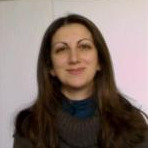
Department of Environment, Land and Infrastructure Engineering (DIATI), Polytechnic of Turin, Turin, Italy;Deborah Panepinto, graduated in Environmental Engineering at Politecnico di Torino on March 2006 (mark 110 L /110) and achieved her PhD in Environmental Engineering at Politecnico di Torino (focus: wastes thermal treatment) on April 2012. Since July 2006 she worked at Politecnico di Torino as Post Degree grant holder and from December 2018 she is Associate Professor. Her scientific activity concerned, in particular, the following research fields: Wastes management; Wastewater treatment management; Renewable energy production; Evaluation of the environmental compatibility of the industrial plants; and Analysis of the pollutant dispersion. She is a supervisor of different Master Degree thesis and author of more or less 200 publications (journal publications and proceedings).

Institute of Atmospheric Sciences and Climate (ISAC), National Research Council (CNR), Italy;Daniele Contini was born in Livorno, Italy, in 1969. He studied Physics at the University of Florence graduating in 1994 and obtained his doctorate in Energy Engineering in 1999. He became Researcher at the Institute of Atmospheric Sciences and Climate of the National Research Council (ISAC-CNR in Lecce) in 2001. He is now Research Director at ISAC-CNR. The main research interests are focused in four main lines: (i) Identification and characterization of atmospheric particulate matter sources using both high-resolution temporal measurements and receptor models based on the chemical composition of the particulate; (ii) health and toxicological effects of atmospheric particulate matter due to both natural and anthropogenic sources; study of atmospheric particulate dynamics in the surface boundary layer with particular attention to emission and deposition processes; analysis and parameterization of the dispersion of atmospheric pollutants also using physical modelling on a reduced scale in a wind tunnel and / or in a hydraulic vein. Throughout his career he has established numerous and successful research collaborations with leading international groups in the field of atmospheric and climate sciences. He has managed an important number of projects for public administrations and private companies. Daniele is President of the Italian Aerosol Society (IAS) since 2018 and he is co-chair of the working group “Atmospheric Aerosol Studies” of the European Aerosol Assembly. He manages the Environmental-Climate Observatory of Lecce, regional station of the GAW/WMO-Global Atmosphere Watch network and station of the ACTRIS network.
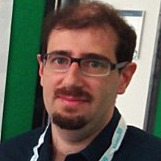
Dipartimento di Scienze e Tecnologie Biologiche ed Ambientali (DiSTeBA), University of Salento, Italy;Riccardo Buccolieri is Associate Professor of Atmospheric Physics at the University of Salento in Italy. His research, both experimental and modelling, is in the field of micrometeorology and atmospheric circulation at local scale. Specifically, the research deals with the study of flow and pollutant dispersion in the urban environment and of the effects of morphology and obstacles on urban ventilation. He is reviewer and member of Editorial Boards of several international scientific journals and (co)-author of more than 50 peer-reviewed scientific papers.
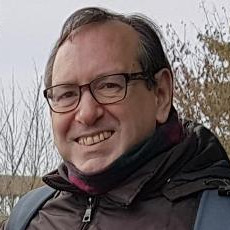
Dipartimento di Fisica, Università della Calabria, Ponte Pietro Bucci Cubo 31C, Arcavacata, Italy;Leonardo Primavera is a Researcher at the Department of Physics at the University of Calabria in Italy since January 2003. He was a Research Fellow at the University of Calabria, from August 2001 to December 2002. His research concerned numerical simulations of solar wind turbulence, fluid turbulence and MHD turbulence in plasma machines. He is Principal investigator of the project P. Veltri.

Department of Infectious Diseases and Public Health, City University of Hong Kong, Hong Kong, China;Dr Ming is an assistant professor in public health and epidemiology and the co-program leader of the MSc Public Health and Epidemiology postgraduate program at the City University of Hong Kong. He is an experienced clinical doctor and medical educator. He has over 10 years of experience teaching and mentoring students in medical school. To date, he has supervised over 100 undergraduate and graduate research students. He undertook his postdoctoral training at Oxford and Harvard. He completed his fellowship at the Nuffield Department of Women's & Reproductive Health, University of Oxford, and the National Perinatal Epidemiology Unit in the United Kingdom in 2016 and completed his fellowship at the Division of Pharmacoepidemiology and Pharmacoeconomics, Department of Medicine, Brigham and Women's Hospital, and obtained a master's degree from Harvard University in the United States in 2018.
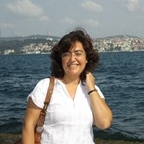
Department of Chemistry & CESAM, University of Aveiro, Aveiro, Portugal;Regina Duarte is Principal Researcher at the Department of Chemistry and Centre for Environmental and Marine Studies at the University of Aveiro in Portugal. Her research is focused on the structural and molecular characterization of atmospheric organic aerosols, with a particular focus on the water-soluble organic matter and its health effects. Her research interests also focus on the wet and dry deposition of organic aerosols and their potential ecotoxicity on marine organisms. She is (co)author of more than 55 peer-reviewed scientific papers, as well as 9 book chapters and co-editor of 2 books.




Live Session 1
|
20 July 2022 Time: 10:00am CEST Session Chair: Prof. Dr. Anthony R. Lupo |
|
Speaker |
Presentation Topic |
Time (CEST) |
|
Prof. Dr. Anthony R. Lupo |
Opening Introductory |
10:00am–10:10am |
|
Dr. Yuan Xu |
Integrated environmental compliance monitoring system for air pollution and climate mitigation |
10:10am-10:30am |
|
Prof. Dr. Viney P. Aneja |
Ammonia emissions and deposition from global crop agriculture, and how they will be impacted by global climate change |
10:30am-10:50am |
|
Prof. Dr. Chunlei Liu |
Energy flow in the Earth system |
10:50am-11:10am |
|
Discussion and Q&A session |
11:10am-11:30am |
|
|
Prof. Dr. Anthony R. Lupo |
Closing remarks |
11:30am |
Live Session 2
|
21 July 2022 Time: 10:00am CEST Session Chair: Dr. Sergey Pulinets |
|
Speaker |
Presentation Topic |
Time (CEST) |
|
Dr. Sergey Pulinets |
Opening Introductory |
10:00am-10:10am |
|
Dr. Sergey Pulinets |
Atmosphere as a sensitive indicator of approaching earthquakes |
10:10am-10:30am |
|
Dr. Yuncheng He |
Identification and short-term forecasting of tropical cyclone (TC) parameters via deep learning techniques |
10:30am-10:50am |
|
Prof. Dr. Deborah Panepinto |
Environmental aspects of MSW thermal treatment |
10:50am-11:10am |
|
Discussion and Q&A session |
11:10am-11:30am |
|
|
Dr. Sergey Pulinets |
Closing remarks |
11:30am |
Live Session 3
|
25 July 2022 Time: 10:00am CEST Session Chair: Dr. Daniele Contini |
|
Speaker |
Presentation Topic |
Time (CEST) |
|
Dr. Daniele Contini |
Opening Introductory |
10:00am-10:10am |
|
Dr. Daniele Contini |
Correlation of acellular oxidative potential with in vitro toxicological effects induced by atmospheric particles |
10:10am-10:30am |
|
Prof. Dr. Riccardo Buccolieri |
Local Climate Zones (LCZs) and urban morphological parameters using GIS: an Application to Italian Cities |
10:30am-10:50am |
|
Prof. Dr. Leonardo Primavera |
Large-scale and small-scale intermittency in stratified and rotating turbulent flows under atmospheric conditions |
10:50am-11:10am |
|
Dr. Wai-kit Ming |
COVID and Atmosphere: From Research to Public Policy |
11:10am-11:30am |
|
Dr. Regina Duarte |
Untargeted Profiling of Water-Soluble Organic Aerosols: Lessons Learned and Future Challenges |
11:30am-11:50am |
|
Discussion and Q&A session |
11:50am-12:10pm |
|
|
Dr. Daniele Contini |
Closing remarks |
12:10pm |