 |
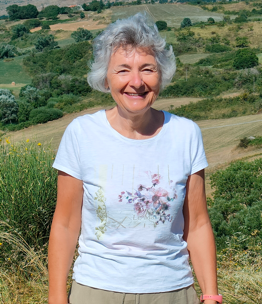
Prof. Dr. Sabina Merlo Department of Electrical, Computer and Biomedical Engineering, University of Pavia, Italy Short Bio Sabina Merlo is Full Professor of Electrical and electronic measurements at the Department of Electrical, Computer and Biomedical Engineering, University of Pavia, Pavia (Italy). She holds a master’s degree and a Ph.D. degree, both in electronic engineering, from the University of Pavia. She also received the M.S.E. degree in bioengineering from the University of Washington, Seattle, USA, thanks to a Rotary Foundation Graduate Scholarship. Within the Faculty of Engineering of University of Pavia, she is member of the Executive and Quality committees as well as Teaching Activity Council President for Information engineering. She is teaching Microelectronic, MEMS and Optoelectronic classes for undergraduate and graduate students in Engineering. She was visiting professor at the University of Southampton (UK) and at MIT (USA). She is Vice-President of the “Distretto della Microelettronica Pavese” recognized as Ecosystem for Microelectronics of the Italian Lombardy region. Her research interests include optical testing of MEMS/MOEMS and microfluidic devices, optical interferometry, optical chemical sensing, as well as biomedical and industrial applications of photonics. She has been PI and coordinator of several research projects funded by Italian government and private companies. She has collaborated with STMicroelectronics on MEMS/MOEMS since the very beginning of the company activity in this field. She holds four patents and is the author of approximately 200 publications in journals, books, and conference proceedings. She is Senior member of IEEE Photonics and Intrumentation & Measurement Societies, as well as of AEIT and GMEE. She is an Associate Editor of MDPI Sensors and Editorial Board Member of MDPI Micromachines. |
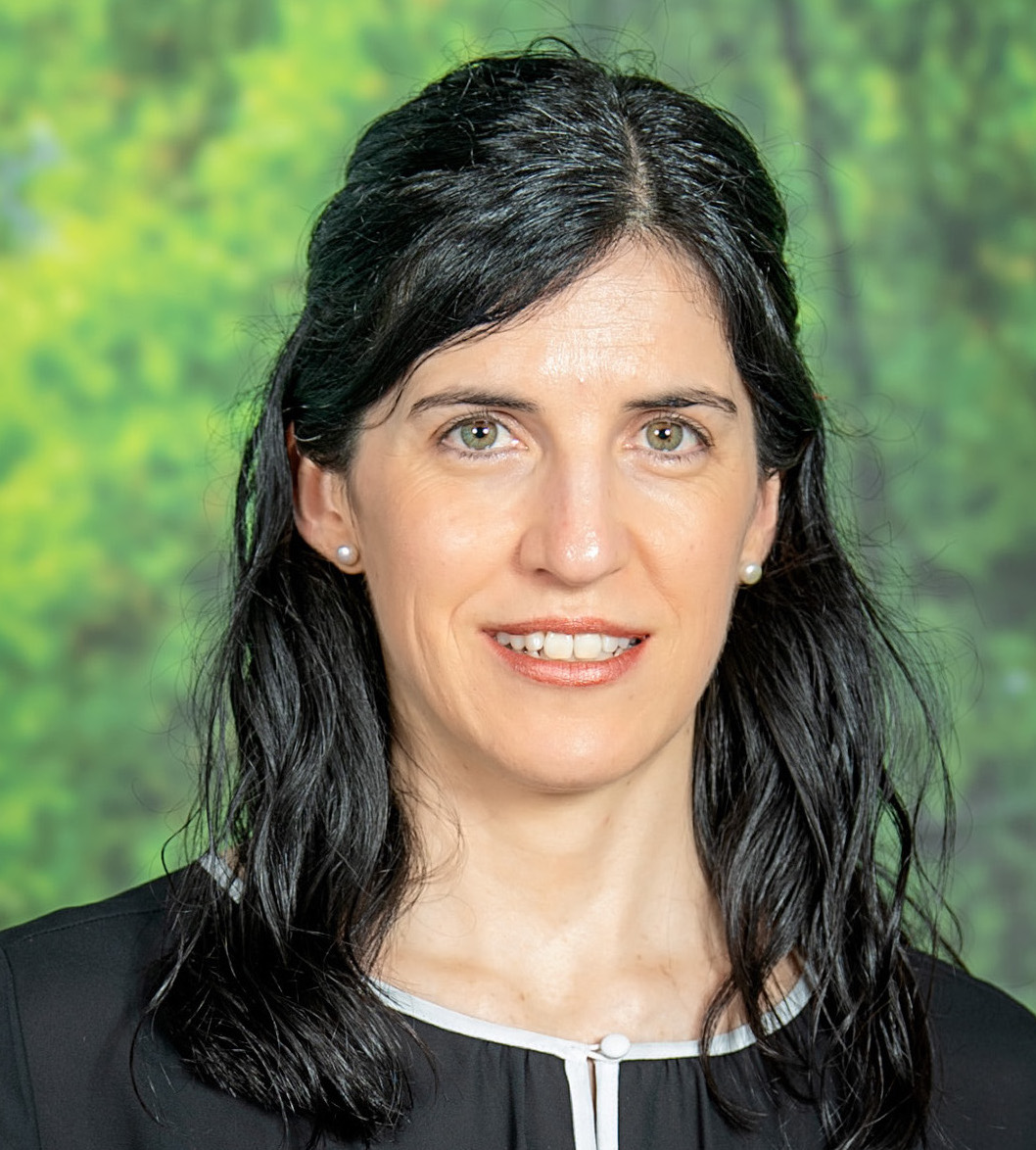 |
Prof. Dr. Leyre Azpilicueta Department of Electrical, Electronic and Communication Engineering, Institute of Smart Cities, Public University of Navarre (UPNA), Spain. Short Bio LEYRE AZPILICUETA received her Telecommunications Engineering Degree (2009), her Master’s Degree of Communications (2011) and her Ph.D. Degree in Telecommunication Technologies (2015), at the Public University of Navarre (UPNA), in Spain. In 2010 she worked in the R&D department of RFID Osés as radio engineer. From 2015 to 2022, she was an Associate Professor and Researcher at Tecnologico de Monterrey, Campus Monterrey, Mexico. Currently, she is a Ramon y Cajal Fellow (Researcher & Professor) at UPNA, in Spain. She has over 250 contributions in relevant journals and conference publications. Her research interests are on radio propagation, mobile radio systems, wireless sensor networks, ray tracing, and channel modeling. She was the IEEE Communications Society Monterrey Chapter Chair (2020-2022), and Faculty Advisor of the IEEE-HKN Lambda-Rho Chapter (2020-2022). She is currently the Vice-Chair of the IEEE ComSoc RCC Special Interest Group on Propagation Channels for 5G and Beyond. She is Associate Editor of IEEE Sensors Letters Journal (2020-present), IEEE Journal on Multiscale and Multiphysics Computational Techniques (2022-present), Computer Communications Journal (2021-present) and International Journal of Electronics and Communications (2018-date). She has co-authored the textbook Radio Wave propagation in Vehicular Environments (2020), from The Institution of Engineering and Technology. She has received numerous awards over the past few years, including the 2014 IEEE Antennas and Propagation Society Doctoral Research Award, the Young Professors and Researchers Santander Universities 2014 Mobility Award, the Best PhD in 2016 awarded from Colegio Oficial de Ingenieros de Telecomunicación (COIT), the 2018 IEEE N2Women: Rising Stars in Computer Networking and Communications Award, the IEEE Junior Research Raj Mittra Travel Grant 2020, the Distinguished Professor Award 2020 and 2021, and the IEEE Mojgan Daneshmand Grant 2021. She also co-authored papers that received Best Paper Awards at conferences, including ECSA 2014, the IISA 2015, ISSI 2019, and EAI IndustrialIoT 2020. |
 |
Dr. Dirk Lehmhus |