Topic: The Omics Dashboard for Metabolomics Data
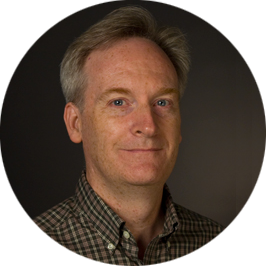
Dr. Peter D. Karp
Director, Bioinformatics Research Group
SRI International, CA 94025, USA
Dr. Peter D. Karp is the director of the Bioinformatics Research Group within the Artificial Intelligence Center at SRI International. Dr. Karp has authored more than 160 publications in bioinformatics and computer science in areas including metabolic pathway bioinformatics, computational genomics, scientific visualization, and scientific databases. He is a Fellow of the American Association for the Advancement of Science and of the International Society for Computational Biology. He received the Ph.D. degree in Computer Science from Stanford University in 1989, and was a postdoctoral fellow at the NIH National Center for Biotechnology Information.
Topic: Profiling Redox and Energy Coenzymes in Tissue and Blood Using NMR Spectroscopy
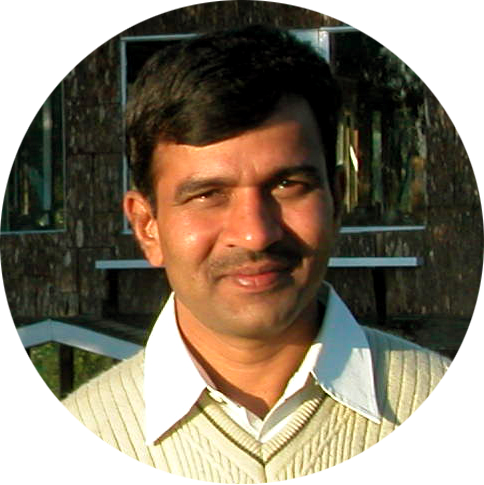
Dr. G. A. Nagana Gowda
Northwest Metabolomics Research Center and Mitochondria and Metabolism Center
Department of Anesthesiology & Pain Medicine, UW Medicine, University of Washington
Seattle, USA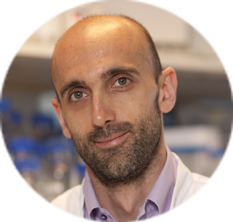
Topic: Metabolic Alterations in Fumarate Hydratase Deficient Cells
Dr. Christian Frezza
MRC Cancer Unit
University of Cambridge, UKChristian Frezza is an MRC Programme Leader at the MRC Cancer Unit, University of Cambridge. He studied Medicinal Chemistry at the University of Padova, Italy, and gained his MSc in 2002, after a period of research on mitochondrial toxicity induced by photoactivable anticancer drugs. Christian then joined the laboratory of Luca Scorrano in Padova to start a PhD on mitochondrial dynamics and apoptosis. In 2008, he moved to the Beatson Institute of Cancer Research in Glasgow as recipient of an EMBO Long Term Fellowship, where he investigated the role of mitochondrial defects in tumorigenesis. He moved to the MRC Cancer Unit in 2012, to take up his current position.
Christian’s research is focussed on understanding the role of altered metabolism in cancer, particularly investigating how small molecule metabolites affect the process of tumorigenesis. The major goal of his team is to exploit this knowledge to pioneer novel tools for cancer diagnosis and therapy. 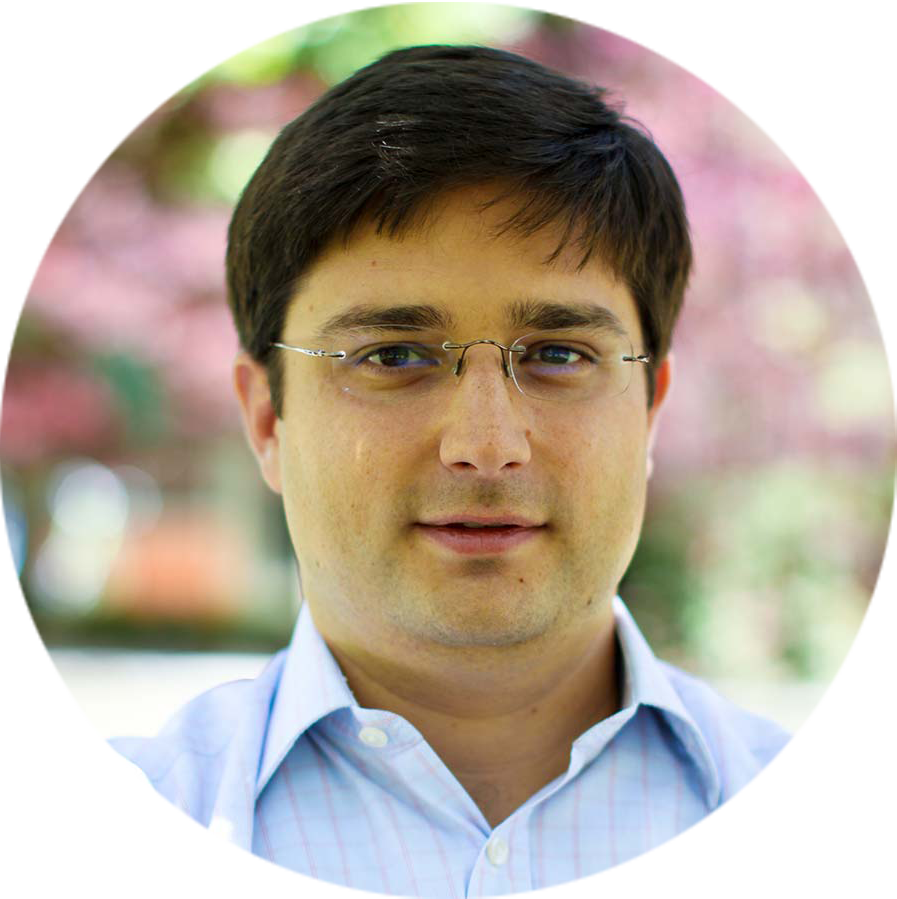
Topic: Tracing Compartment-Specific Redox Pathways Using Stable Isotopes and Mass Spectrometry
A/Prof. Christian Metallo
Jacobs School of Engineering, University of California San Diego, CA, USA
Topic: Clinical Metabolomics: An Integral Tool Driving Patient Phenotyping in Precision Medicine
Dr. Vladimir Tolstikov
Director of Metabolomics
BERG LLCDr. Vladimir Tolstikov was awarded with PhD degree at the age of 28 years from the Institute of Chemical Means for Plant Protection, Moscow, Russia. During his career he was working in leading research academic institutions and industry including Max Plank Institute, UC Davis, Eli Lilly and Company and others. He is a pioneer in HILIC separations development applied to Metabolomics. He is the director of Metabolomics at BERG LLC. He has published more than 50 papers in reputed journals, 5 book chapters and has been serving as an editorial board member of MDPI Metabolites. He has participated and contributed in organization of various international meetings. His current research interests are in the field of AI-guided multi-omics input into the Precision Medicine development.
Topic: Investigation of Salinity Tolerance Mechanism in Barley Roots Using Semi-Targeted Lipidomics Approach with High-Resolution Mass Spectrometry TechniquesDr. Thusitha W. Rupasinghe
Related Video: Investigation of Salinity Tolerance Mechanism in Barley Roots Using Semi-Targeted Lipidomics Approach with High-Resolution Mass Spectrometry Techniques
Metabolomics Australia, Bio21 Institute of Molecular Science and
Biotechnology, University of Melbourne, Parkville, Victoria, AustraliaDr. Thusitha Rupasinghe was awarded PhD degree in Analytical Chemistry in 2004 from the La Trobe University, Melbourne, Australia. During her career, she was working in leading pharmaceutical industry and research institutes, such as Arrow pharmaceuticals, centre for drug candidate and optimisation at Monash University and Bio21 institute at the University of Melbourne. She is a senior research scientist at Melabolomics Australia, school of Biosciences, the University of Melbourne and a leading scientist in lipidomics field. Thusitha has published more than 40 publications in peer reviewed articles, 5 book chapters. She is actively participated in organising national and international meetings in metabolomics and lipidomics. Her research interest are plant lipidomics and metabolomics using mass spectrometric techniques.
Topic: Metabolomics in Chronobiology: Metabolic Alterations by Sleep Loss and Circadian FunctionRelated Video: Metabolomics in Chronobiology: Metabolic Alterations by Sleep Loss and Circadian Function
Dr. Aalim Weljie
Department of Pharmacology, University of Pennsylvania, 10-113
Translational Research Center, 3400 Civic Center Blvd, Bldg 421,
Philadelphia, PA 19104 USA
Aalim M. Weljie, Ph.D. is a Research Assistant Professor of Systems Pharmacology and Translational Therapeutics at the Perelman School of Medicine at the University of Pennsylvania. He received his B.Sc. in Chemistry and Certificate in Engineering from Mount Allison University in New Brunswick, Canada in 1996, and his Ph.D. in Biochemistry from the University of Calgary, Canada in 2003. He completed an industrial post-doctoral fellowship with Chenomx Inc where he developed expertise in quantitative NMR metabolomics, followed by a visiting scientist fellowship from EMBO to the University of Cambridge in the lab of Dr. Jules Griffin. Dr. Weljie was the co-Director of the Metabolomics Research Center at the University of Calgary from 2008 until he was recruited to Penn in 2012 in Pharmacology and the Institute of Translational Medicine and Therapeutics. Dr. Weljie’s current research interests focus is ‘Chrono-metabolomics’, including translational studies of metabolism and molecular clocks, such as sleep disruption, circadian rhythms and the influence of diseases such as cancer on the clock-metabolism connection as well as aging processes. In addition to contributions to analytical methods for metabolomics, Dr. Weljie has reported novel cross-species biomarkers of sleep restriction, and the circadian nature of numerous metabolites in vitro and in vivo. 
Topic: ATP Metabolism in RBC as Potential Biomarker for Post-Exercise Hypotension and a Therapeutic Target for Cardiovascular Drugs
Prof. Dr. Pollen K.F. Yeung, B.Sc Pharm., MSc. Ph.D.
Professor of Pharmacy and Medicine, Dalhousie University, Halifax, NS
Canada B3H 4R2
Pollen Yeung completed his Ph.D from University of Saskatchewan (Saskatoon, SK, Canada) and is currently Professor of Pharmacy and Medicine at Dalhousie University in Halifax, NS, Canada. He has published more than 90 peer reviewed articles in reputed journals and is currently serving as Editor-in-Chief for Cardiovascular Pharmacology Open Access, a Guest Editor on a thematic issue on “Biomarkers and Metabolomics for Drug Discovery” for Metabolites, and an editorial member for Medical Sciences Monitor, Metabolites, Natural Products Chemistry and Research Open Access, Cardiovascular and Hematologic Disorders Drug Targets and Current Drug Safety.
Research Interest: Pharmacokinetics, Drug Metabolism and Biomarker Research for Cardiovascular and Metabolic Diseases 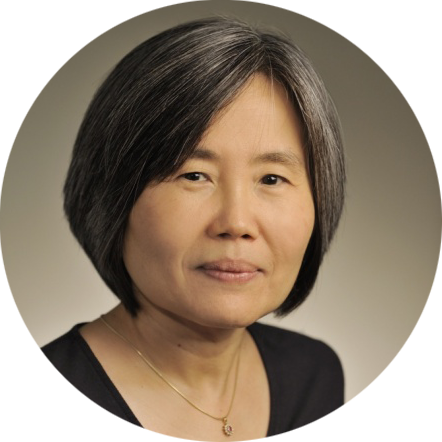
Topic: Mapping Metabolic Networks in 3D spheroids using Stable Isotope-Resolved
Metabolomics
Prof. Dr. Teresa Fan
Department of Toxicology, Markey Cancer Center and Center for
Environmental and Systems Biochemistry (CESB), University of Kentucky
Lexington, KY 40536, USA