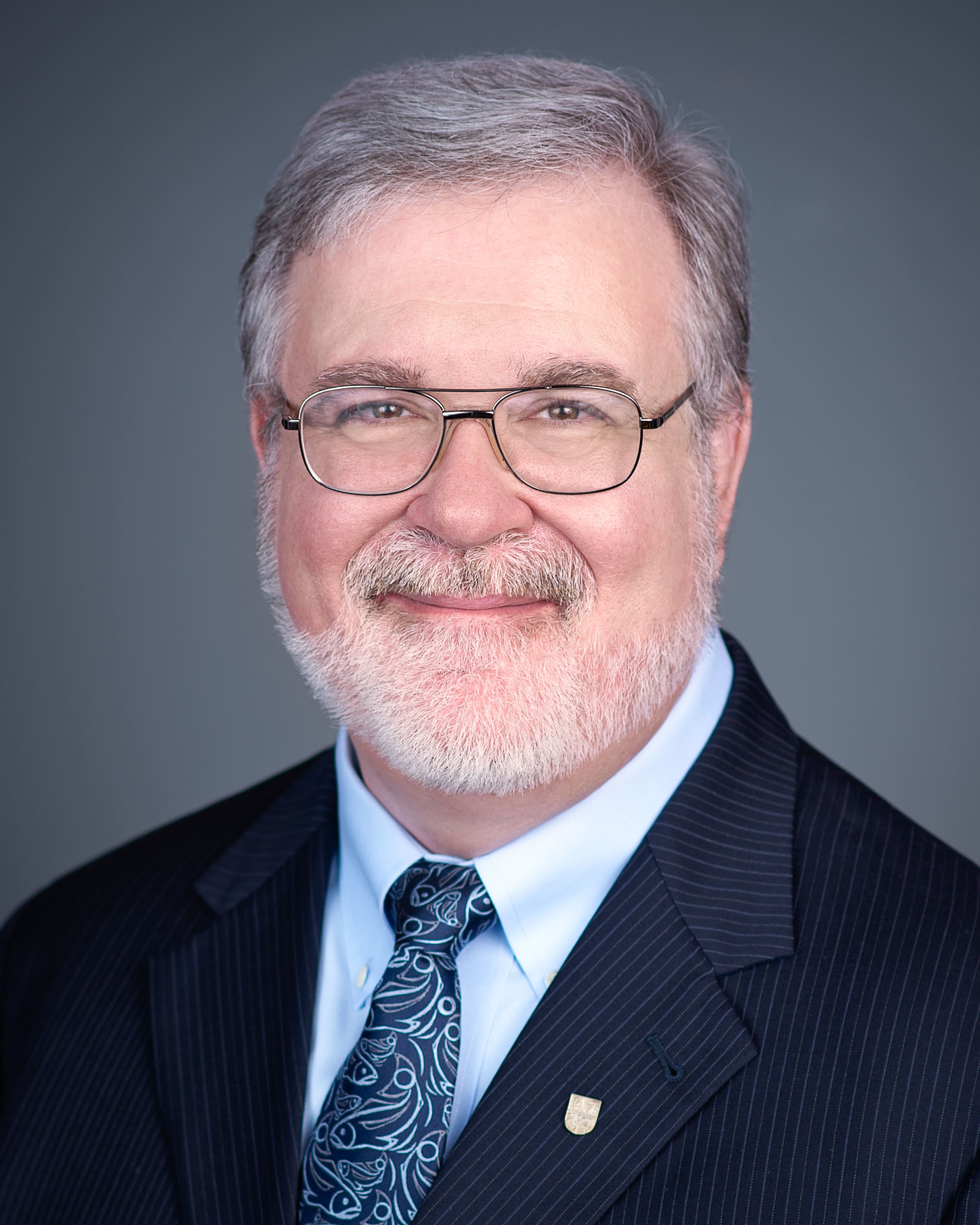
South China University of Technology, China Professor Emeritus at North Carolina State University, USA
Dr. Richard Spontak holds a Changjiang Chair in the Institute of Emergent Elastomers at the South China University of Technology after retiring as Distinguished Professor of Chemical & Biomolecular Engineering and Professor of Materials Science & Engineering at NC State University.
He has published ~320 peer-reviewed journal papers and delivered ~450 invited lectures worldwide. He is an elected Fellow of several societies including the American Chemical Society and Royal Society of Chemistry.
Examples of his professional accolades include the NC State Alexander Q. Holladay Medal for Excellence, theActa Materialia Hollomon Award for Materials and Society and the Ernst Ruska Prize.
Plenary Talk Title: "Decoding Structure-Property Relationships in Selectively Plasticized Poly(urethane-urea)s as Protective Coatings"
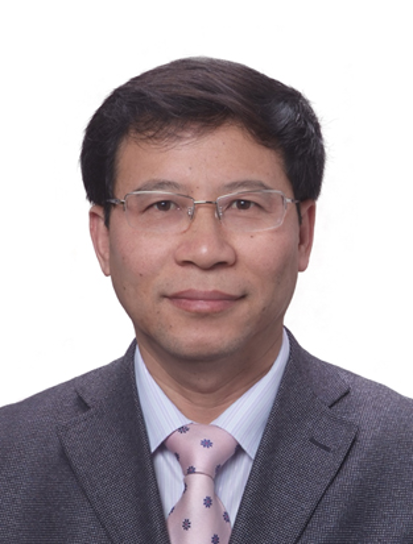
Researcher Yanchun Zhou Suzhou National Laboratory, China
His research focuses on the multi-scale structural design, preparation, and properties of high-temperature ceramics and composites. He has discovered more than 20 new carbides, nitrides, and borides and determined their crystal structures. He has published over 500 SCI papers, which have garnered more than 33,600 citations with an H-index of 97.He was ranked 121st in materials science in Stanford University’s 2025 list of the World’s Top 2% Scientists and selected as an Elsevier Highly Cited Chinese Researcher for 2019–2025.
His honors include the Special Prize of the CAS President Scholarship, the Second Prize of the National Science and Technology Progress Award, the First Prize of Liaoning Provincial Natural Science Award, the Global Star Award and Bridge Building Award from the American Ceramic Society. He was awarded the National Science Fund for Distinguished Young Scholars in 1999, elected Fellow of the American Ceramic Society and Academician of the World Academy of Ceramics in 2010, and Academician of the Asia Pacific Academy of Materials in 2013.
His major academic services include Chair of the International Committee of the Engineering Ceramics Division, American Ceramic Society (2009–2010); Member of the Advisory Council and Elections Committee of the World Academy of Ceramics (2010–2014); Chair of the Ross Coffin Purdy Award Committee of the American Ceramic Society (2015); Chair of the Publications Board of the American Ceramic Society (2018); Chair of the Nominating Committee of the Engineering Ceramics Division, American Ceramic Society (2015–2016); and Vice Chairman of the Special Ceramics Branch and Testing Branch of the Chinese Ceramic Society (2008–present).
He serves as Editor-in-Chief of Modern Technology Ceramics, Founding Editor-in-Chief of Extreme Materials, Executive Editor-in-Chief of Engineering Transformative Materials, and Editor for J. Adv. Ceram., JMST, and J. Am. Ceram. Soc.
Prof. Conrado Aparicio Technical University of Catalonia (UPC), Spain
Prof. Conrado Aparicio is an ICREA Research Professor in the Department of Materials Science and Engineering at Universitat Politècnica de Catalunya (UPC), Spain, where he leads the Bioinspired Oral Biomaterials and Interfaces (BOBI) Lab.
Trained as a materials engineer, he spent more than twelve years at the University of Minnesota, serving as Deputy Director of the Minnesota Dental Research Center for Biomaterials and Biomechanics.
Before joining UPC in September 2024, he served as Vice-Rector for Research, Innovation and Knowledge Transfer at UIC Barcelona. His research focuses on bioinspired biomaterials, bioactive surfaces and interfaces, biomineralization, and antimicrobial strategies to prevent infection and promote tissue repair and regeneration, particularly in dental, oral, and orthopedic applications. He is also an associated researcher at the Institute for Bioengineering of Catalonia (IBEC) and a Fellow of the American Institute for Medical and Biological Engineering (AIMBE).