MOL2NET'18, Conference on Molecular, Biomed., Comput. & Network Science and Engineering, 4th ed.
MOL2NET: FROM MOLECULES TO NETWORKS
MOL2NET-04 EDITION NOW CLOSED, THANK YOU FOR YOUR SUPPORT!!!
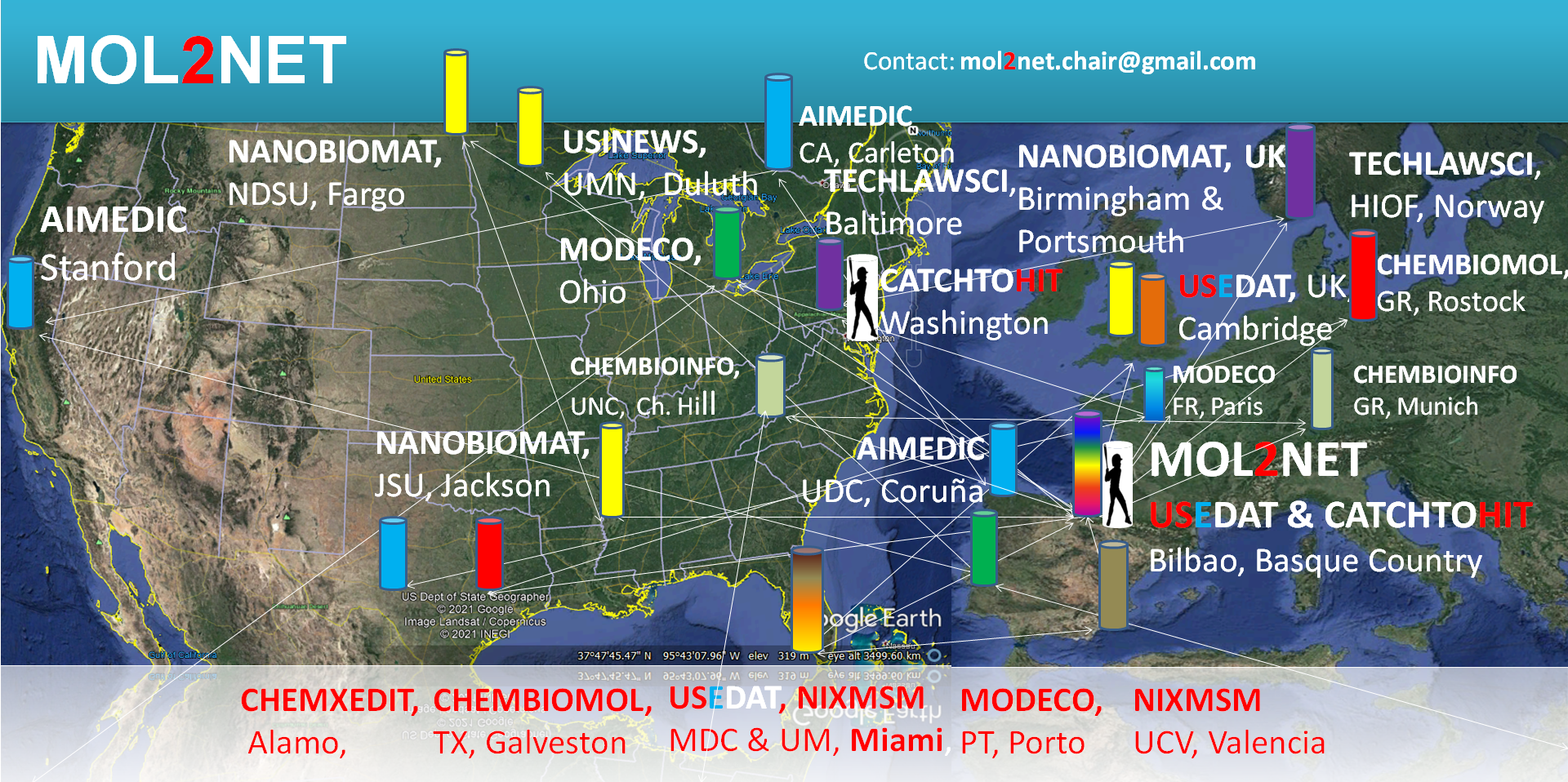
(Statistics: >10 Workshops in USA, France, Spain, Portugal, etc., Journal Issues: 7, Authors: >700, Submissions: >300)
the chair
[MOL2NET 2015] [MOL2NET 2016] [MOL2NET 2017] [FACEBOOK (>10K followers)]
[Welcome Videos] [官话] [हिन्दी] [Euskera] [Castellano] [Português] [Français]
Headquarters and Supporters
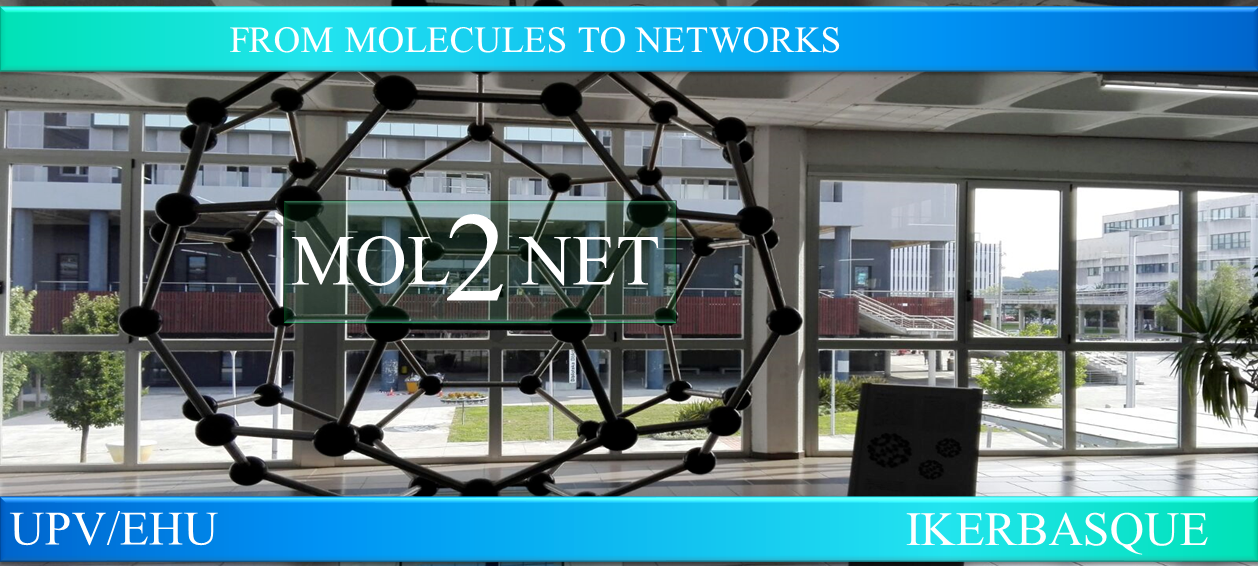
MOL2NET runs both online and/or in person workshops in host universities worldwide and at the SciForum platform maintained by the editorial MDPI, Basel, Switzerland. The Scientific Headquarters (HQs) of this conference series are in the Faculty of Science and Technology, University of Basque Country (UPV/EHU), Biscay. However, the idea of this multidisciplinary conference emerged from the melting pot formed as the result of multiple collaborations of professors from many centers worldwide. Locally, the founders and strongest supporters of the conference are professors endowed by IKERBASQUE, Basque Foundation for Sciences, professors from the two departments Department of Organic Chemistry I and Department of Organic Chemistry II of the University of Basque Country (UPV/EHU), and professors from the Department of Computer Sciences of the University of Coruña (UDC).
Internationally, professors from Dept of Biological Chemistry & Molecular Pharmacology (BCMP), Harvard Medical School, USA; the Center for the Study of Biological Complexity of the Virginia Commonwealth University (VCU), USA; the Natural Resources Research Institute, of the University of Minnesota, USA; CNRS-Université Paris-Sud, Paris, France, and other institutions are also founders and/or supporters of this conference, please see full committees lists [Honor Committee] [Co-Chairs Committee] [Scientific Committee (Abroad)] [Scientific Committee (Local)] and [MOL2NET-IKERBASQUE Staff].
Conference Lemma
The acronym MOL2NET summarizes the running title of this conference: FROM MOLECULES TO NETWORKS. This lemma is inspired by the possibility of spreading the knowledge about multiple topics by promoting multidisciplinary collaborations in science with conferences including topics ranging from quantum world to large social networks. In this sense, the spirit of this conference is in consonance with the lemma EMAN TA ZABAL ZAZU (Give and extend knowledge). This anthem from the 19th century is written in Basque language (Euskera) and is used now a days as the official motto of the University of Basque Country (UPV/EHU).
Steps for Participation
(0) Register, Sign in/Login, to Sciforum platform [Sciforum login]
(1) Submit the title and abstract, select a section or workshop (do not upload paper here) [Submit New Abstract]
(2) Wait for Sciforum abstract acceptance email, follow the link, and/or login to upload paper, doc and pdf format
(3) Download template doc to prepare your communication, for general sessions: [Mol2Net Template], or use the
for other workshops: [BioChemPhys Template], [WRSAMC template] , [MODEC Template], [AWP-04 Template]
(4) Wait for paper acceptance and publication emails (follow link to proofread your paper) (Asap after upload)
(5) Communicate with chairpersons if corrections are necessary, including past editions (All the year)
(6) Log in to post comments, questions, or answers in a section or one of the workshops
(7) Contact chairpersons if you need author (publication) or attendance (posting) certificate for conference and/or workshops (All the year)
Workshops Schedule
General Schedule: MOL2NET International Conference Series on Multidisciplinary Sciences, MDPI Sciforum, Basel, Switzerland has online and/or in person workshops (>10) associated. The conference usually runs online at the online platform SciForum maintained by the editorial MDPI, Basel, Switzerland. The platform is open on a year-round basis almost all the days of the year in course. We have this modality for practical reasons; e.g., accommodation of many workshops in different dates along the year, flexible reception of communications, etc.
Submission and Publication of communications: As we mentioned before, in the practice, the online platform is open at the beginning of the year in course and continue open all the year for submissions of communications. However, the associated workshops may open in different dates along the year (see specific workshop pages). Submission of papers to all workshops is open until the last days of the year in course or the first days of the following. The publication of communications is continuous all the year upon acceptance.
Schedule for Online participation: After publication of papers is closed we open the online platform for online participation. The authors will be able to post online comments and/or answers to comments in this workshop/section and also in the other general sections and/or >10 international workshops of the MOL2NET conference (many of them also run both online and in person). The participants are entitled to receive participation certificates for MOL2NET conference and all the workshops they participate upon request to the respective chairpersons. See committees of MOL2NET and each workshop.
Schedule for in person participation: Many of the workshops associated to MOL2NET are going to be held also in person (face-to-face) in different universities of USA, Spain, Italy, Mexico, Chile, etc. This in person workshops have specific schedules in parallel to their online versions. Please, go to the homepages of these workshops and/or contact their chairpersons for further details.
Notes for participants: MOL2NET conference runs both online (general sections) and/or in person (associated workshops). No physical presence is needed for online participation saving traveling costs. We accept experimental works, theoretical works, or experimental-theoretic works in the areas mentioned. Proceedings will be Published Online, Open Access, and Totally Free of Charges (no cost). For details about in person (face-to-face) participation on associated workshops contact the respective members of the local committees.
Types of communications
Before to submit your communication recommend to download and use the [Template File] to write your communication; we strongly recommend you to read carefully the following information about publication model, copyright, authors responsibilities, etc Firstly, be aware that the works published here belongs to two main modalities preliminary communications or comments on previous works.
Preprints. These are short communications of unpublished results but they are not post-print journal papers. In this sense, committee and/or external reviewers check only scope and apparent scientific soundness. They have the same editorial process than for an online Preprint service. Therefore, all works receive doi number and are indexed in databases (GoogleScholar, Publons, etc.).The works may receive also comments from registered participants (public post-publication review). The authors are encouraged to submit their works to a peer-reviewed scientific journals of MDPI or other editorials during or after finalization of the conference, as per SciForum copyright rules.
Research Highlights. These short communications are comments on already published papers. They are short notes to comment about the more interesting points, highlights, etc. of works previously published by the authors or other groups. In this case, committee and/or external reviewers check also only scope and apparent scientific soundness. The works may receive also comments from registered participants (public post-publication review).
Authors liability
In all cases, is responsibility of authors, to perform a checking similarity, ensure veracity of contents, and carry out a proper citation of previous works. The committee is not responsible of the previous aspects in this publishing modality. Consequently, the opinions expressed on the communications are not necessarily coincident to the opinions of the members of the committees. In this sense, we strongly recommend the authors to use online text-similarity checking services. These tools may help authors to avoid any form of plagiarism or copyright violation. The authors may be requested to modify the communication (re-write their texts) in the case that high similarity is detected and reported to the committee. In these cases, the manuscript could be put on standby or withdrawn temporarily until the authors re-submit the proper version. The authors are also allowed to submit short reviews, comments, letters, or discussions of papers already published if they guarantee sufficient difference to previous public contents.
Call for Collaborators, Editors, Chairpersons, Sponsors
[EN] We sincerely invite you to join MOL2NET Conference Series or one of the worldwide associated workshops; please, sent a direct email to the chairperson: Prof. González-Díaz H., IKERBASQUE Professor, Email: mol2net.chair@gmail.com. You are encouraged to nominating and/or personally applying for a position or active role in some of the following modalities, or other modalities of collaboration suggested by you:
(1) Committee membership (nomination or personal application for membership in honor, steering, or scientific committees).
(2) Guest-Editor of JCR MDPI journal issue (help to propose, editing, announce your special issue in one of the MDPI journals).
(3) Chairperson of workshop (publishing an online or in person workshop of your institution with you as chairperson).
(4) Sponsor of conference (including logo, description, flyer, and link to homepage of your institution).
(5) Speaker (publication of video conferences with cover poster, issn, isbn, and doi number).
MDPI Journals Issues (Organized by MOL2NET Committee Members)
In parallel, the members of committees and/or authors are encouraged to edit special issues for different journals of the editorial MDPI (https://www.mdpi.com/). The special issue is now in call for papers, submissions are welcome in a posteriori, in parallel, or totally independently from the conference. Manuscripts should be submitted online at www.mdpi.com by registering and logging in to this website. In order to send a proposal of associated workshop and/or special issue contact the chairperson of the conference Prof. González-Díaz H. Please, check the following list of past and present special issues associated to our conference:

Nanomaterials (Published): Special issue entitled: Experimental Nanosciences, Computational Chemistry, and Data Analysis. Journal Nanomaterials (ISSN 2079-4991), JCR IF = 3.55. Editors: Prof. González-Díaz H, UPV/EHU, Spain, Prof. B. Rasulev , NDSU, USA, Dr. Shameer Khader, Philips, Cambridge, MA, USA, Prof. H. Kušić, UZ, Croatia.

IJMS (Published): Special issue entitled: Data Analysis in Molecular Sciences. Journal: International Journal of Molecular Sciences IJMS (ISSN 1422-0067), JCR IF = 3.257. Topics: Cheminformatics, Computational Chemistry, Bioinformatics, Data Analysis, Proteomics, Biological Networks, Editors: Prof. González-Díaz H, University of the Basque Country UPV/EHU, Biscay, Spain. Prof. R. Todeschini, University of Milano-Bicocca, Italy, Prof. A. Pazos Sierra, University of Coruña UDC, Spain, Prof. S. Arrasate, University of the Basque Country (UPV/EHU), Biscay, Spain.

Entropy (Call for Papers): Special issue entitled: Biological Statistical Mechanics. Journal Entropy (ISSN 1099-4300), JCR IF = 1.821. Topics: cell differentiation, biocomplexity, order and organization, ecology, epidemics, correlation dynamics, complex networks, systems biology. Editors: Prof. Alessandro Giuliani. Environment and Health Department, Istituto Superiore di Sanità, Roma 00161, Italy. Prof. Mariano Bizzarri, Department of Experimental Medicine, Systems Biology Group Lab, Sapienza University of Rome, Rome, Italy.
Entropy (Call for Papers): Special issue entitled Graph and Network Entropies. Journal Entropy (ISSN 1099-4300), JCR IF = 1.821. Topics: network sciences; walk entropies; algegraic graph theory; spectral methods; matrix functions. Editor: Prof. Dr. Ernesto Estrada, Department of Mathematics & Statistics, University of Strathclyde, Glasgow G11XQ, UK.

Molecules (Call For Papers): Special Issue: GPCR Mechanism and Drug Design. Journal: Molecules (ISSN 1420-3049), JCR IF = 3.098. Topics: data science; drug design and discovery; computational chemistry; structural biology; molecular modeling; molecular docking; computational mutagenesis; G-protein-coupled receptors; protein–protein interactions; protein–ligand interactions. Editor: Dr. Irina Moreira, Email: irina.moreira@cnc.uc.pt, Center for Neuroscience and Cell Biology (CNC), University of Coimbra (UC), Portugal. Workshop Associated: EJIBCE, Encontro de Jovens Investigadores de Biologia Computacional e Estrutural, Portugal, 2018.
Molecules (Call For Papers): Special Issue: Structure and Function of Metalloenzymes. Journal: Molecules (ISSN 1420-3049), JCR IF = 3.098. Topics: catalytic power of enzymes; computer-aided drug design; bio-desulfurization; computational methods in chemistry and biochemistry; metalloenzymes; biological membranes; docking and virtual screening; computational enzymatic catalysis. Editor: Dr. Sérgio Filipe Sousa, Email: sergiofsousa@med.up.pt, UCIBIO/REQUIMTE, BioSIM - Departamento de BioMedicina, Faculdade de Medicina da Universidade do Porto, Porto, Portugal. Workshop Associated: EJIBCE, Encontro de Jovens Investigadores de Biologia Computacional e Estrutural, Portugal, 2018.

Applied Sciences (Call for Papers): Special issue entitled: Complex Networks and Machine Learning: From Molecular to Social Sciences. Journal Applied Sciences (ISSN 2076-3417), JCR IF = 1.679. Topics: machine learning, complex networks, systems biology, protein networks, metabolic networks, ecosystems, artificial neural networks, social, financial, and legal networks. Editors: Prof. Maykel Cruz-Monteagudo, Email: mCruz@westcoastuniversity.edu, West Coast University, Miami Campus, FL, USA, Prof. Dr. David Quesada, Director of Dept. of Mathematics, Miami Dade Colege (MDC), Miami, FL, USA. Email: dquesada@mdc.edu, Prof. González-Díaz H., IKERBASQUE Professor, Dept. of Organic Chemistry II, University of the Basque Country UPV/EHU , 48940, Leioa, Biscay, Spain. Email: mol2net.chair@gmail.com
Associated Workshops
In addition, you can participate both online or in person (face-to-face) in some of the workshops we organize in different universities worldwide (see workshops section). Publication of all communications of the workshops will be also online via the platform SciForum. We welcome proposals for organization of workshops in different universities. Please, do not hesitate to contact conference chairperson and/or scientific committee presidents. Some of the workshops planned to be held in 2018 edition are: SRI-10, St. Thomas University (STU) and Miami Dade College (MDC), Miami, FL, USA (Multidisciplinary Sciences); WCUCW-02, West Coast University (WCU), Miami, FL, USA (Multidisciplinary Sciences); WMCUP-01, University of Padova (UP), Padova, Italy (Medicinal Chemistry); LAWSCI-01, University of the Basque Country UPV/EHU, Bilbao, Spain (TICs, Bioethics, Social, and Legal Sciences), etc.; see other workshops in the list of sections at left panel.
Past Editions
MOL2NET-03, the 3rd edition of this conference series, was held in 2017. This conference received >250 communications, submitted by >450 authors registered, and included >10 workshops in: USA, Spain, Portugal, Brazil, etc.. Some of the world top universities and centers represented in the lists of committee members and/or authors were: Harvard Medical School, Boston, USA; Stanford School of Medicine, USA; Virginia Commonwealth University (VCU), USA; University of Minnesota Duluth, MN, USA; Conservatoire National des Arts et Métiers, CNAM París, France; University of Pennsylvania, USA; Miami Dade Collegue (MDC), USA; EMBL-EBI European Bioinformatics Institute, Cambridge, UK; CAS Chinese Academy of Science, China; ZJU Zhejiang University, China.
MOL2NET-02, the 2nd edition of this conference series, was held in 2016. This 2nd conference published 150 communications of 400+ authors 30+ universities of 20+ countries. Some of the world top universities and centers represented in the lists of committee members and/or authors were: Harvard Medical School, Boston, USA; Stanford School of Medicine, USA; Virginia Commonwealth University (VCU), USA; University of Minnesota Duluth, MN, USA; Conservatoire National des Arts et Métiers, CNAM París, France; University of Pennsylvania, USA; Miami Dade Collegue (MDC), USA; EMBL-EBI European Bioinformatics Institute, Cambridge, UK; CAS Chinese Academy of Science, China; ZJU Zhejiang University, China.
MOL2NET-01, the first edition of this conference series, was held in 2015. This first conference attracted more than 100 papers and 300+ authors and/or committee members representing 30+ universities of 20+ countries. Some of the world top universities and centers represented in the lists of committee members and/or authors were: Harvard Medical School, Boston, USA; Stanford School of Medicine, USA; Virginia Commonwealth University (VCU), USA; University of Minnesota Duluth, MN, USA; Conservatoire National des Arts et Métiers, CNAM París, France; University of Pennsylvania, USA; Miller School of Medicine, University of Miami, USA; EMBL-EBI European Bioinformatics Institute, Cambridge, UK; CAS Chinese Academy of Science, China; ZJU Zhejiang University, China.
People, Media Channels, and Social Networks
We are uploading flyers and promotional videos (in different languages) to the MOL2NET accounts in different social networks such as: FACEBOOK group with >10000 followers; RESEARCHGATE project, LINKEDIN, and TWITTER account @mol2net. In addition, we have uploaded topic-specific pages with lists of contacts of people related to the conference. In this page you can find people with research interests focused on one specific area such as Organic Chemistry, Computational Chemistry, Materials or Nanoscience, etc.
Influences & Sister Conferences
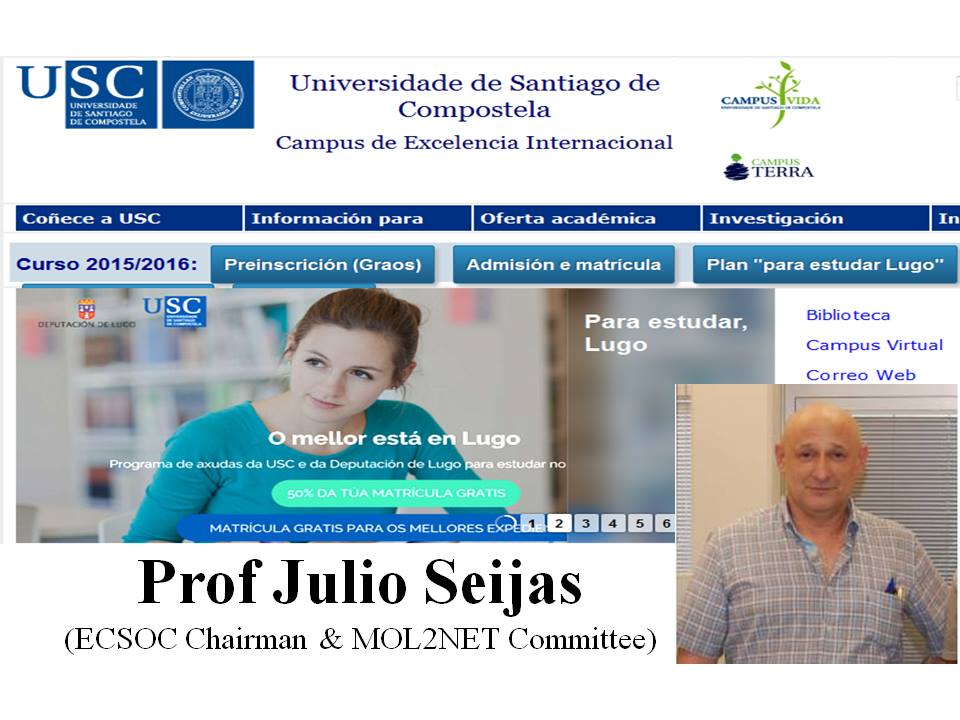
MOL2NET conference series is inspired on various Sciforum conference series, specially on the ECSOC Electronic Conference Series in Organic Chemistry organized during more than 20 years (22nd edition in 2018) by Prof. Julio Seijas at Department of Organic Chemistry, Faculty of Sciences, Campus Lugo, University of Santiago de Compostela (USC), Spain. In consonance, we are glad to list Prof. Siejas in the scientific committee of MOL2NET and we invite all colleagues to participate also in ECSOC conference. In addition, MOL2NET committee members would like to recommend other conferences with some topics in common such as: IWBBIO, International Work-Conference on Bioinformatics and Biomedical Engineering, Chairperson: Prof. Ignacio Rojas, et al., Univerity of Granada, 2018 edition. NetSci: International School and Conference on Network Science.
THANK YOU FOR YOUR SUPPORT!!!
Sincerely yours
MOL2NET Chairman
Prof. González-Díaz H., IKERBASQUE Professor,  [RESEARCHGATE],
 [LINKEDIN],
 [ORCID],
(1) Department of Organic Chemistry II, University of the Basque Country UPV/EHU , 48940, Leioa, Biscay, Spain.
(2) IKERBASQUE, Basque Foundation for Science , 48011, Bilbao, Biscay, Spain.
Email: mol2net.chair@gmail.com
Meet Our Chair

Dept. of Organic and Inorganic Chemistry, University of The Basque Country UPV/EHU, Leioa, 48940, Greater Bilbao, Basque Country, Spain. <a href="https://www.linkedin.com/in/hgdiaz/">Website</a>;
Important Dates
10 Jan
2018
12 Jan
2018
14 Jan
2018
MOL2NET'18 CONGRESSES
Explore more details- 01. Proceedings & Welcome Message
- 02. USEDAT-04: USA-Europe Data Analysis Training Program Workshop, Cambridge, UK-Bilbao, Spain-Miami, USA, 2018
- 03. CHEMBIOINFO-04: Chem-Bioinformatics Congress Cambridge, UK-Chapel Hill and Duluth, USA, 2018
- 04. AIMEDIC-06: AI, Med. Info., & Biomed. Eng. Congress, Coruña, Spain-Miami, USA, 2018.
- 05. MODEC-03: Workshop on Natural Products and Agro-Industrial Procesess in Amazon, UEA, Puyo, Ecuador, 2018
- 06. CHEMBIOMOL-04: Chem. Biol. & Med. Chem. Workshop, Paraiba, Porto, Rostock, Germany-Galveston, Texas, USA, 2018
- 07. TECHLAWSCI-02: PANELFIT H2020 Tech. Law. & Sci. Challenges, Bilbao, Spain, Halden, Norway, Baltimore, USA, 2018
- 08. NANOBIOMAT-04: Nanotechnology & Biomaterials Sci. Congress, Jackson & Fargo, USA, 2018
- 09. NICEXSM-04: North-Ibero-American Congress on Exp. and Simul. Methods., Valencia, Spain-Talca, Chile-Miami, USA, 2018-2019
Entropy (Call for Papers): Special issue entitled Graph and Network Entropies. Journal Entropy (ISSN 1099-4300), JCR IF = 1.821. Topics: network sciences; walk entropies; algegraic graph theory; spectral methods; matrix functions. Editor: Prof. Dr. Ernesto Estrada, Department of Mathematics & Statistics, University of Strathclyde, Glasgow G11XQ, UK.
Email: dquesada@mdc.edu, Prof. González-Díaz H., IKERBASQUE Professor, Dept. of Organic Chemistry II, University of the Basque Country UPV/EHU , 48940, Leioa, Biscay, Spain. Email: mol2net.chair@gmail.com
(Year-round Open Call for Applications)
Type of Course: Research Internship Training Courses for Sabbatical Professors, Post-Doc Associates, or PhD, MSc, or Degree Students (Summer internships) coming from aborad or for our university.
Benefits for Students:
(1) Publication of communications in MOL2NET Conference Workshops in Miami Dade College, West Coast University, University of Minnesota (USA), Conservatoire national des arts et métiers (France), etc. (2) Publication of Scientific Papers in International Journals.
Course Duration: PhD Students (upto 1 Year), MSc Students (upto 4 months), Degree Students: Jun-15 to Jul-30.
Course seats: 15, Students Nationality: Worldwide, Attendance Certificate: Delfin certificate (program students)
Enrollment & Fees: Free of cost (no enrollment fees will be levied to students), however scholarship or other funds must cover travel, living, and insurance.
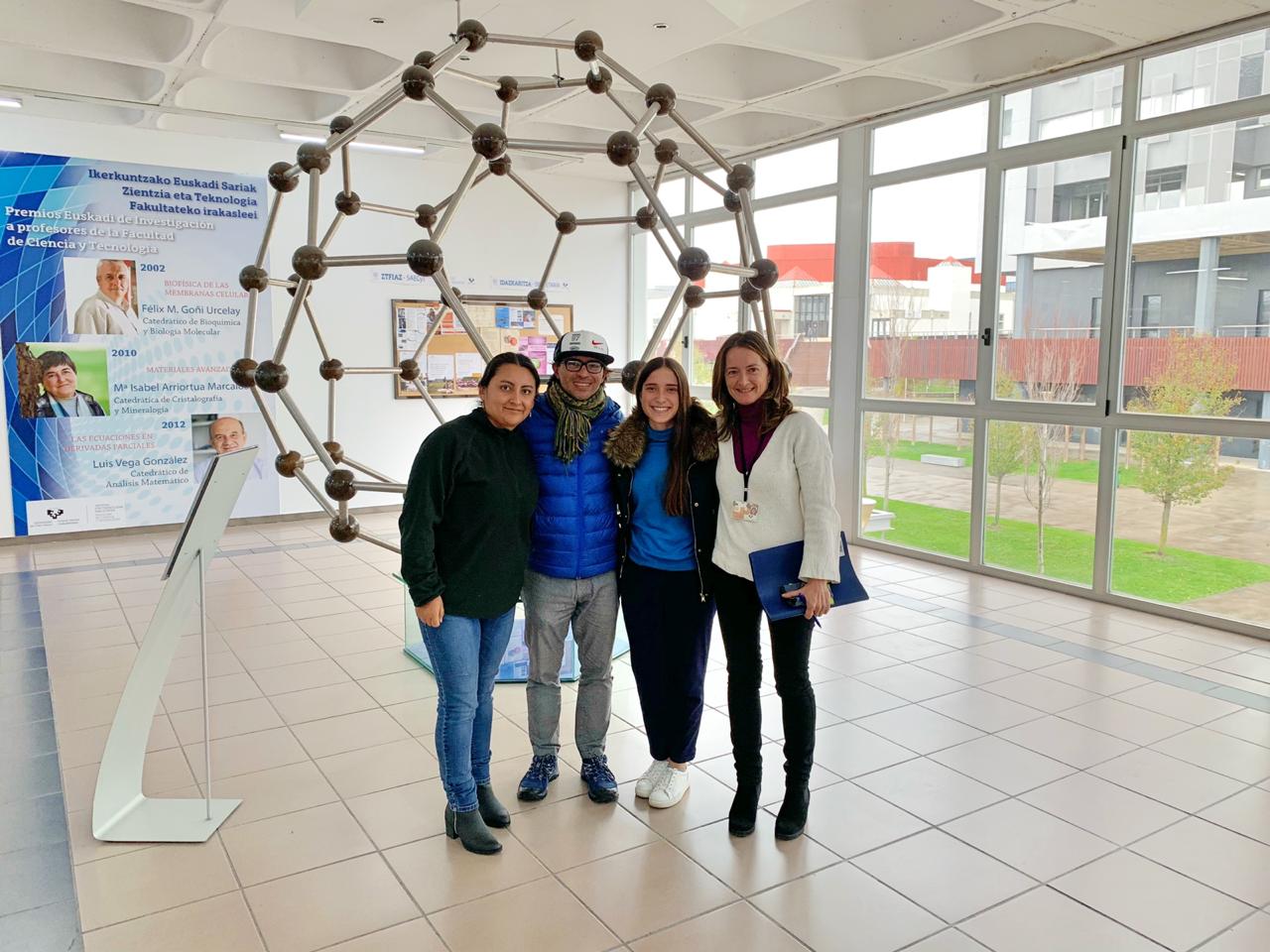
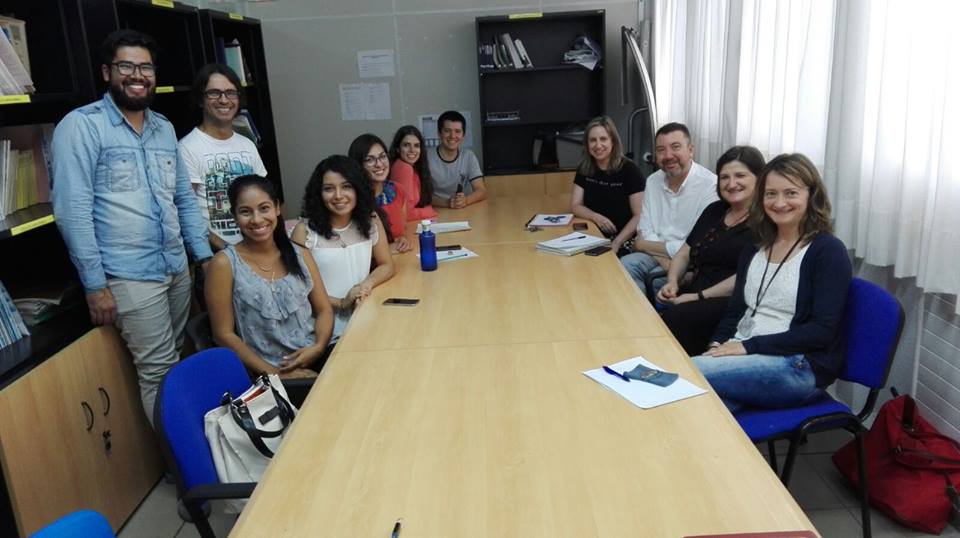
COURSE (2): STU-MDC-MOL2NET SUMMER RESEARCH INSTITUTE: APPL. PHYS., MATHS., MOL. BIOL., ENVIRONM. SCI., MDC, MIAMI, USA
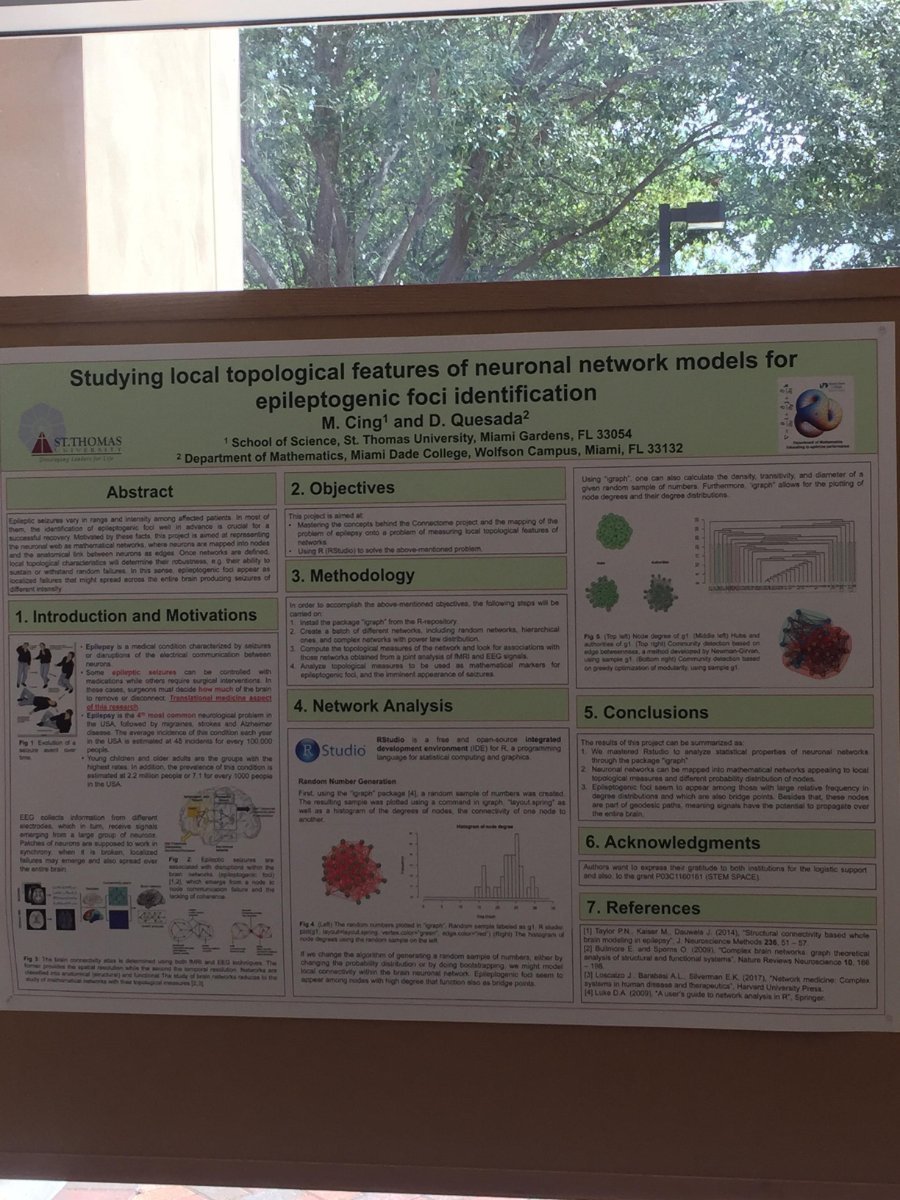
Summer Research Institute (SRI) Symposium of the School of Science, Technology, and Engineering Management of Saint Thomas University (STU) and Miami Dade College (MDC). SRI series have research and education objectives providing undergraduate students, master, and phd students as well as research associated and professor hands-on experiences and computational projects. The workshop is dual including both in person participation (mostly for STU-MDC students and professors) and online participation (including students and professors from abroad). It covers multidisciplinary topics in science ranging from modern techniques of molecular biology, statistical analysis, mathematical modeling, computational physics, bioinformatics, nano sciences and a large variety of characterization techniques to the social, legal, and educational implications of these techniques.
(1) Publication of communications in MOL2NET Conference Workshop Series of Summer Research Institute (SRI) in Miami Dade College.
Sponsor Agencies: Miami Dade College (MDC) and the grant STEM-SPACE P03C1160161. The received contributions provided funding for equipment, logistics, and minor activities associated with the SRI. Ten speakers from and local Technological companies came to St. Thomas to share their wisdom as an in kind contribution. During this last edition, students exchanged experiences with researchers from University of Miami, Florida International University (FIU) and also from NASA.
*Contact: Prof. Dr. David Quesada, Director of Dept. of Mathematics, Miami Dade Colege (MDC), Miami, FL, USA.
Email: dquesada@mdc.edu
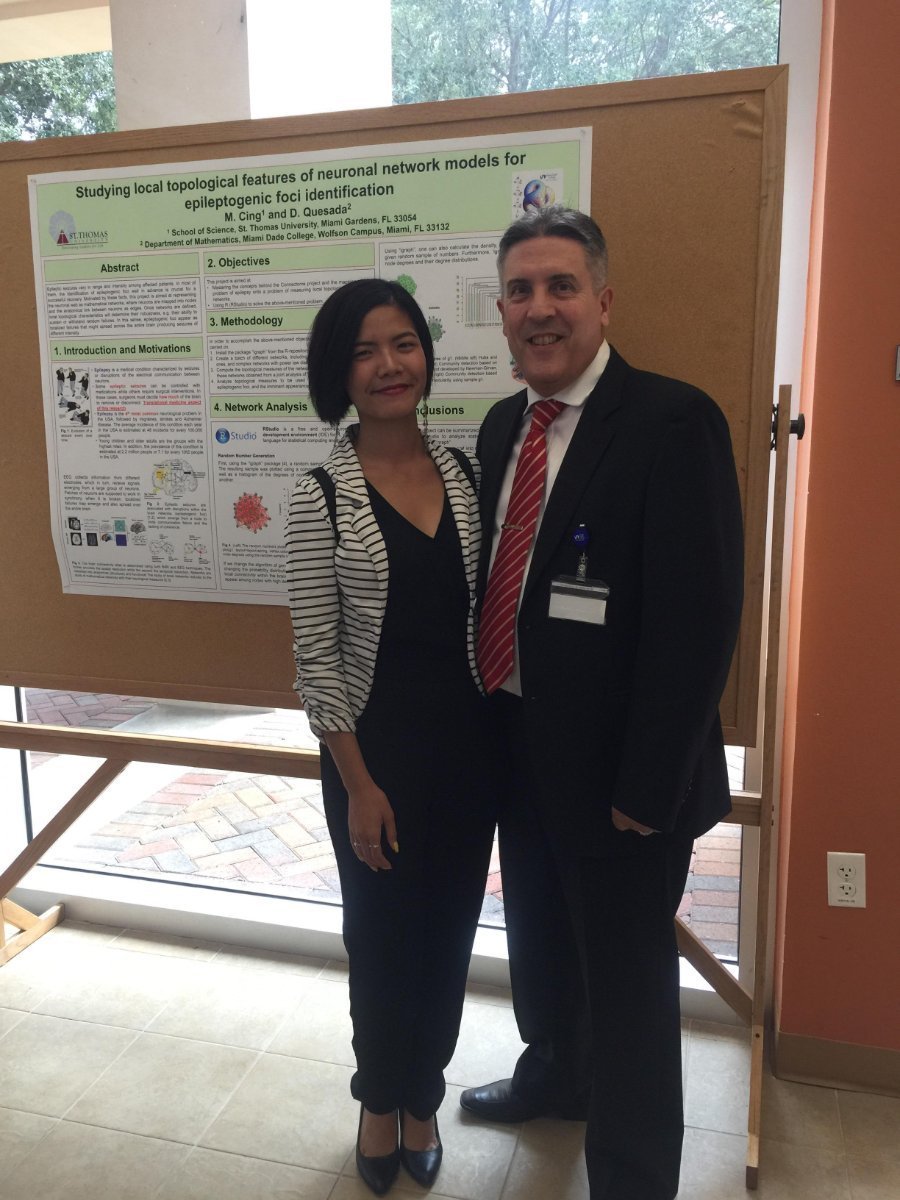
Course Photo Galley
 |
 |