

The 1st International Online Conference on Aerospace

The 1st International Online Conference on Aerospace
Part of the International Online Conference on Aerospace series
Event's Timezone: Central European Summer TimeAerodynamics Flight Mechanics, Propulsion Systems Energy, Autonomous AI-Driven Systems, Next-Gen Aircraft Design, Additive Manufacturing Smart Materials, Sustainable Aviation Technologies, Hypersonic Vehicles, Space Systems Exploration, Space Debris Orbital Sustainability


The IOCAE 2026 Conference has Commenced.
The conference will be held from Thursday to Friday, 16 - 17 April 2026, CEST.
Join Us Virtually on Zoom
Day 1: Session 1 & Session 2
Day 2: Session 4 & Session 3
View the full program here: https://sciforum.net/event/IOCAE2026?section=#program_day1.
Registered attendees should have received unique Zoom links to attend the conference.

If you have not received your link, please contact us immediately at iocae2026@mdpi.com.
Welcome from the Chair
It is my pleasure to invite you to the 1st International Online Conference on Aerospace (IOCAE 2026), which will be held virtually on 16–17 April 2026. This inaugural event aims to bring together leading experts, researchers, and industry professionals to share the latest advances in aerospace science and technology.
IOCAE 2026 provides an interactive and inclusive platform for presenting innovative research, fostering interdisciplinary dialogue, and exploring emerging applications across the aerospace sector. Organised under the auspices of MDPI’s journal Aerospace, the conference will offer contributors the opportunity to publish extended versions of their work in a dedicated Special Issue. The themes of the conference include the following:
S1: Next-Gen Aircraft Design & Optimization
-Aircraft Design and Optimization – Covering efficiency, lightweight materials, and sustainability.
-Aerostructures: Materials & Structures – Focusing on composites, smart materials, and additive manufacturing.
-Aerodynamics and Flight Mechanics – With trends like urban air mobility (UAM), hypersonics, and drag reduction.
S2: Sustainable Propulsion & Energy Systems
-Fuels & Energy Storage – SAFs, hydrogen propulsion, and hybrid-electric storage.
-Propulsion Technologies – Gas turbines, electric propulsion, and next-gen space propulsion.
S3: Space Systems & Exploration
-Spacecraft Design and Systems Engineering – Modularity, reusability, and miniaturization (CubeSats, SmallSats).
-Space Exploration & Mission Design – Human and robotic missions, ISRU, and long-duration sustainability.
-Space Environment and Space Debris Mitigation – Active debris removal and sustainable satellite design.
S4: Digitalization, Autonomy & Airspace Management
-Avionics and Autonomous Systems – AI-driven flight control, drone swarms, and autonomy in space.
-Air Traffic Management & Airports – AI-based ATC, UAM airspace integration, and sustainable airport infrastructure.
By hosting this conference online, we aim to break down geographical barriers and create a dynamic, global space for collaboration, knowledge exchange, and community building. We are particularly committed to encouraging the active involvement of early career researchers and young scientists as they engage with the forefront of aerospace innovation.
I warmly welcome your participation in this exciting event as we work together to shape the future of aerospace research and development.
Best regards,
Prof. Dr. Konstantinos Kontis
School of Engineering, University of Glasgow, Glasgow, Scotland, UK


Program Overview
|
|
|
|
|
|
|
|
|
|
|
|
IOCAE 2026 Program - Day 1
Session 1. Next-Gen Aircraft Design & Optimization
Date: 16 April 2026 (Thursday)
Time: 9:00 (CEST, Basel) | 03:00 (EDT, New York) | 15:00 (CST Asia, Beijing)
| Time (CET) |
Speaker | Title |
|
9:00-9:10 |
Prof. Dr. Konstantinos Kontis |
Welcome and Opening Remarks |
| 9:10-9:20 | Prof. Dr. Norman Wereley and Dr. Yufei Zhang Session Chairs |
Welcome by Session Chairs |
| 9:20-9:40 | Dr. Runze Li Invited Speaker |
Bayesian Failure Prediction of a Novel Z-Beam Composite Wing under Gust Response |
| 9:40-9:55 | Peter L Bishay Selected Speaker |
SMART Hawk: A Shape-Morphing Artificial Red-Tailed Hawk |
| 9:55-10:10 |
Giorgio Filippoli |
Flight-Test-Based Analysis of Blowing Effects on Trimmed Aerodynamic Polars of a Distributed Electric Propulsion Aircraft Demonstrator |
|
10:10-10:25 |
Alan Serena Moreno Selected Speaker |
INDUSTRIAL APPLICATION OF PARAMETRIC CONCEPTUAL LOADS LOOP |
|
10:25-10:40 |
Edmondo Minisci Selected Speaker |
Interpretable Surrogate Modelling for Multirotor Design Exploration: Combining HDMR and Kolmogorov–Arnold Decomposition |
|
10:40-10:55 |
Tim Luplow Selected Speaker |
Numerical Analysis Framework for a Hybrid Electrothermal and Electromechanical De-Icing System for High-Lift Systems |
|
10:55-11:10 |
Mulugeta Tilahun Bekele Selected Speaker |
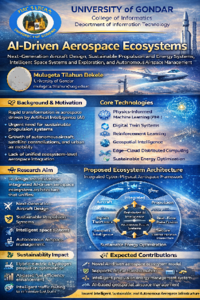
AI-Driven Aerospace Ecosystems: Next-Generation Aircraft Design, Sustainable Propulsion and Energy Systems, Intelligent Space Systems and Exploration, and Autonomous Airspace Management |
|
11:10-11:25 |
PERIYASAMY C. Selected Speaker |
DESIGN AND CFD BASED AERO-STRUCTURAL OPTIMIZATION STUDY OF BIOINSPIRED MORPHING SWEPT WING USING NACA 20612 SUPERCRITICALASYMMETRIC CAMBERED AIRFOIL FOR BOMBARDIER CRJ -900 |
|
11:25-11:40 |
Emmanouil Georgantakis Selected Speaker |
Integrating Mission, Aerodynamic–Structural Sizing, and Additive Manufacturing Constraints in the Conceptual Design of a Modular UAV |
|
11:40-11:55 |
Néstor Alcañiz Brull Selected Speaker |
Analytical Prediction of Propeller Thrust for Tilt-Rotor Configurations with Wind Tunnel Validation |
|
11:55-12:10 |
Martin Bartelt Selected Speaker |
Electro-Impulse De-Icing of the Leading Edge of a Slat |
| 12:10-12:25 | Carlo E.D. Riboldi Selected Speaker |
A unified design methodology for unmanned airships: from preliminary sizing to flying qualities |
| 12:25-14:00 | Break | Break |
Session 2. Sustainable Propulsion & Energy Systems
Date: 16 April 2026 (Thursday)
Time: 14:00 (CEST, Basel) | 8:00 (EDT, New York) | 20:00 (CST Asia, Beijing)
| 14:00-14:10 |
Prof. Dr. Stephen Whitmore |
Welcome by Session Chair |
|
14:10-14:40 |
Professor Karen A. Thole Keynote Speaker |
Propulsion at the Forefront of Sustainable Development |
|
14:40-15:10 |
Dr. Arif Karabeyoğlu Keynote Speaker |
Hybrid Rockets as a Cost Effective Propulsion System Alternative for Dynamic Space Operations |
| 15:10-15:25 | Oleksandr Zaporozhets Selected Speaker |
Multi-level Aircraft Design Modelling Including the Effects of Disruptive Propulsion Technologies on Environmental Impact |
| 15:25-15:40 | Carlos Ávila Catalán Selected Speaker |
Balancing the Environmental Trade-off: Simultaneous Minimization of Carbon and Nitrogen Emissions in Novel Aero-Engine Cycles |
| 15:40-15:55 | Zhengxun Zhou Selected Speaker |
Analysis of the Interaction Mechanisms between Rocket Exhaust Plume and Sea Surface in Maritime Launch Conditions |
| 15:55-16:10 | Subrata Sarkar Selected Speaker |
Lifecycle Cost Analysis of Aircraft Systems: Unlocking Efficiency with Digital Twin Applications |
| 16:10-16:25 | Wagd Ajeeb Selected Speaker |
Hydrogen Propulsion Technology for Decarbonizing Aircraft Transport: Environmental and Technical Analysis |
| 16:25-16:40 | Naveen Deshan Ranasinghe Selected Speaker |
Optimization of a Two-Stage Rocket for Low Earth Orbit Reconnaissance Payloads: Toward Fuel-Efficient Launch Systems |
| 16:40-16:55 | Ryan Thibaudeau Selected Speaker |
Technological Advancements of Hybrid Rocket Engines for Sustainable and Competitive In-Space Propulsion Applications |
IOCAE 2026 Program - Day 2
Session 4. Digitalization, Autonomy & Airspace Management
Date: 17 April 2026 (Friday)
Time: 9:00 (CEST, Basel) | 03:00 (EDT, New York) | 15:00 (CST Asia, Beijing)
| Time (CEST) |
Speaker | Title |
|
9:00-9:10 |
Prof. Dr. Antonios Tsourdos Session Chair |
Welcome by Session Chairs |
| 9:10-9:40 | Prof. Dr. Vaios Lappas Keynote Speaker |
The ERMIS Nanosatelite Constellation: Advanced Satellite Communications and Earth Observation Technologies |
| 9:40-10:10 | Prof. Dr. Hyo-Sang Shin Keynote Speaker |
Risk-Aware Planning and Control in Aerospace |
| 10:10-10:30 | Prof. Dr. Yan Xu Invited Speaker |
Integrated Air-Ground Risk Assessment for Large-Scale Operations in Urban Air Mobility |
| 10:30-10:45 |
Max Weigert |
State-Based Estimation of Future Mission Capability for Degrading Unmanned Aerial Vehicles |
|
10:45-11:00 |
Cigdem Avci Selected Speaker |
Cognitive Offloading: A Human-Centered Gap in Interface Design Standards |
|
11:00-11:15 |
Yuvaraj George Selected Speaker |
Geometric MPC for Robust UAV Flights using a 2-Manifold approach |
|
11:15-11:30 |
Jobanpreet Singh Sohi Selected Speaker |
A Compact Multi-Sensor System for Real-Time Micro-Debris Impact Detection in Nanosatellites |
|
11:30-11:45 |
Edmondo Minisci Selected Speaker |
Interpretable Machine Learning for Nonlinear Control via Kolmogorov–Arnold Decomposition |
| 11:45-14:00 | Break | Break |
Session 3. Space Systems & Exploration
Date: 17 April 2026 (Friday)
Time: 14:00 (CEST, Basel) |8:00 (EDT, New York) | 20:00 (CST Asia, Beijing)
| 14:00-14:10 |
Prof. Dr. M. Reza Emami |
Welcome by Session Chair |
|
14:10-14:40 |
Prof. Dr. George Z.H Zhu Keynote Speaker |
Collaborative Spacecraft Swarm for Space Debris Removal |
|
14:40-14:55 |
Ryoji Imai Selected Speaker |
Study on the development of a propellant tank that enables propellant refilling in microgravity (Verification of the gas–liquid separation mechanism during liquid filling through a short-term microgravity experiment) |
| 14:55-15:10 | Carlos INSAURRALDE Selected Speaker |
Autonomous Modelling Analytics for Space Ground Vehicles with Multidisciplinary System Design Framework |
| 15:10-15:25 | Jose-Carlos Gamazo-Real Selected Speaker |
Reliable and cost-effective design of the temperature conditioning module for a scientific LEO microsatellite |
| 15:25-15:40 | Daniele Marcora Selected Speaker |
On the feasibility of a lighter-than-air platform for Martian exploration |
| 15:40-15:55 | Bedanand Mandal Selected Speaker |
A Comprehensive Structural, Thermal, Solar, and Aerodynamic Analysis of a Mars Sub-surface Habitat |
| 15:55-16:10 | Luis Torres Selected Speaker |
STAGED EXCAVATION FOR DUST PREVENTION IN LUNAR REGOLITH: DESIGN AND PRELIMINARY RESULTS |
| 16:10-16:25 | Josh Kalin Selected Speaker |
More FLOPS, less mass: enabling future AI missions in Space |
Flash Poster Session
| Time (CEST) |
Speaker | Title |
|
16:25-16:30 |
Andrejs Kovalovs Poster Presenter |
Numerical modeling and analysis of a helicopter rotor blade with an active twist concept |
| 16:30-16:35 | Riccardo Andrew Oggioni Poster Presenter |
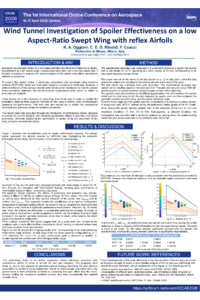
Wind Tunnel Investigation of Spoiler Effectiveness on a low Aspect-Ratio Swept Wing with reflex Airfoils |
| 16:35-16:40 | Adrian Winter Poster Presenter |
Experimental Study of Cryogenic Fill-Level Sensors for Liquid Hydrogen Aircraft Applications |
| 16:40-16:45 | Sakshi Devi Poster Presenter |
Discrete volume based thermal fluid and structural modelling for LH2 aircraft tanks |
| 16:45-16:50 | Ahmed Mahmoud Poster Presenter |
Steady-State Modelling of a Dual Active Bridge Converter for Bidirectional Energy Flow in Space Electrical Power Systems |
| 16:50-16:55 | Yun Sang Tse Poster Presenter |
Robust AI-Assisted HPC Borescope Inspection: Evaluating Stage-Level Decisions and Viewpoint Generalisation |
| 16:55-17:00 | Venu Jangam Poster Presenter |
Aerodynamic and Structural Optimization of Additive Manufactured Rocket Fins (Lattice) |
| 17:00-17:05 | Kamila Niedźwiedź Poster Presenter |
When Cyber Becomes Physical: Assessing the Impact of Space Cyberattacks on LEO Collision Risk |
Abstract Book
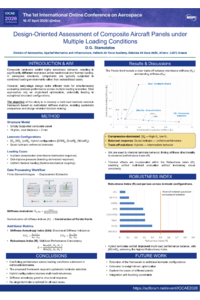
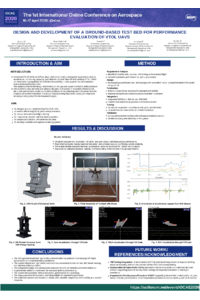
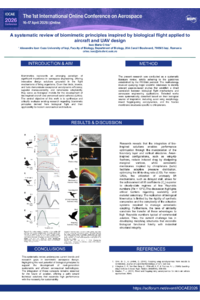
The online version of the IOCAE 2026 abstract book, including the program, all abstracts, and the complete poster list, is available to browse and download! 
Poster Gallery
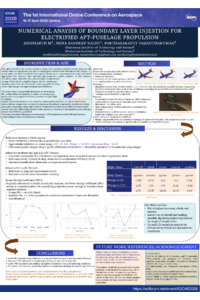
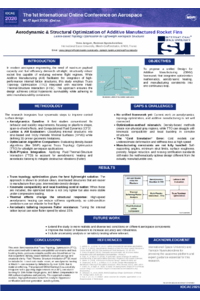
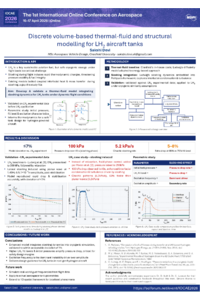
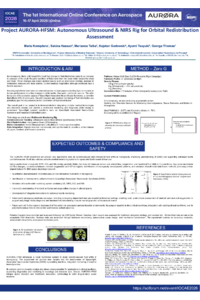
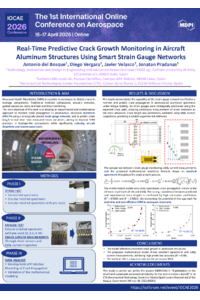
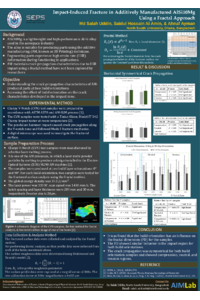
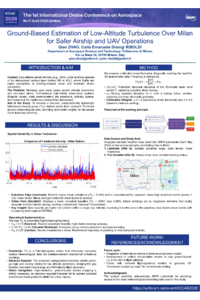
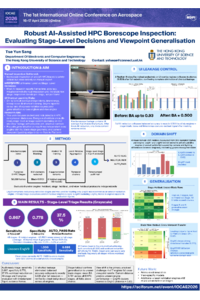
Event Chair


Professor Kontis is a world-leading authority in aerospace engineering, including integrated wing technologies, air-transport systems and space access, and multi-disciplinary applications of aerodynamics, shock physics, wind tunnel testing, flow control, and diagnostics. He has published more than 350 articles including 130 in journals, 6 book chapters, and 2 books, including an edited two-volume compendium on shock waves published by Springer. His publications embrace both scientific fundamental research and practical engineering applications. His conference papers are regularly invited to appear in the special issues of prestigious journals. He has had continuous EPSRC funding since 2001. Other sources of funding include the Royal Society, EU, Nuffield Foundation, USAF, USNavy, JSPS, and industry. He has raised over £13.5M in external funding including over 65 separate collaborative projects with industrial partners, a testament to the industrial applicability of his work. The new methodologies developed are now being adopted by industries and universities based worldwide. Since 1998, Kontis has given 60 invited presentations and keynote lectures to peer-reviewed conferences and international Advanced Schools in the USA, Europe, India, China, and Japan. He owes his formal education to two universities: the University of Bristol (BEng) and Cranfield University (MSc and PhD). He can speak Greek and Japanese.
Session Chairs

Dr. Yufei Zhang
School of Aerospace Engineering, Tsinghua University, Beijing, China
Yufei Zhang is a tenured Associate Professor and Special Research Professor at the School of Aerospace Engineering, Tsinghua University, where he also serves as Deputy Dean. He received his B.S., M.S., and Ph.D. degrees from Tsinghua University and was a visiting assistant professor at the University of Notre Dame. His research focuses on data-driven turbulence modeling, intelligent aerodynamics, computational fluid dynamics, aerodynamic optimization, and artificial intelligence in CFD, with applications including icing aerodynamics and aeroacoustics. Prof. Zhang has received multiple honors, including the Youth Top Talent Support Program of China’s National Ten Thousand Talents Program and the Youth Talent Award of the Chinese Aerodynamics Research Society. He is a Lifetime Senior Member of AIAA and serves on editorial boards and program committees for several leading aerospace journals and conferences.

Prof. Dr. Norman Wereley
Department of Aerospace Engineering, University of Maryland, USA
Prof. Dr. Norman M. Wereley is the Minta Martin Professor and former chair (2012–2021) of Aerospace Engineering at the University of Maryland. His research focuses on smart materials and structures, as well as composite and additively manufactured cellular materials and structures, for actuation and occupant protection systems in aerospace and automotive applications. Dr. Wereley has published extensively on these topics, including over 275 journal articles and 22 patents. He was awarded the ASME Adaptive Structures and Material Systems Prize and the SPIE Smart Structures and Materials Lifetime Achievement Award. Dr. Wereley is a Fellow of AIAA, ASME, IOP, RAeS, SPIE and VFS, and a Lifetime Member of SAMPE. He holds a BEng from McGill University, and MS and PhD degrees from Massachusetts Institute of Technology. He currently serves as Editor-in-Chief of Actuators and Editor-in-Chief of SAMPE Journal.

Prof. Dr. Stephen Whitmore
Department of Mechanical and Aerospace Engineering, Utah State University, Logan, UT, USA
Dr. Stephen A. Whitmore, Emeritus Professor of Mechanical and Aerospace Engineering and Director of the PRL-USU, has more than 35 years of academic, technical, and program management experience in the aerospace industry. He joined USU in 2005 after more than 25 years as a civil servant for NASA. Dr. Whitmore served multiple roles within NASA including those of principal investigator, chief engineer, branch chief, and program manager. He was fortunate to have worked on 7 different "X-planes." He received his PhD in Aerospace Engineering from UCLA in 1988. Dr. Whitmore is also a Licensed Private Pilot with more than 250 hours as pilot in command and has earned more than 40 hours as second in command and flight engineer in Military-Class Jet aircraft. He was a finalist for the Astronaut Class of 2002.

Prof. Dr. M. Reza Emami
Institute for Aerospace Studies, University of Toronto, Canada
Prof. M. Reza Emami is the Director of the Aerospace Mechatronics Group and Coordinator of the Aerospace and Design Laboratories at the University of Toronto Institute for Aerospace Studies. He was also the Founding Chaired Professor of Onboard Space Systems and Director of Asteroid Engineering Centre at the Luleå University of Technology, Sweden, in 2015-2020. He obtained his Ph.D. and postdoctoral fellowship in Robotics and Mechatronics from University of Toronto, and M.A.Sc. and B.Sc. in Aerospace Engineering from Sharif University of Technology, and worked in the industry as a licensed Professional Engineer and Project Manager before joining the academia. His research focuses on concurrent engineering of multidisciplinary systems, such as spacecraft, robot manipulators and rovers. Some of his current research includes: space systems miniaturization, space debris mitigation and remediation, concurrent base-arm control of free-flying space manipulators, satellite formation flying, asteroid redirection for exploration and mining, intelligent heterogeneous rover/satellite teams, and reconfigurable manipulators. Prof. Emami is the Associate Editor of Frontiers in Space Technologies and International Journal of Advanced Robotic Systems, Guest Editor of MDPI’s Journal of Aerospace, and Honorary Rosalind Member of London Journals Press. He has been nominated for several awards, including National Innovation for Technology Award and OPAS Award for Excellence in Teaching. He was also recognized by MathWorks as a Featured Professor in 2013 and 2003, and was in the list of University of Toronto's Miracle Workers in 2000.

Prof. Dr. Antonios Tsourdos
Faculty of Engineering and Applied Sciences, Cranfield University, Cranfield, United Kingdom
Antonios Tsourdos is Director of Research, School of Aerospace, Transport and Manufacturing and member of the University Executive at Cranfield University. He is an academic who has contributed to the autonomous systems and control field for over 25 years. He completed his PhD in Nonlinear Robust Autopilot Design and Analysis at Cranfield University in 1999 and has been a member of the faculty since then. He started as a lecturer and was later appointed Head of the Autonomous Systems Group in 2007. In 2009, he was awarded the title of Professor of Autonomous Systems and Control and now heads the Centre for Autonomous and Cyber-Physical Systems. With his achievements in research and expertise in the field, in September 2015, Antonios was appointed the Director of Research for the School of Aerospace, Transport and Manufacturing. Additionally, Antonios is the Proceedings of the Editorial Board of the Institution of Mechanical Engineers, Part G: Journal of Aerospace Engineering; International Journal of Systems Science; Institute of Electrical and Electronics Engineers Transactions on Instrumentation and Measurement, Transactions on Aerospace and Electronic Systems, and Aerospace Science and Technology. Moreover, Antonios is actively involved in the global academic community, serving as the vice-chair of the International Federation of Automatic Control (IFAC) Technical Committee on Aerospace Control. He is also a member of the IFAC Technical Committees on Networked Systems, Discrete Event and Hybrid Systems, and Intelligent Autonomous Vehicles.
Committee Members


DLR German Aerospace Research Center, Institute of Electrified Aircraft in Cottbus, Germany
aircraft; contrails; ATM; Air Traffic; trajectory optimization; flight performance


air transport, education, security and safety, environmental issues, human factors and performance


aerospace engineering; systems engineering; supersonic; hypersonic; aircraft design; Sustainable Aviation; hydrogen; biofuel; conceptual design


Department of Aerospace Engineering, Sejong University, Seoul, Republic of Korea
space propulsion; thruster; satellite system; Thermal Engineering; cfd; inverse heat; rarefied flow


Department of Aerospace Science and Technology, Polytechnic University of Milan, Italy
aircraft design; Electric Aircraft; lighter than air; flight dynamics; weapons; airship design; airships; flight control; Optimal Design; hybrid-electric aircraft


National Key Laboratory of Solid Rocket Propulsion, Northwestern Polytechnical University, China
Solid propellant combustion


College of Aerospace Engineering, Nanjing University of Aeronautics and Astronautics, Nanjing, China
aircraft environmental control; avionics cooling; thermal control; aircraft air conditioning; boiling heat transfer; condensing heat transfer; flow resistance


astrodynamics; orbit design and trajectory optimization for space exploration


Department of Mechanical Engineering & Aeronautics, University of Patras, Greece
composite materials; mechanical behavior of carbon nanotubes, graphene and nano-reinforced composites,strength prediction of corroded aluminum alloys; computational and experimental strength of materials


Computational fluid dynamics; numerical optimisation; computational structures


vtol aircraft; morphing wings; aircraft/uav design; aeroelasticity; materials science; physics and astronomy; computer science; mathematics; Energy


Department of Aerospace and Mechanical Engineering, College of Engineering, University of Notre Dame, USA
combustion; Aerothermodynamics; Plasma; Flow control


Arts et Métiers Institute of Technology (ENSAM), Institute of Mechanics and Engineering (I2M, UMR 5295), France
topology optimization; anisotropy; Composite materials and structures; homogenization; optimization; finite element method; Multi-scale Analysis; lightweight structures; solid mechanics; elasticity


structural dynamics; morphing aircraft; Improvement of finite element models using measured data; Identification of damage location and extent using model based algorithms; Rotating machinery dynamics; Model reduction methods; Modelling and analysis of st


Bell Laboratories, Physical Sciences and Engineering Research Division; Portland State University, Depts. of Mech. and Mat., and Elect. and Comp. Engineering, Portland, OR, USA
Applied Mathematics and Mechanics, Applied and Mathematical Physics; Materials Science and Engineering; Aerospace Electronics and Photonics; Design for Reliability (DfR) of Electronic, Opto-Electronic and Photonic Assemblies, Packages and Systems; Applied


rds computational fluid dynamics; gas turbines; Mesh Generation; Turbulence modeling; boundary layer; Numerics; drag; boundary condition; Navierstokes Equations"


sustainable aviation fuel (saf); thermophysical properties; combustion and flow diagnostics; high altitude reignition; gas turbine combustion and high temperature wall heat transfer


Center for Aeronautical and Space Science and Technology (CCTAE), IDMEC, Instituto Superior Técnico (IST), Universidade de Lisboa, Portugal
CFD


Propulsion and Energy Machinery Section, Southwest Research Institute (SwRI), USA
Combustion Propellants and Energetics Explosions, Detonations, and DDT Battery Safety Nano-Scale Particle Synthesis

Multi-Objective Optimisation Nature Inspired Optimisation Algorithms Uncertainty treatment Design Under Uncertainties Multidisciplinary Design Optimisation Uncertainty based Multidisciplinary Design Optimisatio


School of Automation Science and Electrical Engineering, Beihang University, China
fault-tolerant control, adaptive control, reinforcement learning

instability mechanism, stability control, modeling and experimental measurement of axial flow compressor in aeroengine/gas turbine


Department of Aeronautical and Aviation Engineering, The Hong Kong Polytechnic University, China
(1) fault detection and tolerant, human-machine interaction, motion planning and risk assessment for autonomous driving. (2) deployment, navigation and control of unmanned aerial vehicles in applications of surveillance, wireless communications, herding


Department of Aerospace Engineering, Embry Riddle Aeronautical University, USA
raynold number; Low and high speed aerodynamics (theoretical and experimental), wind tunnel testing, wind energy, configuration design, aircraft performance prediction methods
Keynote Speakers

Robert J. Vlasic Dean of Engineering, University of Michigan, USA
Propulsion at the Forefront of Sustainable Development
Karen A. Thole is the Robert J. Vlasic Dean of Engineering at the University of Michigan. An expert in heat transfer and cooling of gas turbine airfoils, Thole’s detailed experimental and analytical work has influenced the way that gas turbines are designed - both for propulsion and power generation. Before joining Michigan, she spent 18 years at Pennsylvania State University, where she served as a Distinguished Professor and head of the Department of Mechanical Engineering. There, she founded and served as director of the Steady Thermal Aero Research Turbine Lab, one of the world’s most sophisticated research turbine facilities. In 2009, she co-founded the Engineering Ambassador Program and the national Engineering Ambassador Network, now spanning 40 programs across the U.S. and Puerto Rico, providing STEM outreach and professional development for students. Prof. Thole has been a member of several National Academy of Engineering studies, of NASA advisory committees, and of the U. S. Department of Air Force’s Scientific Advisory Board. She earned her Ph.D. in mechanical engineering in 1992 from the University of Texas, Austin. She is an advocate for mentorship of students and faculty, and passionate about developing future leaders in engineering and STEM.
Heat Transfer, Gas Turbines, Turbine Blade Cooling, Turbomachinery, Additive Manufacturing

Hybrid Rockets as a Cost Effective Propulsion System Alternative for Dynamic Space Operations
Prof. Dr. Arif Karabeyoğlu is currently a faculty member at Koc University in Istanbul, Turkiye, and also serves as a board member for the Turkish Space Agency. He has co-founded and managed several rocket propulsion and green energy companies including Space Propulsion Group Inc. (SPG) in California/USA and DeltaV Space in Istanbul/Türkiye. He also served as the CTO for Fergani space between 2022-2024, a company developing navigation constellations and orbital transfer vehicles (OTV). The hybrid rocket-based OTV has been successfully operated in space for an orbit raising mission. His research focuses on rocket propulsion and green energy systems, covering both theoretical studies and practical propulsion/combustion testing. In addition, Dr. Karabeyoglu has years of experience as an instructor at Stanford University, Koc University and other organizations over a wide range of subjects including Thermodynamics, Space Systems Engineering, Rocket Propulsion and Experimental Aeronautics and Astronautics. He has also served as the Program Manager and Principal Investigator for many programs that focused on the development and testing of hybrid rockets, green in-space propulsion systems and green fuels for terrestrial applications. He has authored numerous journal articles, conference papers, and obtained patents in rocket propulsion and green energy. He was the chairman of the AIAA's Hybrid Technical Committee during 2009-2011 and served on the Expert Advisory Board that oversaw the development of the SpaceShipTwo propulsion system developed for Virgin Galactic. He is currently serving as the co-chair for IAC 2026, one of the world’s largest space conferences. Dr. Karabeyoglu is an associate fellow of AIAA.
Rocket Propulsion, Aeronautics, Gas Dynamics, Fluid Mechanics, Engineering Thermodynamics


Department of Aerospace Science & Technology, National & Kapodistrian University of Athens, Greece; School of Aerospace, Transport and Manufacturing, Cranfield University, UK
The ERMIS Nanosatelite Constellation: Advanced Satellite Communications and Earth Observation Technologies
Professor V. Lappas graduated with a B. Eng in Aerospace Engineering at Ryerson University (Toronto, Canada), his MSc in Space Technology at NASA (Goddard Space Flight Centre) through the International Space University (France) and his PhD in Space Vehicle Control at the University of Surrey (UK). He has led various significant research grants on satellite technology, space missions, space debris, funded by the United States Air Force, NASA, Airbus, European Space Agency, European Commission. He has managed substantial research grants including the EU funded QB50, RemoveDEBRIS space missions and the European Defence Agency EuroSWARM project which is one of Europe’s first Defence R&D pilot projects. He is currently Professor of Aerospace Systems and Department Head at the Department of Aerospace Science & Technology of the University of Athens (Greece) and a Consulting Professor in Aerospace Systems at Cranfield University (UK). His current research includes development of unmanned vehicles for defence applications, satellite/space systems, launch vehicle design, small satellites funded by the EU, United States Air Force and European Space Agency. He also teaches Flight Controls, Dynamics and Satellite Communications at Cranfield University and supervises MSc student projects and PhD researchers for the MSc in Astronautics/Space and Autonomous systems (AVDC). He currently is the PI of the ERMIS nanosatellite constellation, a constellation of 3 small cubesats to be launched in January 2026 focused on hyperspectral imaging, laser optical links and IoT communications funded by the Greek Ministry of Digital Governance and the European Space Agency. He is a world authority in small satellites, UAVs, autonomous systems and is in “Stanford’s World’s Top 2% Scientists List” for the subject of Aerospace.
Aerospace, Space Systems, UAVs, Small Satellites

Cho Chun Shik Postgraduate School of Mobility, Korea Advanced Institute of Science and Technology, Republic of Korea
Professor Hyo-Sang Shin, received an MSc on flight dynamics, guidance and control in Aerospace Engineering from KAIST and gained a PhD on cooperative missile guidance from Cranfield University. He is a Lecturer on Guidance, Control and Navigation Systems in Autonomous and Intelligent Systems Group at Cranfield University since 2010. He participated in the 3rd Korea Robot Aircraft Competition with Team Highest winning the Silver (2004) and Most Popular Team award (2004). Professor Hyo-Sang Shin is extensively involved in teaching and research. He has published book chapter and journal and conference papers. He has been invited to lecture at other universities, research institutes and to industry. His current research interests include cooperative guidance and control for multiple vehicles, coordinated heath monitoring and management, and information-driven sensing.
Aeronautical Systems, Autonomous Systems, Aircraft Design, Flight Physics, Space Systems, Through-life Engineering Services, Computing, Simulation & Modelling, Instrumentation, Sensors and Measurement Science

_Zhu.png)
Collaborative Spacecraft Swarm for Space Debris Removal
Dr. George Zhu is a Professor and Tier 1 York Research Chair in Space Robotics and AI in the Department of Mechanical Engineering at York University in Toronto, Canada. He served as the inaugural Academic Director of Research Commons (2019-2022) in the Office of Vice-President of Research and Innovation. His research includes the spacecraft dynamics and control, tethered space systems, autonomous space robotics, computational control methodologies, and in-space additive manufacturing. Currently, he is an elected Academician of the International Academy of Astronautics; College Member of the Royal Society of Canada; Fellow of the Canadian Academy of Canada; Fellow of the Engineering Institute of Canada, Canadian Society of Mechanical Engineering, and Fellow of the American Society of Mechanical Engineers; and Associate fellow of American Institute of Aeronautics and Astronautics. Dr. Zhu is the Editor-in-Chief of Acta Astronautica and the receipt of 2024 Solid Mechanics Medal and 2021 Robert W. Angus Medal of the Canadian Society for Mechanical Engineering, the 2024 Gold Medal and 2019 Engineering R&D Medal of Ontario Professional Engineers Awards, Canada and the 2021 York University President’s Research Excellence Award.
Control Theory; Systems Dynamics; Mathematical Modelling; Composites; Finite Element Modeling; Solid Mechanics; Mechanical Engineering; Dynamics, Nonlinear Analysis, Robotics
Invited Speakers

Integrated Air-Ground Risk Assessment for Large-Scale Operations in Urban Air Mobility
Prof. Dr. Yan Xu has conducted many years of research in the field of air traffic–related systems, serving as principal investigator and participant in multiple scientific research projects funded by the EU Horizon programs and UK Research and Innovation (UKRI). He has led several major research projects, including National Natural Science Foundation of China (NSFC) Young Scientist, General, and Excellent Young Scientists Fund (Overseas) projects, as well as sub-projects of the National Key Research and Development Program of China. Prof. Dr. Yan Xu obtained a PhD from the Universitat Politècnica de Catalunya (UPC), Spain, and was a visiting scholar at the French Civil Aviation University (ENAC). He later worked at Cranfield University in the United Kingdom, holding positions as Postdoctoral Researcher, Lecturer, and Associate Professor. During this period, Prof. Dr. Yan Xu served as Programme Director of the MSc in Advanced Air Mobility Systems and as Head of the Air Traffic Management Laboratory. He has received multiple Best Paper Awards at major international academic conferences. The outcomes of the ISOBAR project led by Prof. Dr. Yan Xu won the 2023 Digital European Sky Award. Students supervised by him have received numerous honors, including First Prize in the SESAR Young Scientist Award (Master’s and PhD categories) in 2023 and 2024, and Second Prize in the 2022 EUROCONTROL Innovation Masterclass Competition (PhD team category). Prof. Dr. Yan Xu currently serves as an Editorial Board Member of IEEE Aerospace and Electronic Systems Magazine (JCR Q1), Young Editorial Board Member of Communications in Transportation Research (JCR Q1), Technical Committee Member of the Civil Air Navigation Services Organisation (CANSO), and is an IEEE Senior Member. He has been selected for a national-level young talent program.
uav route planning

Bayesian Failure Prediction of a Novel Z-Beam Composite Wing under Gust Response
Dr. Runze Li is a research associate in Department of Aeronautics, Imperial College London. He does research in multi-disciplinary optimization design of aircraft, and develops AI-assisted design methods, using generative models, reinforcement learning and LLMs.
Machine Learning Technologies in Aerodynamic Studies and Optimizations; Adaptive Sampling Methods; Surrogate Model Assisted Optimization; Reinforcement Learning
Registration
The registration for IOCAE 2026 will be free of charge! The registration includes attendance to all conference sessions.
If you are registering several people under the same registration, please do not use the same email address for each person, but their individual university email addresses. Thank you for your understanding.
Please note that the submission and registration are two separate parts. Only scholars who registered can receive a link to access the conference live streaming. The deadline for registration is 12 April 2026.
Instructions for Authors
1. Deadline for abstract submission: 2 February 2026
2. Abstract acceptance notification: 2 March 2026.
Please note:
An abstract acceptance email only confirms that your abstract has been accepted. Oral or poster presentation invitations are determined separately by the conference chairs, and you will receive an additional email with the presentation result.
Abstract Submission
If you do not have an account, please register at www.sciforum.net. After logging in, submit your abstract using the "Submit Abstract" button on the conference homepage. No template is required.
-
Types of Submissions
- Accepted: Original research abstracts; systematic reviews or meta-analyses abstracts(must comply with PRISMA 2020).
- Not accepted: Narrative, scoping, comparative, perspective, opinion, or essay-style reviews -
Content Requirements
- Length: 200–300 words
- Structure: Introduction, Methods, Results, Conclusions
- Language: Clear, publication-ready English
- Originality: Must be original and unpublished; previously published abstracts will not be considered -
Authorship
- The submitting author must ensure all co-authors approve the content.
- Authors may submit multiple abstracts, but only one abstract per author may be selected for an oral presentation.
1. Each abstract must designate one presenter. To change the presenter, please contact us after you receive the oral/poster presentation invitation.
2. Only live presentations are accepted.
3. Presenters who do not attend the live session will not be eligible for awards or presentation certificates.
The slot for the oral presentation is 15 mins. We advise that your presentation lasts for a maximum of 12 mins, leaving at least 3 mins for the Q&A session.
Authors are encouraged to prepare presentations using PowerPoint or equivalent software for online display alongside their abstract. If provided, slides will be presented directly on the conference website via the Sciforum.net slide viewer and should be prepared in the same format as a traditional conference presentation of research results. All slides must be converted to PDF format prior to submission to ensure accurate online display.
Each presentation should:
- Communicate the research question or objective, methodology, key results, and scientific novelty;
- Use a clear and logical structure, typically Introduction-Methods-Results&Discussion structure (IMRaD) or a field-appropriate alternative;
- Emphasize the relevance of the work;
- Support key findings with clear figures or tables where appropriate;
- Conclude with a critical interpretation of the results and their impact.
Posters should be designed to allow independent understanding of the research and clearly present the essential elements of the study.
Each poster should include:
- Title, authors, affiliations, and contact details (clearly displayed at the top);
- Brief introduction outlining the research objective;
- Concise methodology summary;
- Main results, supported by clear, well-labeled figures or tables where appropriate;
- Short conclusion summarizing key findings and their relevance.
Technical specifications:
Dimensions (cm): 84.1 × 118.9 (A0 - portrait)
Resolution:300 dpi
Pixel size (portrait, 300 dpi):9933 × 14043 px
Minimum font size:≥24
The poster template can be downloaded HERE. We will reach out to you closer to the dates of the conference with more information.
Note: The uploaded poster may be used as provided and serves as a reference. However, as long as the technical specifications are followed, scholars are welcome to use any poster template of their choice.
It is the author's responsibility to identify and declare any personal circumstances or interests that may be perceived as inappropriately influencing the representation or interpretation of clinical research. If there is no conflict, please state "The authors declare no conflicts of interest." This should be conveyed in a separate "Conflict of Interest" statement preceding the "Acknowledgments" and "References" sections at the end of the manuscript. Any financial support for the study must be fully disclosed in the "Acknowledgments" section.
MDPI, the publisher of the Sciforum.net platform, is an open access publisher. We believe authors should retain the copyright to their scholarly works. Hence, by submitting an abstract to this conference, you retain the copyright to the work, but you grant MDPI the non-exclusive right to publish this abstract online on the Sciforum.net platform. This means you can easily submit your full paper (with the abstract) to any scientific journal at a later stage and transfer the copyright to its publisher if required.
Publication Opportunities
Participants in this conference are cordially invited to contribute a full manuscript to the conference's Special Issue, published in Aerospace (ISSN 2226-4310, Impact Factor 2.2), with a 20% discount on the publication fee. Please note, if you have IOAP/association discounts, conference discounts will be combined with IOAP/association discounts. Conference discounts cannot be combined with reviewer vouchers. All submitted papers will undergo MDPI’s standard peer-review procedure. The abstracts should be cited and noted on the first page of the paper.
All accepted abstracts will be published in the conference report of the 1st International Online Conference on Aerospace in the Engineering proceedings (ISSN: 2673-4591); authors of accepted abstracts are highly encouraged to submit an extended proceeding paper (ideally 4-8 pages in length) for free, please submit it to the same journal after the conference.
Proceedings paper submission deadline:31 May 2026.
Please click HERE to submit your proceeding paper to the Engineering Proceedings, and be sure to disclose the conference information in your cover letter or mention the conference name in your submission.
IOCAE 2026_proceeding_paper-template.dot
Publication Notice: Conference report and proceedings papers will undergo peer-review procedure. Acceptance at the conference does not ensure final publication.
Manuscripts for the proceedings issue must be formatted as follows:
Title;
Full author names;
Affiliations (including full postal address) and authors' e-mail addresses;
Abstract;
Keywords;
Introduction;
Methods;
Results and Discussion;
Conclusions;
Acknowledgements;
References.
List of accepted submissions (75)
| Id | Title | Authors | |
|---|---|---|---|
| sciforum-174766 |
Load-carrying capacity of cold bonded inserts oriented parallel to facings on honeycomb sandwich panels used in aero-structures applications
, A Slimane ,
S. Abaidi ,
A. Guelailia ,
M. Chaib ,
H. Salem ,
A. HAMMOU
Submitted: 25 Feb 2026 Abstract: Show Abstract |
,
A Slimane ,
S. Abaidi ,
A. Guelailia ,
M. Chaib ,
H. Salem ,
A. HAMMOU
|
Show Abstract Comment |
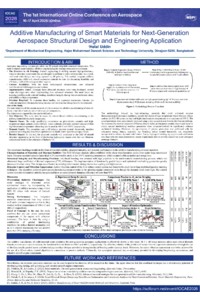
| sciforum-162217 | ADDITIVE MANUFACTURING OF SMART MATERIALS FOR NEXT-GENERATION AEROSPACE STRUCTURAL DESIGN AND ENGINEERING APPLICATION |
Helal Uddin
|
Show Abstract Comment |
| sciforum-163580 | Impact-Induced Fracture in Additively Manufactured AlSi10Mg Using a Fractal Approach |
,
,
Ahnaf Ayman
|
Show Abstract Comment |
| sciforum-165777 | Conceptual Design and Finite Element Validation of Alpha-11 Wing: Mesh Convergence, Structural Performance and Material Trade-offs | , , , |
Show Abstract Comment |
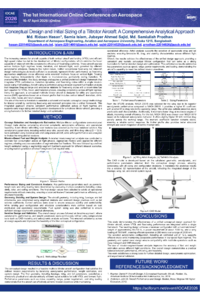
| sciforum-166237 | Conceptual Design and Preliminary Analysis of Carrier-Borne Fighter Aircraft |
Mahi Ahmaad ,
,
,
|
Show Abstract Comment |


Event Awards

To acknowledge the support of the conference's esteemed authors and recognize their outstanding scientific accomplishments, we are pleased to announce that the conference will provide 4 awards including Best Oral Presentation Awards and Best Poster Awards.
The Awards
Number of Awards Available: 6
The Best Poster Awards are given to the submission judged to make the most significant and interesting poster for the conference.
Terms and Conditions:
Eligibility: Open to all authors selected as oral speakers who have delivered their presentation. Failure to present, delegation of the presentation to another person, or use of AI-generated voice or similar substitutes will result in disqualification.
Criteria: Evaluation considers scientific rigor (clear, literature-supported research question or hypothesis, appropriate methodology, robust analysis and critical discussion of the results), IMRaD/field-appropriate structure, clarity of presented data (clear, well-labeled figures and tables), presentation skills and audience engagement, demonstrated scientific novelty and impact.
Prize: An award of CHF 200 and a certificate in recognition of your outstanding contribution.
Best Poster Award
Eligibility: Open to all authors who have presented their work through posters. Failure to present, delegation of the presentation to another person, or use of AI-generated voice or similar substitutes will result in disqualification.
Criteria: Evaluation considers scientific rigor (clear, literature-supported research question or hypothesis, appropriate methodology, robust analysis, and critical discussion of the results), IMRaD/field-appropriate structure enabling independent understanding, clarity of presented data (clear, well-labeled figures and tables), presentation skills (if orally presented), demonstrated scientific novelty and impact.
Prize: An award of CHF 200 and a certificate in recognition of your outstanding contribution.
Winner Announcement: The award winners will be evaluated and selected by the scientific committee after the conference. Results will be announced on the website and all winners will be individually contacted via email.
Sponsors and Partners
For information regarding sponsorship and exhibition opportunities, please click here.
Organizers


Media Partners


