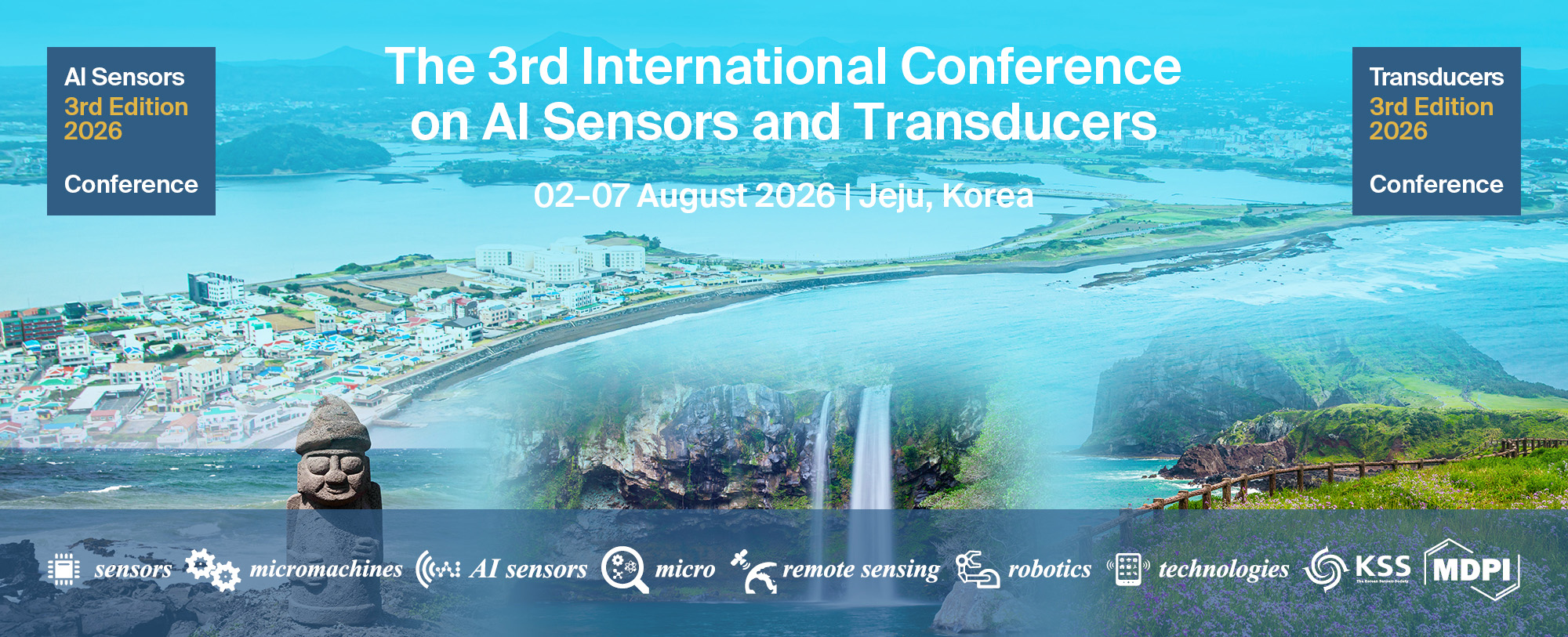
The 3rd International Conference on AI Sensors and Transducers
Thank You for your Support at our AIS conference series!
- Event Certificates:
All registered attendees, including all chairs and speakers, can access the certificates by logging in to your Sciforum account HERE. - Publication Opportunities:
Participants in this conference are cordially invited to contribute a full manuscript to the Special Issue “Selected Papers from the 3rd International Conference on AI Sensors and Transducers (AIS 2026)”, published in Sensors (ISSN: 1424-8220, IF: 4.0) with a 20% discount on the Article Processing Charge (APC).
Participants are also invited to submit to the Topics Collections of AIS 2026 participating journals, Sensors (ISSN: 1424-8220, IF: 4.0), Micromachines (ISSN: 2072-666X, IF: 3.5), AI Sensors (ISSN: 3042-5999), Micro (ISSN: 2673-8023, IF: 2.4), Remote Sensing (ISSN: 2072-4292, IF: 4.3), Robotics (ISSN: 2218-6581, IF: 3.6), Technologies (ISSN: 2227-7080, IF: 5.2) with a 20% discount on the Article Processing Charge (APC). - Award Winners Announcement
You may view the list of winners here.
Join Us at AIS 2027:
Mark your calendars for next year’s edition in Kunming, Yunnan, China, happening from 29 July - 3 August 2027! For more information, please visit the AIS 2027 website here.
Event Chairs
Prof. Eric M. Yeatman, University of Glasgow
Prof. Alexander Star, University of Pittsburgh
Prof. Wen Jung Li, City University of Hong Kong
Prof. Chengkuo Lee, National University of Singapore
Plenary Speaker
Prof. Zhonglin Wang, Beijing Institute of Nanoenergy and Nanosystems
From August 2 to 7, 2026, the 3rd International Conference on AI Sensors and Transducers (AIS 2026) was successfully held in Jeju, South Korea. As a leading international platform for exchange in artificial intelligence, intelligent sensing, and advanced transducer technologies, the conference was jointly organized by MDPI and the Korean Sensors Society (KSS), bringing together nearly 600 participants from academia, research institutions, and industry across more than 30 countries.
AIS 2026 showcased the latest advances in AI sensors and transducers, fostering interdisciplinary collaboration and global knowledge exchange while contributing to the innovation and development of intelligent sensing technologies.
We look forward to welcoming the global research community again in Kunming, Yunnan, China, in 2027 for another inspiring scientific journey.
the chairs
We are delighted to host you—the innovators, researchers, and experts who are shaping the future at the exciting intersection of sensors, sensing technology, transducers, and artificial intelligence. AIS 2026 is dedicated to exploring the very latest advancements in AI-enhanced sensing systems and transducers, a field evolving at a breathtaking pace.
We are confident this conference will be a stimulating, productive, and memorable experience for all. Let us embark together on this exciting journey of discovery and collaboration.
Prof. Inkyu Park, Korea Advanced Institute of Science and Technology
Prof. Zhou Li, Tsinghua University
Prof. Xinge Yu, City University of Hong Kong
Prof. Chengkuo Lee, National University of Singapore



Meet Our Chairs
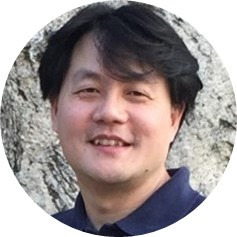
National University of Singapore;Prof. Lee is the director of the Center for Intelligent Sensors and MEMS at the National University of Singapore, Singapore. He is a Fellow of OPTICA. He co-founded Asia Pacific Microsystems, Inc. (APM) in 2001, where he was Vice President of R&D from 2001 to 2005. From 2006 to 2009, he was a Senior Member of the Technical Staff at the Institute of Microelectronics (IME), A-STAR, Singapore. Prof. Lee has trained 40+ Ph.D. students who graduated from the ECE Dept., NUS. He has co-authored 570+ journal articles. He holds 10 US patents. His Google Scholar citation is more than 54000. Furthermore, he is Highly Cited Researcher Designations in 2023, 2024 and 2025 (Clarivate). He is editor-in-chief of AI Sensors (MDPI), associate editor-in-chief of Trans. Nanotechnology (IEEE), editor-in-chief of Sensors International (Elsevier), and editor-in-chief of npj Self-powered Electronics (Springer Nature).
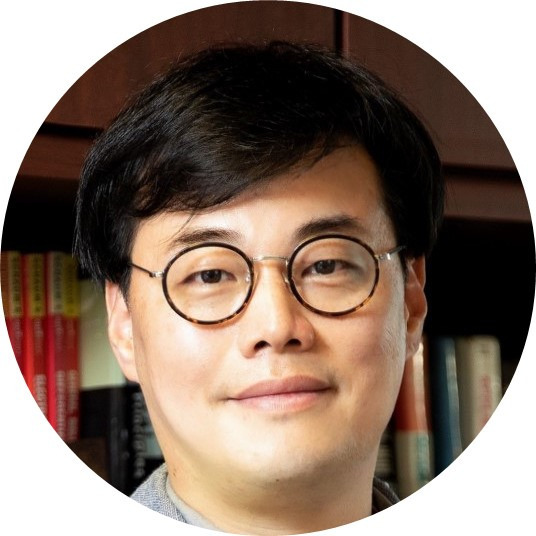
Korea Advanced Institute of Science and Technology;Professor Inkyu Park is a distinguished KAIST Chair Professor and Principal Investigator at the MINT Lab. With expertise in high-performance sensors and hybrid manufacturing technologies, he leads innovative research in bio/chemical sensors and nanomaterial-based devices. His work showcases a blend of excellence in academia and industry.
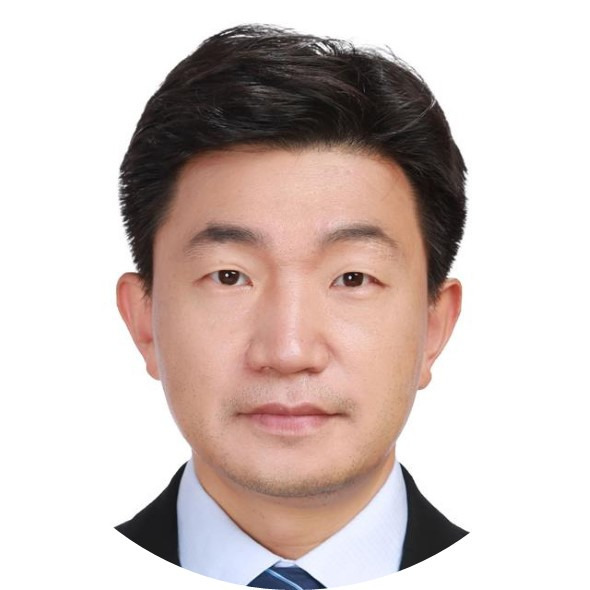
Tsinghua University;Dr. Zhou Li is a Professor at Tsinghua University and Director of the Vita Tech Innovation Center at Beijing Tsinghua Changgung Hospital. As a recipient of the National Natural Science Fund for Distinguished Young Scholars and the National Ten Thousand Talents Program, his research focuses on novel bioelectronic and medical devices, including implantable/wearable electronics for health monitoring and therapy. He has published over 330 peer-reviewed papers in international journals, achieving an H‑index of 90+ with more than 29,000 citations.
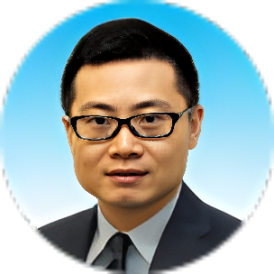
City University of Hong Kong;Xinge Yu is the Professor of Biomedical Engineering at City University of Hong Kong (CityUHK), Associate Director of Institute of Digital Medicine at CityUHK, Associate Director of Hong Kong Centre for Cerebro-cardiovascular Health Engineering, and Associate Director of the CAS-CityU Joint Lab on Robotics. Prof. Yu is the Member of the Hong Kong Young Academy of Sciences, recipient of RGC Research Fellow. He was selected as Innovators under 35 China (MIT Technology Review), NSFC Excellent Young Scientist Grant (Hong Kong & Macao), New Innovator of IEEE NanoMed, MINE Young Scientist Award, Gold Medal in the Inventions Geneva, CityU Outstanding Research Award, Stanford's top 2% most highly cited scientists etc. Xinge Yu’s research group is focusing on skin-integrated electronics and systems for VR and biomedical applications. Dr. Yu is the Associate Editor of Science Advances, Editroal Board for 10 journals. He has published 200 papers in Nature, Nature Materials, Nature Biomedical Engineering, Nature Machine Intelligence, Nature Communications, Science Advances etc., and 50 patents filed/granted.
Meet Our Speakers
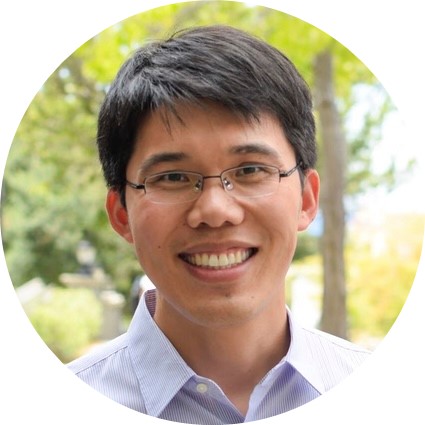
Prof. Wei Gao
California Institute of Technology;Wei Gao is a Professor of Medical Engineering and Heritage Medical Research Institute Investigator at the California Institute of Technology. He earned his Ph.D. from the University of California, San Diego in 2014, followed by a postdoctoral fellowship at the University of California, Berkeley from 2014 to 2017. He is a recipient of NSF Career Award, ONR Young Investigator Award, IAMBE Early Career Award, Sloan Research Fellowship, Pittcon Achievement Award, IEEE EMBS Early Career Achievement Award, IEEE EMBS Technical Achievement Award, IEEE Sensor Council Technical Achievement Award, MIT Technology Review 35 Innovators Under 35, and Falling Walls Breakthrough of the Year in Engineering and Technology. He is a World Economic Forum Young Scientist, a Highly Cited Researcher (Web of Science). He is an elected Fellow for AIMBE and RSC. His research interests include wearable biosensors, digital medicine, bioelectronics, additive manufacturing, and micro/nanorobotics.
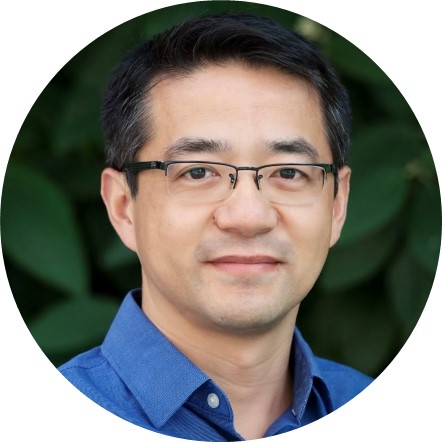
Prof. Mo Li
University of Washington;Mo Li is a Professor of Electrical & Computer Engineering and Professor of Physics at the University of Washington (UW). Prior to joining UW in 2018, he was a faculty member in the Department of Electrical and Computer Engineering at the University of Minnesota since 2010. From 2007 to 2010, he was a postdoctoral associate in the Department of Electrical Engineering at Yale University. He received his Ph.D. degree in Applied Physics from Caltech in 2007 and a B.S. degree in Physics from the University of Science and Technology of China (USTC) in 2001. Dr. Li is the principal investigator of the Laboratory of Photonic Systems at UW. His main research interests include integrated photonics, optoelectronics, optomechanics, and quantum photonics. He is an elected fellow of Optica (former OSA).
The University of Tokyo;Shoji Takeuchi received his B.E., M.E., and Dr. Eng. degrees in Mechanical Engineering from the University of Tokyo, Japan, in 1995, 1997, and 2000, respectively. He is currently a Professor in the Department of Mechano-Informatics, Graduate School of Information Science and Technology at the University of Tokyo. He has authored more than 255 peer-reviewed publications and has filed more than 140 patents. He has received numerous honors, including the MEXT Young Scientists' Prize in 2008, the JSPS Prize in 2010, the ACS Analytical Chemistry Young Innovator Award in 2015, the UNESCO Netexplo Award in 2019, and the JSME Micro-Nano Science & Technology Achievement Award in 2022. His current research interests include cultivated meat, 3D tissue fabrication, bioMEMS, implantable devices, artificial lipid bilayer systems, and biohybrid robotics.
Ulsan National Institute of Science and Technology;Hyunhyub Ko is a Professor at the School of Energy and Chemical Engineering, Ulsan National Institute of Science and Technology (UNIST), Republic of Korea. He received his Ph.D. in Materials Science and Engineering from the Georgia Institute of Technology in 2008, following an M.S. from Iowa State University and a B.S. from Chung-Ang University. He completed postdoctoral training at the University of California, Berkeley, in Electrical Engineering and Computer Sciences. Before joining UNIST as a faculty member in 2010, he worked as a research engineer at Hyosung Corporation and as a research student at KIST. His research focuses on functional nanomaterials and devices, combining bottom-up assembly and top-down lithography to hierarchically organize organic and inorganic nanomaterials such as carbon nanotubes, graphene, nanowires, and nanoparticles. His lab explores fundamental nanomaterial properties and collective behaviors of micro/nanostructures for applications in electronics, optics, sensors, and biomedical devices.
S1. Metasurface and Metaoptics
S2. AI-Accelerated Design for Materials and Sensors
S3. AI-Driven Biomedical Imaging and Diagnostics
S4. AI-Enhanced Bioelectronics
S5. AI-Driven Bio/Chemical Sensors
S6. AI Sensors for Smart Healthcare Applications
S7. Microfluidics, Lab-on-a-Chip and MicroTAS
S8. Advanced Sensors for Robots and Autonomous Systems
S9. Soft Sensors and Actuators for Human-Machine Interface
S10. Soft Robotics Technologies
S11. Flexible, Stretchable and Wearable Sensors
S12. Nanogenerators and Self-Powered Sensors
S13. Energy Harvesting Technology and Intelligent Sensing Applications
S14. Sensing Technology for Natural and Harsh Environment
S15. IoT Sensors and System Integration
S16. Remote Sensing and Its Applications
S17. Smart Cities Sensing Technologies
S18. Cross Data for Sensing Applications
S19. MEMS/NEMS Sensors
S20. Wearable and Flexible Ultrasound Electronics
S21. Optical MEMS and Photonic NEMS
S22. Fiber Optics for Biosensing, Environmental Sensing, and Wearable Applications
S23. Si Photonics for Sensing and Edge Computing
S24. 2D Material-Enabled Nanosensors, Neuromorphic Computing and Applications
S25. Nanomaterials and Gas/Chemical Sensors
S26. Smart Gas Sensors and Artificial Olfactory
S27. Regular Symposium
 |
 |
 |
 |
 |
 |
 |
 |
 |
Dr. Alina-Andrada Igna
Ms. Alethea Liu
Mr. Benjamin Tay
Ms. Elara Liu
ais2026@mdpi.com