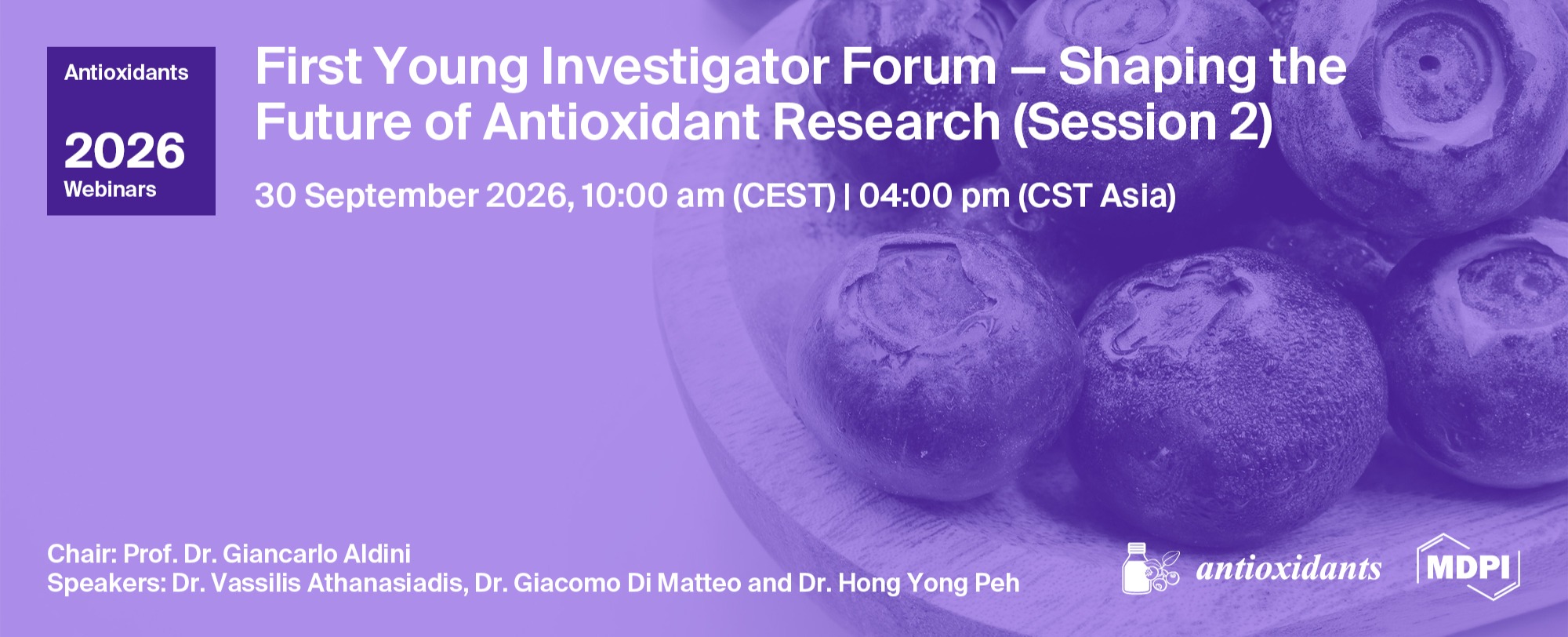
Antioxidants Webinar | First Young Investigator Forum — Shaping the Future of Antioxidant Research (Session 2)
the chair
5th Antioxidants Webinar
First Young Investigator Forum — Shaping the Future of Antioxidant Research (Session 2)
Welcome to the First Young Investigator Forum of Antioxidants. I am Professor Giancarlo Aldini, Department of Pharmaceutical Sciences, University of Milan, Italy, and Section Editor-in-Chief of Antioxidants. It is my great pleasure to chair this inaugural scientific event, which has been established to showcase outstanding research conducted by early-career scientists working in the broad field of oxidative stress, redox biology, and antioxidant research.
The First Young Investigator Forum is a new scientific initiative promoted by Antioxidants to provide an international platform where promising young investigators can present their latest discoveries, exchange ideas with peers and senior scientists, and foster new collaborations across disciplines. By bringing together researchers investigating both the fundamental mechanisms of redox biology and their translational and clinical applications, the Forum aims to highlight emerging trends that will shape the future of antioxidant research.
The scientific program features invited presentations from selected young investigators covering diverse areas of antioxidant science, including redox signaling, oxidative stress in human disease, mitochondrial biology, inflammation, aging, nutrition, natural products, biomarkers, and novel therapeutic strategies. Each presentation will be followed by an interactive discussion designed to stimulate scientific exchange, encourage networking, and promote new collaborative opportunities.
This Forum reflects the commitment of Antioxidants to supporting the next generation of scientists and providing visibility to innovative research that advances our understanding of oxidative stress and antioxidant biology.
I would like to warmly welcome all our speakers, participants, and attendees from around the world. I hope this inaugural Forum will inspire stimulating discussions, foster new collaborations, and become a recurring event showcasing the future leaders of antioxidant research.
Date: 30 September 2026
Time: 10:00 am CEST | 4:00 pm CST Asia
Webinar ID: 899 1823 8414
Webinar Secretariat: journal.webinar@mdpi.com
Meet Our Chair
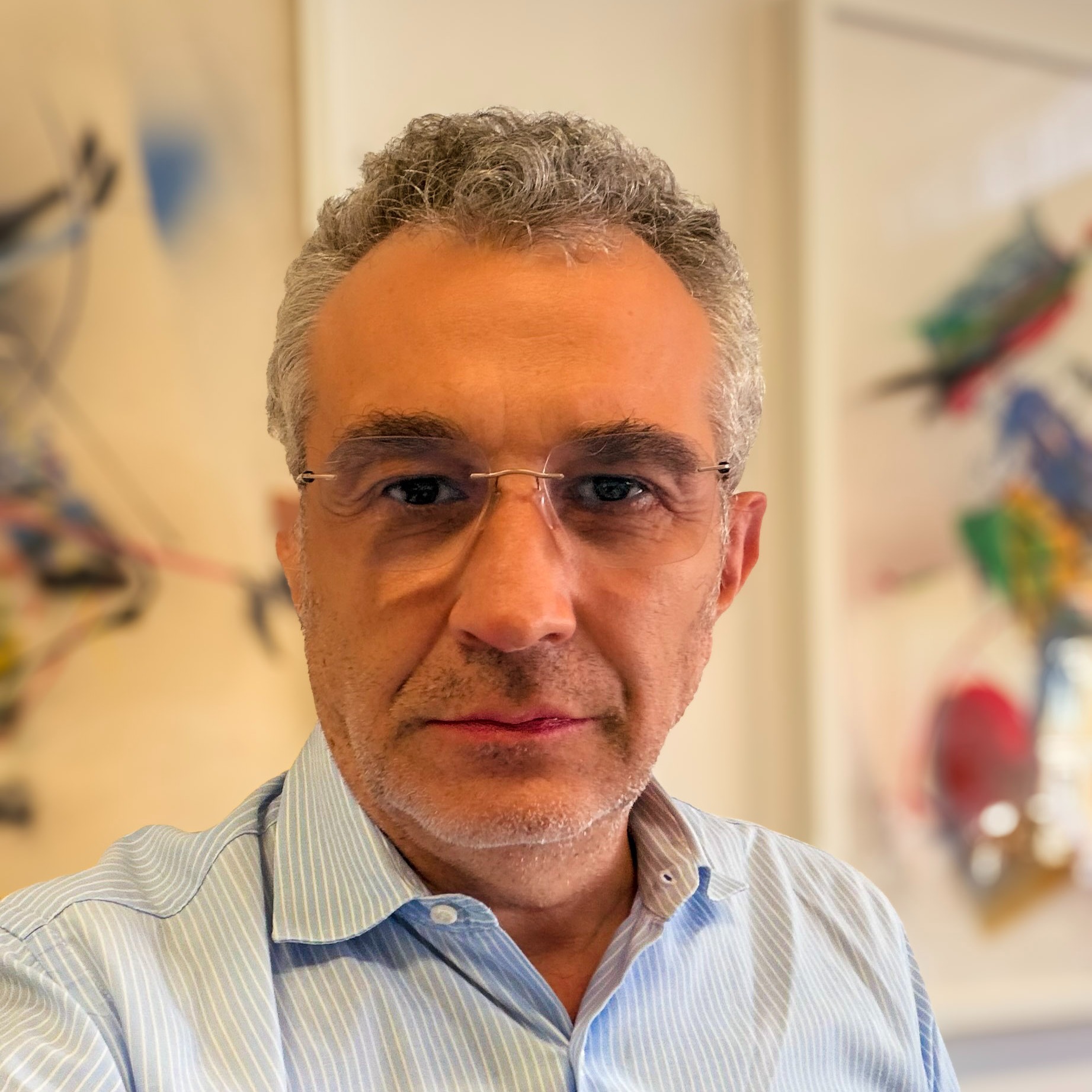
University of Milan, Italy;Prof. Dr. Giancarlo Aldini is Full Professor of Medicinal Chemistry at the Department of Pharmaceutical Sciences, University of Milan, Italy, where he leads the Pharmaceutical Analysis and Bioanalysis laboratories. He serves as Section Editor-in-Chief of Antioxidants and Associate Editor of Free Radical Research. His research focuses on oxidative stress, redox biology, reactive carbonyl species, and endogenous antioxidant defense mechanisms, with particular emphasis on the molecular mechanisms of lipid peroxidation, Nrf2 activation, biomarkers of oxidative damage, and the discovery of innovative antioxidant and carbonyl-scavenging strategies for pharmaceutical, nutraceutical, and cosmetic applications. His group combines medicinal chemistry with advanced analytical technologies, including mass spectrometry, proteomics, metabolomics, and chemical biology, to investigate disease mechanisms and identify novel therapeutic targets. Prof. Aldini has authored more than 300 peer-reviewed publications, holds 11 international patents, and has an h-index of 66 (Scopus). He has coordinated numerous national and international research projects and actively collaborates with both academia and industry in the fields of redox biology, drug discovery, and cosmetic science.
Meet Our Speakers
Department of Food Science and Nutrition, University of Thessaly, Karditsa, Greece;Dr. Vassilis Athanasiadis is an academic editor, reviewer, and researcher in food science and nutrition, with a focus on natural antioxidants, extraction technologies, and sustainable applications. He serves on editorial boards and Special Issue management teams across several journals and is a Topical Advisory Panel Member and Guest Editor. He also teaches Instrumental Chemical Analysis, Organic Chemistry, General and Inorganic Chemistry, Food Chemistry, and Analytical Chemistry laboratories at the university level. His research interests include bioactive compounds, green extraction methods, and analytical characterization of functional ingredients.
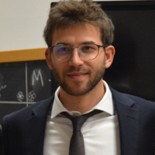
Food Chemistry Lab, Department of Chemistry and Technology of Drugs, Sapienza University of Rome, Rome, Italy;Dr. Giacomo Di Matteo is a researcher at the Department of Chemistry and Technology of Drugs, Sapienza University of Rome. His research focuses mainly on the chemical characterization of foods and natural products, with particular emphasis on bioactive compounds and food quality. His work combines advanced analytical techniques, including nuclear magnetic resonance spectroscopy, high-performance liquid chromatography, and metabolomic approaches.
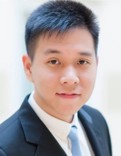
Immunology Translational Research Program, Yong Loo Lin School of Medicine, Department of Pharmacology, National University of Singapore, Singapore;Dr. Hong Yong Peh is a Research Assistant Professor at the National University of Singapore (NUS) Department of Pharmacology and Immunology Translational Research Program and Principal Investigator of NUS Life Sciences Institute, where he leads the HYPRI Lab. His research focuses on resolution of inflammation, particularly the role of eicosanoids and specialized pro-resolving lipid mediators (SPMs) in maternal–offspring immunity and chronic inflammatory diseases. He established Singapore’s first targeted lipidomics platform to quantify eicosanoids and SPMs using LC-MS/MS. Previously, he trained and served as junior faculty at Harvard Medical School and Brigham and Women’s Hospital. Dr. Peh has received numerous awards and currently serves as Council Member for IUPHAR’s Immunopharmacology Section. His work bridges translational lipidomics, immune responses, and resolution pharmacology to advance therapeutic strategies to resolve inflammation.