Applied Sciences Webinar | Microbiome Innovations for Functional and Sustainable Food Systems
Meet Our Speaker
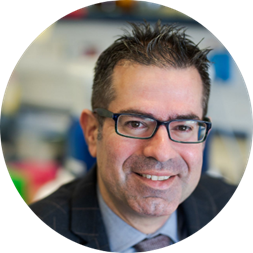
FOODBIOMES HUB: Laboratory of Applied Microbiology & Biotechnology, Department of Molecular Biology & Genetics, Democritus University of Thrace, Alexandroupolis, Greece;Yiannis Kourkoutas is Professor of Applied Biotechnology and the Director of the Laboratory of Applied Microbiology & Biotechnology at the Department of Molecular Biology & Genetics, Democritus University of Thrace at Alexandroupolis, Greece. His current research is focused on microbiome applications in food systems, food bioprocesses, functional foods and nutrition. He has published more than 100 papers in peer-reviewed journals, 14 chapters in books, > 120 conference proceedings and 4 patents (citations > 3000; h-index: 32). He has been invited as a plenary speaker and has served as chairman in several conferences, as Lead Guest Editor and an Editorial Board member in many special issues and reputed scientific journals, as member of the steering and organizing committees of International Conferences and as evaluator of research proposals in national and European calls. He has also participated in many research projects, coordinating most of them. His funds derive from EU, National Grants and the Agri-Food Industry.

The development of sustainable agri-food systems for innovative and safe microbiome products, services, and bioprocesses is one of the key priorities within the European frames of the Circular Economy and the Green Deal. At FOODBIOMES the development of novel foods fortified by health-promoting microorganisms and natural compounds obtained via biotechnological routes that can act as preventive and/or therapeutic tools constitutes one of the main scientific axes.
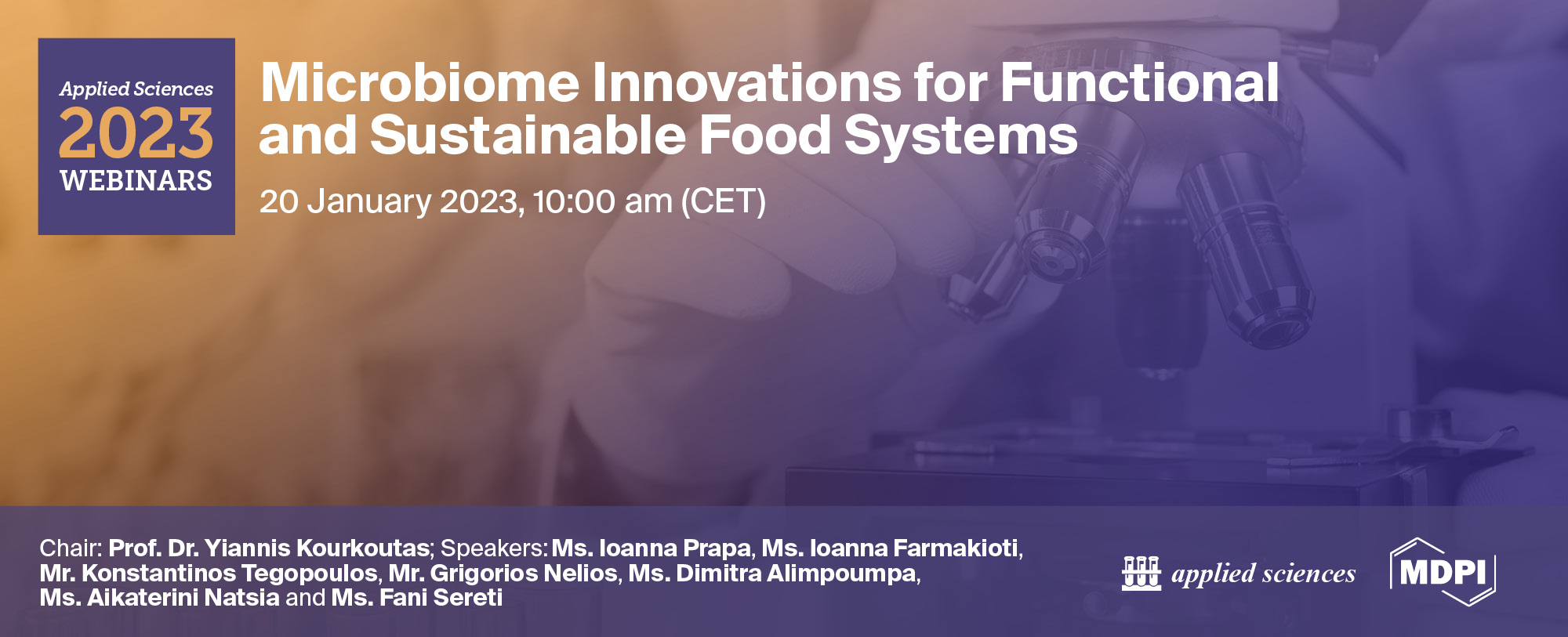
On Friday, 20 January 2023, FOODBIOMES researchers shared their research findings in an online webinar entitled “Microbiome Innovations for Functional and Sustainable Food Systems” that was organized by FOODBIOMES in association with MDPI and the journal Applied Sciences within the frame of the Special Issue “Emerging Technologies and Innovations for Gut Microbiome Research”.
The webinar served as an interactive educational event in which our speakers focused into the current research and innovation trends of FOODBIOMES and more specifically:
Ioanna Prapa discussed the effect of cell immobilization on maintenance of probiotic cell viability, a property of vital importance for developing food ingredients for modulation of gut microbiome.
The next speaker, Ioanna Farmakioti, revealed that following a 6-week intervention, with the novel Lactiplantibacillus pentosus strainin healthy mice, the ratio Firmicutes/Bacteroidetes, as well as the families Lachnospiraceae, Ruminococcaceae and Rikenellaceae were significantly increased, while the levels of triglycerides and ALT were significantly reduced.
Konstantinos Tegopoulos presented a bioinformatical workflow for the analysis of WGS data, which is expected to provide a better insight on the molecular mechanisms underlying health-promoting properties and to form the basis for the development of high throughput screenings for the characterization of novel effective probiotic strains.
Subsequently, Grigorios Nelios reported the effective production of lactic acid bacteria (LAB) biomass using liquid agro-industrial residues and wastes, contributing to the EU goals for Circular Economy and the Green Deal.
In the same context, Dimitra Alimpoumpa, explored cheese whey valorization for biosurfactants production from LAB and the bioprocess development for LAB derived biosurfactants, along with novel food applications within the circular economy.
The following speaker, Aikaterini Natsia, commented on the development of novel protein-based products from hemp seed and presented hemp protein films' properties that are suggested for potential use as food-packaging material.
Finally, Fani Sereti highlighted the potential of red yeasts for unusual carotenoid production for novel functional foods.
The presentations were followed by a Q&A and a discussion, moderated by the Chair. The webinar was offered via Zoom and required registration to attend. The full recording can be found here on Sciforum website. In order to stay updated on the next webinars on Applied Sciences, be sure to sign up for our newsletter by clicking on “Subscribe” at the top of the page.
We would like to thank our research teams for their research work, our speakers for representing FOODBIOMES and the journal Applies Sciences for organizing this special webinar.
Guest Editors: Dr. Yiannis Kourkoutas, Prof. Dr. Eugenia Bezirtzoglou, Dr. Christina Tsigalou & Dr. Gregoria Mitropoulou
Deadline for manuscript submissions: 31 May 2023