The 13th International Electronic Conference on Sensors and Applications
18–20 November 2026
1 June 2026
26 June 2026
1 September 2026
20 October 2026
26 October 2026
12 November 2026
Biosensors, Physical Sensors, Applications, Sensor Network and IoT, Chemo sensors, Sensor Data Analytics
- Go to the Sessions
-
- S1. Chemo- and Biosensors
- S2. Physical Sensors
- S3. Sensor Networks, IoT, Smart Cities and Health Monitoring
- S4. Sensors and Artificial Intelligence
- S5. Smart Agriculture Sensors
- S6. Electronic Sensors, Devices, and Systems
- S7. Wearable Sensors and Healthcare Applications
- S8. Robotics, Sensors, and Industry 4.0
- S9. Student Session
- Event Details
The ECSA-13 is Now OPEN for Abstract Submission and Registration!
Submit your abstracts here before 1 June 2026.
Please complete your registration here by 20 October 2026 to secure the early bird rates.
For more discounts, submission guidelines, and publication opportunities, please scroll down on the website.
We look forward to welcoming you to ECSA-13 and to an inspiring exchange of ideas.
Welcome from the Chairs
Building upon the remarkable success of the twelve previous editions from 2014 to 2025, ECSA-13 continues to serve as a premier global event for the exchange of cutting-edge research and innovation in sensor technologies. This year’s conference will spotlight the following thematic sessions:
S1. Chemo- and Biosensors;
S2. Physical Sensors;
S3. Sensor Networks, IoT, Smart Cities, and Health Monitoring;
S4. Sensors and Artificial Intelligence;
S5. Smart Agriculture Sensors;
S6. Electronic Sensors, Devices, and Systems;
S7. Wearable Sensors and Healthcare Applications;
S8. Robotics, Sensors, and Industry 4.0;
S9. Student Session (This session will be held to showcase outstanding work by student researchers. Selected student contributions will be eligible for the ECSA-13 Best Student Award. For more details, please visit: Event Awards.)
ECSA-13 is a fully virtual conference, enabling worldwide participation without travel barriers. This format supports timely and dynamic exchanges on the latest research findings and emerging ideas in the fast-evolving field of sensor science.
Accepted Proceeding Papers will be published in the Engineering Proceedings (indexed within Scopus, ISSN 2673-4591) , and authors will be invited to submit their full manuscripts, which will be considered for publication in a Special Issue in the journal Sensors after the conference. Please refer to Publication Opportunities for more information.
We warmly invite the global research community to contribute to and participate in ECSA-13. Together, let’s make this 13th edition another milestone in the advancement of sensor technologies.
Looking forward to your valuable contributions.
Conference Chairs
Prof. Dr. Stefano Mariani
Prof. Dr. Francisco Falcone
Prof. Dr. Jean-Marc Laheurte

Event Chairs
Politecnico di Milano, Department of Civil and Environmental Engineering, Italy
Stefano Mariani received an M.S. degree (cum laude) in civil engineering in 1995, and a Ph.D. degree in structural engineering in 1999; both degrees are from the Polytechnic University of Milan. He is currently a professor at the Department of Civil and Environmental Engineering of the Polytechnic University of Milan. He was a research scholar at the Danish Technical University in 1997, an adjunct professor at Penn State University in 2007, and a visiting professor at the Polytechnic Institute of New York University in 2009. He is a member of the Editorial Boards of Algorithms, International Journal on Advances in Systems and Measurements, Inventions, Machines, Micro and Nanosystems, Micromachines, and Sensors. He has been a recipient of the Associazione Carlo Maddalena Prize for graduate students (1996), and of the Fondazione Confalonieri Prize for PhD students (2000). His main research interests are: the reliability of MEMS that are subject to shocks and drops; structural health monitoring via machine and deep learning strategies; numerical simulations of ductile fracture in metals and of quasi-brittle fracture in heterogeneous and functionally graded materials; extended finite element methods; the calibration of constitutive models via extended and sigma-point Kalman filters; and multi-scale solution methods for dynamic delamination in layered composites.
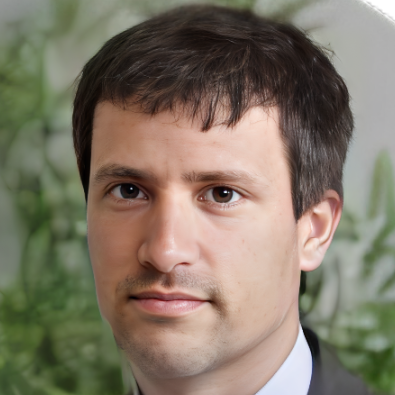
Public University of Navarre, Department of Electrical, Electronic and Communication Engineering & Institute for Smart Cities (ISC), Spain; Tecnológico de Monterrey, School of Engineering and Sciences, Mexico
Dr. Francisco Falcone received his Telecommunication Engineering Degree (1999) and PhD in Communication Engineering (2005), both at the Public University of Navarre in Spain. From 1999 to 2000 he worked as Microwave Commissioning Engineer, Siemens-Italtel. From 2000 to 2008 he worked as Radio Network Engineer, Telefónica Móviles. In 2009 he co-founded Tafco Metawireless. From 2003 to 2009 he was also Assistant Lecturer at UPNA, becoming Associate Professor in 2009. His research area is artificial electromagnetic media, complex electromagnetic scenarios and wireless system analysis, with applications to context aware environments, Smart Cities and Smart Regions. He has over 500 contributions in journal and conference publications. He has been recipient of the CST Best Paper Award in 2003 and 2005, Best PhD in 2006 awarded by the Colegio Oficial de Ingenieros de Telecomunicación, Doctorate award 2004-2006 awarded by UPNA, Juan Lopez de Peñalver Young Researcher Award 2010 awarded by the Royal Academy of Engineering of Spain and Premio Talgo 2012 for Technological Innovation.

Gustave Eiffel University, Laboratory of Electronics, Communications Systems and Microsystems, France
Dr. Jean-Marc Laheurte received the M.Sc. and Ph.D. degrees in electrical engineering and the Habilitation to Supervise Research from the University of Nice, France, in 1989, 1992 and 1997, respectively. From 1989 to 1990, he was a research assistant at the École Polytechnique Fédérale de Lausanne, Switzerland. In 1992, he was a postdoctoral researcher at the University of Michigan, Ann Arbor, MI, USA. From 1993 to 2002, he was an Associate Professor at the University of Nice Sophia Antipolis, France. Since 2002, he has been a Professor at the University Gustave Eiffel, France. In 2012, he spent a year as a senior RF engineer at Tagsys, La Ciotat, France. For the past 8 years, he has been the director of the 75-member Electronics, SYstèmes de COmmunications and Microsystems Laboratory (ESYCOM Laboratory). He is the author or co-author of two books, two book chapters, more than 80 technical papers in international journals and 90 conference papers. He holds two patents on RFID technologies. His current research interests include antennas in matter, RFID technologies, RFID localization, Body Area Network Antennas (BANs) and channel modeling.
Event Committee
ds signal processing, image processing, communication, guided wave, lamb wave, ultrasonics, inspection, NDT, SHM, condition monitoring, sensors, instrumentation, guided wave, acoustic emission, vibration,
University Campus Bio-Medico di Roma, Department of Engineering, Rome, Italy
Prof. Emiliano Schena is a Full Professor of Measurements and Sensors at the Department of Engineering and Vice-Rector for Education at Università Campus Bio-Medico do Roma (UCBM). His scientific activity primarily focuses on the development, metrological characterization, and assessment of measurement systems designed for monitoring physiological parameters and joint motion. His main research areas include the development and validation of wearable devices based on flexible sensors and the design of algorithms for physiological signal analysis. In this context, he has promoted and led multidisciplinary research projects, supervised numerous master’s and PhD theses, and contributed to the implementation of clinical studies, innovative devices, and a large number of scientific publications. He has extensive experience in technology transfer, gained through industrial consultancy activities, ownership of patents, and the founding of a startup. He previously served as Chair of the IEEE Sensors Council Italy Chapter and is currently Treasurer of the IEEE Italy Section. As Principal Investigator (PI) and co-Principal Investigator (co-PI), he has coordinated numerous national and international multidisciplinary projects covering, among the main areas, the use of wearable sensors for collaborative robotics, clinical monitoring of physiological parameters, cardiovascular prevention, and rehabilitation.
fiber optic sensors; laser ablation; magnetic resonance imaging; flow measurement; computed tomography imaging; thermometry; health care; sleep monitoring; sleep apnea; pressure sensor; wearable system; smart textile; multi-material fibers; human br
Nottingham Trent University, Department of Computer Science, Nottingham, United Kingdom
Dr. Omprakash Kaiwartya is an Associate Professor (Networks & Cybersecurity for CAV) and PhD (PGR) Research Coordinator at the Department of Computer Science. He is also the Research Talk/Seminar Coordinator of the department. He was also the Course Leader for M.Sc. Engineering Electronics and Cybernetics & Communication (2018-2024). He teaches Embedded Systems and Group Design Projects modules in M.Sc. and Internet/Systems Technology, and Networks and Security modules in B.Sc.
internet of vehicles; electronic vehicles; IoT; sensor network
Institute of Nanoscience and Nanotechnology, National Center for Scientific Research "Demokritos", Athens, Greece
Dr. Christos Tsamis is Director of Research at the Inst. Of Nanoscience & Nanotechnology at the National Center for Scientific Research “Demokritos”, leading the group on “Energy Harvesting and Autonomous Sensors”. His research interests focus on Micro- and Nanofabrication technologies for Micro-systems for devices and sensors, Nanostructured materials and devices for Energy harvesting, Chemical Sensors, flexible electronics and Thermal processes for micro- and nanodevices. He acts as reviewer for international journals and conferences. He is the author or co-author of over 200 publications in peer-reviewed International Journals, Conference Proceedings, and contributions in International Conferences
micromachining technologies; microgenerators for energy harvesting; micromachined sensors (gas sensors)
Sessions
S2. Physical Sensors
S3. Sensor Networks, IoT, Smart Cities and Health Monitoring
S4. Sensors and Artificial Intelligence
S5. Smart Agriculture Sensors
S6. Electronic Sensors, Devices, and Systems
S7. Wearable Sensors and Healthcare Applications
S8. Robotics, Sensors, and Industry 4.0
S9. Student Session
Registration
When registering as an "Academic", please register with your academic email address, as this will accelerate the registration process. If you are registering several people under the same registration, please do not use the same email address for each person, but their individual university email addresses. Thank you for understanding.
Participation to the conference is considered final only once the registration fees have been paid. The number of participants is limited: once the number of paid registrations reaches the maximum number of participants, unpaid registrations will be cancelled.
Please note that, in order to finalize the scientific program in due time, at least one registration by any of the authors, denoted as the “Covering Author”, is required to cover the presentation and publication of any accepted abstract. The “Covering Author” registration deadline is 26 October 2026. Your abstract will be withdrawn if your registration is not completed by this date.
Finally, only registered authors will be able to apply for the Conference Awards.
|
Early Bird Until 20 October 2026 |
Regular Until 12 November 2026 |
Supported documents | |
|---|---|---|---|
| Sensors Journal - Authors, Reviewers, Topical Advisory Panel Members, Review Board Members, Editorial Board Members, Guest Editors | 50.00 CHF | 70.00 CHF | |
| Academic | 70.00 CHF | 90.00 CHF | |
| Non-Academic | 120.00 CHF | 180.00 CHF | |
| Student | 50.00 CHF | 70.00 CHF |
Please upload a valid proof of your student identify, e.g. Certificate of Study, Student ID card. |
| Chairs, Session Chairs, Keynote Speakers, Committee Members of the Conference, MDPI Guests |
Active discounts
Group of 3: 5% discount
Group of 5: 10% discount
Group of 10: 15% discount
Note: Group size refers to the number of registered attendees in the same registration order.
Cancellation policy
| > 2 weeks before the conference | Full refund |
| < 2 weeks before the conference | No refund |
We will endeavour to present the program advertised. However, MDPI and its partners reserve the right to alter or cancel, without prior notice, arrangements, timetables, plans, or other items relating directly or indirectly to ECSA-13. MDPI and its partners are not liable for any loss or inconvenience caused as a result of such cancellation.
Beware of Unauthorized Registration
Note that Sciforum is the only official registration platform to register to ECSA-13. Beware that entering into financial agreements with non-endorsed companies can have costly consequences.
Insurance
The organizers do not accept liability for personal accident, loss, or damage to private property incurred as a result of participation in the event.
Payment methods
Wire transfer, Credit card
Currencies accepted by this event
Swiss francs (CHF) , Euros (EUR) , US dollars (USD) , Pounds sterling (GBP) , Japanese yen (JPY) , Canadian dollars (CAD) and Singapore dollars (SGD)
Instructions for Authors

Step 1: Submit your abstract (By 1 June 2026)
Abstract submissions should be completed online by registering with www.sciforum.net and using the "Submit Abstract" function once logged into the system. No template is required.
- Accepted: Original research abstracts; systematic reviews or meta-analyses abstracts(must comply with PRISMA 2020).
- Not accepted: Narrative, scoping, comparative, perspective, opinion, or essay-style reviews
2. Content
- Length: 200–300 words
- Structure: Introduction, Methods, Results, Conclusions
- Language: Clear, publication-ready English
- Originality: Must be original and unpublished; previously published abstracts will not be considered
- 100% Human-written: All abstracts have to be 100% human-written and not AI-generated; AI detection checks will be conducted to ensure this rule.
3. Authorship
- The submitting author must ensure all co-authors approve the content.
- Each author is permitted to submit no more than 3 abstracts.
- Each author is required to use Institutional email address. The submissions with non-institutional email addresses such as gmail.com, hotmail.com, 163.com, qq.com, will not be reviewed.
Step 2: Submit your full files (By 1 September 2026)
- Only accepted proceeding paper will be published with DOI in the MDPI Engineering Proceedings journal (indexed within Scopus, ISSN 2673-4591), poster cannot be published.
- Poster-only submissions are not eligible for oral presentation selection.
- All accepted full files will be displayed on the conference website along with your abstract.
1. Proceeding Paper
Proceeding papers need to be prepared in MS Word and should be converted into PDF format before submission. The manuscript should be at least 4 pages (including figures, tables and references), with no upper limit in terms of pages.
Once the abstract has been accepted, please upload your proceeding paper in both PDF and Word formats to the corresponding fields.
Carefully read the rules outlined in the "Instructions for Authors" on the journal’s website and ensure that your submission adheres to these guidelines.
Please use ECSA-13 Proceeding Paper Template to prepare your proceeding paper.
2. Poster
After their abstracts are accepted, authors can also submit their Posters without an accompanying Proceeding Paper.
If you want to submit a poster only, please upload the Poster PDF in the "Poster (optional)" field.
Each poster should include:
- Title, authors, affiliations, and contact details (clearly displayed at the top);
- Brief introduction outlining the research objective;
- Concise methodology summary;
- Main results, supported by clear, well-labeled figures or tables where appropriate;
- Short conclusion summarizing key findings and their relevance.
Technical specifications:
Dimensions (cm): 84.1 × 118.9 (A0 - portrait)
Resolution:300 dpi
Pixel size (portrait, 300 dpi):9933 × 14043 px
Minimum font size:≥24
The poster template can be downloaded HERE.
All submissions will be reviewed using the powerful text comparison tool iThenticate and AI detection tool. This procedure aims to prevent scholarly and professional plagiarism (which should not be higher than 20%), self citation (which should not be higher than 25%) or AI-generated text.
Optional: Video Submission
Authors are also encouraged to submit video presentations after acceptance of their Proceeding Paper and/or poster. The video should be no longer than 3-5 minutes and prepared with one of the following formats: .mp4 / .webm / .ogg (max size: 250Mb).
Step 3: Don't forget to register and attend your oral presentation
The submission acceptance email only confirms that your submission has been accepted. Oral presentation invitations are determined separately by the conference chairs, and you will receive an additional email with the presentation result.
The slot for the oral presentation is 10-15 mins. We only accept live presentations.
Note: Please select only one presenter for each submission. If you would like to change the presenter after submission, please email us accordingly.
Additional notes
It is the author's responsibility to identify and declare any personal circumstances or interests that may be perceived as inappropriately influencing the representation or interpretation of clinical research. If there is no conflict, please state "The authors declare no conflicts of interest." This should be conveyed in a separate "Conflict of Interest" statement preceding the "Acknowledgments" and "References" sections at the end of the manuscript. Any financial support for the study must be fully disclosed in the "Acknowledgments" section.
MDPI, the publisher of the Sciforum.net platform, is an open access publisher. We believe authors should retain the copyright to their scholarly works. Hence, by submitting an abstract to this conference, you retain the copyright to the work, but you grant MDPI the non-exclusive right to publish this abstract online on the Sciforum.net platform. This means you can easily submit your full paper (with the abstract) to any scientific journal at a later stage and transfer the copyright to its publisher if required.
Publication Opportunities
Please note: The submission to the Sensors journal is independent of the Engineering Proceedings and will undergo MDPI’s standard peer-review procedure. The abstracts should be cited and noted on the first page of the paper.
1. Sensors Journal Publication
Registrants in this conference are cordially invited to contribute a full manuscript to a Special Issue (to be updated) published in Sensors (ISSN 1424-8220, Impact Factor 3.5, CiteScore 8.2) after conference, with a 20% discount on the Article Processing Charges (APC) . Please note, if you have IOAP/association discounts, conference discounts will be combined with IOAP/association discounts. Conference discounts cannot be combined with reviewer vouchers.
2. Engineering Proceedings Publication
When your proceeding paper is accepted and your registration is finished, your proceeding paper will be published with DOI in the MDPI Engineering Proceedings journal (indexed within Scopus, ISSN 2673-4591) after conference. Please Carefully read the rules outlined in the 'Instructions for Authors' on the journal’s website and ensure that your submission adheres to these guidelines.
Publication of the Engineering Proceedings will be Free of charge.
Publication Notice: Acceptance at the conference does not ensure final publication.
Event Awards
To acknowledge the support of the conference's esteemed authors and recognize their outstanding scientific accomplishments, we are pleased to announce that the conference will provide 3 award slots including 2 Best Contribution Awards and 1 Best Student Award.
Winner Announcement: The award winners will be evaluated and selected by the scientific committee after the conference. Results will be announced on the website and all winners will be individually contacted via email.
The Awards
Number of Awards Available: 2
The Best Contribution Awards are given for the submission judged to make the most significant contribution to the conference.
Number of Awards Available: 1
The Best Student Award has been established to encourage high-quality work among young researchers.
Criteria for Participation in the Student Awards Selection:
1. To be considered, please submit your work under the 'Student Session'. Students who do not wish to enter the awards selection are welcome to submit their work to other sessions.
2. The corresponding author must be a student and use the institutional email address.
3. A scanned copy or photograph of a valid student ID card must be submitted along with the abstract as proof, please send the proof to ecsa@mdpi.com by 1 June 2026. (Email Subject: [ECSA-13] sciforum-xxxxxx Student Proof)
Sponsors and Partners
For information regarding sponsorship and exhibition opportunities, please click here.
Organizers
Media Partners
Proceedings of Previous Editions
Proceedings of the 12th International Electronic Conference on Sensors and Applications (ECSA-12)
Proceedings of the 11th International Electronic Conference on Sensors and Applications (ECSA-11)
Proceedings of the 10th International Electronic Conference on Sensors and Applications (ECSA-10)
Proceedings of the 9th International Electronic Conference on Sensors and Applications (ECSA-9)
Proceedings of the 8th International Electronic Conference on Sensors and Applications (ECSA-8)
Proceedings of the 7th International Electronic Conference on Sensors and Applications (ECSA-7)
Proceedings of the 6th International Electronic Conference on Sensors and Applications (ECSA-6)
Proceedings of the 5th International Electronic Conference on Sensors and Applications (ECSA-5)
Proceedings of the 4th International Electronic Conference on Sensors and Applications (ECSA-4)
Proceedings of the 3rd International Electronic Conference on Sensors and Applications (ECSA-3)
Conference Secretariat
Ms. Ann Li
Ms. Joy Wang
Ms. Jeannie Xiang
Email: ecsa@mdpi.com
For inquiries regarding submissions and sponsorship opportunities, please feel free to contact us.
S1. Chemo- and Biosensors
This session is about chemo- and biosensors—devices that feature recognition elements in direct contact with signal transducers to detect and quantify specific analytes. They can find application in fields such as medical diagnostics, environmental monitoring, security and defense, drug discovery, and food safety.
Session Chair
Prof. Dr. Stefano Mariani, Politecnico di Milano, Department of Civil and Environmental Engineering, Italy
S2. Physical Sensors
This session covers all aspects of Physical Sensing. Both theoretical and experimental papers will be considered, in addition to review papers. Subjects of interest include, but are not limited to, the following: electrical- and thermal-based sensors, mass-sensitive and fiber-optic sensors, gas sensors, physical sensor applications for the food industry and environmental monitoring, physical sensor arrays, modeling, design, and software for physical sensors, sensor technology, and new physical sensor principles.
Session Chair
Prof. Dr. Jean-Marc Laheurte, Gustave Eiffel University, Laboratory of Electronics, Communications Systems and Microsystems, France
S3. Sensor Networks, IoT, Smart Cities and Health Monitoring
This session focuses on developments regarding sensor network components and subsystems, including IoT architectures and different solutions and test cases related to smart cities and smart/cognitive health applications.
Session Chair
Prof. Dr. Francisco Falcone, Public University of Navarre, Department of Electrical, Electronic and Communication Engineering & Institute for Smart Cities (ISC), Spain, Tecnológico de Monterrey, School of Engineering and Sciences, Mexico
S4. Sensors and Artificial Intelligence
This session addresses the combination of sensors with AI methods, including, but not limited to, ML- and agent-based methods. The goal is to enhance sensor capabilities with respect to their autonomy, robustness, self-calibration, self-diagnostics, and self-adaptation to changing environments or sensor deviation. These so called "smart sensors" provide in-sensor computation and enhanced communication.
Session Chair
Prof. Dr. Francisco Falcone, Public University of Navarre, Department of Electrical, Electronic and Communication Engineering & Institute for Smart Cities (ISC), Spain, Tecnológico de Monterrey, School of Engineering and Sciences, Mexico
S5. Smart Agriculture Sensors
This session addresses state-of-the-art agriculture sensors, sensing systems, and emerging technologies such as artificial intelligence, the IoT, UAVs, and robots. Applications of interest include smart farming, precision livestock management, aquaculture, greenhouse technology, and innovation in software and hardware development applied to crop and animal production.
Session Chair
Prof. Dr. Stefano Mariani, Politecnico di Milano, Department of Civil and Environmental Engineering, Italy
S6. Electronic Sensors, Devices, and Systems
This session covers the integration of advanced signal (pre-) processing in physical sensors on an analog electronic level, as well on a digital level, e.g., regarding MEMS technologies. In addition, complete sensor systems and their applications are considered, including modular frameworks and the concept of sensor devices enabling the dynamic composition of complex measuring systems. Additionally, discussions of new advanced electronics like printed organic electronics for sensor signal processing are highly welcomed.
Session Chair
Prof. Dr. Jean-Marc Laheurte, Gustave Eiffel University, Laboratory of Electronics, Communications Systems and Microsystems, France
S7. Wearable Sensors and Healthcare Applications
This session covers all aspects of wearable sensors, devices, and electronics and their applications for humans, animals, and livestock. Both theoretical/experimental papers and comprehensive reviews will be considered. Subjects of interest include, but are not limited to, the following: wearable smart devices, non-invasive assistive technologies, smart textiles, IoT wearables, flexible electronics, and wearable monitors. In addition, the session covers all aspects of healthcare applications including source and detection technologies for the study, treatment, and prevention of various diseases and injuries; biomedical sensor design and fabrication, performance, processing approaches, and applications; new developments and recent improvements in designs; and the electronics, data processing, and materials of biomedical sensors.
Session Chair
Prof. Dr. Jean-Marc Laheurte, Gustave Eiffel University, Laboratory of Electronics, Communications Systems and Microsystems, France
S8. Robotics, Sensors, and Industry 4.0
This session focuses on advances in sensors, signal processing, and connectivity in relation to industrial and manufacturing processes, associated with the adoption of Industry 4.0 and future Industry 5.0 paradigms.
Session Chair
Prof. Dr. Francisco Falcone, Public University of Navarre, Department of Electrical, Electronic and Communication Engineering & Institute for Smart Cities (ISC), Spain, Tecnológico de Monterrey, School of Engineering and Sciences, Mexico
S9. Student Session
The Best Student Award has been established to encourage high-quality work among young researchers. Any student author who meets the following criteria is eligible to participate in the Student Awards selection.
Criteria for Participation in the Student Awards Selection:
1. To be considered, please submit your work under the 'Student Session'. Students who do not wish to enter the awards selection are welcome to submit their work to other sessions.
2. The corresponding author must be a student and use the institutional email address.
3. A scanned copy or photograph of a valid student ID card must be submitted along with the abstract as proof, please send the proof to ecsa@mdpi.com by 1 June 2026. (Email Subject: [ECSA-13] sciforum-xxxxxx Student Proof)