The 3rd International Online Conference on Metals
The IOCME 2026 conference closed.
The Best Oral Presentation Awards and Best Poster Awards of IOCME 2026 will be announced soon.
You can directly download your electronic Certificate of Attendance HERE.
If your certificate is not yet visible, please wait until the end of next week before reaching out to iocme2026@mdpi.com.
Click HERE for the poster gallery.
Click HERE for the abstract book.
Participants are eligible for publication in a Special Issue of Metals (ISSN: 2075-4701, Impact Factor 3.1), with a 20% discount on the publication fee.
Click HERE for details.
the chair
This global event will provide a unique and dynamic platform for presenting cutting-edge research and innovations in metallic materials, their processing, and novel applications.
As a cornerstone of modern technological development, metallic materials continue to play a central role in addressing major global challenges—from sustainable manufacturing and energy efficiency to the design of advanced functional materials. Building on the success of previous editions, IOCME 2026 will serve as an international forum for researchers, engineers, and industry professionals to share and discuss the latest advances and future trends in the broad field of metals.
The conference will cover a wide range of topics, including advanced metallic materials, sustainability, advanced characterization techniques, computational design and modeling, metals for energy and transportation, biomaterials, additive manufacturing, metals processing, and emerging applications, among others.
Through keynote lectures, oral and poster presentations, and interactive discussions, IOCME 2026 will promote scientific exchange and foster collaboration across academia, research institutions, and industry worldwide.
Being fully online, IOCME 2026 offers an accessible and dynamic environment for participants from all regions to share knowledge and engage in meaningful discussions without geographical barriers. Our goal is to create optimal conditions that encourage collaboration, stimulate the exchange of ideas, and strengthen partnerships among the diverse sectors of the metals community, including research, academia, and industry.
Prof. Dr. Antonio Riveiro Rodríguez
Conference Chair
Department of Materials Engineering, School of Engineering, University of Vigo, Vigo, Spain



Meet Our Chair
Department of Materials Engineering, School of Engineering, University of Vigo, Vigo, Spain;Antonio Riveiro Rodríguez is an assistant professor in the Department of Materials Engineering, Applied Mechanics and Construction (School of Engineering) at the University of Vigo (Spain) where he teaches courses on solid mechanics and laser processing. He received his PhD in Applied Physics (2009) from the University of Vigo and completed postdoctoral stays at the University of Manchester (School of Materials), the Imperial College London (Department of Materials), and the University of Minho (3B's Research Group in Biomaterials, Biodegradables and Biomimetics). His research is focused on laser materials processing mainly for biomedical applications. His research interests also include: laser surface engineering, laser synthesis of micro- and nanomaterials, and the synthesis and laser processing of bioactive glasses. He is author/co-author of 100+ peer-reviewed journal articles, book chapters, and national and international patents.
Important Dates
11 Jun
2026
11 Jul
2026
6 Oct
2026
Meet Our Speakers
Department of Laser Processing and Structural Assessment, Institute of Material and Process Design, Helmholtz-Zentrum Hereon, Geesthacht, Germany;Dr. Nikolai Kashaev concluded his studies in energy-related mechanical engineering with the advanced subject of electrical aerospace engines and power plants at the Bauman University of Technology in Moscow in 2001. Subsequently, he worked as a scientific employee at the Foundation Institute for Materials Technology in Bremen for four years. In 2005, he obtained his doctoral degree in materials engineering. After various activities in industry, he has been the head of the Laser Processing and Structural Assessment department at the Institute of Material and Process Design at the Helmholtz-Zentrum Hereon in Geesthacht (Germany) since 2010. His research interests are laser welding and processing of lightweight metallic materials, residual stress engineering, laser shock peening, damage tolerance assessment, fatigue life prediction of welded and additively manufactured components and structures.
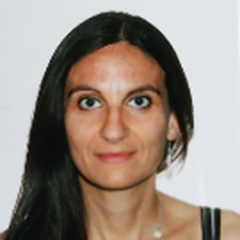
Department of Applied Science and Technology (DISAT), Polytechnic University of Turin, Turin, Italy;Sara Ferraris is an associate professor at the Department of Applied Science and Technology (DISAT) in Polytechnic University of Turin. She obtained the PhD in Biomedical Engineering in 2010 from Polytechnic University of Turin and worked as fellow and researcher in materials science in the same institution. Her main research interests are surface modification and characterization of metallic materials and biomaterials, bioactive, natural and protective coatings and sustainable materials. She participated to more than 20 national and international projects, supervised more than 50 students in their master degree thesis and 5 in their PhD ones. Sara Ferraris is author of 163 papers on international journals and 6 patents, she has 5032 total citations and H-index of 37 (data from Scopus). She is also active in dissemination and communication activities for the general public such as Researchers’ Night and activity for primary schools.
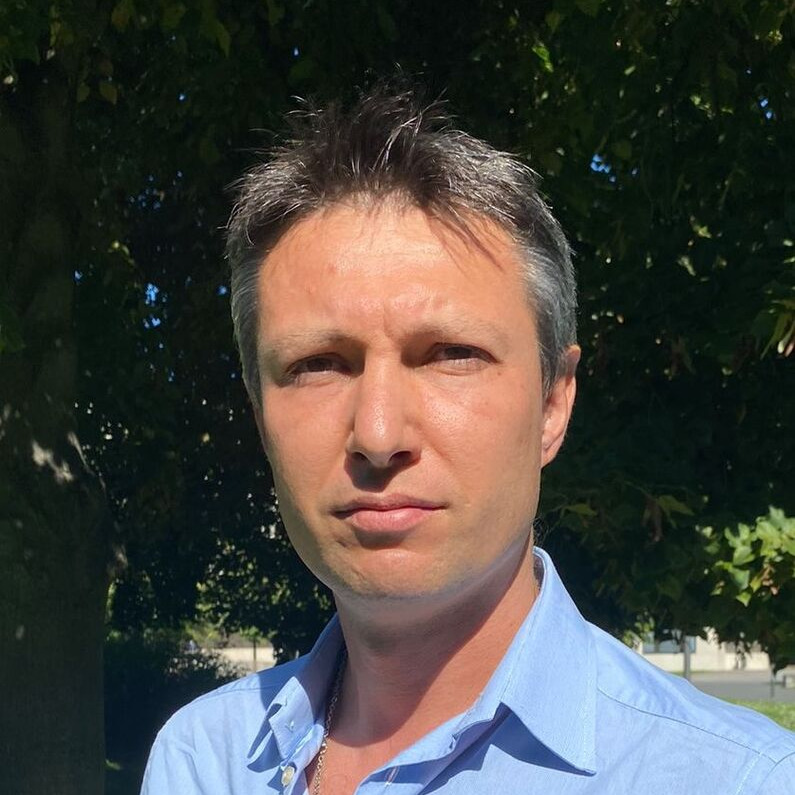
Materials and Surface Engineering Laboratory (LAMIS), Polytechnic Department of Engineering and Architecture (DPIA), University of Udine, Udine, Italy;He currently works at DPIA as an associate professor in metallurgy where he deals with research topics aimed at improving the resistance to mechanical and chemical degradation of metal alloys, especially steels (stainless, high T and low alloy steels) and titanium alloys. He has also been a type B researcher in the metallurgical field carrying out research aimed at improving the resistance to environmental degradation of metal alloys used in the iron and steel industry, a subject also carried out as part of his position as researcher A in materials science and technology. Technical manager of the materials science laboratory session mechanical tests, he is actively involved in technical-scientific collaboration activities with steel companies, and others, in the area. He has been scientifically responsible for several regional projects in collaboration with companies in the area. Member of the Italian metallurgy association in which he plays an active role in CoMET as a researcher representative with secretarial functions. Author and co-author of over one hundred different international scientific publications. He is on the editorial board of the journal Materials Today Communications.
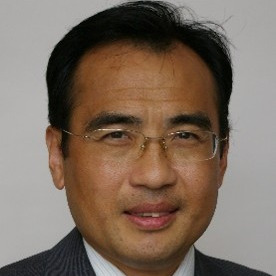
Department of Metallurgy, Technical University of Leoben, Leoben, Austria;Dr. Menghuai Wu is a professor of Computational Metallurgy at the Technical University of Leoben, Austria, with internationally recognized expertise in the numerical modeling and sim-ulation of solidification and related metallurgical processes. He earned his Master's degree from Northwestern Polytechnical University (China), his Ph.D. from RWTH Aachen Universi-ty (Germany), and his Habilitation from the University of Leoben (Austria). Since 2010, he has been the Head of the Christian Doppler Laboratory for Advanced Process Simulation of Solidi-fication and Melting at the University of Leoben. His research focuses on the development of advanced multiphase models for solidification and melting phenomena, with applications to continuous casting, semi-continuous casting, ingot casting, electroslag remelting (ESR), vacu-um arc remelting (VAR), and other metallurgical processes. He has successfully coordinated numerous national, European, and international research projects, while maintaining close collaborations with leading industries, including Primetals Technologies, voestalpine, INTECO, and RHI Magnesita, etc. He has authored or co-authored more than 210 peer-reviewed journal articles and 200 conference papers, with a h-index of 40 and over 6,000 citations.
-6a6323f4006e0.jpg)
Department of Mechanical Engineering and Materials Science, Pittsburgh, USA;Prof. Wei Xiong is Director of the Physical Metallurgy and Materials Design Laboratory at the University of Pittsburgh, where his research advances CALPHAD-based ICME (Integrated Computational Materials Engineering) approaches to materials design and process optimization. A leading voice in materials design for additive manufacturing, he combines phase equilibria, phase transformations, and data-driven modeling to accelerate the development of advanced alloys and printable materials. Prof. Xiong has authored more than 150 publications and seven invited book chapters, and serves as Section Editor of the CALPHAD journal and as Associate Editor for the Journal of Phase Equilibria and Diffusion and for Science and Technology of Advanced Materials. His honors include the NSF CAREER Award, the CALPHAD Young Leader Award, the TMS Early Career Faculty Fellow Award, and the ASTM AM CoE Young Professional Award in Additive Manufacturing. Supported by NASA, AFOSR, ONR, NSF, DOE, and DARPA, his work bridges fundamental science and real-world engineering.
-6a8586470e8ff.jpg)
Department of Materials, Imperial College London, London, United Kingdom;Dr Nima Haghdadi is an Associate Professor of Metallurgy in the Department of Materials at Imperial College London. He joined Imperial in 2024 and also holds an adjunct academic position at UNSW Sydney, where he worked from 2019 to 2024. He previously conducted research at Deakin University, the Max-Planck-Institut für Eisenforschung in Germany, McGill University and UBC in Canada, and earned his PhD from Deakin University in 2017. Dr Haghdadi has received several awards, including the TMS Young Innovator Award in Materials Science of Additive Manufacturing, the TFS Cowley-Moodie Award, Victoria Fellowship, and the Acta Materialia Student Award. His research bridges fundamental metallurgy and industrial applications, focusing on microstructure–property relationships, interface and grain boundary engineering, and advanced manufacturing, including electron-beam, laser-based and wire-arc additive manufacturing. His group investigates steels, Ni, Al, Ti, Cu and high-entropy alloys for applications spanning aerospace, automotive, mining, energy and biomedical industries.
-6aabc9044673e.png)
Department of Condensed Matter Physics, University of Seville, Seville, Spain;Dr. Javier S. Blázquez Gámez has been Full Professor in the Department of Condensed Matter Physics at the University of Seville since October 2018 and has served as Head of the Non-Crystalline Solids Research Group since 2025. He obtained his PhD from the University of Seville in 2002 with a thesis on the crystallization of FeCoNbB(Cu) alloys, supervised by Prof. A. Conde. He has carried out postdoctoral research at several internationally recognized institutions, including Warsaw University of Technology, IFW Dresden, the University of Oxford, Université du Mans, the Wigner Research Centre for Physics in Budapest, and the Slovak Academy of Sciences in Košice. His research focuses on metastable soft magnetic materials, particularly Fe-based nanocrystalline alloys and magnetocaloric systems. His scientific production includes more than 150 JCR-indexed publications and over 100 contributions to international conferences. A detailed list of his scientific production can be found in https://personal.us.es/jsebas and in the ORCID profile (https://orcid.org/0000-0003-2318-5418).
Sessions
Explore more details





Ms. Diana Lacusteanu
Mr. Russell Wang
Mr. Ionut Spatar
Email: iocme2026@mdpi.com
For inquiries regarding submissions and sponsorship opportunities, please feel free to contact us.