Sessions & Session Chairs
Sessions
S1. Design and Characterization of Novel Metallic Materials
S2. Sustainability in Metals
S3. Metals for Energy, Mobility, and Emerging Technologies
S4. Metallic Biomaterials
S5. Additive Manufacturing
S6. Computational Metallurgy, AI, and Multiscale Modeling
S7. Metals Processing

CRISMAT Laboratory, Normandy University, Caen, France
He is a Full Professor of Materials Science and Physical Metallurgy at Normandie University of Caen and a researcher at the CRISMAT Laboratory, where he leads the Physical Metallurgy Group. His main research interests include plasticity mechanisms, microstructural characterization, mechanical behavior, magnetic properties of soft ferromagnetic materials, microforming processes, nondestructive testing methods, and, more recently, additive manufacturing of metallic alloys, passivity mechanisms, and corrosion.
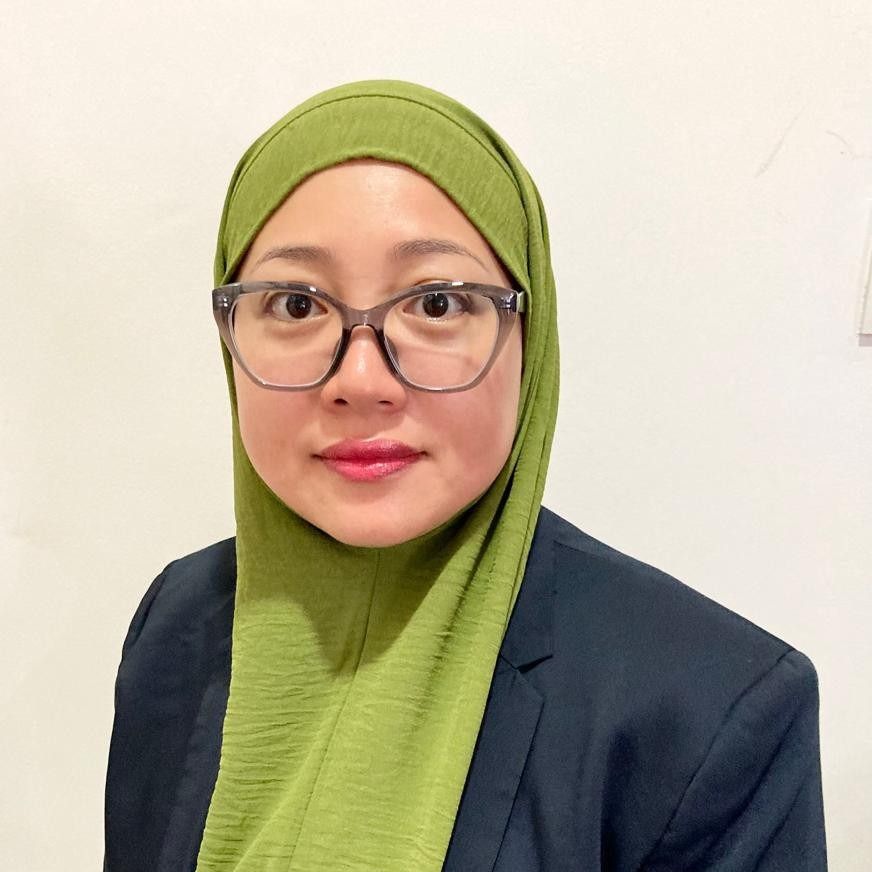
Department of Mechanical and Manufacturing Engineering, Faculty of Engineering, Universiti Putra Malaysia, Malaysia
Assoc. Prof. Dr. Azmah Hanim Mohamed Ariff is an Associate Professor in the Department of Mechanical and Manufacturing Engineering, Faculty of Engineering, Universiti Putra Malaysia (UPM), Malaysia. She holds a PhD in Mechanical Engineering and has established a strong academic and research profile in advanced materials, with particular expertise in lead-free solder technology, electronic packaging, composite materials, and sustainable material systems. Her research contributions span lead-free solder reliability, interfacial reactions in electronic packaging, metal matrix composites, porous ceramic composites, powder metallurgy, nanomaterials, and MXene-based advanced materials. She has published extensively in reputable international journals and earned strong scholarly recognition for her work in materials engineering and functional composite development. Beyond research, Dr. Azmah Hanim has held several strategic academic leadership roles and is actively engaged in international conferences, editorial activities, and multidisciplinary collaborations. Her broad expertise and sustained contributions to advanced materials research make her a valued member of the scientific community.
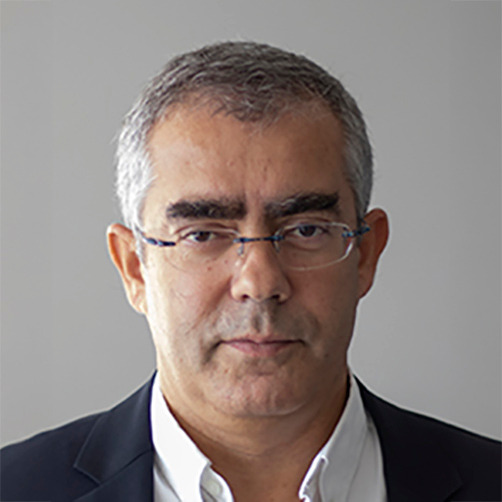
INEGI, The Institute of Science and Innovation in Mechanical and Industrial Engineering, Porto, Portugal
Paulo Tavares is a Physicist with an MSc in Lasers and Optoelectronics and a PhD in Mechanical Engineering from Porto University. He joined Texas Instruments (TI), Portugal in 1989, where he worked for ten years as Failure Analysis Engineer and Laboratory Supervisor. He worked in TI Dallas, TX, and Freising, Germany for extended periods. He owned a private technical consulting business, Prudente & Tavares consulting Ltd until 2023. He has an extensive track record in Optics and Image Processing with 100 publications in conferences or international journals with peer review and is currently a senior researcher in Structural Health Monitoring at INEGI, ranked h25 researcher according to international standards (c.f. Scopus or ResearcherID). He started the SPIE Iberia chapter – Society for Photo-optical and Instrumentation Engineers and is also a founding member, serving on the board of the Portuguese Optics and Photonics Society – SPOF. He has been chair and co-chair in several international conferences, such as the 1st Iberia Meeting of Optics Researchers, the International Conference on Structural Integrity (ICSI), now on its 6th Edition, or the International Conference on Structural Analysis of Advanced Materials (ICSAAM). Dr. Tavares is a non-governmental expert (CnGE) with the European Defence Agency in the Ground Systems, Air Systems, Maritime, Optronics and Materials and Structures CapTechs, and a former member of the Advisory Council for Aviation Research in Europe (ACARE) WG2 on Industrial Leadership. From 2000 to 2010, he taught several subjects in the Institute of Advanced Studies in Finance and Tax, where he served as Vice-President of the Board and he supervised several MSc and PhD students in Mechanical Engineering.
DISAT Department, Polytechnic University of Turin, Turin, Italy
Prof. Silvia Spriano is Associate Professor at the Department of Applied Science and Technology (DISAT), Politecnico di Torino, a position she has held since 2016. She obtained her Master’s degree with honours from the University of Turin in 1993 and her PhD in Metallurgical Engineering from Politecnico di Torino in 1997. Prof. Spriano has authored 165 peer-reviewed publications indexed in Scopus, with 5060 citations and an h-index of 37, and she holds five patents. Her research focuses on surface modification and characterization of metallic alloys for biomedical applications, functionalization of biomaterials with natural biomolecules, bioactive and antibacterial surfaces, shape memory alloys, and coatings for enhanced wear resistance. She has also contributed to the development of polymer-based biomaterials and to the study of protein adsorption on bio-surfaces. She teaches “Materials Science and Technology” within the Bachelor’s Degrees in Biomedical and Mechanical Engineering, “Engineered Biomaterials: from surface design to clinical reliability” within the Master’s Degree in Biomedical Engineering, and contributes with classes to PhD-level courses in Materials Science and Bioengineering and Medical-Surgical Sciences. She has supervised 149 bachelor’s and master’s theses and 12 PhD students. Prof. Spriano has served as Principal Investigator for 20 competitive national and international research projects. She has also coordinated 35 research projects in partnership with industry. Her work bridges materials science, surface engineering, and biomedical applications, with a strong commitment to interdisciplinary research and academic mentorship.
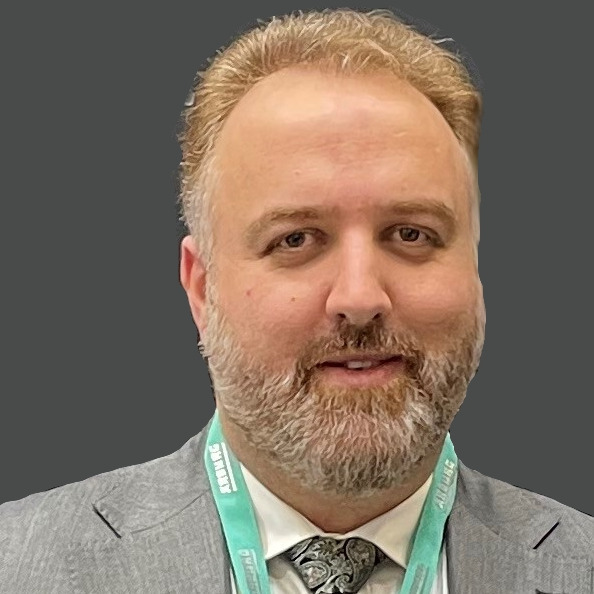
Department of Management and Production engineering, Polytechnic University of Turin, Turin, Italy
Abdollah Saboori is an Associate Professor of Advanced Materials Processing at the Department of Management and Production Engineering of the Politecnico di Torino. His research deals with the correlation between the properties of metallic materials and additive manufacturing processes. In recent years, his scientific activity has focused on alloys and composites produced by metal additive manufacturing processes.
Abdollah Saboori was a visiting PhD student at the University of Birmingham in the United Kingdom, and he received a PhD with honors in Materials Science and Technology at the Politecnico di Torino with a thesis on metal matrix nanocomposites. He is a co-author of more than 145 scientific papers published in scientific journals and conference proceedings.
Institute of Mechanics, The Technical University of Leoben, Leoben, Austria
Ernst Gamsjäger is an Associate Professor at the Institute of Mechanics, Montanuniversität Leoben, Austria, where he has been serving since 2010. He obtained his M.Sc. in Technical Physics from Graz University of Technology in 1997 and his Ph.D. (Dr. mont.) from Montanuniversität Leoben in 2002. He completed postdoctoral research at the University of British Columbia, Canada, and the Max Planck Institute of Colloids and Interfaces, Germany, and received the Masing Memorial Award of the German Society for Materials Science in 2007. His research focuses on equilibrium and non-equilibrium thermodynamics, phase transformations in multi-component systems, micromechanics of materials, and fluid mechanics. He has also served on the Management Committee of the COST Action “Solutions for Critical Raw Materials under Extreme Conditions” (2016–2022) and is a member of the editorial board of the journal Metals.
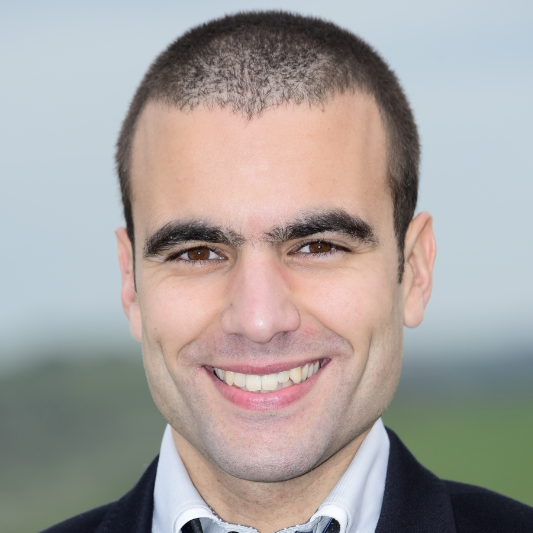
Department of Materials Science, NOVA University of Lisbon, Caparica, Portugal
João Pedro Oliveira is an Associate Professor in the Department of Materials Science at NOVA School of Science and Technology, NOVA University Lisbon, Portugal, where he also coordinates the Bachelor's degree in Materials Engineering. He obtained his Ph.D. in Materials Science and Engineering in 2016 and completed postdoctoral research at The Ohio State University, USA, following a research stay at the University of Waterloo, Canada. His research focuses on fusion-based welding, additive manufacturing, high-entropy alloys, and shape memory alloys, with emphasis on advanced microstructural characterization using electron microscopy and synchrotron X-ray diffraction. He has authored more than 120 peer-reviewed publications, secured over €1.5 million in research funding, and currently supervises Ph.D. students in the fields of welding and additive manufacturing.