.jpg)
3rd MMCS: Shaping Medicinal Chemistry for the New Decade
Thank you for your participation in MMCS2022!
We would like to thank our chairs, committee members, speakers, sponsors, and all the attendees for making such a great meeting!
You can already download you certificate by accessing your Sciforum account. Once you're logged-in, go to your profile and click on 'My certificates'.
For any question or comment, please send us an email to mmcs@mdpi.com.
See you at the next edition!!
the chairs
Dear Colleagues,
It is with great pleasure that we announce the 3rd Molecules Medicinal Chemistry Symposium—Shaping Medicinal Chemistry for the New Decade (MMCS2022), to be held in Rome, Italy, from 27 to 29 July 2022.
The conference is co-organized by the Sapienza University of Rome, Department of Drug Chemistry and Technology, and MDPI, the publisher of the open-access journal Molecules. The conference is a follow-up to the successful 2nd Molecules Medicinal Chemistry Symposium—Facing Novel Challenges in Drug Discovery (MMCS2019), held in May 2019 in Barcelona, Spain. This turned out to be a very fruitful forum that delved into numerous topics. The excellent atmosphere was created by the presence of more than 190 attendees from 30 countries.
Encouraged by the great success of the MMCS2019, the three-day MMCS2022 will continue to address a large audience and a wide variety of current medicinal chemistry topics. The MMCS2022 will be organized into a number of thematic sessions on the medicinal chemistry of particularly challenging diseases, novel and revisited drug discovery approaches, and medicinal chemistry stories about recently implemented projects in areas not covered in the other sessions—target and hit identification, hit-to-lead optimization, the tuning of physicochemical and pharmacokinetic properties, preclinical and clinical development, etc.
In each session, two prominent and inspiring keynote speakers will share the program with a number of oral communications selected from among the contributions submitted by young researchers. The program will be complemented by poster presentations and social events.
We look forward to seeing you in Rome.
Prof. Rino Ragno
Editor of the Medicinal Chemistry Section of Molecules
and
Prof. Diego Muñoz-Torrero
Editor-in-Chief of the Medicinal Chemistry Section of Molecules
MMCS2022 Chairs
Conference Secretariat
Ms. Lucy Chai
Dr. Ana Sanchis
Mr. Pablo Velázquez
Email: mmcs@mdpi.com
Meet Our Chairs

Sapienza University of Rome, Italy;Rino Ragno is a full professor at the Drug Chemistry and Technology Department - Pharmacy and Medicine Faculty, Sapienza University of Rome. He started as medicinal chemist doing synthesis for about 10 years then as Italian NIH fellow spent two years in the Prof. G. R. Marshall’s lab at Washington University in St. Louis. In 2017 he achieved the national abilitation as Full Professor in medicinal chemistry. Prof. Rino Ragno is co-author of more than 120 peer reviewed artcles on interantional journals at high impact factor.
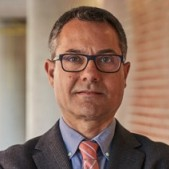
University of Barcelona, Spain;Prof. Diego Muñoz-Torrero is Associate Professor of Organic and Medicinal Chemistry at the Faculty of Pharmacy and Food Sciences, University of Barcelona (UB). He is Head of the Laboratory of Pharmaceutical Chemistry and belongs to the Governing Board of the Institute of Biomedicine (IBUB). He belongs to the editorial advisory board of several medicinal chemistry journals and serves as the Editor-in-Chief of the Medicinal Chemistry Section of the MDPI journal Molecules.
Important Dates
8 Apr
2022
12 May
2022
25 May
2022
10 Jun
2022
11 Jul
2022
27 Jul
2022
Meet Our Speakers
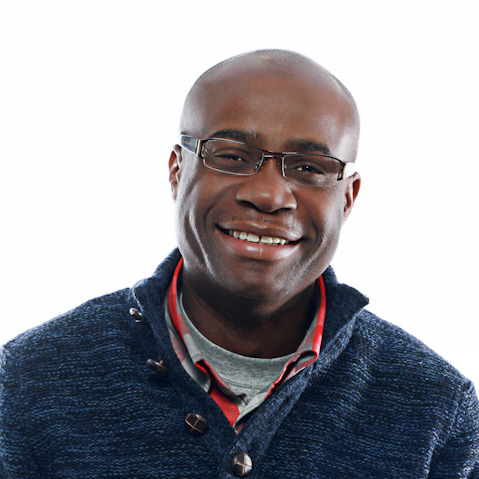
Drug Discovery and Development (H3D) Centre, University of Cape Town (UCT), South Africa;Prof Kelly Chibale is the Founder and Director of H3D. He is also the founding Director of the South African Medical Research Council Drug Discovery and Development Research Unit at UCT. He is the Neville Isdell Chair in African-centric Drug Discovery & Development, a Professor of Organic Chemistry, and a Tier 1 South Africa Research Chair in Drug Discovery.

Molecular Chemistry and Catalysis, ESPCI Paris, France;Janine Cossy graduated from Reims University and after a postdoctoral stay in the US, she returned to Reims where she became, in 1990, Director of Research at the CNRS. In the same year, she moved to Paris where she was appointed Professor at the ESPCI Paris. J. Cossy’s research interests focus on the synthesis of natural and/or bioactive compounds and on the development of synthetic methods. Her research efforts have resulted in more than 540 publications and 18 patents. In 2017, She was elected at the French Academy of sciences.

Organic Chemistry Chair I and Interdisciplinary Center for Molecular Materials (ICMM), Friedrich-Alexander-Universität Erlangen-Nürnberg, Germany;Svetlana B. Tsogoeva graduated with Distinction from St. Petersburg State University, where she completed her doctoral thesis in 1998. Then, she moved to the Johann Wolfgang Goethe University for postdoctoral research. In 2000 she joined the Degussa AG as a research scientist. In 2002 she was appointed a first junior professor in Germany at the Georg-August-University of Göttingen. Since 2007 she has been Professor of Organic Chemistry at the Friedrich-Alexander University of Erlangen-Nürnberg.

Dipartimento di Farmacia e Biotecnologie, Università di Bologna, Italy;Maria Laura Bolognesi is Professor of Medicinal Chemistry, Coordinator of the Biotechnological, Biocomputational, Pharmaceutical and Pharmacological Sciences PhD Program at the University of Bologna. She also serves as Rector Delegate for International Relations to Latin America. Her research is concerned with the design, synthesis, and biological investigation of small molecules in the neurodegenerative and neglected tropical disease therapeutic areas. She has a track record of more than 175 publications in high-ranked scientific journals, including patents and patent applications, and numerous invited talks worldwide. She was awarded a Distinguished Visiting Professor Fellowship at the Complutense University of Madrid in 2009, a PVE Fellowship at the University of Brasilia in 2014 and Professeur Invité at Université Caen Normandie in 2018. She is also an Associate Editor of Journal of Medicinal Chemistry and serves in the Advisory Board of the European Federation of Medicinal Chemistry.

Philipps-Universität Marburg, Germany;Olalla Vázquez graduated with Honours from the University of Santiago de Compostela, where she completed her PhD under the supervision of Prof. Mascareñas. As PhD student, she visited the labs of Prof. Verdine and Prof. Seitz. Afterwards, she returned to Berlin as Marie Curie postdoctoral fellow. In 2014 she was appointed as Assistant Professor (W1) at the University of Marburg to manage the newborn Chemical Biology division. In April 2020, Olalla successfully passed her tenure evaluation, and was promoted to Associate Professor (W2) in January 2021. Innovative optochemical tools and epigenetics are the core of her research.
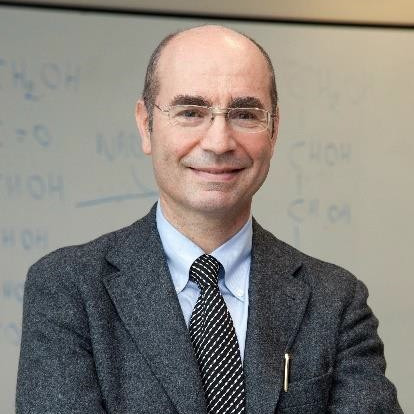
Department of Biotechnological and Applied Clinical Sciences, University of L'Aquila, L'Aquila (Italy);Mauro Maccarrone, Dr. Enzymology and Bio-Organic Chemistry, is Professor and Chair of Biochemistry at the Department of Biotechnological and Applied Clinical Sciences, University of L’Aquila (Italy). He is also Head of the Lipid Neurochemistry Unit at the European Center for Brain Research – IRCCS Santa Lucia Foundation, Rome (Italy). Chair of the 2015 Gordon Research Conference on “Cannabinoid Function in the CNS”. Visiting Professor at Leiden University in 2017, and at University of Cambridge in 2019. He authored more than 500 full papers, and is listed among the Top Italian Scientists. For his research activity he has received, among other prizes, the “2020 Tu Youyou Award”.

Sapienza University of Rome, Roma, Italy;Antonello Mai is a Full Professor in the Department of Drug Chemistry and Technologies, in Sapienza University of Rome. He is a professor of the following courses at the Faculty of Pharmacy and Medicine of Sapienza University of Rome involving Medicinal Chemistry: Medicinal Chemistry 1, Medicinal Chemistry 2, Medicinal Chemistry 3, Medicinal Chemistry and Toxicology Analysis, Pharmaceutical Biotechnology. He has great expertise in 1) organic synthesis; 2) synthesis of new potential bio-active compounds, particularly in the field of epigenetics (inhibitors of DNMTs, HDACs [unselective and class-selective], HATs, sirtuins, PRMTs, HKMTs, and HDs), anticancer agents, antiviral agents (anti-human picornavirus compounds (disoxaril analogues), and anti-HIV-1 compounds belonging to the non-nucleoside reverse transcriptase inhibitor classes (DABOs, S-DABOs, DATNOs, F2-S-DABOs, Amino-DABOs), antibacterial (oxacine analogues), antimycobacterial (oxacine and U-100480 analogues) and antifungal (trichostatin A, pyrrolnitrin, and bifonazole analogues) agents, and CNS agents (pyrrolobenzodiazepines active as analgesic, antidepressant and nootropic compounds); 3) development of new methodology for the synthesis of heterocycles; 4) analysis and purification of organic mixtures; 5) study and characterization of organic molecules.

Chemistry Department, University of Perugia, Italy;Gabriele Cruciani is full professor of Organic Chemistry and Cheminformatics at the University of Perugia, Italy. Prof. Cruciani is the scientific director of Molecular Discovery company based in London, of Molecular Horizon based in Perugia, Italy, and of Montelino Therapeutics based in Boston, USA. He’s also the director of the human Cytochrome Consortium Initiative (a consortium of seven pharmaceutical companies collaborating to address metabolism issues in predictive human metabolism) and a member of the technical scientific advisory board of several pharmaceutical companies. In 2001 he got the Corvin Hansch Award from the Molecular Modeling Society in USA for his work on QSAR and Molecular Modeling, in 2005 he got the Research Award from Società Chimica Italiana, Organic Chemistry Division, and in 2009 he was the recipient of the Novartis Research Award. In 2014 he was the recipient of the gold medal Angelo Mangini award from Italian Chemical Society and finally in 2015 he was the recipient of the gold medal Herman Wold Award from Swedish Chemical Society. Prof. Cruciani made significant contributions to the field of ADME and computer-aided drug design, due to his over two decades of software production for data mining and drug discovery experience, focused on drug informatics, cheminformatics, small-molecule and target informatics, and virtual screening. He obtained several EU grants and Italian research grants, plus a number of support grants from pharmaceutical companies. Cruciani is included in the Top Italian Scientists list.
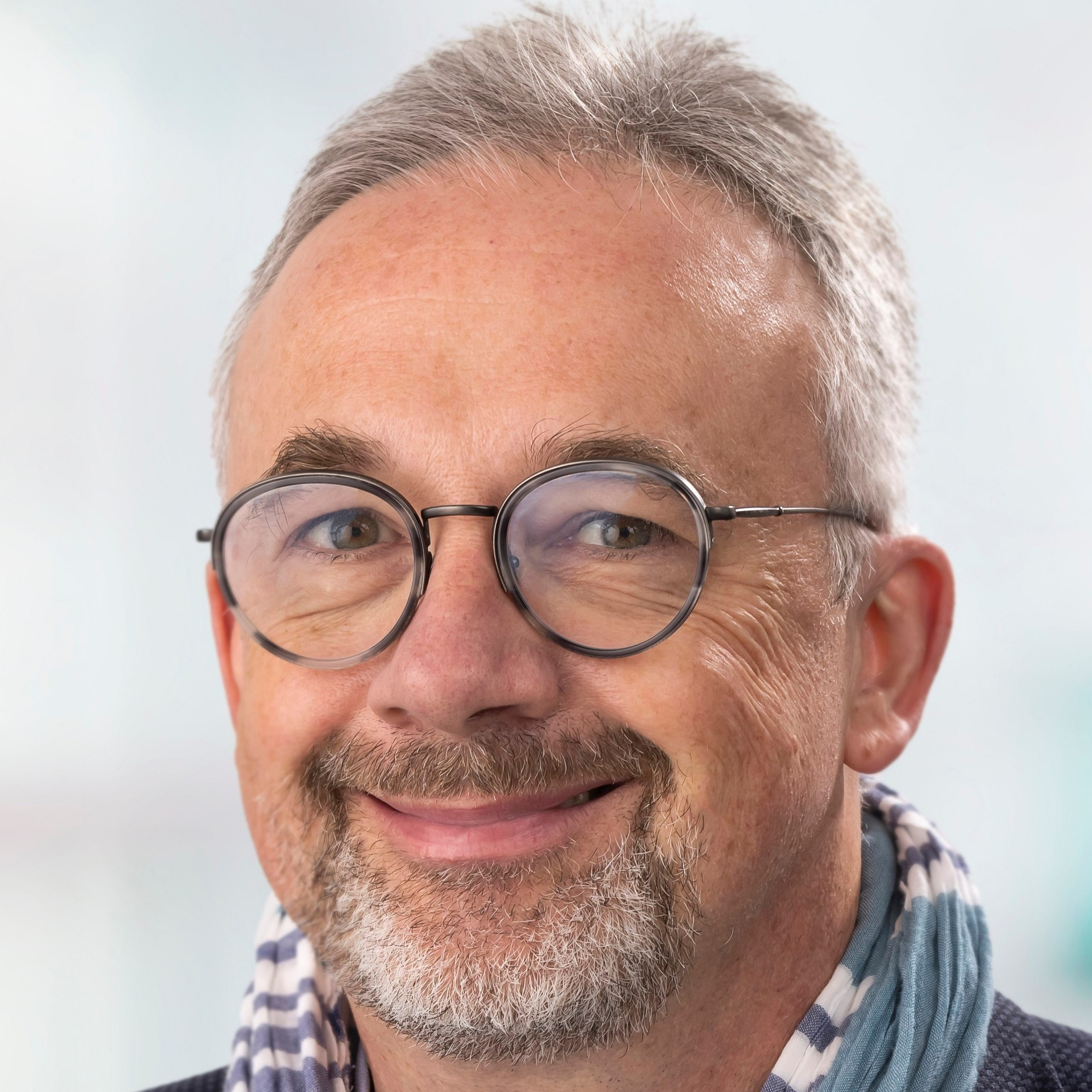
University of Freiburg, Germany;Manfred Jung is an expert in the Medicinal Chemistry and Chemical Biology of epigenetic inhibitors and probes. His research groups works on synthesis, assay development and screening for epigenetic modifiers. Manfred did his PhD at the University of Marburg in 1993, then worked as a postdoc with T. Durst at the University of Ottawa. From 1994 to 2003 he was a junior group leader at the University of Münster From 2003 on he was a Professor of Pharmaceutical Chemistry at the University of Freiburg and since 2011 he is Full Professor there. He was appointed twice as Senior Fellow at the Freiburg Institute of Advanced Studies (FRIAS) and is the co-speaker of the Collaborative Research Centre “Medical Epigenetics” in Freiburg.

Institute of Organic Chemistry, Leibniz University Hannover, Germany;Markus Kalesse is a Professor at the Institute for Organic Chemistry, Centre for Biomolecular Drug, Leibniz Universität Hannover. Since 2005 he is also the Director at the Helmholtz Center for Infection Research and head of Medicinal Chemistry in Braunschweig. Prof. Kalesse did his PhD at the Technical University of Hannover in 1991, then worked as a postdoc with Prof. Dr. S. D. Burke and Prof. Dr. L. L. Kiessling from the University of Wisconsin, Madison, USA. He is also a Member of the “Fachkollegiaten” at the DFG, and was awarded the Novartis Lecturer award on 2004-2005.

Heidelberg Institute for Theoretical Studies (HITS) and Heidelberg University, Germany;Rebecca Wade leads the Molecular and Cellular Modeling group at Heidelberg Institute for Theoretical Studies (HITS) and is Professor of Computational Structural Biology at the Center for Molecular Biology at Heidelberg University (ZMBH). Rebecca Wade studied at Oxford University and, following postdoctoral research at the universities of Houston and Illinois, became a group leader at the European Molecular Biology Laboratory (EMBL) in Heidelberg in 1992. She moved to HITS in 2001. Rebecca Wade’s research is focused on the development and application of computer-aided methods to model and simulate biomolecular interactions. Her research group has developed novel protein structure-based methods for drug discovery and protein engineering, most recently for studying drug binding kinetics, as well as multiresolution computational approaches to investigate macromolecular association and the effects of macromolecular crowding. Rebecca Wade’s research has been published in over 250 scientific papers, as well as software programs and web servers that are used world-wide. She is an Associate Editor of the Journal of Molecular Recognition and PloS Computational Biology. She was awarded the 2004 Hansch Award of the QSAR and Modelling Society and the 2016 International Society of Quantum Biology and Pharmacology (ISQBP) Award in Computational Biology and was the 2020 Molecular Graphics and Modeling Society (MGMS) lecturer.

Serra Hunter Lecturer Professor, University of Barcelona, Spain;Dr Carles Galdeano is currently a Serra Hunter Lecturer Professor at University of Barcelona. He obtained his PhD in medicinal chemistry at University of Barcelona. After that, he spent 3 years post-doc in the Alessio Ciulli’s lab (first at University of Cambridge and later at University of Dundee) where together they develop the first potent VHL ligands described. His postdoctoral discoveries represented a breakthrough in the PROTACS field. In 2015, he returned to the University of Barcelona to work in collaboration with Prof Barril until 2019, when he started his independent research lab.
Sessions
Explore more details





|
Live Demonstration of CDD Vault for Accelerating Drug Discovery
Workshop by Dr Susana Tomasio, Collaborative Drug Discovery
|
 |
|
Collaborative Drug Discovery cordially invites you to a free, conference-associated workshop:
Live Demonstration of CDD Vault for Accelerating Drug Discovery
Wednesday 27th July 2022/ 14:15 – 15:00 The workshop will be a live demonstration of the CDD Vault platform and it will show how this can help scientists to organize their data and accelerate their research. In this workshop you will learn why data management is a key component of the drug discovery process. CDD Vault is a complete and essential informatics platform used by drug discovery researchers around the globe. It helps project teams manage, analyze, and present data for biotech companies, CROs, academic labs, research hospitals, agrochemical and consumer goods companies. This modern web application can be used to register molecules, biological entities, mixtures and all the assay data associated with your experiments, allowing scientists to organize their data in a simple to use and secure system. At the end of the workshop, attendees will be able to request a free trial of the CDD Vault platform and test it with their own data. Do not miss this great opportunity and register for free now for the workshop! |
The gala dinner of MMCS2022 will take place at Ristorante Pizza Forum Roma - Forno a Legna located at via San Giovanni in Laterano 34/38, near the Colosseum, on the night of Thursday 28 July 2022 (around 20:00):
Please register for it before Monday, 11 July and save yourseat. Do not miss the opportunity to join us in this conference social event!
You can register here.
Posters have been divided in two groups and each poster will be presented in one of the two poster sessions:
- Poster Session A – Thursday, 28 July 2022; 13:45-14:45h
- Poster Session B – Friday, 29 July 2022; 13:30-14:30h
The session in which each poster will be presented can be found HERE, together with the posters' numbers, titles, and presenters' names. Please contact us if the poster presenter's name is incorrect in the list.
Please print your poster prior to the conference. Note that maximum poster size limited to 90 x 150 cm, vertical orientation preferred.
Please find below the MMCS 2022 Conference Book, including all abstracts (last update 20 July 2022). Click on the cover image to download it:

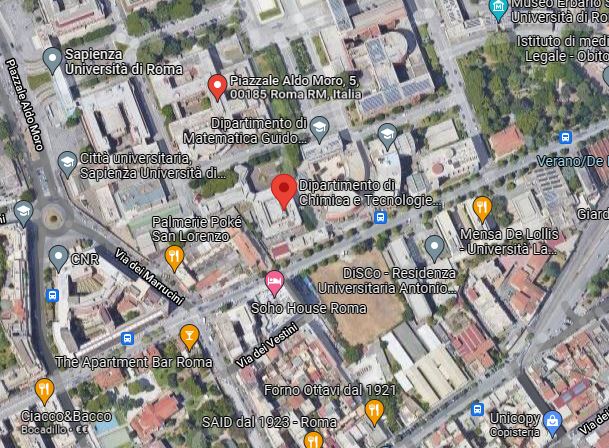
Venue: Department of Chemistry and Pharmaceutical Technologies - Sapienza University of Rome
Address: Piazzale Aldo Moro, 5, 00185 Roma RM, Italy (Google maps)
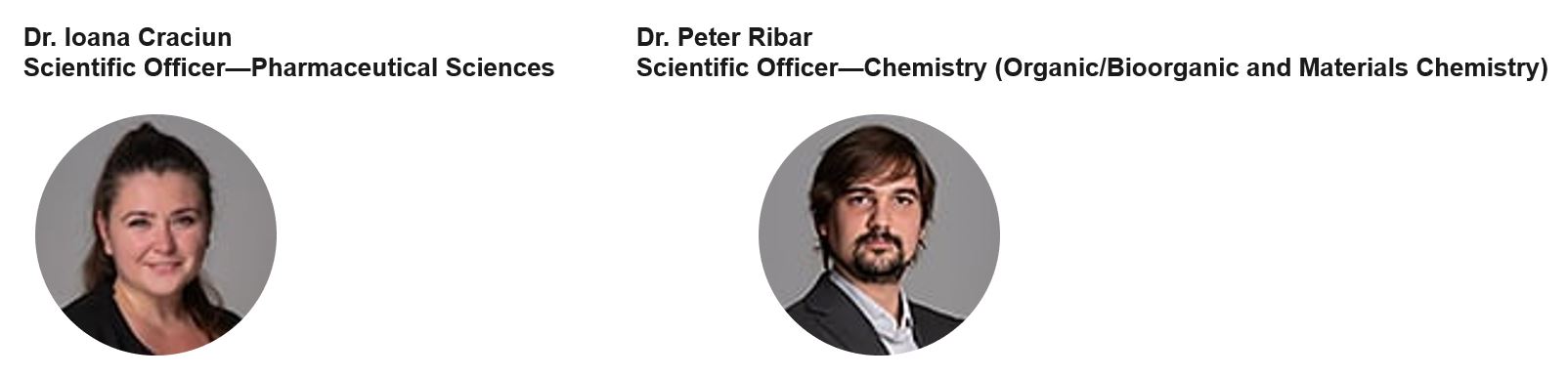
Dr. Ioana Craciun and Dr. Peter Ribar from our MDPI's Scientific Officers Board will join MMCS and are looking forward to meeting you in person! Visit the Molecules sponsors booth at the conference and take the chance to ask them anything!