Event submissions
Published
This submission belongs to the session 6. Animal Physiology, Reproduction, and Sustainable Animal Production of the event The 4th International Online Conference on Animals
Published date
12 Mar, 2026
Academic Editor
'%3e%3cpath%20d='M12.6657%2010.9104C12.4185%2010.325%2012.0599%209.79327%2011.6097%209.34482C11.1609%208.89508%2010.6293%208.5365%2010.0442%208.28888C10.0389%208.28626%2010.0337%208.28495%2010.0285%208.28233C10.8446%207.69279%2011.3752%206.73249%2011.3752%205.64904C11.3752%203.8542%209.92103%202.39999%208.1262%202.39999C6.33136%202.39999%204.87715%203.8542%204.87715%205.64904C4.87715%206.73249%205.40774%207.69279%206.22393%208.28364C6.21869%208.28626%206.21345%208.28757%206.20821%208.29019C5.62129%208.5378%205.09463%208.89284%204.64265%209.34613C4.1929%209.79493%203.83432%2010.3266%203.58671%2010.9117C3.34345%2011.4845%203.21226%2012.0987%203.20023%2012.7209C3.19988%2012.7349%203.20233%2012.7488%203.20744%2012.7619C3.21255%2012.7749%203.22022%2012.7867%203.22998%2012.7968C3.23975%2012.8068%203.25142%2012.8147%203.26431%2012.8202C3.2772%2012.8256%203.29105%2012.8284%203.30504%2012.8284H4.09109C4.14874%2012.8284%204.19459%2012.7825%204.1959%2012.7262C4.2221%2011.7148%204.62823%2010.7676%205.34617%2010.0497C6.08899%209.30683%207.0755%208.89808%208.1262%208.89808C9.17689%208.89808%2010.1634%209.30683%2010.9062%2010.0497C11.6242%2010.7676%2012.0303%2011.7148%2012.0565%2012.7262C12.0578%2012.7838%2012.1037%2012.8284%2012.1613%2012.8284H12.9474C12.9613%2012.8284%2012.9752%2012.8256%2012.9881%2012.8202C13.001%2012.8147%2013.0126%2012.8068%2013.0224%2012.7968C13.0322%2012.7867%2013.0398%2012.7749%2013.0449%2012.7619C13.0501%2012.7488%2013.0525%2012.7349%2013.0522%2012.7209C13.0391%2012.0947%2012.9094%2011.4855%2012.6657%2010.9104ZM8.1262%207.9024C7.52486%207.9024%206.9589%207.6679%206.53312%207.24211C6.10733%206.81633%205.87283%206.25037%205.87283%205.64904C5.87283%205.0477%206.10733%204.48174%206.53312%204.05596C6.9589%203.63018%207.52486%203.39567%208.1262%203.39567C8.72753%203.39567%209.29349%203.63018%209.71927%204.05596C10.1451%204.48174%2010.3796%205.0477%2010.3796%205.64904C10.3796%206.25037%2010.1451%206.81633%209.71927%207.24211C9.29349%207.6679%208.72753%207.9024%208.1262%207.9024Z'%20fill='%235D1EE1'/%3e%3c/g%3e%3c/svg%3e) Mohammed Gagaoua
Mohammed GagaouaCitation
Linda Chinyere Omosekeji, Dideolu Osunkoya, Mikail Abiola Fasanya, Olanrewaju Samuel Olaifa, Isaac Ayobami Arowolo, Dietary noodle waste-induced alterations in ovarian biometry, histological integrity and oxidative status in Wistar rats, in Proceedings of The 4th International Online Conference on Animals, 17 March–19 March 2026, MDPI: Basel, Switzerland
Share
Email
Facebook
Twitter
LinkedIn
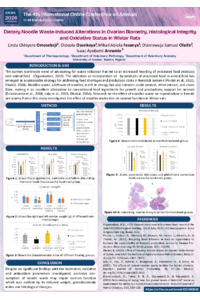
Dietary noodle waste-induced alterations in ovarian biometry, histological integrity and oxidative status in Wistar rats
'%3e%3cpath%20d='M12.6647%2010.9104C12.4176%2010.325%2012.0589%209.7933%2011.6088%209.34485C11.16%208.89511%2010.6283%208.53653%2010.0432%208.28891C10.038%208.28629%2010.0327%208.28498%2010.0275%208.28236C10.8437%207.69282%2011.3743%206.73252%2011.3743%205.64907C11.3743%203.85423%209.92005%202.40002%208.12522%202.40002C6.33038%202.40002%204.87618%203.85423%204.87618%205.64907C4.87618%206.73252%205.40677%207.69282%206.22296%208.28367C6.21772%208.28629%206.21248%208.2876%206.20724%208.29022C5.62031%208.53783%205.09365%208.89287%204.64167%209.34616C4.19192%209.79496%203.83334%2010.3266%203.58573%2010.9117C3.34247%2011.4846%203.21128%2012.0987%203.19925%2012.721C3.1989%2012.735%203.20135%2012.7489%203.20646%2012.7619C3.21157%2012.7749%203.21924%2012.7868%203.22901%2012.7968C3.23877%2012.8068%203.25045%2012.8148%203.26334%2012.8202C3.27623%2012.8256%203.29007%2012.8284%203.30406%2012.8284H4.09012C4.14776%2012.8284%204.19362%2012.7825%204.19493%2012.7262C4.22113%2011.7148%204.62726%2010.7676%205.34519%2010.0497C6.08802%209.30686%207.07452%208.89811%208.12522%208.89811C9.17592%208.89811%2010.1624%209.30686%2010.9052%2010.0497C11.6232%2010.7676%2012.0293%2011.7148%2012.0555%2012.7262C12.0568%2012.7839%2012.1027%2012.8284%2012.1603%2012.8284H12.9464C12.9604%2012.8284%2012.9742%2012.8256%2012.9871%2012.8202C13%2012.8148%2013.0117%2012.8068%2013.0214%2012.7968C13.0312%2012.7868%2013.0389%2012.7749%2013.044%2012.7619C13.0491%2012.7489%2013.0515%2012.735%2013.0512%2012.721C13.0381%2012.0947%2012.9084%2011.4856%2012.6647%2010.9104ZM8.12522%207.90243C7.52388%207.90243%206.95792%207.66793%206.53214%207.24215C6.10636%206.81636%205.87185%206.2504%205.87185%205.64907C5.87185%205.04773%206.10636%204.48177%206.53214%204.05599C6.95792%203.63021%207.52388%203.3957%208.12522%203.3957C8.72655%203.3957%209.29252%203.63021%209.7183%204.05599C10.1441%204.48177%2010.3786%205.04773%2010.3786%205.64907C10.3786%206.2504%2010.1441%206.81636%209.7183%207.24215C9.29252%207.66793%208.72655%207.90243%208.12522%207.90243Z'%20fill='%235D1EE1'/%3e%3c/g%3e%3c/svg%3e)
Linda Chinyere Omosekeji 1
Dideolu Osunkoya 1
Mikail Abiola Fasanya 1
Olanrewaju Samuel Olaifa 2
Isaac Ayobami Arowolo 3
1. Department of Theriogenology, Faculty of Veterinary Medicine, University of Ibadan , Ibadan 200005, Nigeria
2. Department of Veterinary Pathology, Faculty of Veterinary Medicine, University of Ibadan, Ibadan 200005, Nigeria
3. Department of Veterinary Anatomy, Faculty of Veterinary Medicine, University of Ibadan, Ibadan 200005, Nigeria
Abstract
Nutrition plays a vital role in regulating reproductive performance in humans and animals. Recently, the inclusion of agro-industrial by-products such as noodle waste (NW) in animal diets has increased, often without the adequate evaluation of their potential reproductive consequences. This study investigated the effects of NW consumption on ovarian function in twenty (20) healthy adult female Wistar rats. The rats were randomly assigned to four groups (n = 5). Group A (control) received standard rat feed, while Groups B, C, and D were fed diets containing NW only, 50% NW supplemented with 50% fish meal (FM), and 30% NW supplemented with 70% FM, respectively, for 35 days. Serum samples were analyzed for reproductive hormones (progesterone, oestradiol, and follicle-stimulating hormone (FSH)) using an enzyme-linked immunosorbent assay (ELISA). Ovaries were excised to evaluate ovarian biometry, gonadosomatic index (GSI), oxidative stress markers, antioxidant enzymes, and histopathology.
There were no significant differences (p > 0.05) in the mean serum levels of FSH, progesterone, and oestradiol among the treatment groups. Similarly, mean malondialdehyde (MDA), superoxide dismutase (SOD), and glutathione peroxidase (GPx) levels showed no significant variation (p > 0.05), although Group B (NW only) exhibited higher MDA and antioxidant enzyme levels. Significant differences (p < 0.05) were observed in right ovarian weight (Group B: 0.03 ± 0.01 g and Group C: 0.06 ± 0.02 g), left ovarian weight (Group B: 0.02 ± 0.01 g and Group C: 0.06 ± 0.01 g), and GSI (Group B: 0.03 ± 0.02 and Group C: 0.07 ± 0.00). Histological examination revealed extensive follicular atresia, reduced ovarian vascularization, and smaller ovarian size in Group B compared to other groups.
These findings suggest that exclusive consumption of noodle waste may impair ovarian function through oxidative stress and structural degeneration, emphasizing the need for appropriate dietary supplementation to mitigate its adverse effects.
Keywords
Ovarian
food waste
processed
antioxidant
follicle
Poster
Linda Omosekeji poster presentation 1.pdf
Effect of Hydroponic Green Fodder Feeding on Carcass and Meat Quality Characteristics of Gerze Native Chickens
Clinical Evaluation of Pistacia lentiscus L. Extract in Mitigating Flupyradifurone toxicity in Apis mellifera: Survival and Symptom Progression